In the days following the collapse of the Bahamas-based FTX, the Securities Commission of the Bahamas kept a low-profile, releasing a trickle of press releases and hanging up the phone on inquiring journalists.
That changed with a bombshell on Thursday night, when the agency—a kind of supercharged version of the U.S. Securities and Exchange Commission—announced that it had directed FTX’s Bahamian subsidiary to direct the transfer of all its digital assets to a wallet controlled by the Commission “for safekeeping.”
The move was a remarkable display of power for the small Caribbean nation, which spent years burnishing its reputation as an emerging hub for crypto—a campaign that culminated in enticing the founder of FTX, and his crew, to move their headquarters to the country in September 2021.
FTX’s arrival was a coup for the Bahamas and its prime minister, but, now that the once-vaunted company has collapsed amid allegations it was a $30 billion Ponzi scheme, the country’s crypto ambitions may be in jeopardy.
Fortune interviewed government officials, crypto entrepreneurs, and legal experts to reveal how the Bahamas built its reputation as a global hotspot for digital assets. Now, as the SCB and government try to save the country’s reputation, the question is whether its actions will restore trust—or expose underlying rot.
A state of confusion
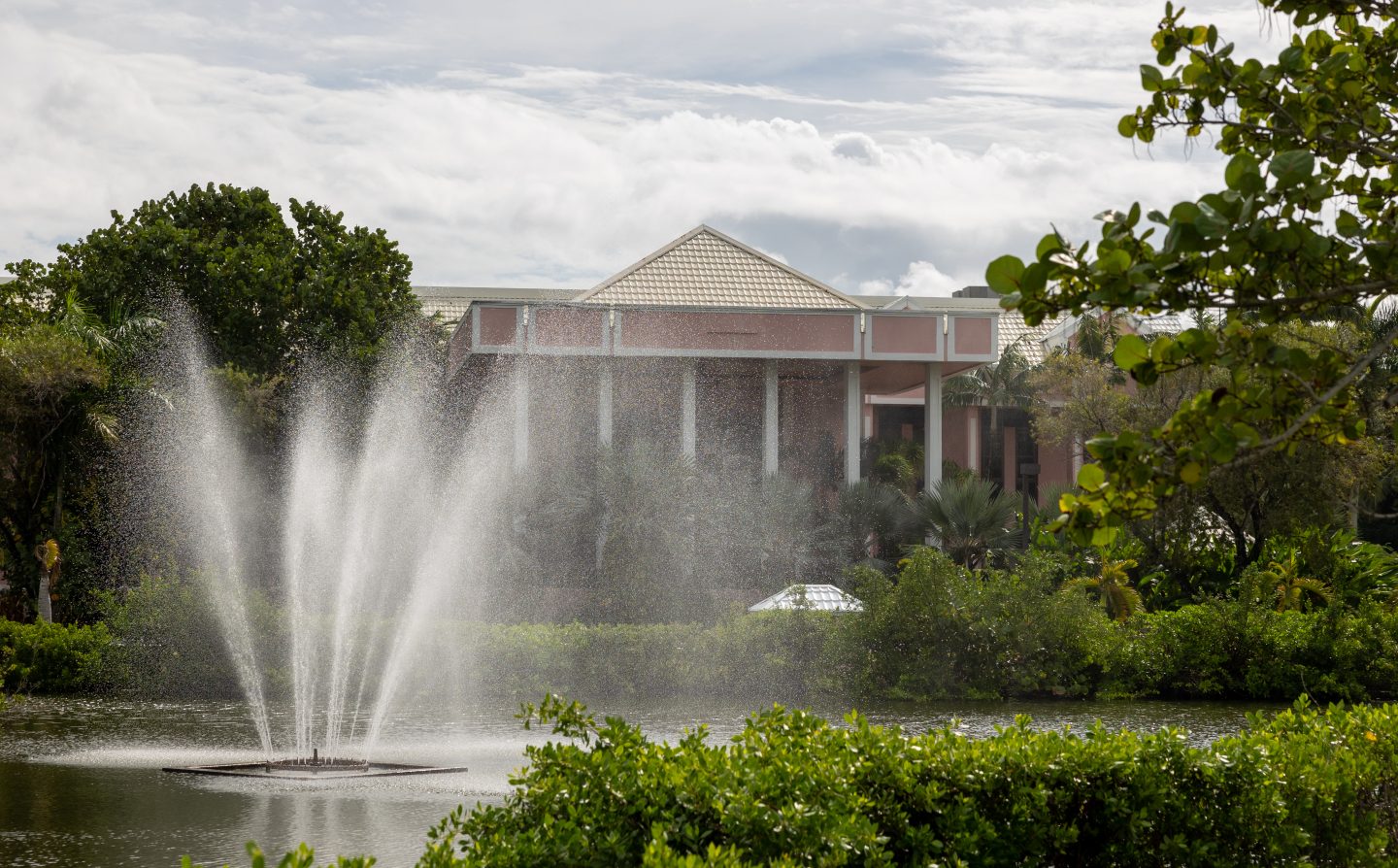
On Friday morning, Bahamian opposition leader Michael Pintard held a press conference in front of the office of Prime Minister Philip Davis, cordoned off to the entrance by a hastily assembled gate.
“There are many matters that have been raised that have caused not only people locally, but internationally, to look with jaundiced eyes,” he said to a crowd of local reporters. “The government does not have the luxury of being quiet.”
Pintard said that his party, like the press and general public, has yet to receive answers about whether the government engaged in ethically dubious behavior tied to FTX—specifically, whether political leaders received donations from the company or funds amid its collapse. He also asked how the government failed to properly screen the company before welcoming it with open arms.
While the Bahamas has long had a reputation as a low-tax jurisdiction, the government began its active courting of digital asset firms with the passage of two laws in 2020: the Digital Assets and Registered Exchanges (DARE) Act, and the Financial and Corporate Service Providers Act.
Together, the two pieces of legislation, developed primarily by the Securities Commission, streamlined a pathway for key digital asset services, including the issuing and trading of crypto tokens, the oversight of exchanges, and the oversight of wallet and custody services. The DARE Act also allowed licensing for both spot and derivatives trading for crypto exchanges.
Law professor Yesha Yadav of Vanderbilt University says all of this, including a 2022 white paper, shows that crypto was viewed as key to the country’s growth strategy as a financial hub.
Davinia Bain, the co-founder of the Bahamas crypto co-working space and accelerator Crypto Isle, hailed the regulation to Fortune as a huge success.
“It makes it a little bit easier to have adoption conversations with major companies,” she said.
With much of the world still lacking crypto regulation, the Bahamian effort to court companies caught the attention of Sam Bankman-Fried’s FTX, which was based in Hong Kong but looking for a new home as the Chinese government cracked down on crypto.
“Sam was basically there to tout that they wanted clarity,” Yadav said. “Also they would have allowed all the insanely leveraged derivatives exposure that would not be allowed in the U.S.”
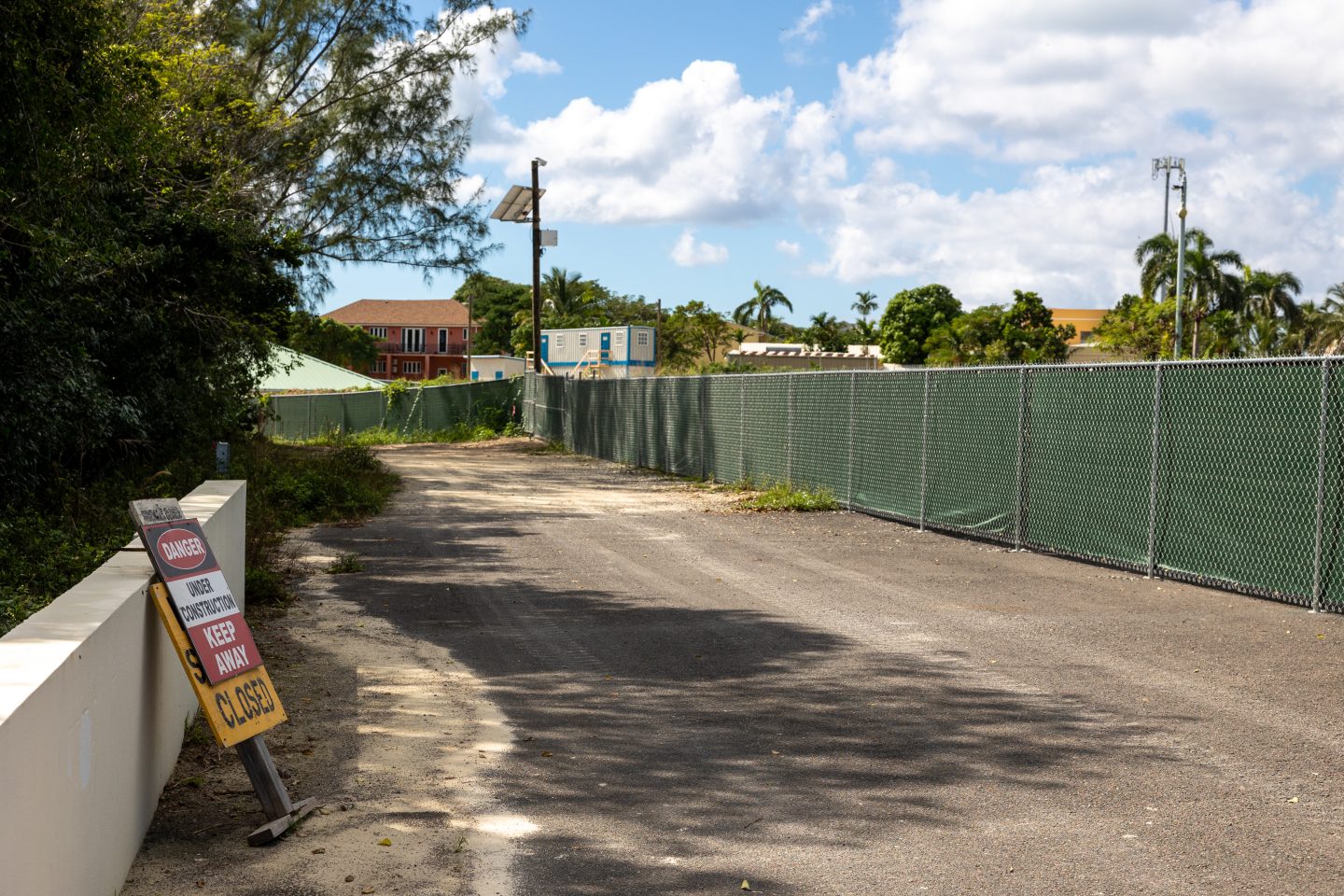
The government, led Davis, embraced FTX, won over by the company’s prodigious spending and donating. When FTX broke ground on a new $60 million headquarters in April, Davis was on hand for the photo op with Bankman-Fried (although, as Fortune reported yesterday, construction never began.)
FTX “became the center of conversation,” Bain said. “It normalized the concept that there could be an entire new industry wrapped around crypto.”
FTX’s move also spurred other crypto activity in the Bahamas: The exchange OKX opened an office in Nassau earlier this month, with CEO Jillian Bethel citing the DARE Act as a key factor.
The walls come tumbling down
Following FTX’s rapid collapse, the Securities Commission took charge of all investigations. Its first communication came on Nov. 10, announcing it had frozen the firm’s assets, without clarification as to which assets of the sprawling empire it was referring.
On Nov. 10, the FTX official account tweeted that it had facilitated the withdrawal of Bahamian funds while pausing other withdrawals. Two days later, the Securities Commission announced it had not directed FTX to do so, a discrepancy that remains unclear.
During this chaotic period, the Securities Commission denied requests from both local and international press for any clarification—a policy that experts say is standard, but one that still sowed confusion as other government agencies stayed quiet. When contacted by Fortune, other offices including the Royal Bahamian Police and the Financial Intelligence Unit all directed any questions to the Securities Commission.
Finally, on Nov. 16, after Davis returned from a trip to Egypt, he addressed the House of Assembly and sought to deflect blame for FTX’s meltdown.
“I note that the Bahamas did not have sole oversight of FTX’s worldwide operation,” he said, adding that the government had not identified any “deficiencies” in its regulations that could have prevented the situation. Critics said those remarks were little more than a self-serving deflection.
“For the last year, you’ve been walking around with FTX as your biggest accomplishment since you came to power—you’re going to be careful with what you say after they fall,” said a Bahamian crypto entrepreneur, who agreed to speak on the condition of anonymity to freely discuss the government.
At a Progressive Liberal Party event on Nov. 16, Davis declined to comment on FTX to Fortune.
In an interview with Fortune on Nov. 17, Pintard, the opposition leader, expressed disappointment in the prime minister’s response, saying it left a vacuum. He argued that Davis should have touted the country’s history of complying with international regulations.
“He ought to have seized the opportunity to talk about this so that he did not leave space for competitors of small-island developing states that are seen as offshore jurisdictions,” Pintard added.
Still, he touted the role of the Securities Commission, and called for updates during its investigation.
Now, with the Securities Commission taking control of FTX’s funds, the agency has set itself on a collision course with U.S. courts over jurisdiction, a last-ditch effort to save its global reputation as a leading-edge regulator of digital assets.
In court filings, new FTX CEO John Ray said the seizure “flaunted” U.S. bankruptcy law.
The future of the Bahamas
As Pintard laid out in Friday’s press conference, there are still a number of lingering questions, including whether politicians held digital wallets with FTX and why the government was so quick to welcome the company without doing proper due diligence.
In Bankman-Fried, “They had a wonderful friend,” Pintard said.
In a subsequent communication, Mr. Pinard’s office denied that his remarks implied a lack of proper due diligence on the part of the government but rather indicated he had a series of questions concerning FTX including, clarification on the extent to which the government’s due diligence was conducted.
There is also speculation that last week’s hack of FTX funds was related to the Securities Commission seizing FTX’s digital assets. Onchain investigator ZachXBT told Fortune that two of the parties who took funds were likely “whitehats”—a term that describes non-malicious hackers—as evidenced by the fact that they did not immediately move to sell the funds. It is possible that one of the addresses belonged to the Securities Commission, although the agency is not responding to press queries.
When asked on Friday by Fortune, Pintard said that he had no knowledge of the matter.
As the Securities Commission sets up a turf war with U.S. regulators, the fear among Bahamian politicians and entrepreneurs is that the country will forever be stained by its association with FTX.
Bain, the co-founder of Crypto Isle, said that although she initially thought it would damage the Bahamas’ reputation, now she’s waiting for the dust to settle.
“I think what it will do is sharpen our guns faster than everybody else,” she said. “We have more to lose.”
This story was updated on December 13 to include additional comments from Mr. Pintard.
Our new weekly Impact Report newsletter will examine how ESG news and trends are shaping the roles and responsibilities of today's executives—and how they can best navigate those challenges. Subscribe here.