• Home
  • Latest
  • Fortune 500
  • Finance
  • Tech
  • Leadership
  • Lifestyle
  • Rankings
  • Multimedia
CommentaryEnvironment

Remove carbon–but do it equitably. Carbon removal mustn’t become a new frontier for injustice

By
Fletcher Harper
Fletcher Harper
and
Cynthia Scharf
Cynthia Scharf
Down Arrow Button Icon
By
Fletcher Harper
Fletcher Harper
and
Cynthia Scharf
Cynthia Scharf
Down Arrow Button Icon
November 5, 2022, 9:05 AM ET
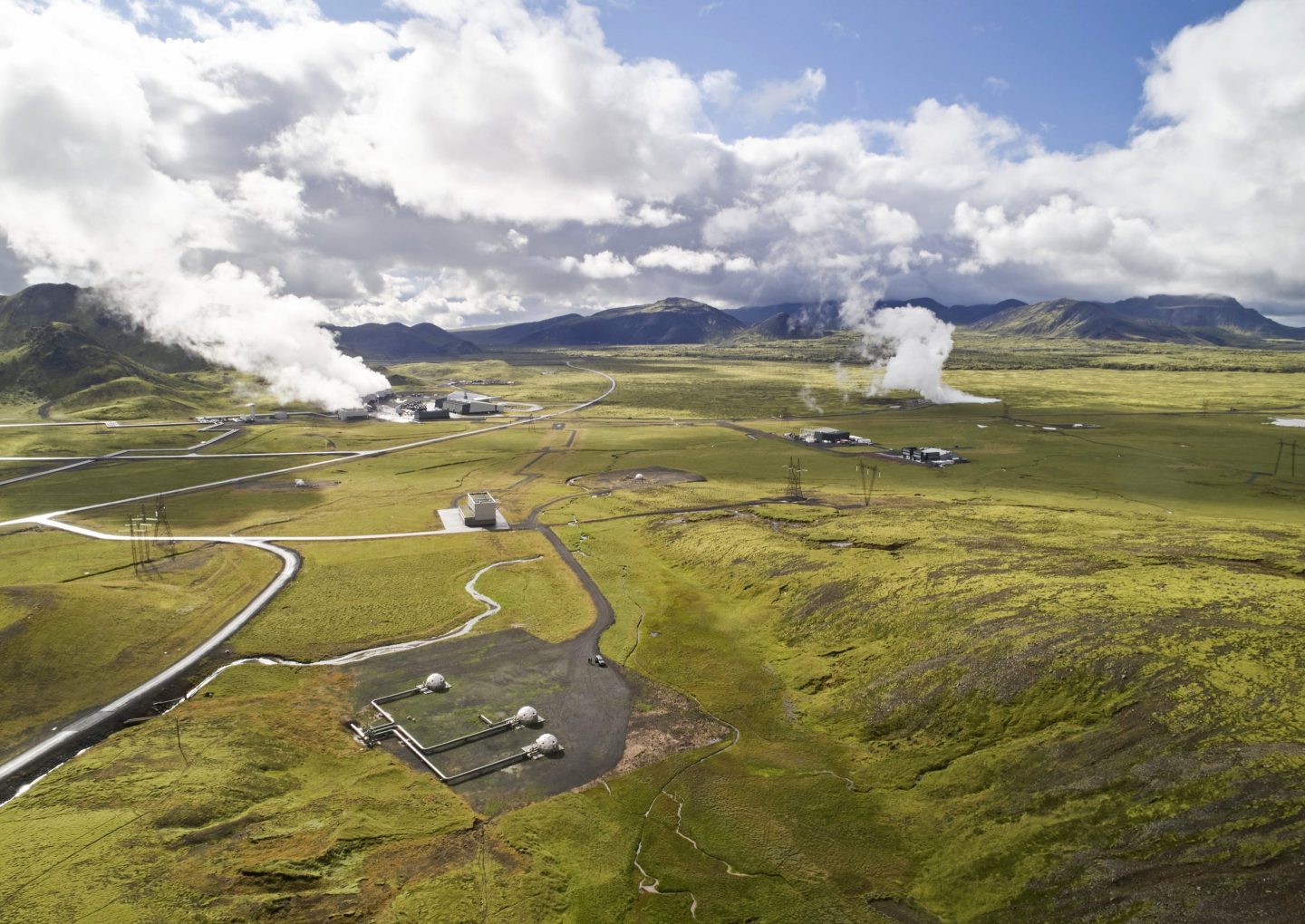
A direct air capture and storage facility, right, and a geothermal power plant, left, in Hellisheidi, Iceland, on Sept. 7, 2021.
A direct air capture and storage facility, right, and a geothermal power plant, left, in Hellisheidi, Iceland, on Sept. 7, 2021.Arnaldur Halldorsson—Bloomberg/Getty Images

As preparations accelerate for the UN climate negotiations in Egypt, Carbon Dioxide Removal (CDR), a largely under-acknowledged issue with widespread, widely varying implications, must be addressed.

All current scientific projections for meeting the Paris Agreement’s temperature goals include this collection of approaches to removing past carbon pollution from the atmosphere at scale.

But here’s the kicker: Neither governments, science, nor industry have any realistic–let alone equitable–plan for removing carbon at the speed and huge scale needed. According to the IPCC, a staggering 100 to 1000 billion tons of carbon dioxide must be removed over the next 80 years. At the upper end, this represents the weight of 125,000 fully-loaded U.S. aircraft carriers worth of carbon removed every year.

Every single CDR technique involves serious ethical issues that will affect communities worldwide. Currently, Western governments and financial interests are dominating the carbon removal debate. This must change. The public, including in the global South, needs to know more–and weigh in. 

Why is carbon removal even needed?

For the past 150 years, the industrialized world has been pumping carbon pollution into the atmosphere, littering the global commons. To prevent catastrophic climate impacts, the Intergovernmental Panel on Climate Change (IPCC) says it is no longer enough to stop future emissions, which must happen as rapidly as possible. It is also necessary to clean up carbon from past and present emissions. That’s where CDR comes in. 

There are many CDR techniques. Some are widely perceived as benign, such as mass-scale tree-planting or regenerative soil practices. Others involve technologies still unproven at scale, such as capturing CO2 directly from the air and storing it underground or under the ocean. Every single carbon removal approach comes with impacts that need strong public oversight.

Some experts estimate, for example, that a land mass the size of India would be needed to grow trees or crops to draw down carbon at the necessary scale. If this were actually done, hundreds of millions of people could be displaced. Who should have the right to decide who is displaced, and whose land is taken? Who will decide what compensation should be paid, and what support is offered to those impacted? Who will monitor this process? As is always the case, those at greatest risk will be poor, global South and Indigenous communities. Why should they, again, be first in the line of harm? 

Consider another CDR approach, called Direct Air Capture and Storage (DACS), which involves chemical approaches to withdrawing and storing carbon from the atmosphere. Where will massive amounts of CO2 be stored? What happens if there is leakage, or when communities are impacted by these projects? What protections will society receive when these still-unproven solutions encounter problems or don’t deliver at the promised level?

Carbon removal also creates an enormous moral hazard

It will seduce many into thinking we can easily remove CO2 from the skies, and thus reduce pressure to phase out coal, oil, and gas. This would be an unethical and dangerous path that plays into the hands of fossil fuel interests and irresponsible politicians unwilling to face the need for urgent, far-reaching climate action.  

In the face of these challenges, core principles must underpin CDR governance discussions. 

Decisions about removing atmospheric carbon must prioritize the interests of those most gravely affected by climate change, including those to be impacted by CDR’s scaled applications. This means that global South, climate vulnerable, Indigenous, youth, and other such communities and nations must be represented in decision-making and governance discussions, with support provided to enable their participation.

Their interests must help shape the implementation of all such initiatives. Their communities must also benefit substantially from equitable incentives needed to scale socially vetted CDR approaches. 

There must also be robust public engagement on this issue to boost accountability and transparency. Policymakers and the public need to know the potential risks and benefits of different CDR approaches, and their expected impacts on local communities. There must be an honest assessment of issues such as forced displacement, food security, human rights, and biodiversity, as well as a plan to prevent fossil fuel interests from using CDR to increase or prolong coal, oil, and gas production. 

Polluters pay

The world’s largest historical emitters, led by the U.S. and other northern industrialized nations, have the greatest responsibility to clean up legacy carbon and pay for its removal. They should bear primary financial responsibility for carbon removal, in addition to financing they have promised developing nations for their mitigation and adaptation efforts and further commitments for loss and damage compensation. Anything less is unfair. 

Removing carbon from our atmosphere is necessary. If we don’t, temperatures will soar even higher and increase massive suffering. But carbon removal must not become the latest in a trail of injustices whereby those who have done the least to cause the climate crisis shoulder the burden for society’s response. 

Now is the time for people of good will to wrestle with this issue and to shape ethically informed CDR governance. Ceding that discussion to fossil fuel interests and a handful of governments from industrialized countries would be a serious mistake. It must not happen. 

Rev. Fletcher Harper is an Espicopal priest and the executive director of GreenFaith. Cynthia Scharf is a GreenFaith board member, writing in her capacity as a trustee, and also serves as the senior strategy director of the Carnegie Climate Governance Initiative (C2G).

The opinions expressed in Fortune.com commentary pieces are solely the views of their authors and do not necessarily reflect the opinions and beliefs of Fortune.

Sign up for the Fortune Features email list so you don’t miss our biggest features, exclusive interviews, and investigations.
About the Authors
By Fletcher Harper
See full bioRight Arrow Button Icon
By Cynthia Scharf
See full bioRight Arrow Button Icon

Latest in Commentary

Finance
Lorem ipsum dolor sit amet, consectetur adipiscing elit, sed do eiusmod tempor incididunt ut labore et dolore magna aliqua. Ut enim ad minim veniam
By Fortune Editors
October 20, 2025
Finance
Lorem ipsum dolor sit amet, consectetur adipiscing elit, sed do eiusmod tempor incididunt ut labore et dolore magna aliqua. Ut enim ad minim veniam
By Fortune Editors
October 20, 2025
Finance
Lorem ipsum dolor sit amet, consectetur adipiscing elit, sed do eiusmod tempor incididunt ut labore et dolore magna aliqua. Ut enim ad minim veniam
By Fortune Editors
October 20, 2025
Finance
Lorem ipsum dolor sit amet, consectetur adipiscing elit, sed do eiusmod tempor incididunt ut labore et dolore magna aliqua. Ut enim ad minim veniam
By Fortune Editors
October 20, 2025
Finance
Lorem ipsum dolor sit amet, consectetur adipiscing elit, sed do eiusmod tempor incididunt ut labore et dolore magna aliqua. Ut enim ad minim veniam
By Fortune Editors
October 20, 2025
Finance
Lorem ipsum dolor sit amet, consectetur adipiscing elit, sed do eiusmod tempor incididunt ut labore et dolore magna aliqua. Ut enim ad minim veniam
By Fortune Editors
October 20, 2025

Most Popular

Finance
Lorem ipsum dolor sit amet, consectetur adipiscing elit, sed do eiusmod tempor incididunt ut labore et dolore magna aliqua. Ut enim ad minim veniam
By Fortune Editors
October 20, 2025
Finance
Lorem ipsum dolor sit amet, consectetur adipiscing elit, sed do eiusmod tempor incididunt ut labore et dolore magna aliqua. Ut enim ad minim veniam
By Fortune Editors
October 20, 2025
Finance
Lorem ipsum dolor sit amet, consectetur adipiscing elit, sed do eiusmod tempor incididunt ut labore et dolore magna aliqua. Ut enim ad minim veniam
By Fortune Editors
October 20, 2025
Finance
Lorem ipsum dolor sit amet, consectetur adipiscing elit, sed do eiusmod tempor incididunt ut labore et dolore magna aliqua. Ut enim ad minim veniam
By Fortune Editors
October 20, 2025
Finance
Lorem ipsum dolor sit amet, consectetur adipiscing elit, sed do eiusmod tempor incididunt ut labore et dolore magna aliqua. Ut enim ad minim veniam
By Fortune Editors
October 20, 2025
Finance
Lorem ipsum dolor sit amet, consectetur adipiscing elit, sed do eiusmod tempor incididunt ut labore et dolore magna aliqua. Ut enim ad minim veniam
By Fortune Editors
October 20, 2025
Fortune Secondary Logo
Rankings
  • 100 Best Companies
  • Fortune 500
  • Global 500
  • Fortune 500 Europe
  • Most Powerful Women
  • Future 50
  • World’s Most Admired Companies
  • See All Rankings
Sections
  • Finance
  • Fortune Crypto
  • Features
  • Leadership
  • Health
  • Commentary
  • Success
  • Retail
  • Mpw
  • Tech
  • Lifestyle
  • CEO Initiative
  • Asia
  • Politics
  • Conferences
  • Europe
  • Newsletters
  • Personal Finance
  • Environment
  • Magazine
  • Education
Customer Support
  • Frequently Asked Questions
  • Customer Service Portal
  • Privacy Policy
  • Terms Of Use
  • Single Issues For Purchase
  • International Print
Commercial Services
  • Advertising
  • Fortune Brand Studio
  • Fortune Analytics
  • Fortune Conferences
  • Business Development
  • Group Subscriptions
About Us
  • About Us
  • Editorial Calendar
  • Press Center
  • Work At Fortune
  • Diversity And Inclusion
  • Terms And Conditions
  • Site Map
  • About Us
  • Editorial Calendar
  • Press Center
  • Work At Fortune
  • Diversity And Inclusion
  • Terms And Conditions
  • Site Map
  • Facebook icon
  • Twitter icon
  • LinkedIn icon
  • Instagram icon
  • Pinterest icon

Latest in Commentary

assis
CommentaryIBM
The digital sovereignty dilemma is a false choice — here’s how enterprises can have both
By Ana Paula AssisApril 9, 2026
17 hours ago
housing
CommentaryHousing
The housing market has been frozen for 3 years. Here’s why this spring could finally change that
By Jessica LautzApril 8, 2026
1 day ago
curtin
CommentaryInfrastructure
TE Connectivity CEO: the real promise of AI is long-term transformation, not short-term efficiency gains
By Terrence CurtinApril 7, 2026
3 days ago
philip
CommentaryEducation
I just became CEO of one of education’s Big 3. Here’s why AI will never replace a great teacher
By Philip MoyerApril 7, 2026
3 days ago
omar
Commentarydisruption
Pearson CEO: the AI job apocalypse is a Silicon Valley story. The data tells a different one
By Omar AbboshApril 6, 2026
3 days ago
no kings
CommentaryLeadership
America’s CEOs have become reluctant guardians of democracy
By Jeffrey Sonnenfeld and Stephen HenriquesApril 6, 2026
3 days ago

Most Popular

The U.S. government is spending $88 billion a month in interest on national debt—equal to spending on defense and education combined
Economy
The U.S. government is spending $88 billion a month in interest on national debt—equal to spending on defense and education combined
By Fortune EditorsApril 9, 2026
15 hours ago
2 years ago, Saudi Arabia quietly canceled the ‘petrodollar’ deal with America that wired the world economy for 50 years. Then war broke out in Iran
Energy
2 years ago, Saudi Arabia quietly canceled the ‘petrodollar’ deal with America that wired the world economy for 50 years. Then war broke out in Iran
By Fortune EditorsApril 7, 2026
2 days ago
Gen Z doesn't want your full-time job. They want several part-time roles, and it's reshaping the entire workforce
Success
Gen Z doesn't want your full-time job. They want several part-time roles, and it's reshaping the entire workforce
By Fortune EditorsApril 9, 2026
18 hours ago
Self-made billionaire MrBeast says his work-life balance is nonexistent and calls it a ‘miracle’ if he works less than 15-hour days: ‘I live to work’
Success
Self-made billionaire MrBeast says his work-life balance is nonexistent and calls it a ‘miracle’ if he works less than 15-hour days: ‘I live to work’
By Fortune EditorsApril 8, 2026
1 day ago
Gen Z workers are so fearful AI will take their job they’re intentionally sabotaging their company’s AI rollout
AI
Gen Z workers are so fearful AI will take their job they’re intentionally sabotaging their company’s AI rollout
By Fortune EditorsApril 8, 2026
1 day ago
The U.S. had a national debt ‘home run’ in its grasp, says Jamie Dimon. But the government did nothing, and now its best option is crisis management
Economy
The U.S. had a national debt ‘home run’ in its grasp, says Jamie Dimon. But the government did nothing, and now its best option is crisis management
By Fortune EditorsApril 8, 2026
2 days ago

© 2026 Fortune Media IP Limited. All Rights Reserved. Use of this site constitutes acceptance of our Terms of Use and Privacy Policy | CA Notice at Collection and Privacy Notice | Do Not Sell/Share My Personal Information
FORTUNE is a trademark of Fortune Media IP Limited, registered in the U.S. and other countries. FORTUNE may receive compensation for some links to products and services on this website. Offers may be subject to change without notice.