• Home
  • Latest
  • Fortune 500
  • Finance
  • Tech
  • Leadership
  • Lifestyle
  • Rankings
  • Multimedia
CommentaryU.S. economy

A thriving manufacturing sector is already boosting local economies throughout the U.S.–but it’s often overlooked. Meet the ‘Titanium Economy’

By
Asutosh Padhi
Asutosh Padhi
Down Arrow Button Icon
By
Asutosh Padhi
Asutosh Padhi
Down Arrow Button Icon
October 25, 2022, 6:41 AM ET
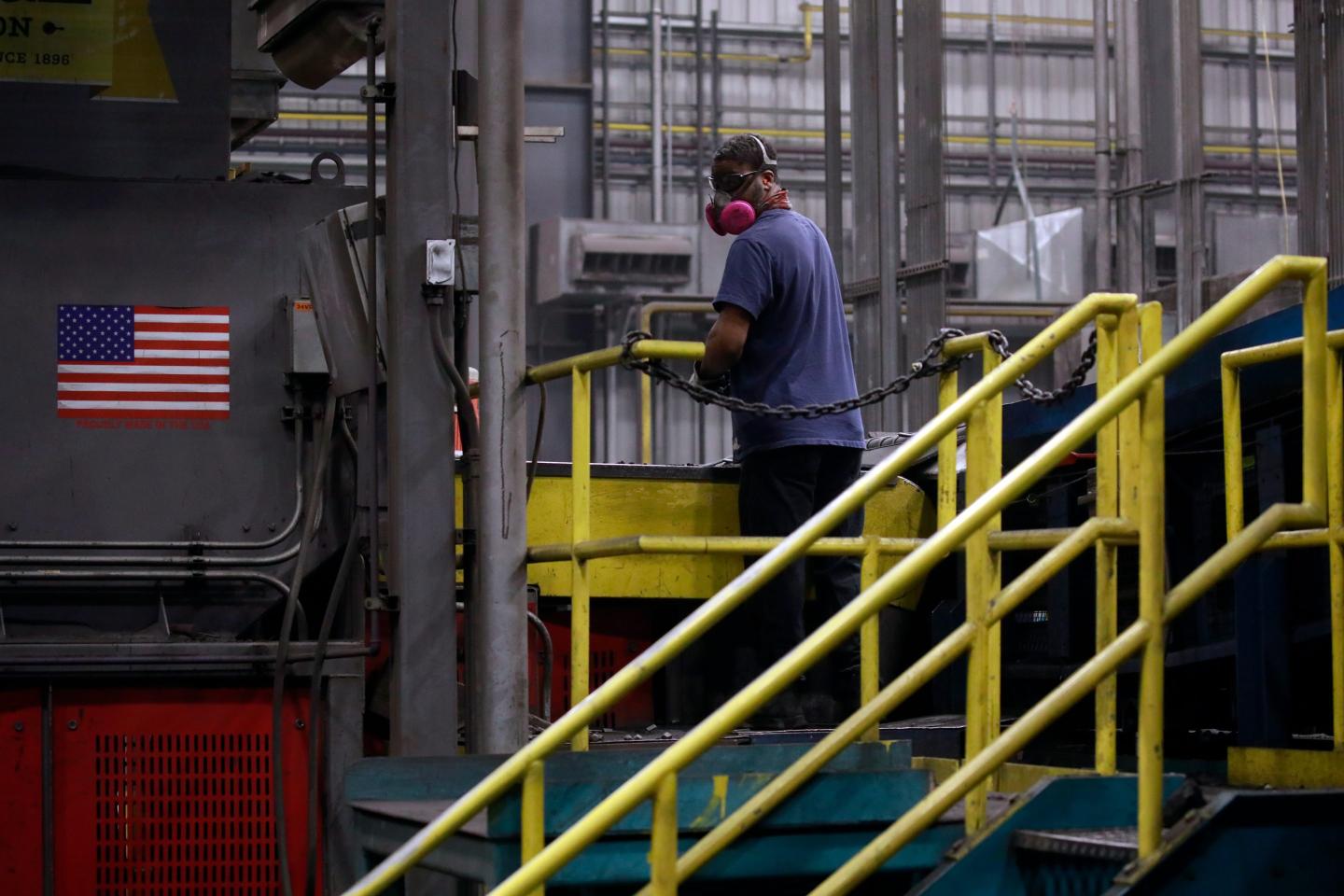
Hundreds of U.S. manufacturing businesses deliver world-class products and excellent financial returns–but they rarely make the headlines.
Hundreds of U.S. manufacturing businesses deliver world-class products and excellent financial returns–but they rarely make the headlines.Luke Sharrett—Bloomberg/Getty Images

We’ve all seen pictures of small towns that lost their last factory and never recovered. Their Main Streets are pockmarked with vacant storefronts and the young leave as soon as they can in search of better opportunities. While there are communities across America that can be described this way, there are also many that break this mold.

Indeed, the death of manufacturing has been greatly exaggerated.

Industrial employment rose from 11.6 million jobs in January 2011 to 12.5 million in October 2021, and the United States is home to hundreds of manufacturers that deliver world-class products and excellent financial returns. Collectively, these companies make up the “Titanium Economy”–and their performance could be critical to driving the sustainable and inclusive growth our country needs.

The Titanium Economy is hidden in plain sight. Many of these companies are based far from major media markets, and they do important things like manufacturing lifting equipment or re-refining oil. Median annual pay is $63,000, compared to $30,000 for service jobs–and many of these jobs go to those without four-year degrees. 

Many, too, are embedded in the hometowns of their founders and families.

An estimated 688 Titanium Economy companies are public–a fifth of the number of private ones. When they create value, it’s with Main Street, not just Wall Street, in mind. One of the most interesting things that stemmed from a set of nationwide research on these companies was that Titanium Economy hometowns often seem like great places to live.

If this conjures up images of a quaint workshop with a few grizzled workers and muffins on Monday, think again. About 80% of public Titanium Economy companies are small to mid-cap, with sales ranging from $1 billion to $10 billion and a headcount of 2,000 to 20,000 employees. The 380 largest privately-owned Titanium Economy companies have a combined annual revenue of about $250 billion.

One feature of this group is that they excel at innovation-driven organic growth. That is because they are often leading players in “micro-verticals”–clusters of ten to fifteen firms in specialty segments. Because the market is narrow, companies know it, and their customers, intimately.

Take New Port Richey, Florida-based Welbilt, a key player in the $80 billion industrial kitchen equipment market. Welbilt knew that restaurants and other big kitchens spent a ton of time monitoring the temperatures in each of their machines. So, after three years of effort, it created the kind of innovation that doesn’t make headlines outside the trade press: a common controller and user interface that could be used on all Welbilt equipment, improving productivity, reliability, quality, and safety–along with company performance.

All this is interesting in and of itself–but it is more than that: The success of Titanium Economy companies can spread far beyond their own bottom line. Their strength means that they can become hubs for related industries, bringing in talent and investment, which then attracts more companies, and so on: what we call the “Great Amplification Cycle.”

Simpsonville, South Carolina, was thrilled to attract a Michelin plant when its textile industry declined. Then carmakers followed, and then all kinds of adjacent industries, such as warehousing and commercial cleaning.

But Sealed Air was there first. This Titanium Economy company, founded in 1955, is best known for making bubble wrap. Its success has been a mainstay for the community throughout and was living proof for other industrial companies of the potential of Simpsonville. Government played a central role, too, by creating a hospitable business environment and working with high schools, universities, and other institutions to build and refresh the pool of talent. 

There is one problem with America’s Titanium Economy: We need more of it. With freight, insurance, and labor costs rising around the world, there is a strong economic case for more domestic manufacturing. As COVID-19 showed, there are downsides to not being able to meet important needs on our own.

However, Titanium Economy hubs won’t just happen–they need to be nurtured. Across the U.S., leaders in the public and private sectors, and in academia, could be doing far more.

Titanium Economy companies are undervalued–and less than one percent of venture capital goes into industrial technology. Public sector support is limited too, especially when compared to major competitors like China and Germany. Another mindset challenge: the emphasis on four-year college degrees largely undersells the possibility of manufacturing to the people it would serve well.

More can be done–and it should be done with urgency. If properly nurtured, there could be more and more Titanium Economy hubs, potentially creating virtuous circles of innovation and prosperity in every region.

This effort doesn’t need to be heavy-handed. Investors could help themselves by evaluating industrial tech on its merits. Schools could open their students’ eyes to careers in manufacturing and encourage girls to consider these trades. Labor unions can expand apprenticeships. Trade groups could develop nationally recognized, transferable credentials. State and national governments could consider ways to support Industry 4.0, particularly in distressed regions.

The Titanium Economy is a hidden treasure that defies much of the conventional wisdom about U.S. manufacturing. Building on its strengths could foster greater efficiency and resilience and improve competitiveness.

Asutosh Padhi is McKinsey & Company’s North America managing partner and co-author of The Titanium Economy: How Industrial Technology Can Create a Better, Faster, Stronger America.

The opinions expressed in Fortune.com commentary pieces are solely the views of their authors and do not necessarily reflect the opinions and beliefs of Fortune.

More must-read commentary published by Fortune:

  • The Fed may be running out of ammunition–but U.S. banks have never been healthier. It’s time to admit Dodd-Frank is paying off
  • The inventors of ESG: ‘Critics have a point—here’s the new global reporting system that will address it’
  • I got rich by betting that inequality would destroy the U.S. and U.K. I’m sorry
  • America’s richest want to pay more taxes–but we won’t let them. We need a tax bracket and rate overhaul
Sign up for the Fortune Features email list so you don’t miss our biggest features, exclusive interviews, and investigations.
About the Author
By Asutosh Padhi
See full bioRight Arrow Button Icon

Latest in Commentary

Finance
Lorem ipsum dolor sit amet, consectetur adipiscing elit, sed do eiusmod tempor incididunt ut labore et dolore magna aliqua. Ut enim ad minim veniam
By Fortune Editors
October 20, 2025
Finance
Lorem ipsum dolor sit amet, consectetur adipiscing elit, sed do eiusmod tempor incididunt ut labore et dolore magna aliqua. Ut enim ad minim veniam
By Fortune Editors
October 20, 2025
Finance
Lorem ipsum dolor sit amet, consectetur adipiscing elit, sed do eiusmod tempor incididunt ut labore et dolore magna aliqua. Ut enim ad minim veniam
By Fortune Editors
October 20, 2025
Finance
Lorem ipsum dolor sit amet, consectetur adipiscing elit, sed do eiusmod tempor incididunt ut labore et dolore magna aliqua. Ut enim ad minim veniam
By Fortune Editors
October 20, 2025
Finance
Lorem ipsum dolor sit amet, consectetur adipiscing elit, sed do eiusmod tempor incididunt ut labore et dolore magna aliqua. Ut enim ad minim veniam
By Fortune Editors
October 20, 2025
Finance
Lorem ipsum dolor sit amet, consectetur adipiscing elit, sed do eiusmod tempor incididunt ut labore et dolore magna aliqua. Ut enim ad minim veniam
By Fortune Editors
October 20, 2025

Most Popular

Finance
Lorem ipsum dolor sit amet, consectetur adipiscing elit, sed do eiusmod tempor incididunt ut labore et dolore magna aliqua. Ut enim ad minim veniam
By Fortune Editors
October 20, 2025
Finance
Lorem ipsum dolor sit amet, consectetur adipiscing elit, sed do eiusmod tempor incididunt ut labore et dolore magna aliqua. Ut enim ad minim veniam
By Fortune Editors
October 20, 2025
Finance
Lorem ipsum dolor sit amet, consectetur adipiscing elit, sed do eiusmod tempor incididunt ut labore et dolore magna aliqua. Ut enim ad minim veniam
By Fortune Editors
October 20, 2025
Finance
Lorem ipsum dolor sit amet, consectetur adipiscing elit, sed do eiusmod tempor incididunt ut labore et dolore magna aliqua. Ut enim ad minim veniam
By Fortune Editors
October 20, 2025
Finance
Lorem ipsum dolor sit amet, consectetur adipiscing elit, sed do eiusmod tempor incididunt ut labore et dolore magna aliqua. Ut enim ad minim veniam
By Fortune Editors
October 20, 2025
Finance
Lorem ipsum dolor sit amet, consectetur adipiscing elit, sed do eiusmod tempor incididunt ut labore et dolore magna aliqua. Ut enim ad minim veniam
By Fortune Editors
October 20, 2025
Fortune Secondary Logo
Rankings
  • 100 Best Companies
  • Fortune 500
  • Global 500
  • Fortune 500 Europe
  • Most Powerful Women
  • Future 50
  • World’s Most Admired Companies
  • See All Rankings
Sections
  • Finance
  • Fortune Crypto
  • Features
  • Leadership
  • Health
  • Commentary
  • Success
  • Retail
  • Mpw
  • Tech
  • Lifestyle
  • CEO Initiative
  • Asia
  • Politics
  • Conferences
  • Europe
  • Newsletters
  • Personal Finance
  • Environment
  • Magazine
  • Education
Customer Support
  • Frequently Asked Questions
  • Customer Service Portal
  • Privacy Policy
  • Terms Of Use
  • Single Issues For Purchase
  • International Print
Commercial Services
  • Advertising
  • Fortune Brand Studio
  • Fortune Analytics
  • Fortune Conferences
  • Business Development
  • Group Subscriptions
About Us
  • About Us
  • Editorial Calendar
  • Press Center
  • Work At Fortune
  • Diversity And Inclusion
  • Terms And Conditions
  • Site Map
  • About Us
  • Editorial Calendar
  • Press Center
  • Work At Fortune
  • Diversity And Inclusion
  • Terms And Conditions
  • Site Map
  • Facebook icon
  • Twitter icon
  • LinkedIn icon
  • Instagram icon
  • Pinterest icon

Latest in Commentary

Anita Beveridge-Raffo is Head of Retail and Consumer Goods at Palantir Technologies
CommentaryAI agents
Palantir exec: the biggest mistake retailers are making with AI? Trying to do it all with one agent
By Anita Beveridge-RaffoApril 16, 2026
8 hours ago
wyle
CommentaryHealth
‘The Pitt’ reveals why healthcare desperately needs a new front door
By Jeremy MorganApril 16, 2026
9 hours ago
health
CommentaryHealth Care Service
Two physicians on ending the waiting-room era: bring care home
By Benjamin Kornitzer and Bill FristApril 16, 2026
10 hours ago
venezuela
Commentaryhappiness
The world’s most — and least — miserable economies in 2025, ranked
By Steve H. HankeApril 16, 2026
11 hours ago
fauber
Commentarytrust
Moody’s CEO: AI has a trust problem – better models won’t fix it
By Rob FauberApril 16, 2026
11 hours ago
bostrom
CommentaryMedical
Top New York surgeon: Americans have better data for choosing restaurants than surgeons. That has to change
By Mathias P. BostromApril 16, 2026
13 hours ago

Most Popular

Jeff Bezos pledged $10 billion for climate change. With the 2030 clock ticking, his wife, Lauren Sánchez Bezos, is leading the charge to spend it
Environment
Jeff Bezos pledged $10 billion for climate change. With the 2030 clock ticking, his wife, Lauren Sánchez Bezos, is leading the charge to spend it
By Sydney LakeApril 15, 2026
1 day ago
Billionaire philanthropist MacKenzie Scott has donated again—a week after gifting millions to a college, she's just given $70 million to Meals on Wheels America
Success
Billionaire philanthropist MacKenzie Scott has donated again—a week after gifting millions to a college, she's just given $70 million to Meals on Wheels America
By Emma BurleighApril 13, 2026
3 days ago
Current price of oil as of April 15, 2026
Personal Finance
Current price of oil as of April 15, 2026
By Joseph HostetlerApril 15, 2026
1 day ago
Germany already told its workers to ditch four-day weeks and work-life balance. Now the government wants to cut their pay for calling in sick, too
Success
Germany already told its workers to ditch four-day weeks and work-life balance. Now the government wants to cut their pay for calling in sick, too
By Orianna Rosa RoyleApril 16, 2026
15 hours ago
The billionaire Anthropic cofounder who majored in literature says knowing how to ask the right questions beats knowing how to code
Success
The billionaire Anthropic cofounder who majored in literature says knowing how to ask the right questions beats knowing how to code
By Marco Quiroz-GutierrezApril 14, 2026
2 days ago
Palantir CEO says working at his $316 billion software company is better than a degree from Harvard or Yale: ‘No one cares about the other stuff’
Success
Palantir CEO says working at his $316 billion software company is better than a degree from Harvard or Yale: ‘No one cares about the other stuff’
By Preston ForeApril 14, 2026
2 days ago

© 2026 Fortune Media IP Limited. All Rights Reserved. Use of this site constitutes acceptance of our Terms of Use and Privacy Policy | CA Notice at Collection and Privacy Notice | Do Not Sell/Share My Personal Information
FORTUNE is a trademark of Fortune Media IP Limited, registered in the U.S. and other countries. FORTUNE may receive compensation for some links to products and services on this website. Offers may be subject to change without notice.