The outcome of a preseason NBA matchup between the Los Angeles Clippers and the Portland Trailblazers didn’t mean much for the teams, and the crowd didn’t care who won either. For the fans who packed Seattle’s Climate Pledge Arena — hundreds of miles from either team’s home court — it was a chance to demonstrate how much the city still cares about basketball and, critically, wants a team back after more than a decade without one.
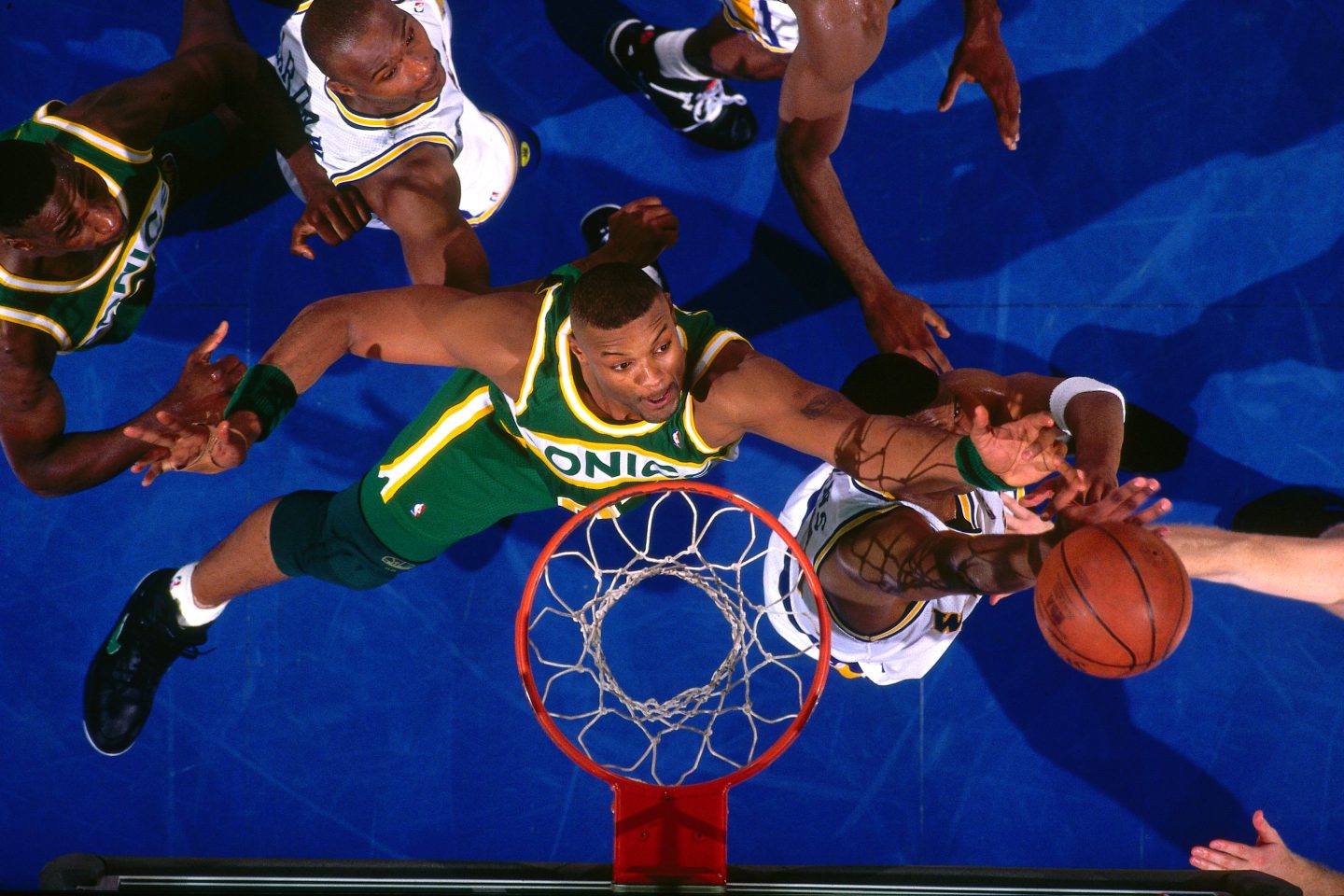
Seattle Mayor Bruce Harrell was in attendance. Fans busted out their old green-and-yellow jerseys — Shawn Kemp’s No. 40 and Gary “the Glove” Payton’s No. 20 — and chanted “Bring back Sonics!”
“We came to honor Seattle,” said Clippers owner and Seattle native Steve Ballmer, who tried twice to own a local NBA franchise before buying the LA team in 2014. “I have been to thousands of basketball games in Seattle at all levels — it’s possible I even went to close to 1,000 Sonics games. I see enthusiasm at all levels. Heck yes, a team would mean a lot.”
The city didn’t want the Sonics to leave in 2008, and it’s been lobbying for a return ever since. Of the 15 US metro areas of more than 4 million, Seattle is the only one without a pro basketball franchise. There’s a new arena, and the fans never stopped caring. If anything, in the years since the team left, the appetite for sports has grown, fed by a pair of Super Bowl appearances for the local Seahawks, the arrival of the NHL’s Kraken and the perennial excellence of the Storm (WNBA) and the Sounders (MLS).
These days, the question seems as much an issue of “when” as “if.” Reports the NBA would expand to Seattle and Las Vegas — where Lebron James made a personal plea to NBA Commissioner Adam Silver for a team — heated up last month after an Associated Press reporter tweeted and then deleted a comment that the league might make a formal announcement during one of the preseason games in those cities. But in June, Silver said expansion wasn’t on the table “at this time,” and a person familiar with the discussions said it’s likely to stay that way until a new collective bargaining agreement is in place and the league has secured a media-rights deal to replace the current one, which ends in 2025.
An NBA team in Seattle “probably could sell out three years of basketball in one day,” said George Karl, who coached the Sonics to the 1996 NBA Finals, where the team lost in six games to Michael Jordan and the Chicago Bulls. “The streets in Seattle are screaming for the Sonics.”
Seattle’s team would also need a buyer. The region has more than its share of millionaires and billionaires. So far, the Kraken’s owners, David Bonderman, who is the co-founder of TPG Capital, and Hollywood producer Jerry Bruckheimer have expressed the most direct interest.
The SuperSonics’ departure still provokes anger and anguish among fans. With the city refusing public funds for a new arena, Howard Schultz, then chairman of Starbucks, sold the team to a group led by Oklahoma investor Clay Bennett in 2006. Bennett never bothered putting a Seattle address on his Sonics business card and two years later moved the team, along with rookie of the year Kevin Durant.
Seattle held on to the trophies, the retired jerseys and a fierce grudge. When Schultz considered a run for president in 2019, he was met by hometown fan protestors and angry newspaper headlines. Seattle executive, former University of Washington player and one-time Sonics ballboy Jason Hamilton said the move was “seeing my childhood go away.” Ballmer, involved in a last-ditch 2008 effort to keep the team, described it as “a dagger in the heart.”
Meanwhile, the city continues to produce pro-caliber talent. Three of this year’s first-round draft picks hail from Seattle and environs, including top-pick Paolo Banchero. Players from the area suit up for Denver, Minnesota and Charlotte; Gary Payton II, sometimes referred to as “the Mitten,” now plays a three-hour drive south, in Portland, Ore. In 20 years in the league, local Jamal Crawford played in practically every part of the country.
“Seattle has a legacy of basketball,” said Jeffrey Shulman, a marketing professor at the University of Washington’s Foster School of Business and host of a 2017 podcast about the Sonics. “But that legacy needs to be nurtured, and the clock is ticking for people to still remember the Sonics and also for the next generation of basketball talent to have role models and inspiration here in the backyard.”
Having a men’s pro team would also confer economic benefit, particularly because an NBA team would likely use Climate Pledge Arena, solving the problem of public financing. As it is, retail chain Simply Seattle sells more green-and-yellow gear than anything related to any extant Seattle franchise, said marketing director Joe Munson. Retro starter jackets and a corduroy Sonics hat modeled after the one Payton wore when he was drafted in 1990 fly off the shelves.
Losing the team also left a vacuum in the city’s Black community, said Omari Salisbury, CEO of Seattle media outlet Converge. Players were regulars at restaurants and barbershops in the Central District, Seattle’s historically Black neighborhood, and devoted supporters of events and organizations in the community. “That was a whole ecosystem that disappeared from our community when the Sonics disappeared,” Salisbury said. It’s a wrong that needs to be righted. “We’re a world class city,” said Salisbury. “We want to be world class in everything else. Why should sports take a backseat?”
Sign up for the Fortune Features email list so you don’t miss our biggest features, exclusive interviews, and investigations.