Nobu Okada was a successful tech entrepreneur in Japan—the founder of one IT company and the CFO who led another to its IPO. But when he turned 40 in 2013, he found himself in a classic midlife crisis. “I was wondering, What should I do during my forties or fifties? I had felt like I was a kind of front-runner in business, but all of a sudden I lost confidence,” he says.
Looking to rekindle his passion, Okada recalled how he loved attending a NASA Space Camp in the U.S. as a teenager. “I thought it might be the space industry where I should ignite my passion again,” he says. He went to several space conferences and, while attending one in Germany in April 2013, discovered that the growing danger of space debris was the industry’s hot unsolved topic. A week later, he set up his startup Astroscale, which has since raised $300 million in funding and in September won a $4.4 million contract with the U.K. Space Agency (UKSA) alongside Swiss space startup ClearSpace to design a mission to remove two spacecraft from orbit in 2025.
“I realized in 2013 that space debris had already made the space environment unsustainable. And no one had a solution for the problem,” Okada says. “That’s why I started Astroscale, because removing space debris was not only a business opportunity, but also an environmental necessity.”
The problem of space junk entered public consciousness about 13 years ago. On Feb. 10, 2009, a defunct Russian satellite, the Kosmos 2251, collided with a working American communications satellite, the Iridium 33, destroying the Iridium and marking the world’s first recorded collision between a man-made satellite and a piece of space junk.
That crash produced almost 2,000 pieces of debris, according to NASA estimates, and was the first example of the so-called Kessler Syndrome. The theory, proposed in 1978 by NASA astrophysicist Donald Kessler, held that by 2000 debris in Earth’s orbit would be so dense that satellites would begin breaking up due to random collisions, creating more debris to break up more objects, and so on, “resulting in an exponential growth in the collision rate and debris population.”
Kessler’s theory of a cascading domino effect of satellite destruction hasn’t yet come to pass, but there are worrying signs that the day is approaching. In 2020, near misses between satellites and debris—that is, less than a kilometer of distance—occurred 2,000 times per month, or 70 times per day. They tripled in 2021, to 6,000 per month, says Astroscale’s Okada.
“It’s horrifying,” Okada says. “The density of objects in space has reached a critical level.”
Okada’s Astroscale was the first commercial entity founded to target space debris, says Hussain Bokhari, a space analyst at the market research firm Northern Sky Research (NSR). Now Astroscale has plenty of competition in the commercial space services industry that NSR estimates will earn $14.3 billion in revenue over the next decade.
From a fleck of paint to a city bus
About 8,850 satellites orbit earth today, according to the ESA, and that total is climbing on a daily basis. Earth is sending about 1,000 satellites into space every year, according to Luc Piguet, cofounder and CEO of ClearSpace, a Swiss startup that collects space junk. In 2021, SpaceX alone launched 800 Starlink satellites. Of the satellites currently in orbit, more than 2,000 no longer function, says Julie Holt Jones, the global lead for space at the consultancy Frost & Sullivan. But the problem isn’t the satellites as much as the debris around them.
The earth’s orbit contains 15,000 to 18,000 pieces of “big” debris—or objects that range from 10 centimeters, the diameter of a softball, to the size of a city bus. There are another 200,000 to 230,000 pieces between 1 and 10 centimeters, says NSR’s Bokhari.
Even the smallest particles pose a big risk. “You can have tiny fragments, the size of a fleck of a piece of paint, and they’re going at such high speed they can cause tremendous damage,” says Holt Jones. “I don’t know if you’ve ever seen the film Gravity,” she adds, referring to the 2013 George Clooney–Sandra Bullock film about a space shuttle caught by a Kessler Syndrome debris field. “It’s not realistic in all aspects, but it highlights the potential devastating effect of space debris.”
Since the ESA started keeping track, it has recorded 630 “break-ups, explosions, collisions, or anomalous events resulting in fragmentation.” Assigning responsibility for the collisions—or forcing companies to remove expiring satellites from orbit—is almost impossible. Space is still governed by a UN treaty from 1967. “It’s a bit like the Wild West up there,” says Holt Jones.
“The danger is a proliferation of objects and debris in orbit to the point where those orbits become unusable,” says Chris Blackerby, Astroscale’s COO. “We’re going to look back on this in 15 years and see this as a watershed moment where we’re taking the steps to make sure that these orbits are clean and remain usable for our children and their children. Or if we don’t, we’re going to be apologizing to future generations for messing it up.”
Magnets, robot arms, and harpoons
Satellites and debris fall back to Earth—eventually. A dead satellite at about 500 kilometers above earth—where Starlink’s satellites are—will fall in five years, says Piguet, while one at 600 kilometers might take 25 years and one at 700 kilometers a century.
To speed up the process, the theory goes, a debris-clearing satellite could grab a piece of debris or a dead satellite and degrade its orbit by slowing it down and dragging it to a lower altitude.
But there are many complicating factors. First, objects in low Earth orbit (LEO, under 2,000 kilometers) travel super fast: 7–8 kilometers a second. Second, debris and dead satellites don’t communicate their positions, which makes them hard to find. Third, many pieces of debris, like rocket boosters, rotate as they travel.
“The objects in orbit now are not prepared to be captured. They don’t have a docking interface on them. They don’t have a hook for towing,” says Piguet.
Early designs for capturing uncooperative space prey included nets and harpoons like those designed by the RemoveDEBRIS project, which successfully caught small objects it took into space.
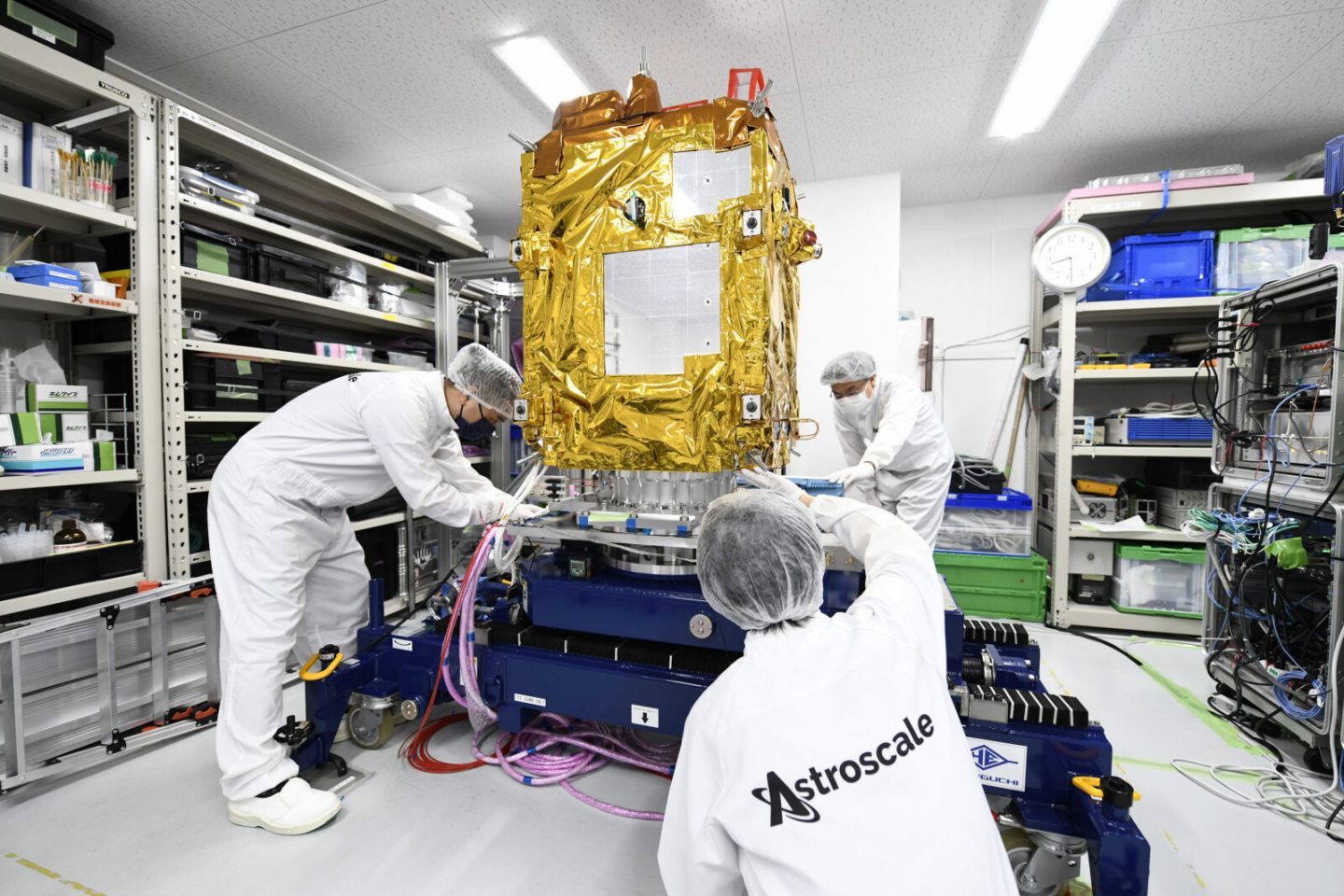
But Astroscale, which now has 340 employees, took a different approach. Working with OneWeb, the world’s second biggest satellite network after Starlink, and Altius Space Machines, an aerospace hardware company, the firm developed a docking plate system that would allow Astroscale spacecraft to capture OneWeb satellites with a magnet and drag them down to burn up in the atmosphere. Astroscale’s ELSA-d spacecraft already successfully released and captured a test object last year.

Going forward, Astroscale has a contract with the Japanese space agency to launch a spacecraft to inspect an upper stage rocket in preparation for removing it later on; in 2024 it will launch its ELSA-M spacecraft to remove one object from orbit for OneWeb.
ClearSpace, for its part, spun out of work at EPFL, the Swiss Institute of Technology of Lausanne. There, a team of scientists sent a tiny CubeSat satellite (often used by universities for experiments) into the Iridium/Kosmos debris field in 2009 and realized, in 2012, the debris problem had grown enough that it needed to be addressed.
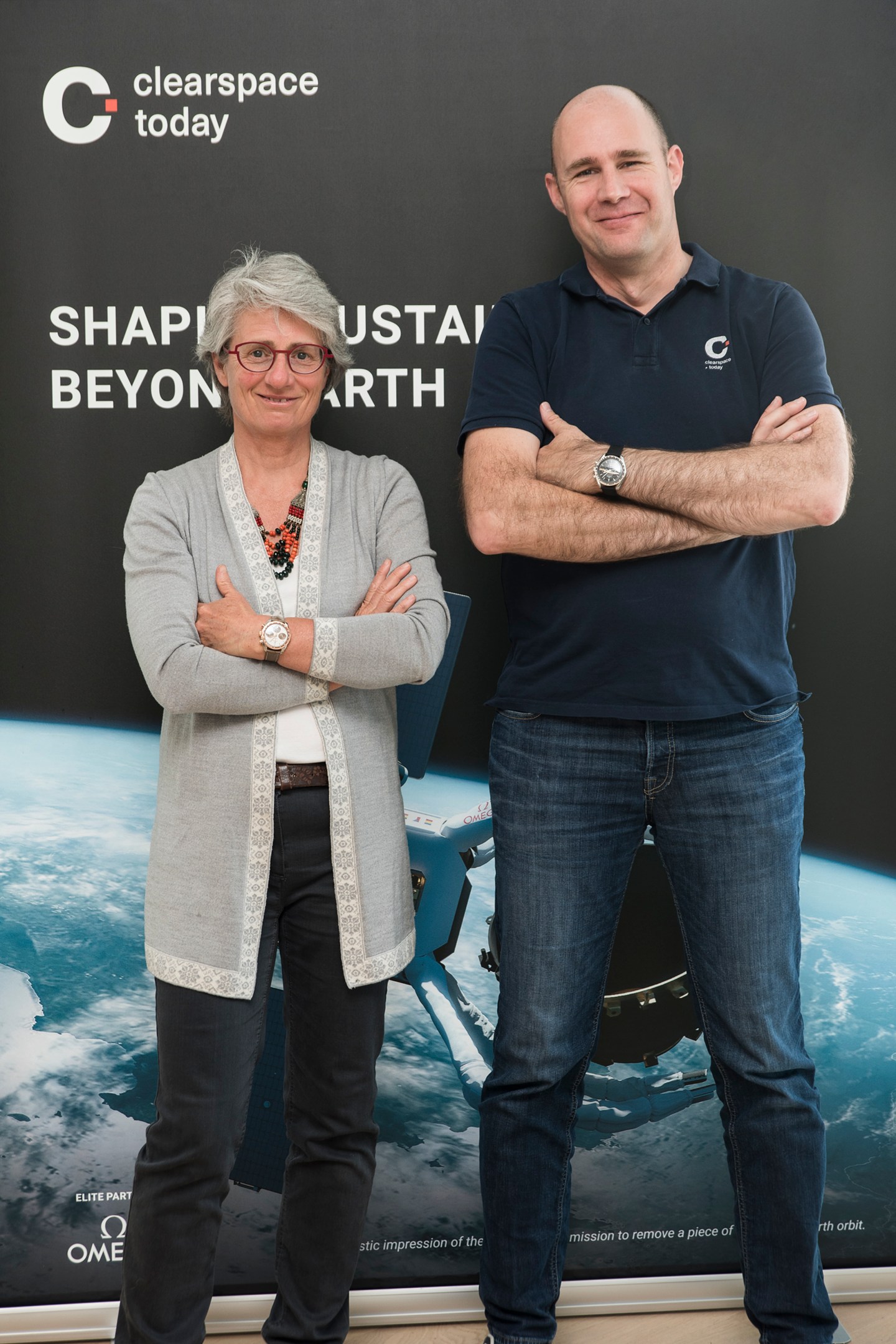
But the team, led by ClearSpace cofounder Muriel Richard, found little interest at first. The reaction was, “Who would ever want to clean space? Nobody will ever pay for something like this. There’s no business case behind it,” Piguet says. That outlook changed when companies like OneWeb began receiving funding to send up hundreds of new satellites, and ClearSpace launched in 2018.
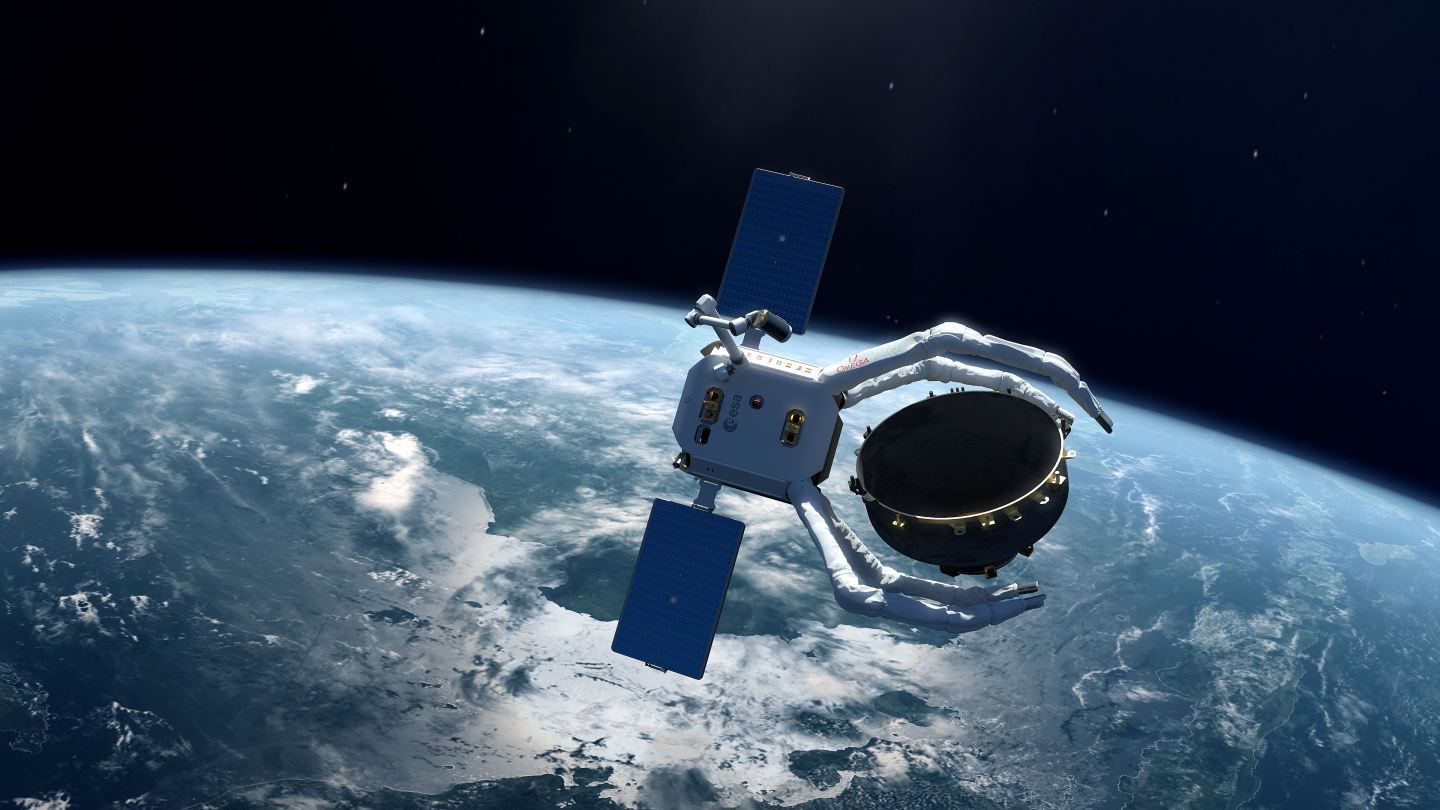
ClearSpace, which has raised $5 million in equity funding and employs 80 people, is developing a four-armed robot spacecraft that will grab satellites and debris. In 2025, as part of an €86 million ($84 million) service contract it signed with the European Space Agency (ESA), ClearSpace is set to launch ClearSpace-1 to remove a 112-kilogram upper-stage rocket part. And as part of the $4.4 million UKSA contract it shares with Astroscale, ClearSpace will design a mission to remove two U.K.-registered derelict objects from orbit.
Astroscale is also developing a robot arm for later missions.
In the end, the goal for space debris removal companies is to become full services space service firms that, in Okada’s words, can “recycle, reuse, repair, refuel, and remove” space objects.
“My goal is, by 2030, I want to make in-orbit servicing just routine work, a daily job in space to make it sustainable,” he says. “We just have only eight years to go.”
Fortune covers the world of innovation in Breakthrough. You can read previous Breakthrough columns here.