After 12 years of trying, Ray Dalio is finally letting go.
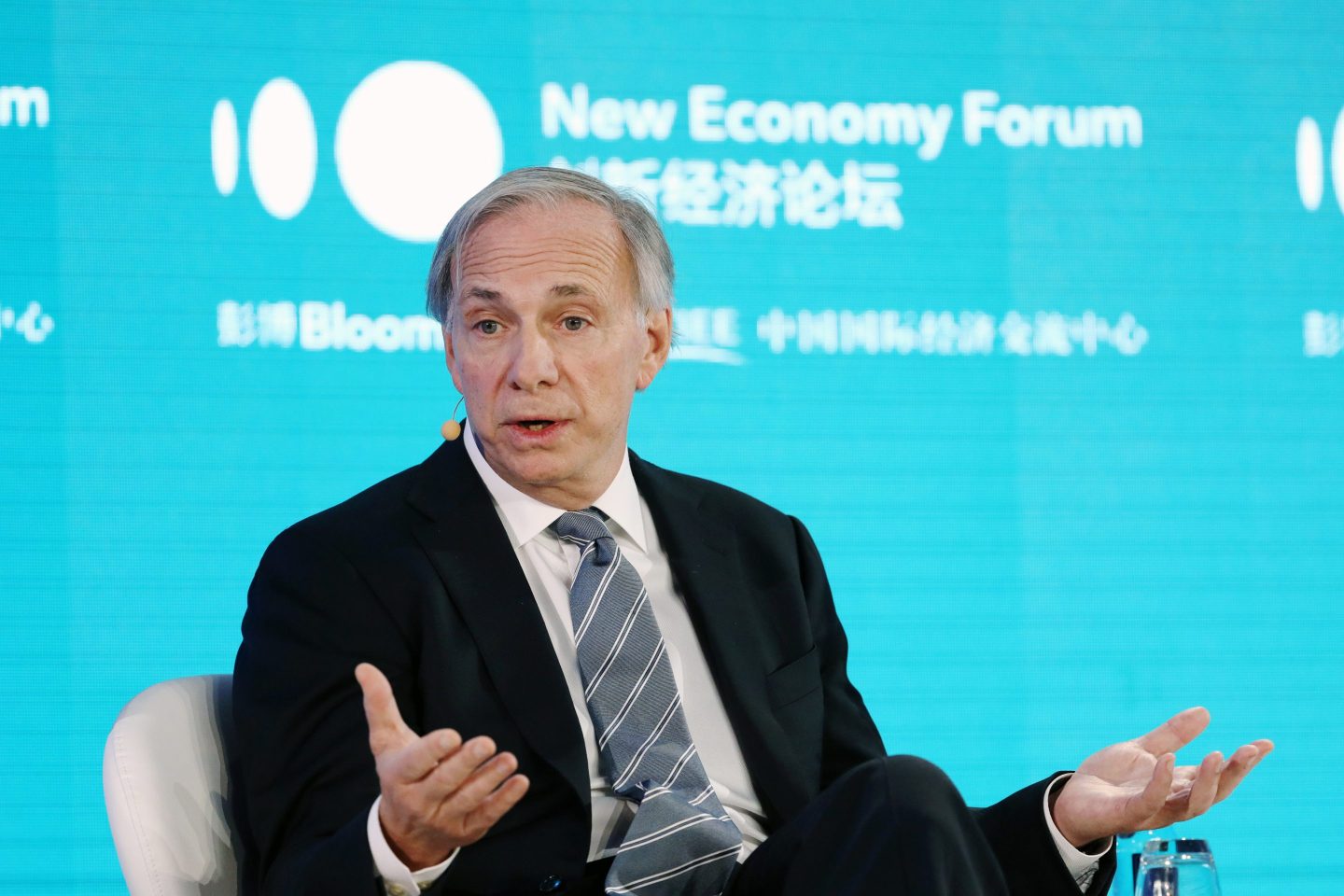
The billionaire founder of Bridgewater Associates has given up control of the firm he built into the world’s largest hedge fund, entrusting its future and $150 billion in assets to a younger generation of leaders with their own ideas about investing. On Sept. 30, he transferred all of his voting rights to the board of directors and stepped down as one of Bridgewater’s three co-chief investment officers.
“Ray no longer has the final word,” co-Chief Executive Officer Nir Bar Dea said in an interview. “That’s a big change.”
It’s also a milestone. While some of his peers converted the firms they founded into family offices or closed shop, Dalio was determined to create something that outlasted him.
He initiated a transition plan as far back as 2010, figuring it might take as little as two years. But Dalio struggled in his search for successors. Now that those people are in place, handing over control is the final and irreversible step.
“This was the natural progression of events; as soon as we were ready, we went ahead,” said Dalio, 73, who will keep his seat on the board with a new title: founder and CIO mentor. “I didn’t want to hold on until I died.”
The timing is favorable, too. Bridgewater, after misreading the markets during the early months of the pandemic, has been putting up some better numbers.
Its flagship Pure Alpha strategy has advanced 34.6% in this year through Sept. 30. All Weather, an approach designed to deliver more stable returns, has lost 27.2%.
‘Idea Meritocracy’
Dalio was a former commodities trader and broker when he founded Bridgewater from his two-bedroom New York City apartment in 1975. Thanks to standout performance in the 2000s, the firm amassed tens of billions of dollars in assets and landed many of the biggest institutions as clients.
Westport, Connecticut-based Bridgewater also became so notorious for secrecy and iconoclasm that it drew comparisons to a cult.
The place certainly was unusual. Dalio wanted to create an “idea meritocracy” and believed the best way to achieve it was through “radical truthfulness and radical transparency.” Open disagreement was encouraged, so-called baseball cards rated employees on attributes such as believability, and meetings were recorded.
When Dalio decided more than a decade ago to set Bridgewater’s succession in motion, “I was just running things,” he recalled. “We didn’t have a board or even an idea of how you establish good governance.”
Revolving Door
It proved to be much harder than he expected. Over the following decade, seven different people at various times held the title of sole or co-CEO.
Only in the past year did Bridgewater’s new ranks of leadership and governance finally come together. In December, the firm revealed the membership of its board. And in January, when David McCormick resigned to pursue a seat in the US Senate, it named Bar Dea and Mark Bertolini to succeed him as co-CEOs.
“It was a challenge along the way because Ray had strong views on how things should go,” said Greg Jensen, who joined Bridgewater as an intern in 1996, served as CEO in the early 2010s and is now co-CIO with Bob Prince.
At a hedge fund, lousy performance is often the catalyst for change. While rivals such as Brevan Howard Asset Management and Rokos Capital Management had record gains in 2020, Bridgewater’s Pure Alpha lost almost 13%. That was on top of comparatively poor returns in the 2010s.
Hints of Change
For a firm so confident that it had cultivated the best investing talent, the results were a shock. In the exhaustive review and analysis that followed, Bridgewater came to realize that several of its methods were constraining creativity and collaboration rather than surfacing the best ideas, according to Jensen.
“The goal is to get people to speak their mind,” he said. “Some of those tools worked to pull out the truth and some of them didn’t.”
As a result, the baseball cards, for example, no longer try to capture and predict every characteristic and quality in the effort to rate an employee’s input. The focus now is narrower and more practical, Jensen explained.
He also hinted at more changes to come. Now that control rests with the board, Bridgewater is likely to invest more aggressively in technology and in people—even if Dalio objects, he said.
‘Beautiful Thing’
In conversation, Dalio projects an aura of contentment and relays a sense of relief.
Succession means he can devote more time to his philanthropy and to passing on the lessons he’s learned as a lifelong student of the economy. He said he has no plans to sell his minority stake in Bridgewater and looks forward to mentoring the firm’s investors for years to come.
It hasn’t been as easy for Dalio’s cohort on Wall Street to let go. At Blackstone Inc., the world’s largest manager of alternative assets, 75-year-old Steve Schwarzman remains chairman and CEO.
At KKR & Co., Henry Kravis, 78, and George Roberts, 79, are still co-chairman. And at Carlyle Group Inc., co-founder Bill Conway, 73, recently stepped back in as interim CEO when the firm ousted 57-year-old Kewsong Lee.
If Dalio misses being the boss, he’s not letting on.
“It’s the most beautiful thing to see,” he said. “Bridgewater is my extended family, and now my family is well without me. It’s a joy. They’re strong.”
Sign up for the Fortune Features email list so you don’t miss our biggest features, exclusive interviews, and investigations.