• Home
  • Latest
  • Fortune 500
  • Finance
  • Tech
  • Leadership
  • Lifestyle
  • Rankings
  • Multimedia

New

Watch Fortune Daily, our new video show that brings you inside the Fortune newsroom and the boardroom

Watch Fortune Daily, our new video show that brings you inside the Fortune newsroom and the boardroom

Watch Fortune Daily, our new video show that brings you inside the Fortune newsroom and the boardroom

Watch Fortune Daily, our new video show that brings you inside the Fortune newsroom and the boardroom

Watch Fortune Daily, our new video show that brings you inside the Fortune newsroom and the boardroom

Watch Fortune Daily, our new video show that brings you inside the Fortune newsroom and the boardroom

Watch Fortune Daily, our new video show that brings you inside the Fortune newsroom and the boardroom

Watch Fortune Daily, our new video show that brings you inside the Fortune newsroom and the boardroom

Watch Fortune Daily, our new video show that brings you inside the Fortune newsroom and the boardroom

Watch Fortune Daily, our new video show that brings you inside the Fortune newsroom and the boardroom

China

China’s millennials and Gen Z are falling out of love with consumerism and fueling a new ‘frugal living’ social media movement as reality bites

By
Yvonne Lau
Yvonne Lau
Down Arrow Button Icon
By
Yvonne Lau
Yvonne Lau
Down Arrow Button Icon
October 1, 2022, 7:30 AM ET
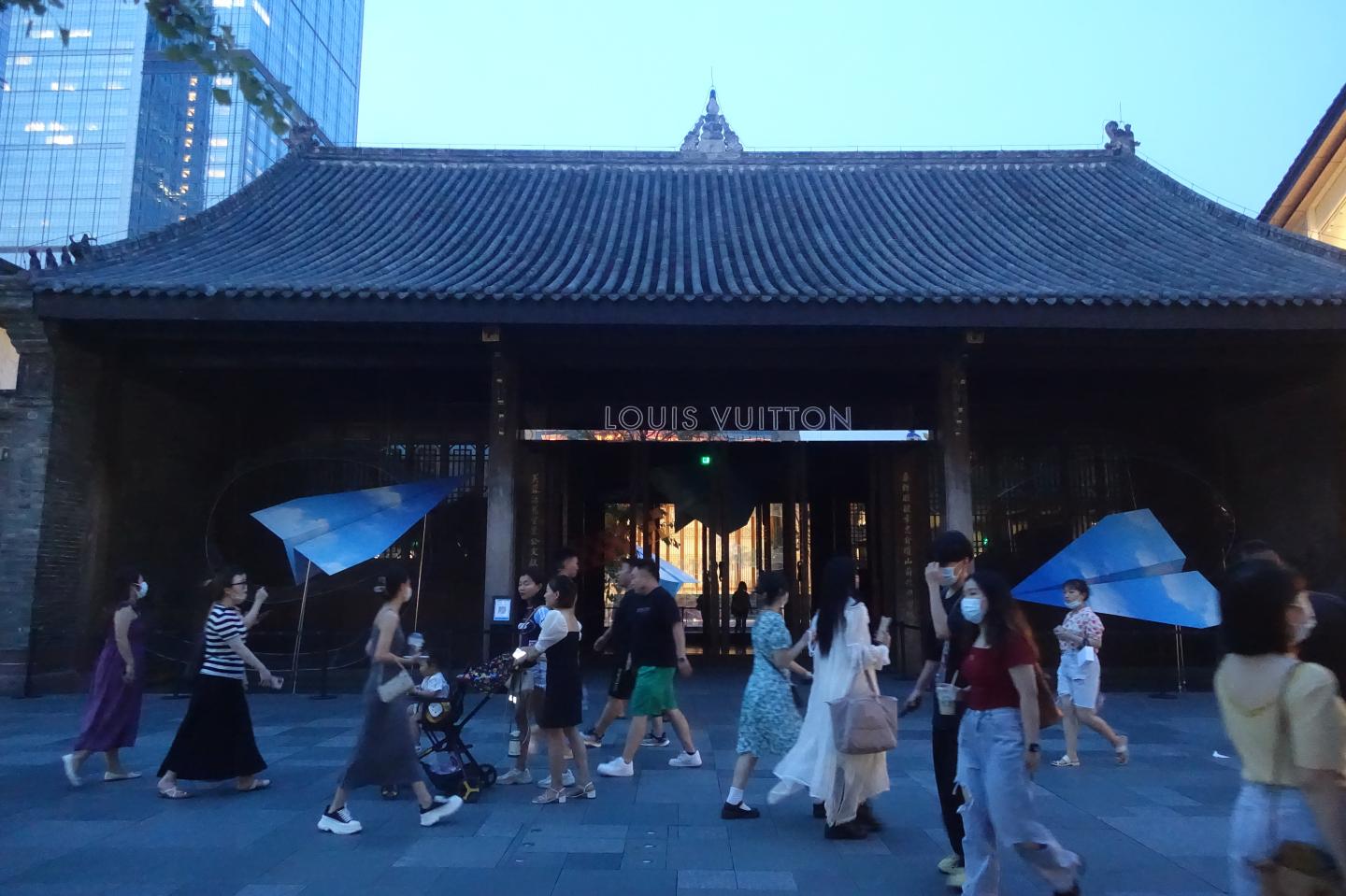
People walk in front of the Louis Vuitton store in Chengdu, China, on Aug. 17, 2022.
People walk in front of the Louis Vuitton store in Chengdu, China, on Aug. 17, 2022.VCG via Getty Images
Add Fortune on Google for similar content.

On Douban, a Chinese website that provides information related to current events, music, and more, young Chinese are flocking to groups that offer money-saving tips. One group, named Crazy Money Savers, which has over 600,000 subscribers, encourages members to shun takeout and bubble tea, and advises them to delete popular e-commerce apps like Alibaba and Pinduoduo. 

In 2015, Chinese President Xi Jinping launched a new economic strategy emphasizing domestic consumption and production to shift the Chinese economy into its next stage of development. But in recent years, many young Chinese—like those who joined Douban’s Crazy Money Savers—have begun saving, scrimping, and turning to social media influencers for advice on how to live frugally, a lifestyle directly in conflict with the government’s ambitions. 

The uncertainty generated by the COVID-19 pandemic reshaped how Chinese citizens consumed. And Beijing’s relentless pursuit of “zero COVID,” during a time when China’s property sector is spiraling and youth unemployment is skyrocketing, has prolonged and exacerbated people’s economic anxiety. 

Now, Beijing’s economic planners, who are resting their hopes on growing consumption to fuel China’s economy, are trying to reverse the newly frugal lifestyles of many young Chinese—a trend that threatens to upend the Chinese economy amid its worst downturn in decades. 

Cautious consumption 

In the 2010s, global firms touted the rise of the Chinese shopper—particularly young ones. 

In 2017, Chinese millennials pushed the country’s luxury goods market up by 20% to $22 billion in sales— the greatest jump in half a decade, consultancy Bain wrote in a 2018 report. During that time, China’s young shoppers were optimistic: Online shopping was becoming easier, and many of them were the only child in their families who grew up in an era of nonstop economic growth and rising home prices. 

But because of the COVID outbreak, China’s year-over-year retail sales—a gauge of consumer demand—fell 21% in February 2020, from an 8.2% gain in the same month a year earlier. 

In 2020, a clear trend began emerging across Chinese social media: the proliferation of “low desire” and “low consumption” money-saving groups. Douban users created groups like Stingy Men’s Federation and Stingy Women’s Federation. COVID worries, coupled with disenchantment over soaring home prices and a cutthroat school system and workplaces that offered increasingly fewer benefits, encouraged Chinese millennials and Gen Z to save more and buy less.

This year, the Chinese authorities’ harsh and protracted COVID lockdowns, alongside a deepening property crisis and high youth unemployment, tanked consumer sentiment. China’s year-over-year retail sales growth surged to 34% in March 2021 as people believed the country was nearing the end of COVID. But a year later, in March 2022, that exuberance tempered, and China’s retail sales fell 3.5% and then 11.1% in April. The latest August numbers show a pickup—a 5.4% gain—from a year ago, though experts warn that many factors are still weighing on consumer demand.
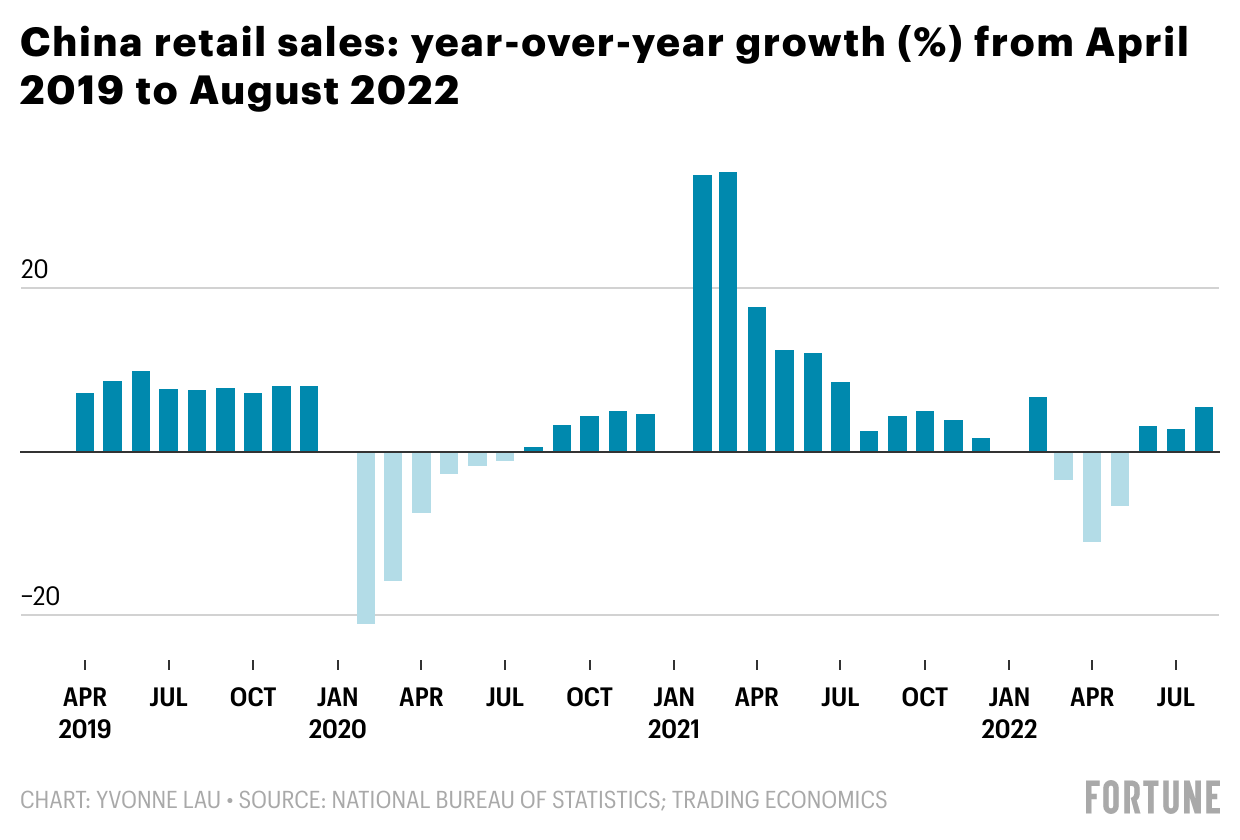
“Chinese consumers have become more cautious, and we see no indication of this changing in the near term,” Amy Huang, an economist at nonprofit research firm the Conference Board, wrote in an August note. Chinese consumers will “remain cautious about spending on nonessential items and increase their savings in the face of growing uncertainty about the economy,” she said. 

Earlier this year, Shanghai endured a severe lockdown that trapped residents in their homes for eight weeks. Some residents were unable to get the food, medicine, and health care they needed; others suffered mental health trauma. Vera, a 30-year-old finance professional who was born and raised in Shenzhen, visited Shanghai for a business trip in March. Her weeklong visit turned into a five-week ordeal due to the lockdown: “I lost all sense of time and self. I was stuck alone inside the apartment everyday…connected to the outside world only if I turned on VPN,” she told Fortune on the condition that, like other young Chinese interviewed for this story, her last name not be used fearing backlash from her boss or future employers. “I consider myself an emotionally tough person, but by the twelfth day, I began breaking down,” she said. 
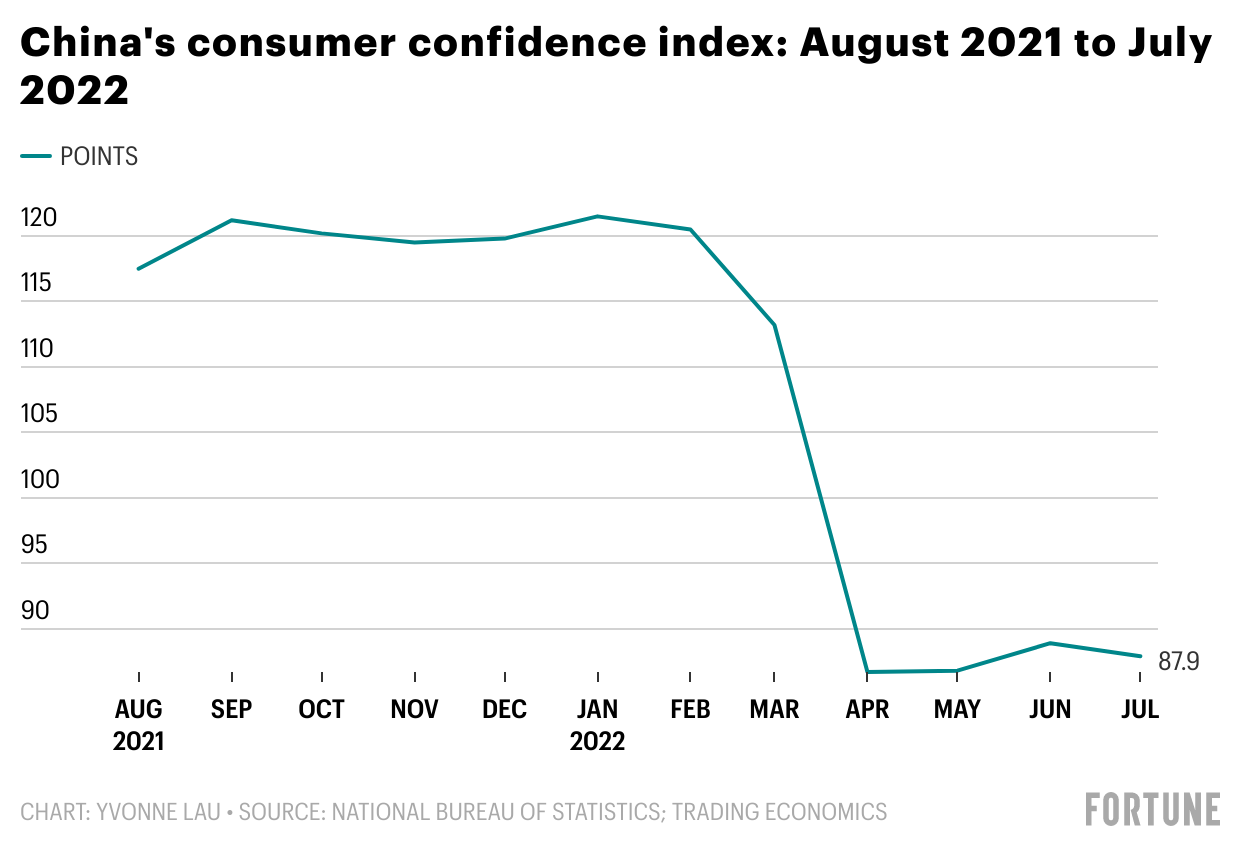
In subsequent months, a series of protests by Chinese homeowners refusing to pay their mortgages rocked China’s already embattled property sector. It further dampened people’s confidence in the economy because citizens had become accustomed to real estate as a safe investment vehicle that offered outsize returns. 

The recent events shattered Vera’s confidence in the authorities and led her to question China’s economic future for the first time. “I always thought I’d want to stay in China and buy a home. Now I’m really not sure,” she said. 

Living your best (frugal) life 

The events also prompted changes in consumption habits and a gloomier outlook for many young Chinese, like 25-year-old Shanghai resident Daphne, who works in marketing. The pandemic initially shifted Daphne’s spending online. But the shock of the Shanghai lockdowns and mortgage protests “told me things are going wrong. My family and friends’ families have lost a chunk of money on their properties. They can’t bear to think about those losses now. Maybe it’s now time to worry and to save more…it’s better to be safe than sorry,” she told Fortune. 

During and prior to the pandemic, Daphne felt empowered to spend a quarter of her income on shopping, dining out, and other activities like karaoke and travel. Now, “at least a handful” of closest friends can’t find a job or have taken a pay cut, while her manager at work says “it’s not the time for a salary review,” she said. 

As a result, Daphne has begun paying more attention to money-saving groups on social media. She’s now swapped hotpot at restaurants for home-cooked meals and has sworn off designer bags for a while. 

Daphne and her friends aren’t alone. China’s youth unemployment rate soared to nearly 20% in July. The country’s general slowdown and government crackdown on tech has led to pay cuts and mass layoffs. 

Last year, when Chinese consumption recovered slightly, “affluent Gen Z were a key growth driver…representing up to 80% of the growth of the luxury market,” Jacques Penhirin, a partner at consultancy Oliver Wyman, said earlier this year. But “this time around, the affluent Gen Z may react differently, especially since a lack of job security may be something that they have to deal with for the very first time,” Penhirin wrote. 

Worrying slowdown 

As young Chinese look to save money, the government is pushing them to spend more. 

In Shenzhen—a south China tech hub known as the country’s Silicon Valley—the city government rolled out a $15 million stimulus scheme in May that offered subsidies to encourage spending on personal electronics, home appliances, and electric vehicles. The month prior, the city handed out roughly $70 million in consumption vouchers.

Yet these initiatives aren’t enough to stimulate the kind of spending that Beijing needs, experts say. 

Sluggish consumption remains a major problem for Beijing’s top policymakers. Chinese Premier Li Keqiang said in a Wednesday speech that the government will do “whatever we can to expand effective investment and promote consumption” to deal with the weak demand. 

Beijing has been discussing boosting consumer spending for months, while steering clear of major changes like drastically relaxing its zero-COVID measures or transferring cash to struggling households, research firm Trivium China wrote in a recent note. But until Beijing decides to do so, consumer demand “will continue to flounder,” the analysts said.

Sign up for the Fortune Features email list so you don’t miss our biggest features, exclusive interviews, and investigations.
About the Author
By Yvonne Lau
LinkedIn iconTwitter icon
See full bioRight Arrow Button Icon
Add Fortune on Google for similar content.

Latest in

Finance
Lorem ipsum dolor sit amet, consectetur adipiscing elit, sed do eiusmod tempor incididunt ut labore et dolore magna aliqua. Ut enim ad minim veniam
By Fortune Editors
October 20, 2025
Finance
Lorem ipsum dolor sit amet, consectetur adipiscing elit, sed do eiusmod tempor incididunt ut labore et dolore magna aliqua. Ut enim ad minim veniam
By Fortune Editors
October 20, 2025
Finance
Lorem ipsum dolor sit amet, consectetur adipiscing elit, sed do eiusmod tempor incididunt ut labore et dolore magna aliqua. Ut enim ad minim veniam
By Fortune Editors
October 20, 2025
Finance
Lorem ipsum dolor sit amet, consectetur adipiscing elit, sed do eiusmod tempor incididunt ut labore et dolore magna aliqua. Ut enim ad minim veniam
By Fortune Editors
October 20, 2025
Finance
Lorem ipsum dolor sit amet, consectetur adipiscing elit, sed do eiusmod tempor incididunt ut labore et dolore magna aliqua. Ut enim ad minim veniam
By Fortune Editors
October 20, 2025
Finance
Lorem ipsum dolor sit amet, consectetur adipiscing elit, sed do eiusmod tempor incididunt ut labore et dolore magna aliqua. Ut enim ad minim veniam
By Fortune Editors
October 20, 2025

Most Popular

Finance
Lorem ipsum dolor sit amet, consectetur adipiscing elit, sed do eiusmod tempor incididunt ut labore et dolore magna aliqua. Ut enim ad minim veniam
By Fortune Editors
October 20, 2025
Finance
Lorem ipsum dolor sit amet, consectetur adipiscing elit, sed do eiusmod tempor incididunt ut labore et dolore magna aliqua. Ut enim ad minim veniam
By Fortune Editors
October 20, 2025
Finance
Lorem ipsum dolor sit amet, consectetur adipiscing elit, sed do eiusmod tempor incididunt ut labore et dolore magna aliqua. Ut enim ad minim veniam
By Fortune Editors
October 20, 2025
Finance
Lorem ipsum dolor sit amet, consectetur adipiscing elit, sed do eiusmod tempor incididunt ut labore et dolore magna aliqua. Ut enim ad minim veniam
By Fortune Editors
October 20, 2025
Finance
Lorem ipsum dolor sit amet, consectetur adipiscing elit, sed do eiusmod tempor incididunt ut labore et dolore magna aliqua. Ut enim ad minim veniam
By Fortune Editors
October 20, 2025
Finance
Lorem ipsum dolor sit amet, consectetur adipiscing elit, sed do eiusmod tempor incididunt ut labore et dolore magna aliqua. Ut enim ad minim veniam
By Fortune Editors
October 20, 2025
Fortune Secondary Logo
Rankings
  • 100 Best Companies
  • Fortune 500
  • Global 500
  • Fortune 500 Europe
  • Most Powerful Women
  • World's Most Admired Companies
  • See All Rankings
  • Lists Calendar
Sections
  • Finance
  • Fortune Crypto
  • Features
  • Leadership
  • Health
  • Commentary
  • Success
  • Retail
  • Mpw
  • Tech
  • Lifestyle
  • CEO Initiative
  • Asia
  • Politics
  • Conferences
  • Europe
  • Newsletters
  • Personal Finance
  • Environment
  • Magazine
  • Education
Customer Support
  • Frequently Asked Questions
  • Customer Service Portal
  • Privacy Policy
  • Terms Of Use
  • Single Issues For Purchase
  • International Print
Commercial Services
  • Advertising
  • Fortune Brand Studio
  • Fortune Analytics
  • Fortune Conferences
  • Business Development
  • Group Subscriptions
About Us
  • About Us
  • Press Center
  • Work At Fortune
  • Terms And Conditions
  • Site Map
  • About Us
  • Press Center
  • Work At Fortune
  • Terms And Conditions
  • Site Map
  • Facebook icon
  • Twitter icon
  • LinkedIn icon
  • Instagram icon
  • TikTok icon
  • YouTube icon

Latest in

bezos
EnvironmentBillionaires
Leo DiCaprio teams with Jeff and Lauren Sanchez Bezos on $200 million plan to save 100 endangered species
By The Associated PressAugust 5, 2026
46 minutes ago
h
Asiaearnings
Honda doubles profit as motorcycles and a weak yen fuel its post‑EV writedown comeback
By Yuri Kageyama and The Associated PressAugust 5, 2026
1 hour ago
s
Big Techearnings
SpaceX races toward Musk’s $1 trillion dream—just as insiders can start selling
By Bernard Condon and The Associated PressAugust 5, 2026
1 hour ago
OpenAI logo is seen displayed on a smartphone with code in the background.
C-SuiteCFO Daily
What OpenAI’s finance team is becoming in the age of AI
By Sheryl EstradaAugust 5, 2026
1 hour ago
d
Arts & Entertainmentearnings
Disney boosted by $1 billion at the box office, strong parks performance as international visits slump
By Michelle Chapman and The Associated PressAugust 5, 2026
1 hour ago
Scott Bessent, US treasury secretary, during a meeting with US President Donald Trump and Lebanon's President Joseph Aoun, not pictured, in the Oval Office of the White House in Washington, DC, US, on Tuesday, July 21, 2026.
EconomyInflation
Scott Bessent just declared the K-shaped economy is over, saying he’s ‘sick of hearing about’ it—but the data would beg to disagree
By Eleanor PringleAugust 5, 2026
2 hours ago

Most Popular

How Zohran Mamdani's pied-à-terre tax exposed an epidemic of 'ghost cars' instead
Personal Finance
How Zohran Mamdani's pied-à-terre tax exposed an epidemic of 'ghost cars' instead
By Catherina GioinoAugust 4, 2026
1 day ago
Bars, bowling alleys, and movie theaters cost too much to run and visit. Americans have run out of places to hang out and we're paying with our health
North America
Bars, bowling alleys, and movie theaters cost too much to run and visit. Americans have run out of places to hang out and we're paying with our health
By Catherina GioinoAugust 2, 2026
3 days ago
Forget Gen Z: People in their 70s and 80s are some of the earliest Americans to welcome physical AI into their homes and daily routines
AI
Forget Gen Z: People in their 70s and 80s are some of the earliest Americans to welcome physical AI into their homes and daily routines
By Marco Quiroz-GutierrezAugust 3, 2026
2 days ago
Current price of oil as of August 4, 2026
Personal Finance
Current price of oil as of August 4, 2026
By Joseph HostetlerAugust 4, 2026
1 day ago
Scott Bessent is using moves from his hedge fund days to prop up Japan's yen—and America's $40 trillion national debt
Economy
Scott Bessent is using moves from his hedge fund days to prop up Japan's yen—and America's $40 trillion national debt
By Mia OsmonbekovAugust 4, 2026
19 hours ago
Ray Dalio on the AI bubble nearing 1929, 2000 levels and the lesson people always forget: 'Wealth is not the same as money'
Investing
Ray Dalio on the AI bubble nearing 1929, 2000 levels and the lesson people always forget: 'Wealth is not the same as money'
By Nick LichtenbergAugust 4, 2026
1 day ago

© 2026 Fortune Media IP Limited. All Rights Reserved. Use of this site constitutes acceptance of our Terms of Use and Privacy Policy | CA Notice at Collection and Privacy Notice | Do Not Sell/Share My Personal Information
FORTUNE is a trademark of Fortune Media IP Limited, registered in the U.S. and other countries. FORTUNE may receive compensation for some links to products and services on this website. Offers may be subject to change without notice.