• Home
  • Latest
  • Fortune 500
  • Finance
  • Tech
  • Leadership
  • Lifestyle
  • Rankings
  • Multimedia

Trendingnow

1

The heiress of $10 billion Perdue Farms and the $12 billion Sheraton Hotels empire wore hand-me-downs, still rides the subway, and flies economy

2

Iran's president admits 'we have many problems' and missiles 'are of no use' as the U.S. chokes its economy while weakening Tehran's grip on Hormuz

3

Six months into the Iran war, the global economy has pulled off a ‘Mission Impossible’ scene, and the Trump family is among the winners

1

The heiress of $10 billion Perdue Farms and the $12 billion Sheraton Hotels empire wore hand-me-downs, still rides the subway, and flies economy

2

Iran's president admits 'we have many problems' and missiles 'are of no use' as the U.S. chokes its economy while weakening Tehran's grip on Hormuz

3

Six months into the Iran war, the global economy has pulled off a ‘Mission Impossible’ scene, and the Trump family is among the winners
Energy
Europe

The Eiffel Tower’s extravagant lights are coming into question during Europe’s energy crisis

Steve Mollman
By
Steve Mollman
Steve Mollman
Contributors Editor
Down Arrow Button Icon
Steve Mollman
By
Steve Mollman
Steve Mollman
Contributors Editor
Down Arrow Button Icon
September 11, 2022, 5:29 PM ET
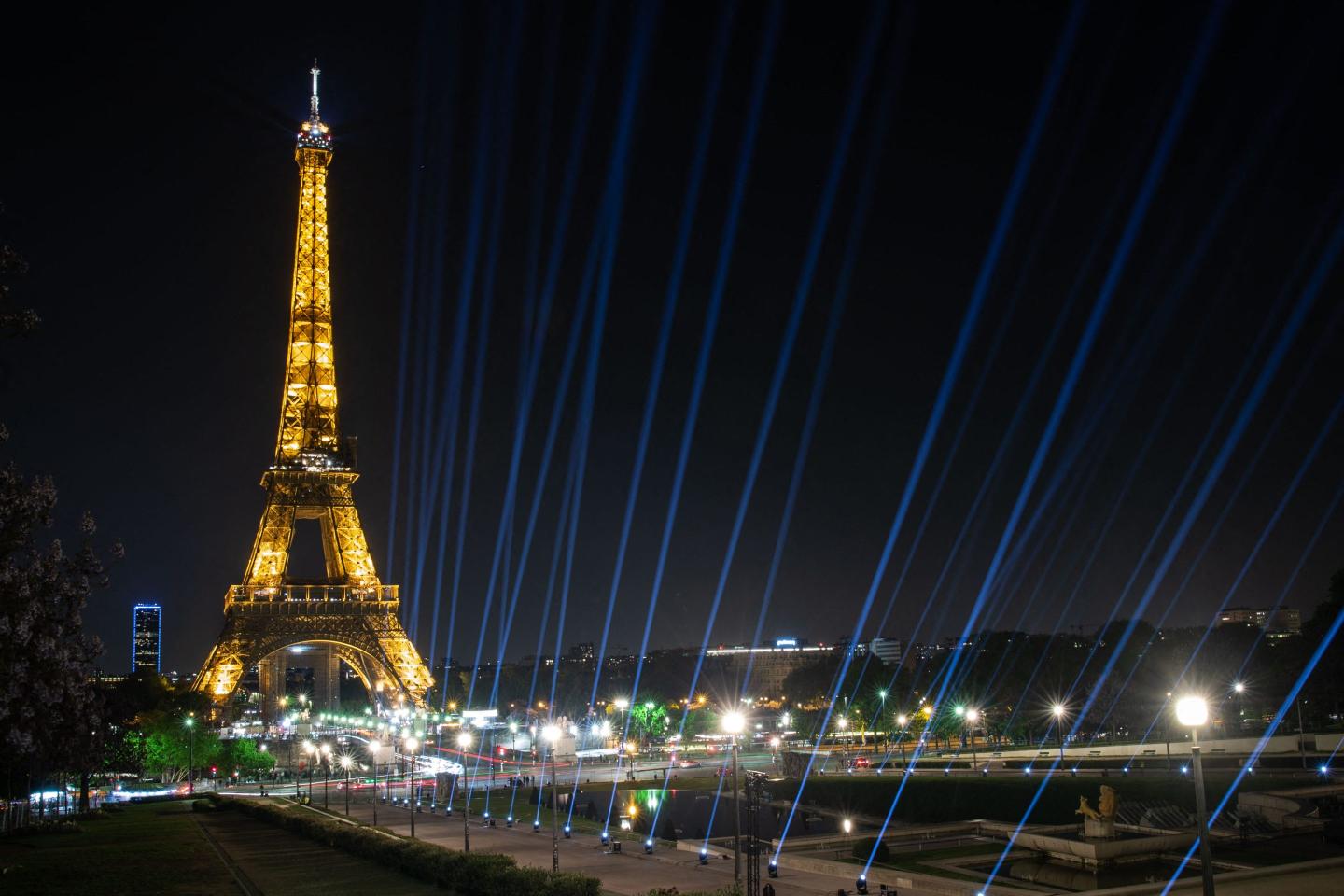
The Eiffel Tower illuminated at night on April 26.
City of lights.AFP/Getty Images
Add Fortune on Google for similar content.

An energy crisis is no time to be an electricity hog.

As Europe contends with spiraling power bills, thanks in no small part to Russia’s war in Ukraine, extravagant nighttime illumination is being called into question—including at the Eiffel Tower. 

The Paris landmark currently stays lit until 1 a.m., but city hall is expected in the days ahead to propose moving that back to 11:45 p.m., according to the Guardian.

“It’s a highly symbolic gesture—part of the growing awareness around energy sobriety,” Jean-François Martins, head of the tower’s management, told the publication.

Similar moves have been made across Europe this summer: Authorities in Berlin reduced night-time lighting at the Victory Column and Kaiser Wilhelm Memorial Church, as did their counterparts in Marseille at the Pharo Palace and other monuments. 

But the real fear is winter. As Europe contends with spiraling energy costs—fueled by inflation, the Ukraine war, and extreme weather—cutting back on electricity consumption before the cold sets in is critical.

“The next 5 to 10 winters will be terrible if nothing is done,” tweeted Belgium’s energy minister, Tinne Van der Straeten, late last month.

On July 26, the European Union announced an agreement to cut natural gas use by 15% this winter, saying in a statement, “Today’s decision has clearly shown the member states will stand tall against any Russian attempt to divide the EU by using energy supplies as a weapon.”

It didn’t have to wait long. Earlier this month, Russia cut off gas supplies indefinitely via Europe’s main pipeline. Asked if supplies would resume if sanctions against Russia over the Ukraine invasion were eased or lifted, Kremlin spokesman Dmitry Peskov told reporters, “Of course.” 

Energy-saving plans across Europe include a ban on heated private swimming pools in Germany, switched-off illuminated signs at grocery chains in France, and air conditioning limited to 27°C in public buildings in Spain.

German Chancellor Olaf Scholz said Saturday Europe and his country are prepared to weather the fallout of Russia cutting gas supplies, but critics quickly expressed doubt. Marcel Fratzscher, president of German think tank DIW, said on the same day that “many companies will go bankrupt” due to the energy crisis and that “recession is unavoidable.”

Amid such pessimism, turning off lights a bit early at monuments might seem like a paltry move. But as Martins noted, it’s a “highly symbolic gesture”—and few symbols are more recognized than the Eiffel Tower.

Sign up for the Fortune Features email list so you don’t miss our biggest features, exclusive interviews, and investigations.
About the Author
Steve Mollman
By Steve MollmanContributors Editor
LinkedIn iconTwitter icon

Steve Mollman is a contributors editor at Fortune.

See full bioRight Arrow Button Icon
Add Fortune on Google for similar content.

Latest in


Most Popular

Fortune Secondary Logo
Rankings
  • 100 Best Companies
  • Fortune 500
  • Global 500
  • Fortune 500 Europe
  • Most Powerful Women
  • World's Most Admired Companies
  • See All Rankings
  • Lists Calendar
Sections
  • Finance
  • Fortune Crypto
  • Features
  • Leadership
  • Health
  • Commentary
  • Success
  • Retail
  • Mpw
  • Tech
  • Lifestyle
  • CEO Initiative
  • Asia
  • Politics
  • Conferences
  • Europe
  • Newsletters
  • Personal Finance
  • Environment
  • Magazine
  • Education
Customer Support
  • Frequently Asked Questions
  • Customer Service Portal
  • Privacy Policy
  • Terms Of Use
  • Single Issues For Purchase
  • International Print
Commercial Services
  • Advertising
  • Fortune Brand Studio
  • Fortune Analytics
  • Fortune Conferences
  • Business Development
  • Group Subscriptions
About Us
  • About Us
  • Press Center
  • Work At Fortune
  • Terms And Conditions
  • Site Map
  • About Us
  • Press Center
  • Work At Fortune
  • Terms And Conditions
  • Site Map
  • Facebook icon
  • Twitter icon
  • LinkedIn icon
  • Instagram icon
  • TikTok icon
  • YouTube icon

    Latest in


    Most Popular

    © 2026 Fortune Media IP Limited. All Rights Reserved. Use of this site constitutes acceptance of our Terms of Use and Privacy Policy | CA Notice at Collection and Privacy Notice | Do Not Sell/Share My Personal Information
    FORTUNE is a trademark of Fortune Media IP Limited, registered in the U.S. and other countries. FORTUNE may receive compensation for some links to products and services on this website. Offers may be subject to change without notice.