Tomatoes are getting squeezed.
California leads the world in production of processing tomatoes—the variety that gets canned and used in commercial kitchens to make some of the most popular foods. The problem is the worst drought in 1,200 years is forcing farmers to grapple with a water crisis that’s undermining the crop, threatening to further push up prices from salsa to spaghetti sauce.
“We desperately need rain,” Mike Montna, head of the California Tomato Growers Association, said in an interview. “We are getting to a point where we don’t have inventory left to keep fulfilling the market demand.”
Lack of water is shrinking production in a region responsible for a quarter of the world’s output, which is having an impact on prices of tomato-based products. Gains in tomato sauce and ketchup are outpacing the rise in US food inflation, which is at its highest in 43 years, with drought and higher agricultural inputs to blame. With California climate-change forecasts calling for hotter and drier conditions, the outlook for farmers is uncertain.
“It’s real tough to grow a tomato crop right now,” Montna said. “On one side you have the drought impacting costs because you don’t have enough water to grow all your acres, and then you have the farm inflation side of it with fuel and fertilizer costs shooting up.”
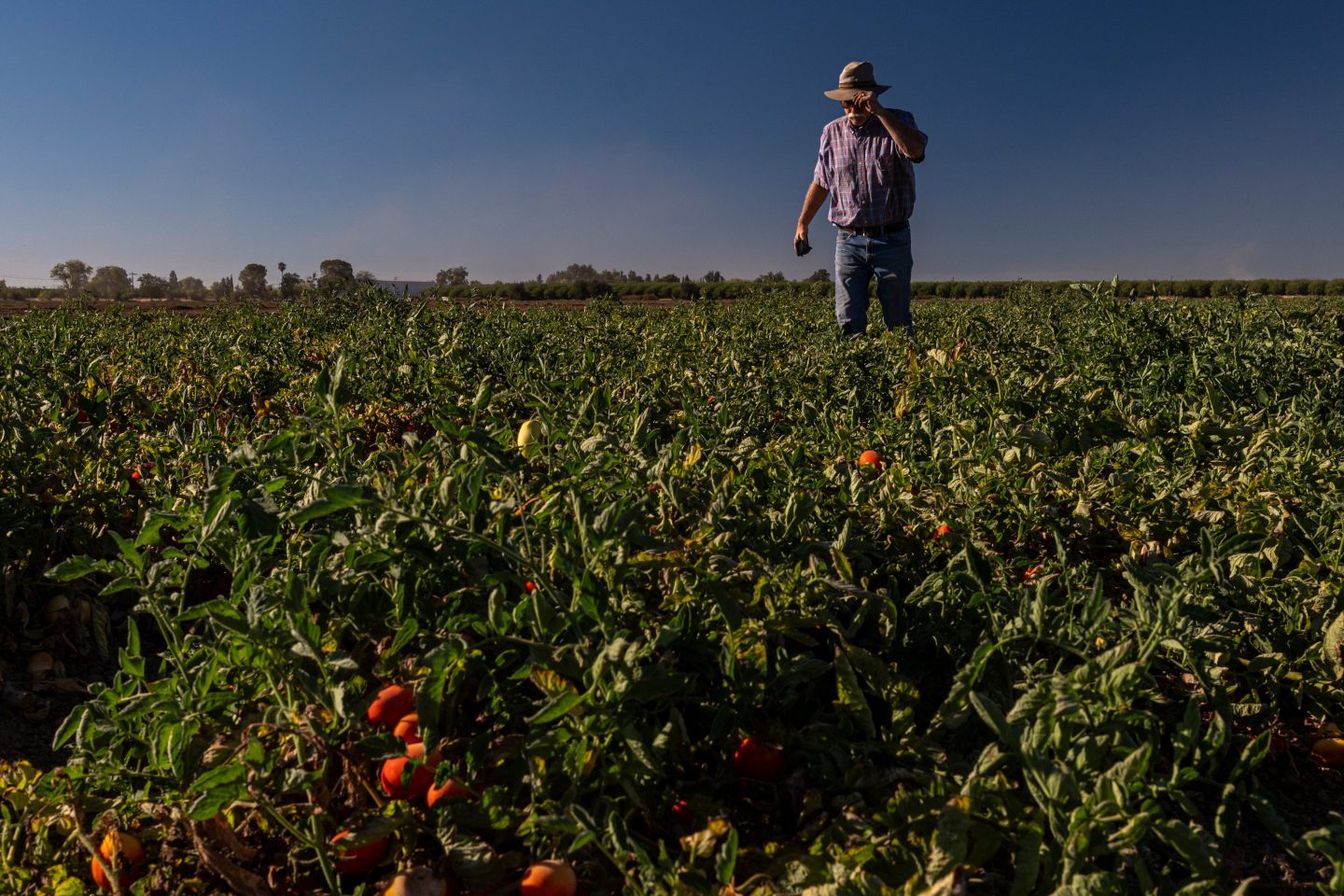
California restrictions limiting groundwater use and soaring costs for labor, fuel and fertilizer have caused headaches for producers such as Woolf Farming. It costs the Fresno County-based grower and processor around $4,800 an acre to grow and harvest a tomato crop these days compared with $2,800 a decade ago, according to Rick Blankenship, vice president of farming operations. Most of the increases have been in the last two years. This season’s bounty costs more and delivers less.
“Yields are way off this year,” Blankenship said in an interview. “Coupled with drought, we’ve had high temperatures and that in itself creates an issue where the tomatoes are so hot that they just don’t size properly — so you have a lot of tomatoes on a plant, but they are smaller.”
Getting higher value for crops from the field is usually an incentive for farmers, yet this season’s negotiated rate of $105 a ton for the tomatoes—an all-time high—may not be enough to overcome the industry’s challenges.
“You would think that it was a home run for growers, but in reality the input costs have gone up so much that the potential profit was all gobbled up,” Blankenship said.
The water woes have led to crop shifting as growers try to gauge what commodity will bring the biggest returns. Bruce Rominger, a fifth-generation farmer, slashed rice sowing by 90% to make room for tomatoes. He hopes to turn a profit on the 800 acres of tomatoes he began harvesting in July—though it’s a gamble.
“It’s a high-risk crop and our yields so far are below average,” Rominger said, noting that excessive heat, lack of water and mid-April frost took its toll.
And it’s only getting worse. Higher temperatures will shrink supply of processing tomatoes in key regions in the next few decades, with the US, Italy and China expected to decline 6% by 2050, according to an academic study published in Nature Food. Increasing heat and water constraints may make it especially tough for California and Italy to maintain current production levels, the June report said.
The California crop has been below the recent production peak of 14.4 million tons in 2015 for the past six years, and 2022 is shaping up to continue the trend, according to US Department of Agriculture data. The industry expects this year’s harvest to fall below the USDA’s 11.7 million tons estimate.
“Despite low supply and a substantial increase in price, contracted production has dropped significantly compared to the beginning of 2022,” the USDA said in its May report on California’s processing tomato crop, noting that water availability is the main issue facing producers.
“There are simply not enough acres of processing tomatoes being planted this year to ensure that everybody gets their full supply,” said R. Greg Pruett, sales and energy manager for Ingomar Packing Co., one of the world’s biggest tomato processors. “The water is either too expensive or just not available at any cost.”
Such pressures are being reflected in Ingomar’s processed products. Tomato paste prices for clients of the company, which sells to some of the largest U.S. food brands, are up as much as 80% from a year ago. With inventories dropping to critically low levels, though, supply isn’t available for everyone.
“If you are looking for a significant amount of tomato paste and you haven’t already contracted it then you aren’t going to get it no matter what the price is,” Pruett said in a phone interview. “It’s just not there.”
Since tomato-based products are hard to substitute, demand isn’t especially sensitive to price changes. Still, it’s an added cost for consumers. The price of tomato sauce in the four weeks ended July 10 is up 17% from a year ago, while ketchup is 23% higher, according to market research firm IRI.
“There is obviously a point where that relationship is going to break down if frozen pizzas and pasta sauce and other staple items get priced to the point where the average consumer wants to decide to do something else,” Pruett said.