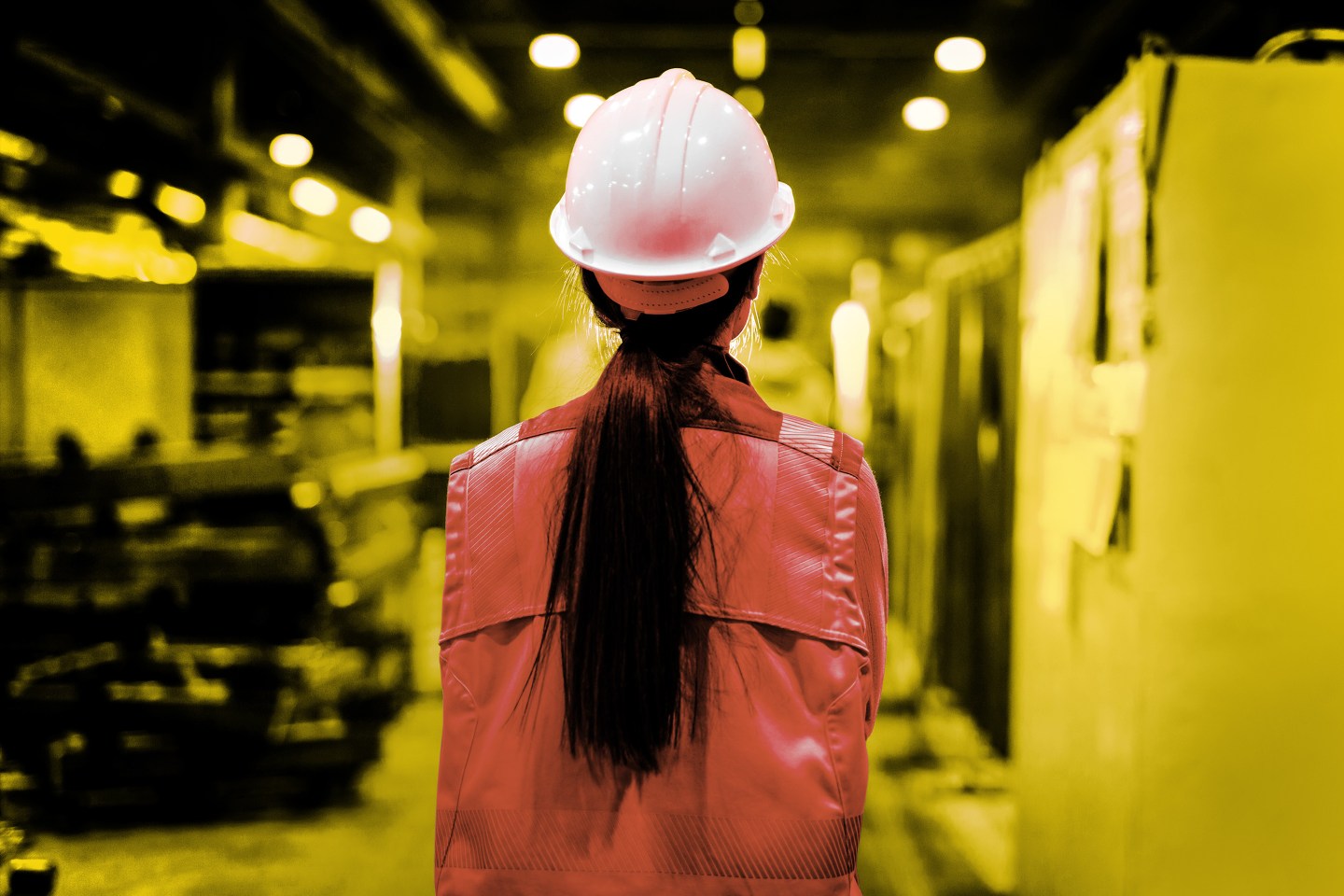
Essential workers became the backbone of the U.S. economy as many workplaces ground to a halt during the early COVID-19 lockdowns.
But now, more than two years after those initial lockdowns, those mostly hourly workers are struggling to get the support they need as many grapple with the ongoing effects of long COVID. Also known as post-acute COVID and chronic COVID, this is essentially a condition where new, returning, or ongoing health problems occur four or more weeks after an initial infection with SARS-CoV-2, the virus that causes COVID-19.
Between 10% to 30% of COVID-19 patients are expected to develop long COVID, according to a recent report from the Government Accountability Office. That means up to 23 million people in the U.S. may have already developed long COVID as of February. Moreover, Brookings Institution research suggests over 1 million workers are out of the workforce at any given time because of long COVID.
The financial burden of that is immense, ranging between $386 billion and $511 billion, according to a report released last month by the Solve Long Covid Initiative. “There is no realistic scenario in which the long Covid impact on American systems, workplaces, and families is small,” Solve’s report finds.
Employers seemingly caught flat-footed in their responses to long COVID in the workplace
Despite the high prevalence of long COVID, workplaces are largely unprepared to deal with the onslaught. Almost half of workers (45%) report that their employers weren’t accommodating toward employees experiencing long-COVID symptoms, according to survey findings released in April by Power, a patient platform for clinical trials. The survey, conducted in March, polled 1,000 Americans who contracted COVID-19—42% of whom experienced long-COVID symptoms.
For Meg, a California-based hourly worker at a major health and consumer goods manufacturer, the past two years have been an uphill battle. (Meg asked to be identified by her nickname to protect her job and privacy.)
Meg and her doctor believe that she likely first contracted COVID in March 2020. Because it was the start of the pandemic, she wasn’t able to get a COVID test until 15 days after her initial symptoms, and by that time, she had tested negative. But she was still out for roughly eight weeks.
“I never fully recovered from this, but was allowed to return to work with some symptoms,” Meg says. But unfortunately, that wasn’t the last time she contracted COVID. Even after getting vaccinated in April 2021, Meg tested positive in August and was put on short-term disability under California’s COVID sick leave laws.
Although federal statutes for paid COVID-19 sick leave have lapsed, about a dozen states, including California, guarantee some form of paid sick leave. And not all companies offer short-term disability either. Currently, five states—California, Hawaii, New Jersey, New York, and Rhode Island—require employers to offer short-term disability coverage.
But the ordeal wasn’t over. Meg then tested positive again in January 2022. “Although I wasn’t feeling particularly ill, I tested before returning to work from the holiday and found that I was positive,” she says. “When I told this to managers at my work, they were surprised I had tested for this at all.” Although her company had masking rules in place since June 2020, Meg says there was no real push to ensure workers were regularly testing.
But while the January infection was Meg’s mildest case yet symptom-wise—she was only out sick eight working days—it was quickly followed by worsening long-COVID symptoms. “When I returned I noticed immediately that I wasn’t the same. Each workday felt like it was breaking me,” Meg says, adding that feeling that way in your thirties just isn’t normal.
She struggled through a few weeks, relapsed, and then finally went on full-time short-term disability after exhausting California’s COVID sick time provisions and Family and Medical Leave Act time off. Feb. 10, 2022, was Meg’s last day at work.
“My boss knew I had been struggling and tried her best to lighten my load, but I was still drowning,” Meg says. “I was in a cycle of working until I collapsed, then coming back to work the moment I was able, only to crash again.”
The ongoing effects of long-COVID symptoms
Studies show that although up to 30% of COVID cases develop into long COVID, far less actually end up being disabling. But that doesn’t mean that even less severe cases of long COVID are without consequence. About 44% of workers surveyed by Power say they’ve been forced to reduce their work hours as a result of the virus—by an average of seven hours per week.
Moreover, those with long COVID are 54% more likely to report they’re engaging in “presenteeism,” or showing up for work but not fully functioning, according to a March report from WTW, a global advisory firm that specializes in risk management, talent, and benefit solutions. These workers are also twice as likely to be experiencing anxiety and depression as those without a history of COVID.
For Meg, she estimates that between her acute COVID infections and ongoing long-COVID symptoms, she’s missed nearly 140 days of work so far. About 97 of those days Meg took this year because of her long-COVID symptoms.
“I think I’m approaching that limit, and I’m not sure what will happen to me then. I live in an at-will state, so they could fire me,” Meg says. “I honestly might need to quit to preserve what shreds of my health I have left, but then I’m left in poverty.”
And even getting her current disability pay approved has been a slog. Her employer uses an outside, third-party company to handle all disability and accommodations claims, and the sheer amount of paperwork, insurance forms, doctor’s notes, post-visit notes, and calls required by the approval process is overwhelming, Meg says.
“Every single time I try to call…after a significant time on hold, they tell me I need to speak to someone in a different department, and they will transfer me, then the call is dropped. Every time,” Meg says.
“I know I can’t be the only one suffering through this right now, and I know how hard and confusing it is to manage all the paperwork and expectations,” Meg says, adding that many of the machine operators who actually make the company’s product—which include N95 masks—speak English as a second language. Not to mention the neurological issues that come with many long-COVID cases that make completing the complex paperwork requests challenging.
“So workers with long COVID are expected to navigate these murky waters with diagnosed lowered brain function and no support, and if we fail to jump through the right hoops on time, we will lose our jobs,” Meg says.
Many still struggle to gain accommodations, disability pay
Of the 70% of workers experiencing long COVID who applied for disability protections and benefits, about one in eight had their application denied, Power’s survey found. Meg, for example, says she’s received rejections and successfully appealed those decisions multiple times.
Workers can usually ask for reasonable accommodations under the Americans With Disabilities Act, but it’s worth noting that there’s no concrete definition of the types of disabilities protected. That said, the underlying disabilities being cited usually need to be severe and not temporary, which may not apply in all cases of long COVID.
Perhaps most frustrating to Meg is the fact that her early requests for accommodation, namely working from home, were denied by her employer. In 2020, she made an unofficial request to work from home, saying that despite working in the plant, she can do her job remotely.
“I have always been prone to respiratory infections and knew that I was at a higher risk for COVID due to this,” Meg says, adding she also suffers from asthma. But the request was denied. Then later that year when wildfires swept through the region and severely lowered the air quality, she submitted a formal request to work remotely. Again, her request was denied.
“Everyone in corporate was told to work from home. Most of the salaried workers, including supervisors and managers, worked from home as often as possible, only coming in when absolutely required. The plant was full of hourly workers who continued to be automatically penalized by corporate if we clocked in even 30 seconds late,” Meg says.
Although her current symptoms mean Meg has good and bad days, even on her good days, she only gets perhaps four hours where she can reliably do simple administrative tasks such as calling doctors, answering emails or texts, cooking a simple meal. Which is why working remotely is critical to many dealing with long COVID. Even if she spent all four of those hours at work, she would then not be able to safely drive herself home afterward.
“I wish everyone, but especially workplaces, knew how bad this chronic illness can be,” Meg says. “I wish people and work wouldn’t judge my health based on my good days, and understand that my bad days mean that I am truly physically incapable of returning their phone call or completing their form, let alone working full-time again.”