As I walked through Waikamoi Preserve, an 8,951-acre forest on the East Maui mountains, Kerri Fay, a science specialist and Maui program lead for The Nature Conservancy, Hawaii and Palmyra, passionately pointed out the splendor of its biodiversity. Native cyanea horrida hovered above the ground, while yellow-faced bees hummed in the distance. The boardwalk on which we traversed creaked as an iʻiwi bird sang its distinctive tune. We closed our eyes and listened carefully. It was bittersweet.
These protected grounds revealed healthy, functional layers of a native forest—fern ground cover, mosses, lichens, mid-layer shrubs, sub-canopy, and koa trees—that contribute to the overall synergy of the island’s ecosystems. But beyond the fences where meticulous protection isn’t enacted, those sounds, and those sights are slowly disappearing. The dichotomy of the two areas brought the purpose of conservation into clear view, that biodiversity simply must be safeguarded.
Hawaii is known, sadly, as “the endangered species capital of the world.” Many things can easily harm the native ecosystems of islands in the middle of an ocean. And in Hawaii, there’s also human intervention and development, invasive ungulates (Axis deer, goats, and boar), and noxious weeds compromising flora and fauna. The term “invasive”—which is critical here—means a non-native species taking over or dominating an environment and landscape. If and when native habitats fall to invasive species, biodiversity dies off.
Hawaiian culture holds a strong responsibility to the land. The health of the mountains is reflected in the health of the sea and everything in between. They refer to this as “mauka to makai” (mountain to ocean). In some areas, ancestral knowledge and modern technology—such as artificial intelligence—are helping to protect this connection. And for Waikamoi Preserve, while the threats are vast, A.I. is helping to tame a particularly destructive threat: the noxious weed called Himalayan ginger.
Into the weeds
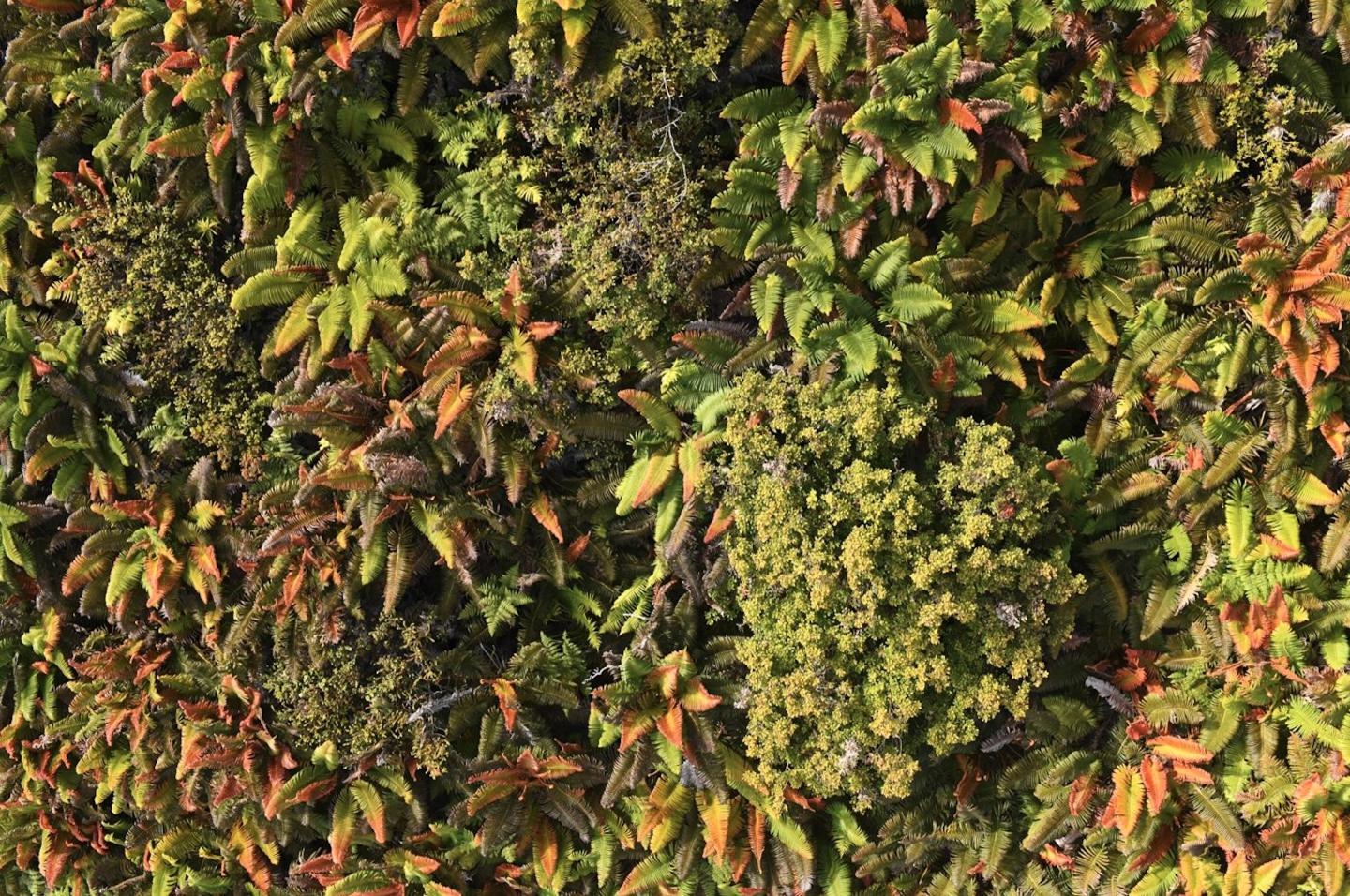
Himalayan ginger was introduced as an ornamental in the 1950s and spread from backyards to rainforests in what Maui Invasive Species Committee calls “an unrelenting march.” Seeds are carried by downstream water flow or birds that eat the seeds and drop feces elsewhere, enabling propagation of new growth far from its origin. When patches develop, they form a dense mat on the ground that prevents the cultivation of other plants. A dominant invasive species like this can ultimately displace the native understory, including moss and lichens that keep the ground cool and humid, or bryophytes that capture water.
Additionally, ginger is known to be a water hog. “There have been hydrologic studies that show it sucking up water and taking it from native plants,” says Alison Cohan, the Hawaii terrestrial director of The Nature Conservancy (TNC). This control over the ground cover alters the functioning of the watershed by preventing rainwater or moisture from soaking into the ground. Therefore, it causes water runoff and erosion into nearshore reef ecosystems; damaging mauka to makai.
In one effort to eradicate Himalayan ginger, TNC is using machine learning and A.I. to more efficiently find and track the weeds before they become established. Enter Niraj Swami, senior director of conservation technology strategy and enablement, who works with conservation partners to weave emerging technology into problem solving. When Swami approaches an issue, he looks at a task and determines if A.I. can accelerate that task in a more efficient way than humans.
“I advocate for the kind of scenarios where A.I. is a service provider and a helper,” says Swami. He indicates A.I. can make challenging work faster by speeding up analysis and large volumes of data. This does not, however, mean granting the humans a lazier path. Instead, it alleviates the time it might take for humans to do the same task.
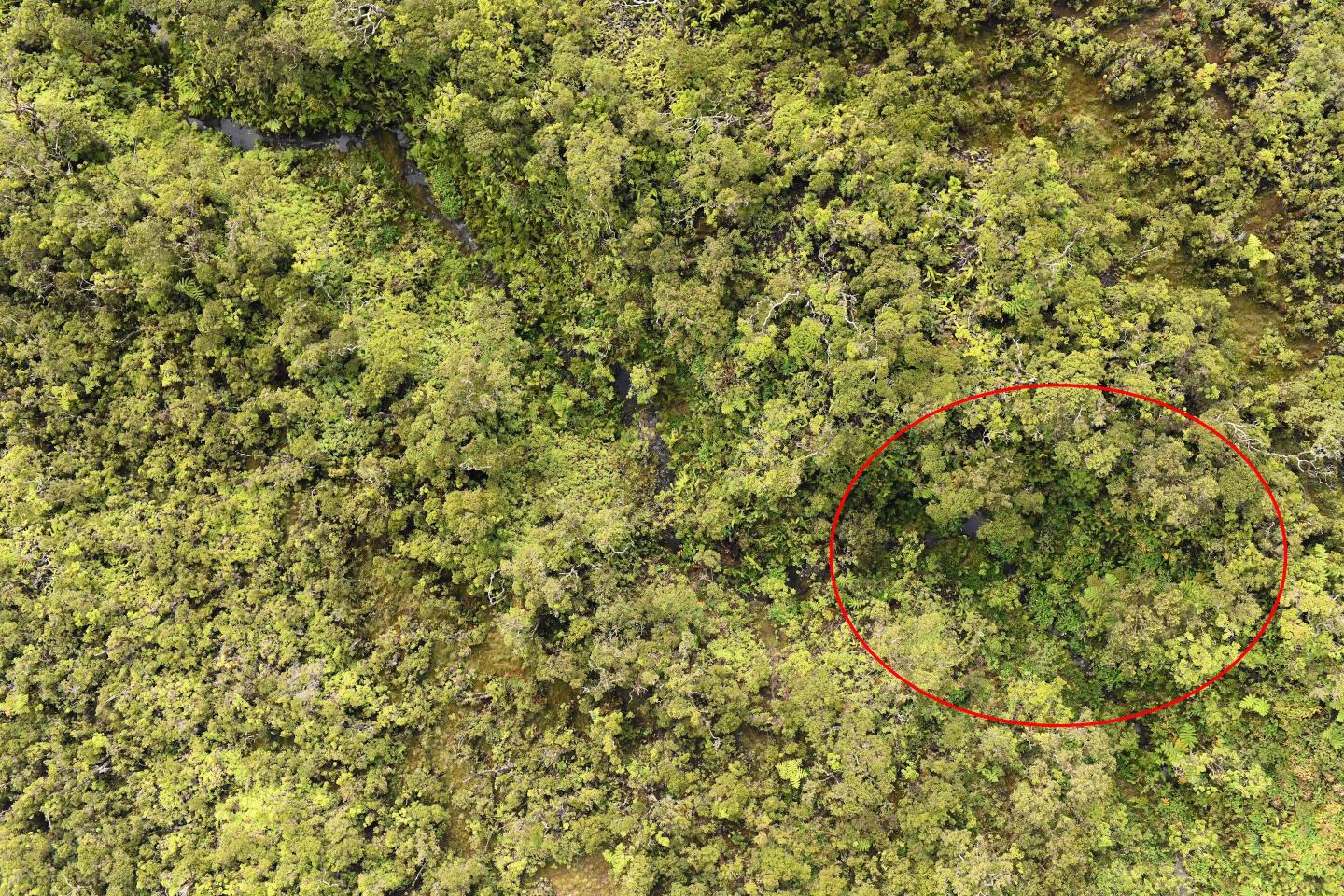
For a project like this, where ginger plants are nestled among a dense forest, it’s essential to look at the ginger’s patterns with images captured by a drone, helicopter, or satellite.
“Imagine you have all this land and forest; and you have all these images. Now, you’ve got a volume of data that takes a lot of time and energy to analyze,” he says. “If you could give something a path, something like A.I., and adapt it to identify which of those images have ginger in them, you could really accelerate your workflow.”
TNC has battled ginger for 30 years, fearing its overwhelming prowess will obliterate Hawaii’s native forests. They used (and sometimes still do use) GPS to manually track populations, along with timely and very costly ground surveys: flying crews into overgrown areas via helicopter, then navigating thick rainforests, uneven terrain, cliffs, and waterfalls to search for clusters of ginger. A.I. allows them to theoretically find outlier populations more swiftly (rather than boots-on-the-ground searches) and better prioritize their time in the field regulating it.
“We can then put a cost estimate on control work or change our strategies,” Fay says. “For instance, if we find an outlier population, it makes sense to control that first and work from the outside in.”
The challenge here is that photos are captured from above and overlook an incredibly dense forest of green. Depending on when the images are taken, shades of green change throughout the day and with the island’s constant climate shifts, from sun to overcast to rain. In certain lights, many of the greens look like ginger and vice versa.
“It is really challenging. But that’s where we use local science to see what’s in the image and what can we drill down into to get the green nuances of that image that translate to a program or an algorithm or A.I.,” Swami explains. When images are taken, humans draw boxes around the correct plant to teach the computer to recognize the patterns of ginger. Therefore, TNC needs to translate as much data as possible, so the machine can interpret it at an accelerated or on a large volume. “At the end of the day, if we can’t understand it, this thing is not going to understand it.”
Once they locate and prioritize heavily populated ginger patches, they send teams to extract them. As the conservancy integrates A.I. more and more, it will eventually save thousands of manual hours and hopefully, biodiversity.
Future of A.I.
According to Cohen, the potential for A.I. in conservation is endless. “I envision a future where we send high-powered drones into the air to assess the landscape for multiple threats at a time. For instance, pigs, deer, ginger, and strawberry guava,” she says, foretelling how the machine will send GPS locations in real-time to staff in the office and a cloud database. “One day in the not-too-distant future, that same drone could then eliminate the threat once detected. Meaning, they could drop a little amount of herbicide onto the target weed.” This could eventually relieve the burden of dangerous and costly traverses.
The day before my hike through Waikamoi, I joined Makale’a Ane, a community-based program manager for TNC, for an excursion on the other side of the island where a drought-ridden part of the West Maui mountains is impacting the Olowalu coral reef below. During a recent storm, tiny granules of sediment rolled off the hills like an avalanche and flowed directly into the reef. This occurred because the section of mountain right above it is compromised: the understory is weak, the trees are deprived of water, and the frail moss and lichen can’t properly absorb the rain.
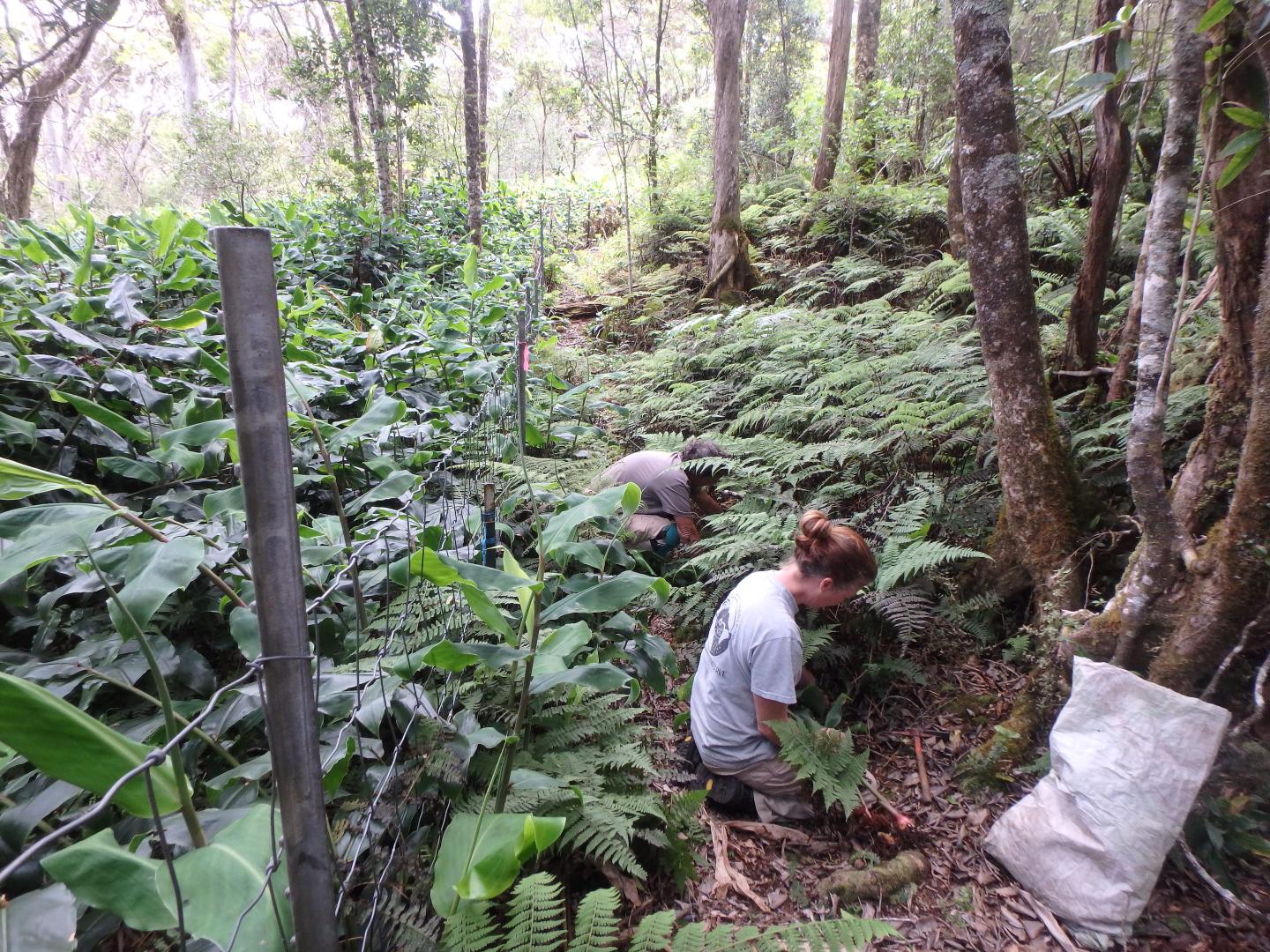
We spoke about the connection of modern technology and ancestral knowledge, and how both can coexist.
“When we look at new technology, we need to also look at the intent behind that technology. If we’re not doing good with it, that has no connection to me,” Ane says.
Having been born and raised on the islands, this deeply rooted relationship to the land is engrained in her, like so many others in conservation. “But if we’re really trying to protect our native forests, and thereby protecting our culture, resources, and our connection to our land, then yes, let’s adopt really cool practices that would help to protect these native systems.”
The Hawaiian state motto reveres that “the life of the land is perpetuated in righteousness.” A.I. is surprisingly enriching that responsibility by enabling the health of mauka to makai, and conserving what is left.
Never miss a story: Follow your favorite topics and authors to get a personalized email with the journalism that matters most to you.