• Home
  • Latest
  • Fortune 500
  • Finance
  • Tech
  • Leadership
  • Lifestyle
  • Rankings
  • Multimedia

Trendingnow

1

AI CEOs from OpenAI, Anthropic, and Microsoft set aside their rivalry to warn Congress AI is making it too easy to design and create bioweapons

2

Social Security faces a 24% cut in 2032—that's a $345 billion hit to retirees nationwide, watchdog says

3

Billionaires Elon Musk and Mark Zuckerberg used mortgages to buy multimillion-dollar mansions. Here’s why that’s a savvy financial decision

1

AI CEOs from OpenAI, Anthropic, and Microsoft set aside their rivalry to warn Congress AI is making it too easy to design and create bioweapons

2

Social Security faces a 24% cut in 2032—that's a $345 billion hit to retirees nationwide, watchdog says

3

Billionaires Elon Musk and Mark Zuckerberg used mortgages to buy multimillion-dollar mansions. Here’s why that’s a savvy financial decision
Commentary

Corporations are (finally) starting to invest in resilient food supply chains

By
Katarina Kahlmann
Katarina Kahlmann
Down Arrow Button Icon
By
Katarina Kahlmann
Katarina Kahlmann
Down Arrow Button Icon
April 13, 2022, 6:23 AM ET
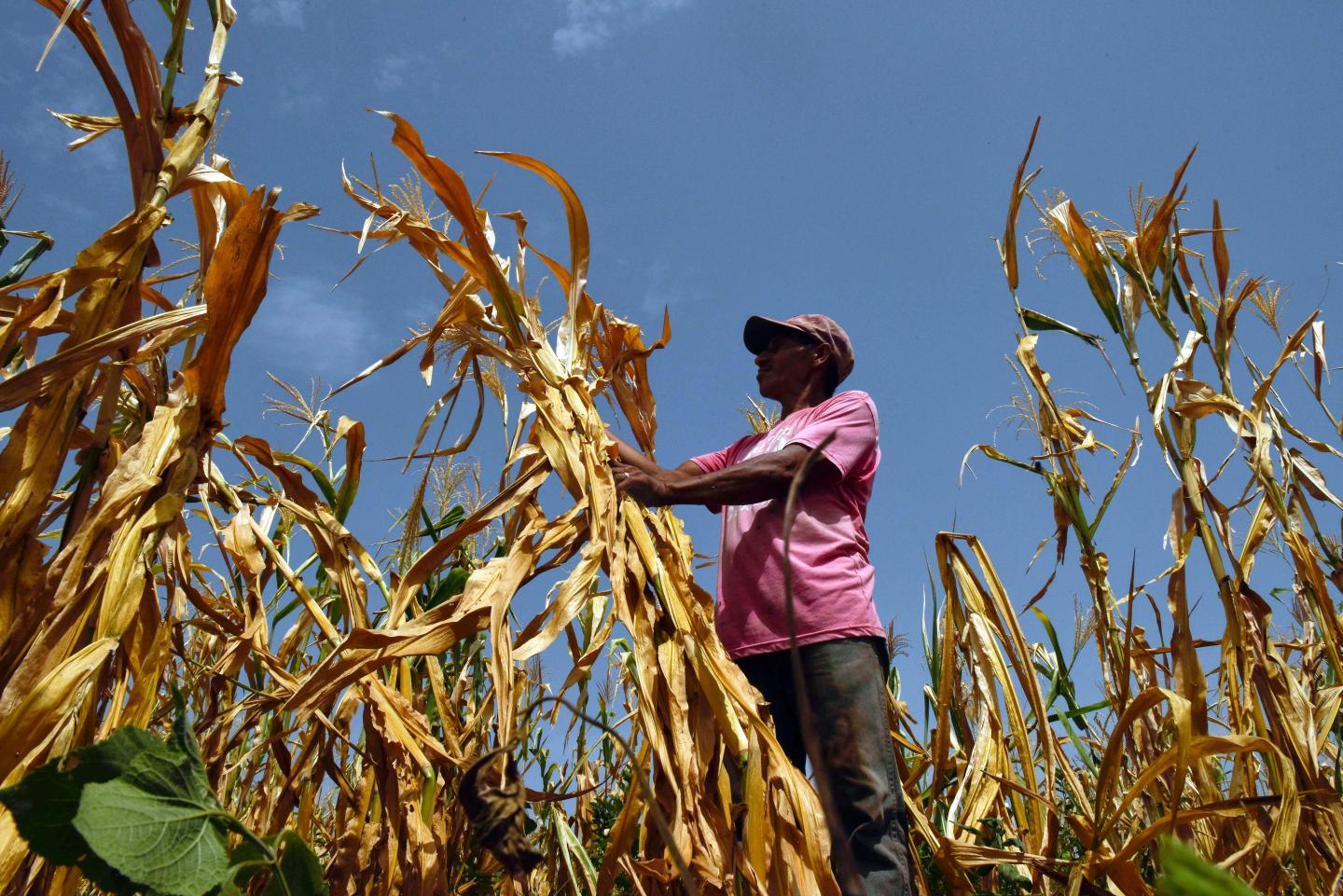
In the past 50 years, climate change has lowered global agricultural productivity by an estimated 21%, and by up to 34% in Africa and Latin America.
In the past 50 years, climate change has lowered global agricultural productivity by an estimated 21%, and by up to 34% in Africa and Latin America.Osca Rivera—AFP/Getty Images

The rising cost of the weekly trip to the grocery store, which just hit a 40-year high in the U.S., does not start and end at the supermarket.

Global food supply chains are only as resilient as the 500 million smallholder farmers who produce up to 70% of the world’s food and $1.5 trillion worth of major commodities like cocoa and coffee.

Smallholders are having to contend with the pandemic and the ripple effects of the ongoing conflict in Ukraine. They are also facing the most direct consequences of climate change. In the past 50 years, climate change has lowered global agricultural productivity by an estimated 21%, and by up to 34% in Africa and Latin America.

For companies to de-risk supply chains, reduce volatility in food prices, and achieve the ambitious livelihood and sustainability goals many have set, they must invest in smallholder resilience strategies that successfully reduce climate vulnerability in the long term.

The good news is that regenerative agriculture–farming practices that help restore ecosystems and reduce carbon emissions–can shore up smallholders against shocks and stresses, enabling them to continue and grow their operations and livelihoods.

These methods must make business sense to the farmer. Too often, public and private sector projects intended to address environmental issues depend on farmers radically changing their practices with no clear payoff or safety net. These farmers live on thin margins and need quick, tangible economic benefits in order to adopt a new approach.

For example, Nespresso, in partnership with TechnoServe, helps train thousands of coffee farmers in Kenya and Ethiopia in regenerative practices like shade tree planting, composting, and integrated pest management. These accessible techniques can support sustainable coffee production in East Africa, where climate change is projected to reduce coffee-growing areas by up to a third.

Not only does this approach provide a buffer against rising temperatures, but it also improves the quality and yields of farmers’ coffee. Participating farmers brought in an additional $7.1 million last year. The income increases motivate them to continue regenerative practices. Thus far, they have planted 1.1 million trees and turned 56,000 acres of farmland over to regenerative agriculture.

In Tanzania, a project led by the Nature Conservancy and Pathfinder International encouraged some 10,000 farmers to adopt climate-smart agriculture practices, which included techniques to prevent sediment from running off into the lake. This not only improved local biodiversity and water quality but increased the farmers’ maize yields by 50%, providing them with a clear income benefit.

Investments in smallholders’ resilience must also make business sense to multi-national buyers. This may seem obvious, but companies need to be confident that regenerative agriculture initiatives will also benefit their supply chains and bottom line to justify their efforts.

In Mexico, for instance, Danone, with the support of Danone Ecosystem Fund, wanted to both improve smallholder farmer livelihoods and help meet its sustainable sourcing goals. Working with TechnoServe and other partners to improve farmer production through regenerative practices, small-scale farmers learned new techniques that promoted reforestation and carbon storage, reducing their emissions by 13%. Meanwhile, farmers tripled their income, encouraging them to continue, and Danone Mexico now buys around a quarter of its total milk from these farmers, therefore diversifying its sourcing and making the company more resilient.

In South Africa, Unilever sought to strengthen the supply chain for the pre-made soup products of Knorr, one of its biggest brands. Partnering with WWF, the company helped smallholder farmers cultivate drought-resistant crops that also improved the agrobiodiversity of cereals and grains. It also guaranteed the purchase of the farmers’ yields, reducing farmers’ risk and giving them a financial incentive that further bolstered the reliability of the company’s sourcing.

Finally, none of these changes will endure without the active participation of the local businesses and organizations that influence farmers’ lives and livelihoods. These include the cooperatives and businesses that purchase their crops, the suppliers who sell them seed and veterinary medicine, and the government extension offices that provide them with agricultural training.

Long after TechnoServe and other organizations complete a project, these businesses and institutions will remain in the community, and it is vital that they play an active role in regenerative solutions in order to sustain them. As multinationals seek to strengthen their supply chains, they must understand the roles, interactions, and incentives of these stakeholders.

The approach to sustainability among multinationals has transformed dramatically in the past two decades. Commitments to net zero emissions and sustainability strategies are important first steps, but to make a difference on the ground, which ultimately makes a difference to squeezed families around the world, companies will need to invest in proven solutions where lives and livelihoods are at stake.

The very sustainability of food supply chains starts with smallholders, which is why regenerative agriculture–applied in a way that makes business sense to farmers and food companies–should be the bread and butter of every food business.

Katarina Kahlmann is chief program officer at TechnoServe, a non-profit organization implementing business solutions to poverty

More must-read commentary published by Fortune:

  • We are getting worker loneliness all wrong
  • Putin’s war is disrupting crypto’s fantasy of stateless money
  • The pandemic is threatening our children’s ability to cope
  • Women of color can no longer buy into the ‘inclusion delusion’
  • Pandemic, oil prices, and war: Here’s when inflation will drop
Never miss a story: Follow your favorite topics and authors to get a personalized email with the journalism that matters most to you.
About the Author
By Katarina Kahlmann
See full bioRight Arrow Button Icon

Latest in Commentary

Finance
Lorem ipsum dolor sit amet, consectetur adipiscing elit, sed do eiusmod tempor incididunt ut labore et dolore magna aliqua. Ut enim ad minim veniam
By Fortune Editors
October 20, 2025
Finance
Lorem ipsum dolor sit amet, consectetur adipiscing elit, sed do eiusmod tempor incididunt ut labore et dolore magna aliqua. Ut enim ad minim veniam
By Fortune Editors
October 20, 2025
Finance
Lorem ipsum dolor sit amet, consectetur adipiscing elit, sed do eiusmod tempor incididunt ut labore et dolore magna aliqua. Ut enim ad minim veniam
By Fortune Editors
October 20, 2025
Finance
Lorem ipsum dolor sit amet, consectetur adipiscing elit, sed do eiusmod tempor incididunt ut labore et dolore magna aliqua. Ut enim ad minim veniam
By Fortune Editors
October 20, 2025
Finance
Lorem ipsum dolor sit amet, consectetur adipiscing elit, sed do eiusmod tempor incididunt ut labore et dolore magna aliqua. Ut enim ad minim veniam
By Fortune Editors
October 20, 2025
Finance
Lorem ipsum dolor sit amet, consectetur adipiscing elit, sed do eiusmod tempor incididunt ut labore et dolore magna aliqua. Ut enim ad minim veniam
By Fortune Editors
October 20, 2025

Most Popular

Finance
Lorem ipsum dolor sit amet, consectetur adipiscing elit, sed do eiusmod tempor incididunt ut labore et dolore magna aliqua. Ut enim ad minim veniam
By Fortune Editors
October 20, 2025
Finance
Lorem ipsum dolor sit amet, consectetur adipiscing elit, sed do eiusmod tempor incididunt ut labore et dolore magna aliqua. Ut enim ad minim veniam
By Fortune Editors
October 20, 2025
Finance
Lorem ipsum dolor sit amet, consectetur adipiscing elit, sed do eiusmod tempor incididunt ut labore et dolore magna aliqua. Ut enim ad minim veniam
By Fortune Editors
October 20, 2025
Finance
Lorem ipsum dolor sit amet, consectetur adipiscing elit, sed do eiusmod tempor incididunt ut labore et dolore magna aliqua. Ut enim ad minim veniam
By Fortune Editors
October 20, 2025
Finance
Lorem ipsum dolor sit amet, consectetur adipiscing elit, sed do eiusmod tempor incididunt ut labore et dolore magna aliqua. Ut enim ad minim veniam
By Fortune Editors
October 20, 2025
Finance
Lorem ipsum dolor sit amet, consectetur adipiscing elit, sed do eiusmod tempor incididunt ut labore et dolore magna aliqua. Ut enim ad minim veniam
By Fortune Editors
October 20, 2025
Fortune Secondary Logo
Rankings
  • 100 Best Companies
  • Fortune 500
  • Global 500
  • Fortune 500 Europe
  • Most Powerful Women
  • World's Most Admired Companies
  • See All Rankings
  • Lists Calendar
Sections
  • Finance
  • Fortune Crypto
  • Features
  • Leadership
  • Health
  • Commentary
  • Success
  • Retail
  • Mpw
  • Tech
  • Lifestyle
  • CEO Initiative
  • Asia
  • Politics
  • Conferences
  • Europe
  • Newsletters
  • Personal Finance
  • Environment
  • Magazine
  • Education
Customer Support
  • Frequently Asked Questions
  • Customer Service Portal
  • Privacy Policy
  • Terms Of Use
  • Single Issues For Purchase
  • International Print
Commercial Services
  • Advertising
  • Fortune Brand Studio
  • Fortune Analytics
  • Fortune Conferences
  • Business Development
  • Group Subscriptions
About Us
  • About Us
  • Press Center
  • Work At Fortune
  • Terms And Conditions
  • Site Map
  • About Us
  • Press Center
  • Work At Fortune
  • Terms And Conditions
  • Site Map
  • Facebook icon
  • Twitter icon
  • LinkedIn icon
  • Instagram icon
  • Pinterest icon

Latest in Commentary

bs
CommentaryCalifornia
I’ve sold property on California’s Central Coast for decades. The buyers chasing ranch and winery estates are after more than a lifestyle
By Lindsey HarnJune 6, 2026
10 hours ago
home
CommentaryHousing
One in five homebuyers is a single woman – here’s what’s driving the shift
By Kathy CollinsJune 6, 2026
11 hours ago
sa
CommentaryIPOs
When good money goes bad: the question SpaceX and OpenAI investors aren’t asking
By Rory McDonaldJune 6, 2026
12 hours ago
denton
CommentaryIran
ICC Secretary General: The Hormuz clock that matters isn’t diplomatic — it’s agricultural
By John W.H. Denton AOJune 6, 2026
16 hours ago
wc
CommentaryWorld Cup
The World Cup is coming to the U.S. — so where are the international travelers?
By Evan SaundersJune 5, 2026
1 day ago
mc
Commentarydisruption
What AI is actually good for
By Maria ColacurcioJune 5, 2026
1 day ago

Most Popular

AI CEOs from OpenAI, Anthropic, and Microsoft set aside their rivalry to warn Congress AI is making it too easy to design and create bioweapons
AI
AI CEOs from OpenAI, Anthropic, and Microsoft set aside their rivalry to warn Congress AI is making it too easy to design and create bioweapons
By Marco Quiroz-GutierrezJune 5, 2026
2 days ago
Social Security faces a 24% cut in 2032—that's a $345 billion hit to retirees nationwide, watchdog says
Economy
Social Security faces a 24% cut in 2032—that's a $345 billion hit to retirees nationwide, watchdog says
By Nick LichtenbergJune 5, 2026
2 days ago
Billionaires Elon Musk and Mark Zuckerberg used mortgages to buy multimillion-dollar mansions. Here’s why that’s a savvy financial decision
Real Estate
Billionaires Elon Musk and Mark Zuckerberg used mortgages to buy multimillion-dollar mansions. Here’s why that’s a savvy financial decision
By Sydney LakeJune 6, 2026
12 hours ago
MacKenzie Scott's approach to her $26 billion giving spree was inspired by a book she read in college about writing
Success
MacKenzie Scott's approach to her $26 billion giving spree was inspired by a book she read in college about writing
By Sydney LakeJune 5, 2026
2 days ago
Current price of oil as of June 5, 2026
Personal Finance
Current price of oil as of June 5, 2026
By Joseph HostetlerJune 5, 2026
1 day ago
Ohio city workers are covering automated license plate readers with trash bags as officials sound the alarm on 'egregious violations' of privacy
Cybersecurity
Ohio city workers are covering automated license plate readers with trash bags as officials sound the alarm on 'egregious violations' of privacy
By Sasha RogelbergJune 3, 2026
3 days ago

© 2026 Fortune Media IP Limited. All Rights Reserved. Use of this site constitutes acceptance of our Terms of Use and Privacy Policy | CA Notice at Collection and Privacy Notice | Do Not Sell/Share My Personal Information
FORTUNE is a trademark of Fortune Media IP Limited, registered in the U.S. and other countries. FORTUNE may receive compensation for some links to products and services on this website. Offers may be subject to change without notice.