• Home
  • News
  • Fortune 500
  • Tech
  • Finance
  • Leadership
  • Lifestyle
  • Rankings
  • Multimedia
CommentaryThe Biden administration

Here’s how much the Biden administration should be investing in infrastructure to prevent another pandemic

By
Kevin Berry
Kevin Berry
,
David Finnoff
David Finnoff
,
Richard Horan
Richard Horan
and
Peter Daszak
Peter Daszak
Down Arrow Button Icon
By
Kevin Berry
Kevin Berry
,
David Finnoff
David Finnoff
,
Richard Horan
Richard Horan
and
Peter Daszak
Peter Daszak
Down Arrow Button Icon
April 11, 2022, 6:20 AM ET
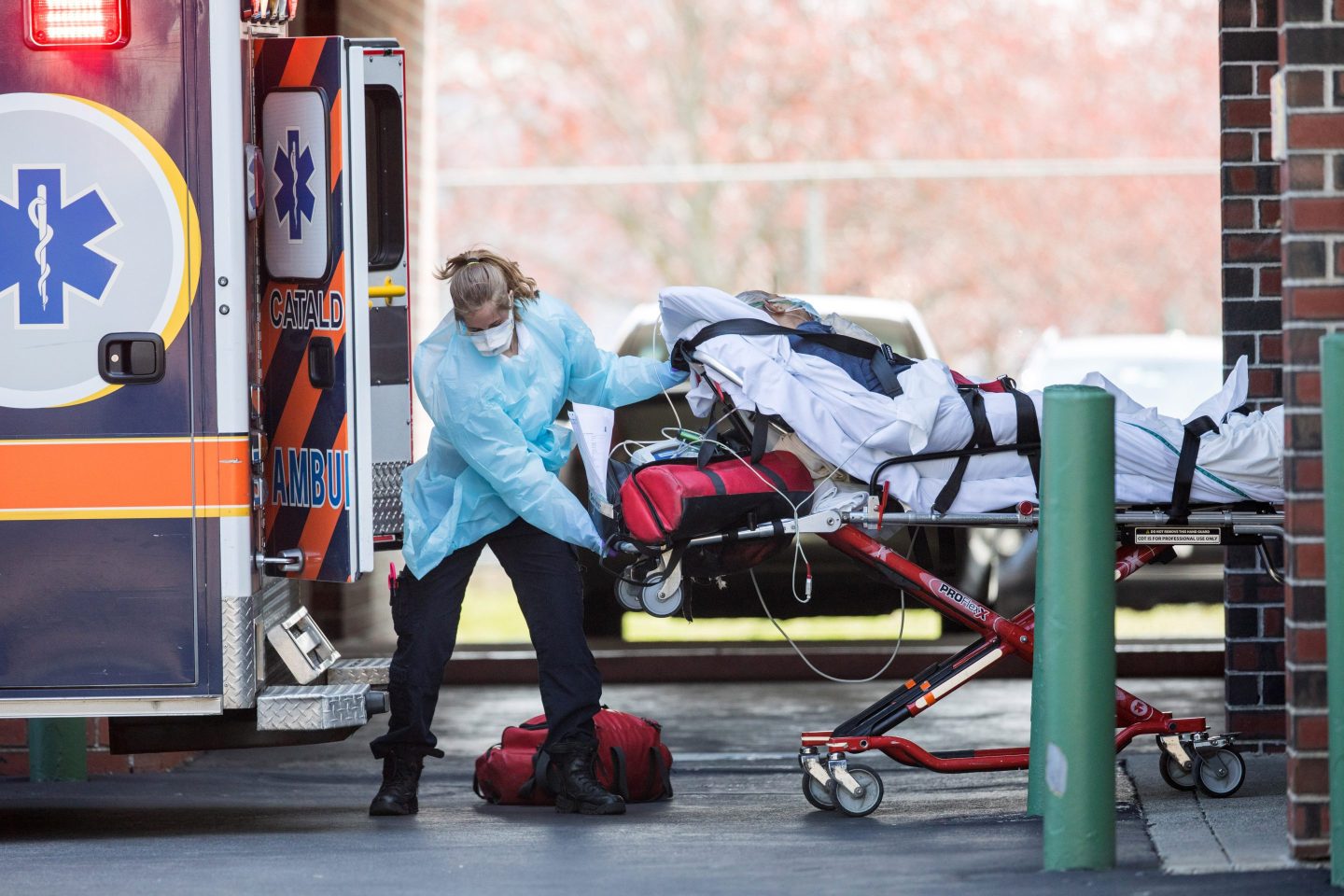
Additional resources would help to prevent the next pandemic by making it possible to detect novel outbreaks early on. This preparedness can also reduce the cost of a pandemic, should it occur.
Additional resources would help to prevent the next pandemic by making it possible to detect novel outbreaks early on. This preparedness can also reduce the cost of a pandemic, should it occur.Scott Eisen—Getty Images

The COVID-19 pandemic is far from over, but it cannot blind policymakers: COVID-19 is only one of hundreds of thousands of undiscovered microbes that exist in nature and can infect people.

Even more alarmingly, the rate at which these diseases are spilling over into our population is increasing each year.

COVID-19, the first truly global high-impact pandemic of the 21st century, is a warning siren to the risks that continue to grow because of environmental change, globalized travel and trade, and the lack of effective prevention policies. It could finally motivate wise investments and effective risk management measures to avoid future catastrophes.

We’ve looked closely at this issue and explored what these investments should look like, as well as the economic gains they could generate for the U.S. The Biden administration clearly needs to invest much more money to prevent and prepare for another pandemic.

A National Research Council report after the 2014 Ebola outbreak emphasized the lack of preparedness and the need for investments in preparation. In the wake of COVID-19, multiple reviews suggest that preparedness deficiencies were a significant factor in the economic and health impacts experienced in developed countries.

In the U.S., preparedness deficiencies were exacerbated by an uncoordinated federal response early in the pandemic, which led to inefficient use of existing resources. While a pandemic plan existed, it was designed in response to smaller-scale outbreaks that had previously been the modern experience. Additionally, the pandemic response was undermined by a politicized and patchwork state-by-state response.

In President Biden’s recent American Jobs Plan, $30 billion was proposed in “infrastructure” spending to prevent future pandemics, as well as other major investments in research and caregiving that could provide additional support. For example, $400 billion were earmarked for caregiving to the elderly, and $40 billion to upgrade research infrastructure and laboratories.

The U.S. should invest far more in building capacity to both prevent pandemics and be able to adapt to them should they occur. These additional resources would help to prevent the next pandemic by making it possible to detect novel outbreaks early on and use contact tracing to target and rush a response.

We can also reduce the cost of a pandemic, should it occur, by ensuring sufficient hospital capacity and public health resources to manage a large outbreak. These resources would be available for other public health needs outside of pandemics.

Under reasonable assumptions, our analysis predicts maximum gains arise from an initial investment of $511 billion, followed by a steady increase of up to $829 billion and supported by annual investments to maintain capacity. The returns to these investments would range between $9-$15 in benefits per dollar invested. Altogether, our proposed investments in capacity could generate up to $10.4 trillion in expected avoided damages to society, as well as avoiding immeasurable human suffering.

These investments generate returns that can be broken down into three different sources. The first is considered a risk-free rate of return, in the sense of a return generated from healthcare capacity that can be used before a pandemic. For example, healthcare facilities, doctors, nurses, beds, labs, and other resources help society outside of pandemic events.

The second source is from reductions in the probability of a pandemic occurring. Self-protection–the ability to detect outbreaks early on, perform contact tracing, and rush response to outbreaks–would allow the U.S. to avoid future pandemics. The third source is self-insurance: reducing the costs of a pandemic if it does occur. This involves having sufficient hospital capacity, the ability to quickly develop vaccines and therapeutics, and lower the cost of a pandemic that does occur.

As background risks increase with continued environmental change and globalization, the relative importance of self-protection increases. These prevention investments would give us the capacity to detect and respond to outbreaks early while they’re small.

As the risk of future pandemics increases over time, we believe each of these three different returns provides ample incentive to invest more in health preparedness capacity in the U.S.

Kevin Berry is an associate professor of economics at the University of Alaska Anchorage. David Finnoff is a professor of economics at the University of Wyoming. Richard Horan is a professor of economics at Michigan State University. Peter Daszak is the president of EcoHealth Alliance.

Never miss a story: Follow your favorite topics and authors to get a personalized email with the journalism that matters most to you.
About the Authors
By Kevin Berry
See full bioRight Arrow Button Icon
By David Finnoff
See full bioRight Arrow Button Icon
By Richard Horan
See full bioRight Arrow Button Icon
By Peter Daszak
See full bioRight Arrow Button Icon

Latest in Commentary

Ayesha and Stephen Curry (L) and Arndrea Waters King and Martin Luther King III (R), who are behind Eat.Play.Learn and Realize the Dream, respectively.
Commentaryphilanthropy
Why time is becoming the new currency of giving
By Arndrea Waters King and Ayesha CurryDecember 2, 2025
15 hours ago
Trump
CommentaryTariffs and trade
The trade war was never going to fix our deficit
By Daniel BunnDecember 2, 2025
16 hours ago
Elizabeth Kelly
CommentaryNon-Profit
At Anthropic, we believe that AI can increase nonprofit capacity. And we’ve worked with over 100 organizations so far on getting it right
By Elizabeth KellyDecember 2, 2025
17 hours ago
Decapitation
CommentaryLeadership
Decapitated by activists: the collapse of CEO tenure and how to fight back
By Mark ThompsonDecember 2, 2025
17 hours ago
David Risher
Commentaryphilanthropy
Lyft CEO: This Giving Tuesday, I’m matching every rider’s donation
By David RisherDecember 1, 2025
2 days ago
college
CommentaryTech
Colleges risk getting it backwards on AI and they may be hurting Gen Z job searchers
By Sarah HoffmanDecember 1, 2025
2 days ago

Most Popular

placeholder alt text
Economy
Ford workers told their CEO 'none of the young people want to work here.' So Jim Farley took a page out of the founder's playbook
By Sasha RogelbergNovember 28, 2025
5 days ago
placeholder alt text
Success
Warren Buffett used to give his family $10,000 each at Christmas—but when he saw how fast they were spending it, he started buying them shares instead
By Eleanor PringleDecember 2, 2025
20 hours ago
placeholder alt text
Economy
Elon Musk says he warned Trump against tariffs, which U.S. manufacturers blame for a turn to more offshoring and diminishing American factory jobs
By Sasha RogelbergDecember 2, 2025
14 hours ago
placeholder alt text
C-Suite
MacKenzie Scott's $19 billion donations have turned philanthropy on its head—why her style of giving actually works
By Sydney LakeDecember 2, 2025
20 hours ago
placeholder alt text
North America
Jeff Bezos and Lauren Sánchez Bezos commit $102.5 million to organizations combating homelessness across the U.S.: ‘This is just the beginning’
By Sydney LakeDecember 2, 2025
15 hours ago
placeholder alt text
AI
More than 1,000 Amazon employees sign open letter warning the company's AI 'will do staggering damage to democracy, our jobs, and the earth’
By Nino PaoliDecember 2, 2025
22 hours ago
Rankings
  • 100 Best Companies
  • Fortune 500
  • Global 500
  • Fortune 500 Europe
  • Most Powerful Women
  • Future 50
  • World’s Most Admired Companies
  • See All Rankings
Sections
  • Finance
  • Leadership
  • Success
  • Tech
  • Asia
  • Europe
  • Environment
  • Fortune Crypto
  • Health
  • Retail
  • Lifestyle
  • Politics
  • Newsletters
  • Magazine
  • Features
  • Commentary
  • Mpw
  • CEO Initiative
  • Conferences
  • Personal Finance
  • Education
Customer Support
  • Frequently Asked Questions
  • Customer Service Portal
  • Privacy Policy
  • Terms Of Use
  • Single Issues For Purchase
  • International Print
Commercial Services
  • Advertising
  • Fortune Brand Studio
  • Fortune Analytics
  • Fortune Conferences
  • Business Development
About Us
  • About Us
  • Editorial Calendar
  • Press Center
  • Work At Fortune
  • Diversity And Inclusion
  • Terms And Conditions
  • Site Map

© 2025 Fortune Media IP Limited. All Rights Reserved. Use of this site constitutes acceptance of our Terms of Use and Privacy Policy | CA Notice at Collection and Privacy Notice | Do Not Sell/Share My Personal Information
FORTUNE is a trademark of Fortune Media IP Limited, registered in the U.S. and other countries. FORTUNE may receive compensation for some links to products and services on this website. Offers may be subject to change without notice.