
Delia Dai, a young professional at a law firm in Shanghai, does not know how to cook.
Until recently, this had not been a problem for her, living in Shanghai, where streets are usually abuzz with thousands of couriers racing food and grocery orders to apartment blocks across the city. But last week, Shanghai authorities forced the thriving metropolis into a complete lockdown to contain an outbreak of COVID-19. Now, Dai and many of the city’s other 25 million residents are quickly running out of food.
“I only have enough cooked food [to last] until today,” she said Wednesday. Dai added that she has a few raw vegetables stocked in her flat, but now has to figure out how to use the pots and pans that have gathered dust in her pantry.
“There are a lot of people like me, including many young people, who don’t know how to cook,” she said. But she is grateful that at least she has some food left and is optimistic she can concoct something edible. “I cannot say I’m starving, right?”
Others trapped in the city appear less fortunate. Online, videos from Shanghai show residents chanting out their windows to protest that they are going hungry in lockdown—only to be told to keep quiet and comply with restrictions by an anonymous drone flying through the air.
Shanghai residents say their access to food during lockdown depends on luck, and the combined competence of city officials and their own building managers. Although some delivery apps are still functioning, the services are overwhelmed by demand. Securing an order has become a daily ordeal for people in lockdown. Some worry that older and less tech-savvy residents will be especially vulnerable to food shortages.
Shanghai residents also fear other aspects of lockdown life—such as reports of officials killing pet dogs they suspect of being infected with COVID, of authorities separating children from their parents, and of positive cases being sent to unsanitary and crowded quarantine facilities.
But as the lockdown enters its second week, the number one concern for many in Shanghai is where their next meal will come from. And there is mounting frustration that the city’s lockdown, planned to last just four days, will drag on for much longer than that.
Shanghai’s lockdown
On Thursday, Shanghai reported 19,982 cases of COVID-19, the most that any city in mainland China has recorded in a day since the beginning of the pandemic—including in Wuhan, where COVID was first documented in 2019.
Shanghai’s spiraling caseload comes even though much of the city has been in lockdown for over a week. In late March, Shanghai authorities announced a phased lockdown in which the authorities were to shut down half of the city from March 28 to April 1 and the other half from April 1 to April 5, giving health officials the chance to sweep the city and conduct rounds of COVID tests.
But on Monday, as case numbers continued to climb, authorities announced that the city’s 25 million residents would all be locked down indefinitely.
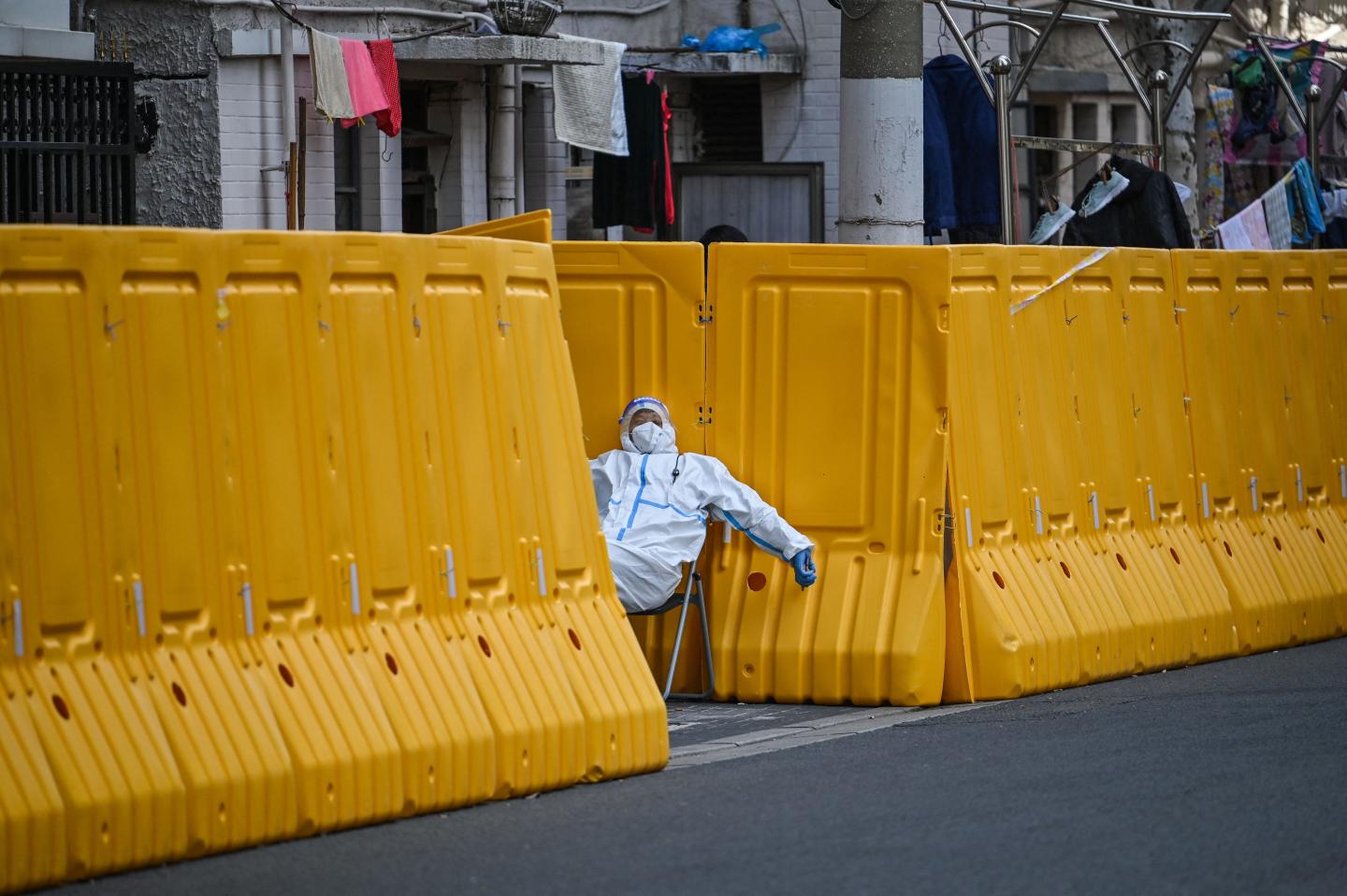
Public health experts, including some in China, have said that the outbreak is evidence that China’s strict adherence to COVID zero may not work against the highly transmissible Omicron variant and may be too costly to enforce indefinitely. China calls its strategy “dynamic COVID zero,” and says that while sporadic infections are inevitable the government should spare no effort in eradicating the spread of COVID-19 when outbreaks do occur.
“Which country would handle influenza this way?” Dr. Zhu Weiping, an epidemiologist in Shanghai, said on a phone call that went viral in China this week. “No one is listening to professionals.”
Zhu is a government scientist. She was answering a phone call from an anonymous Shanghai resident who recorded the phone call with her permission. Zhu told the caller that she had pleaded with city officials to allow positive cases to quarantine at home instead of being sent to isolation facilities. But Zhu said officials ignored her request.
Xi Chen, a health policy professor at Yale University, noted that Chinese public health experts have debated the “stringency” of measures like centralized quarantine, but Chinese officials have shown no inclination to relax the COVID-zero policy anytime soon.
Last weekend, Sun Chunlan, one of China’s four vice premiers, traveled to Shanghai and vowed “unswerving adherence” to China’s COVID-zero policies, according to state media.
Many Shanghai residents say they are more frightened of China’s COVID-zero measures than of the virus itself.
Conor, an American teacher in Shanghai who only shared his first name because of concerns over his employer, says that he has mostly been anxious that he might get separated from his 13-month-old child should someone in his family test positive. He said videos shared online, and later scrubbed by Chinese censors, of children locked in isolation facilities without their parents have been “very worrying” for him and his wife. He explained that Shanghai’s decision this week to relax the rules and allow some parents to quarantine with their children has been a huge relief.
Group buying food
With the entire city competing to order food through Shanghai’s overburdened delivery apps, Chinese apartment blocks have turned to a relatively new e-commerce phenomenon to beat out competition and score essential supplies—group buying.
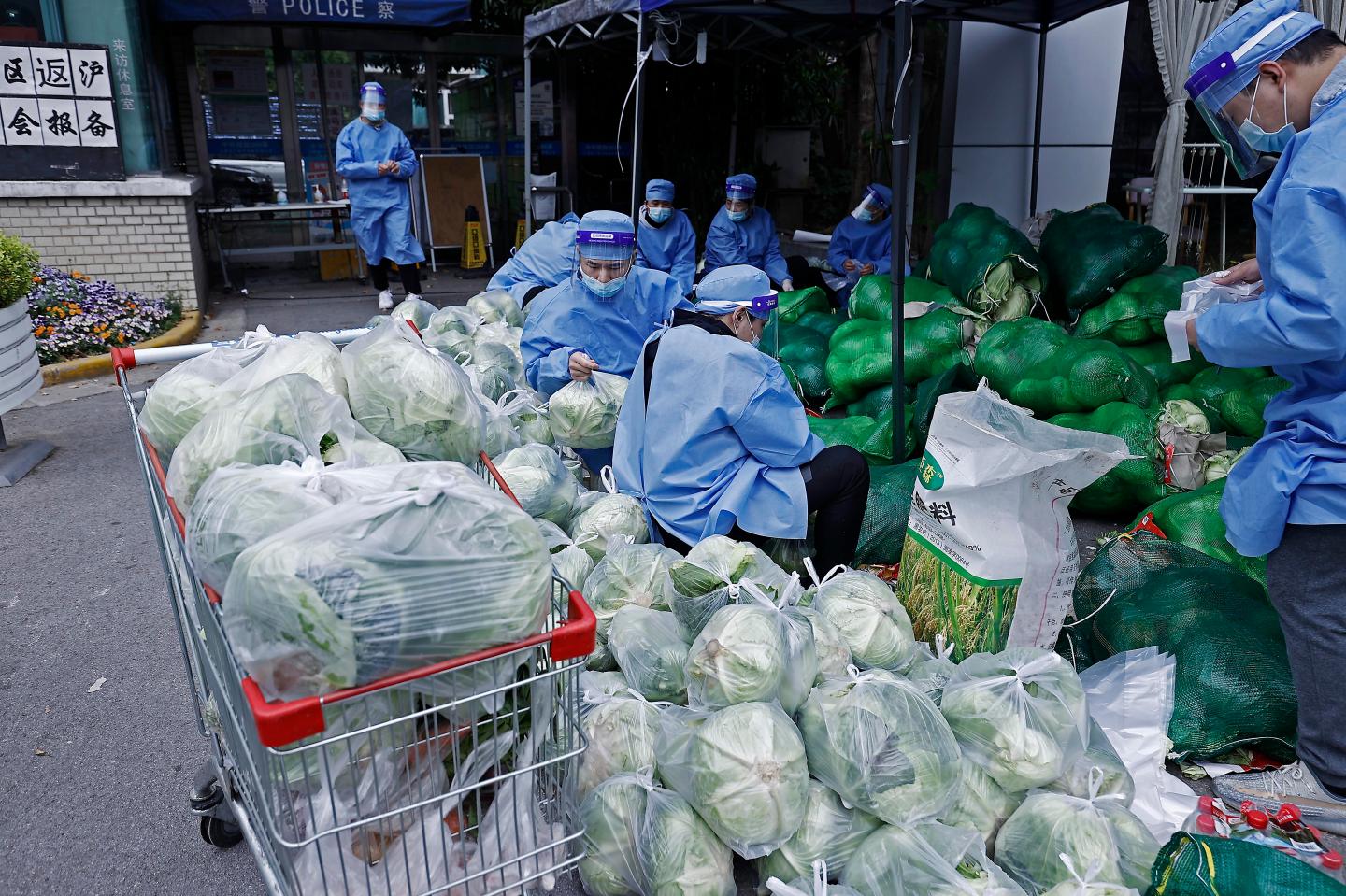
Like a wholesaler, group buying allows consumers to gather together, make bulk purchases, and share orders among one another at discounted rates. Group buying has become increasingly popular in recent years among price-conscious customers, and major e-commerce firms like Alibaba, Pinduoduo, and JD.com have invested heavily in building up their collective-buying offerings.
But in Shanghai’s ongoing lockdown, group buying is not just a hot new e-commerce trend; it has become the last lifeline for many people across the city to get food.
“You can only buy through groups now, because [individual stores] just can’t deliver anymore,” says Conor. China’s largest e-commerce platform, Alibaba, announced on Wednesday that all individual deliveries would be postponed for seven days, even while Shanghai authorities denied that individual food and package orders were suspended in the city.
“Every few days I start panicking or praying for my community to send me group-buying links [on WeChat],” says one Shanghai resident, worrying her family will run out of food.
Our access to food has been “really inconsistent,” says Conor. He says he wakes up at six each morning to join group orders and see if he can get through to individual delivery services. “Some of my friends have tried to order [food], and they can’t get any,” he says. Other Shanghai residents expressed concerns that older and less tech-savvy populations are especially vulnerable to these shortages, given that they may struggle to use messaging apps or group-buying platforms on their phones.
Michael Wang, a digital marketing professional in his mid-forties living in Shanghai, says that he had a hunch the lockdown would last longer than four days, having seen how quickly Omicron spread in places like Hong Kong. So he stocked up on two weeks of food supplies before he entered what was supposed to be a four-day lockdown.
Wang said that while he has enough food to eat, he has begun to barter items with neighbors to make sure his family gets some variety in their meals. “I just traded a pack of biscuits for a bag of rice with one of my neighbors,” he says.
But Wang, a lifelong Shanghai resident, says that the lockdown has pushed him to interact with his neighbors for the first time, making him reminisce about growing up in the city in the 1980s. Before the city rose to become a global financial center, Shanghai was more communal, he says, and his neighbors would serve him dinner if he stopped by. Now, even though he is interacting with his neighbors over messaging apps, he says he has sensed that communal spirit for the first time in decades.
“Old Shanghai is coming back,” he says. “I am so confident that Shanghai can be revived soon.”
Never miss a story: Follow your favorite topics and authors to get a personalized email with the journalism that matters most to you.