• Home
  • Latest
  • Fortune 500
  • Finance
  • Tech
  • Leadership
  • Lifestyle
  • Rankings
  • Multimedia
CommentaryUkraine invasion

Go east? Why China’s not going to save Russia’s energy exports anytime soon

By
Thane Gustafson
Thane Gustafson
Down Arrow Button Icon
By
Thane Gustafson
Thane Gustafson
Down Arrow Button Icon
April 6, 2022, 7:30 PM ET
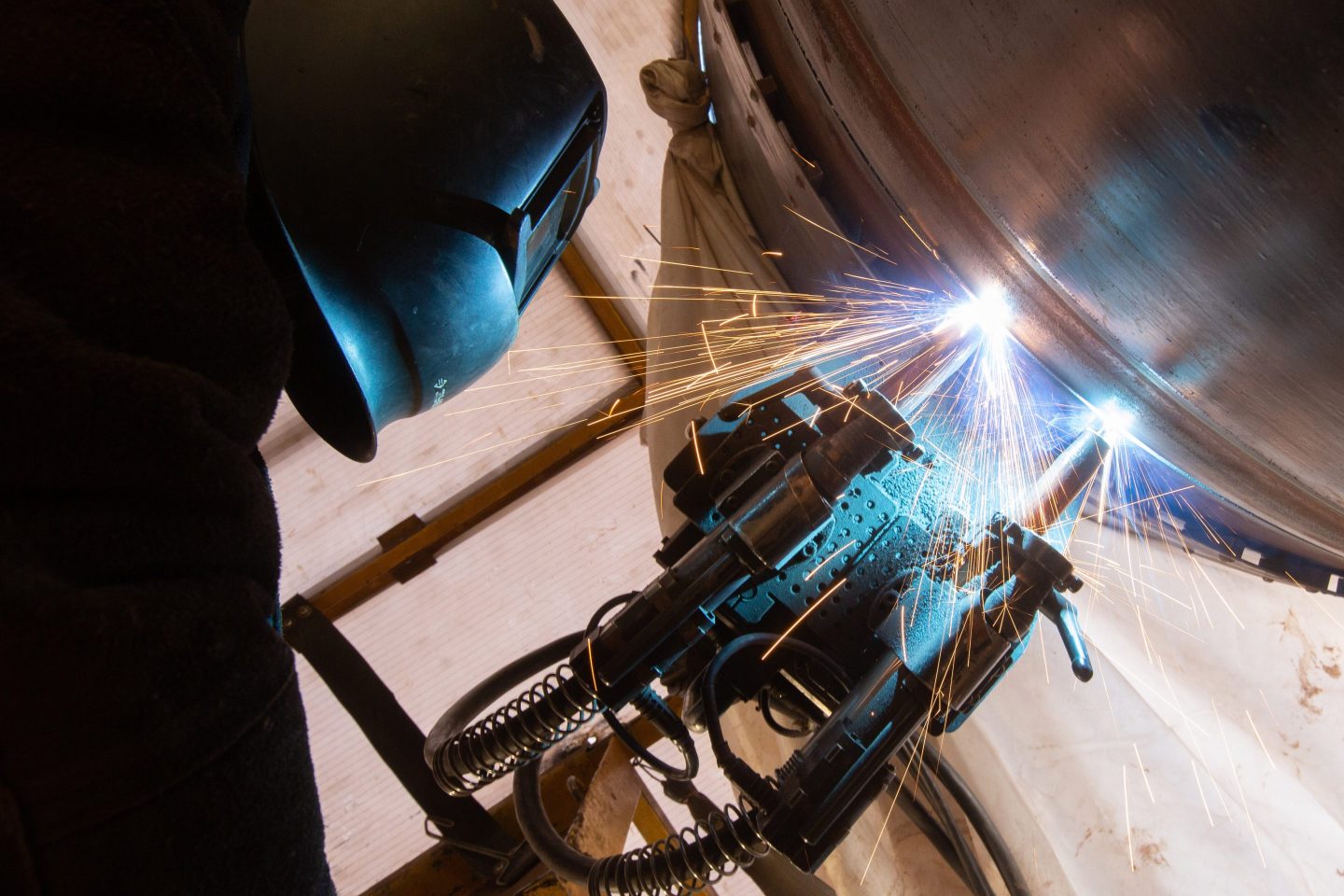
A worker welds a section of pipework on the Power of Siberia gas pipeline.
Thane Gustafson argues that capacity constraints limit how much Chinese purchases can save Russia's energy industry. Andrey Rudakov—Bloomberg via Getty Images

Russia’s invasion of Ukraine, and the tidal wave of Western sanctions that followed, now threatens to severely disrupt the country’s energy trade, perhaps permanently, with its largest market, Europe. In 2019, the last “normal” year before COVID, most of Russia’s $260 billion of energy exports went to its western neighbors.

Can Russia now divert its energy exports to China? In fact, Russia’s energy strategy has been “pivoting to Asia” for over a decade, investing in new oil and gas pipelines, expanding railroad capacity, and boosting LNG transportation to supply the Chinese market. So the more precise question is: how quickly can that effort be accelerated?

The answer: Not much.

A fuel-by-fuel review of Russia’s energy exports reveals that China will not be Russia’s savior any time soon: Russian energy exports to the east face major resource constraints, logistical bottlenecks, and political issues.

Let’s start with oil. The primary Russia export route to China is the East Siberian pipeline (ESPO), which shipped about 700,000 barrels of oil a day in 2021. An additional 900,000 barrels of oil a day were shipped by tanker.

There’s little room for immediate expansion, given constraints in both pipeline capacity and marine terminals. In fact, sending oil by tanker could prove difficult, as traders and shippers shy away from Russian oil. If anything, Russian oil exports to China might even decline over the next year.

Russian gas exports to China have more room to grow. Unused capacity in the existing Power of Siberia 1 pipeline means there’s modest space —at least in theory—for Gazprom to increase its gas deliveries to northeast China over the next few years. But the problem is at the source: the gas resources of East Siberia are modest compared to West Siberia. Moreover, Gazprom is not going to be able to fully develop its two major East Siberian fields, Chayanda and Kovykta, until the mid-2020s at the earliest.

A small additional source could be Sakhalin Island. At the now infamous “friendship with no limits” summit on Feb. 4. Putin and Xi Jinping announced an extension to the existing Sakhalin-Vladivostok pipeline But both sides still need to agree on where the pipeline will cross into China. One option would be a point halfway between Komsomolsk and Vladivostok, which would require only a short spur into China. The other option, to join with the existing crossing-point of PoS-1 at Blagoveshchensk, would require nearly 600km of new pipeline, and would presumably not be available until the mid-2020s. This all assumes, of course, that production could be quickly scaled up at Sakhalin, which also requires additional investment.

Adding everything up, Gazprom could probably supply an additional 28 billion cubic meters of gas to China by 2025—only a fraction of the 155 billion cubic meters Russia supplied to Europe in 2021.

The proposed Power of Siberia 2 pipeline could boost Russia’s gas exports to China, but only in the longer term. Gazprom has been promoting this project for nearly a decade, but there is no agreement yet on where the gas will come from and how it would get to China.

Beijing shows no enthusiasm for Russia’s proposal to ship gas from West Siberia through Mongolia. China already imports gas from Central Asia via the West-East pipeline which runs from China’s western border to the central coast—which is already full to capacity.

A West Siberian source would allow Gazprom to play the Western Europe and Chinese markets against each other—though Russia’s invasion of Ukraine may change that equation.

Transport limitations also constrain Russia’s exports of liquified natural gas—another of Russia’s top priorities and the core of its “Pivot to Asia” strategy.

Russia wants to ship LNG to Asia via the Northern Sea Route, over the top of Russia from Western Siberia to China via the Arctic Ocean. The Kremlin has given its full backing to a new private-sector company, Novatek, which has pioneered the development of LNG from the Yamal Peninsula.

In the long-term, the future looks bright for Novatek, given China’s growing reliance on imported LNG. But, again, the near-term constraint is transportation. The Northern Sea Route still requires ice-capable tankers, which Novatek must buy from South Korea—and which are likely to be unavailable due to sanctions. Instead, Novatek will have to rely on a new generation of nuclear icebreakers from Russian shipyards. But these are mainly configured for military shipping and have been slow to deliver.

The final fuel choice is coal, which Russia has oriented towards exports—mostly to Europe—since the end of the Soviet Union. The industry’s hope is to shift its main export market to the Pacific region, and China above all. A proposed European ban on Russian coal only heightens Moscow’s need for a pivot.

But the main constraint, again, is transportation. Coal accounts for half of all freight traffic on the Russian railroad system, but the traffic points west, not east. Russia has attempted to expand its two main rail arteries to the Pacific (the BAM and the Trans-Siberian), but the underfinanced effort is going slowly. Coal intended for the east has been piling up in the Kuzbass, Russia’s main coal-producing region, with little relief in sight.

Thus the near-term opportunities for a rapid shift of energy exports to the east are limited. For every fuel, logistical problems and transportation constraints get in the way of expanded exports to China. It will take a decade—if not more—for these obstacles to be overcome.

Russia’s energy infrastructure was built to supply markets in Europe, and required half a century to construct. As Europe turns away from Russian fossil fuels, both for reasons of climate and security, this vast system will now have to be pointed toward the east. But that goal can only be achieved at great cost in capital and time. It will not happen overnight.

Thane Gustafson is a professor of Government at Georgetown University. He is the author of The Bridge: Natural Gas in a Redivided Europe (2020), and Klimat: Russia in the Age of Climate Change (2021), both with Harvard University Press.

Never miss a story: Follow your favorite topics and authors to get a personalized email with the journalism that matters most to you.


About the Author
By Thane Gustafson
See full bioRight Arrow Button Icon

Latest in Commentary

Finance
Lorem ipsum dolor sit amet, consectetur adipiscing elit, sed do eiusmod tempor incididunt ut labore et dolore magna aliqua. Ut enim ad minim veniam
By Fortune Editors
October 20, 2025
Finance
Lorem ipsum dolor sit amet, consectetur adipiscing elit, sed do eiusmod tempor incididunt ut labore et dolore magna aliqua. Ut enim ad minim veniam
By Fortune Editors
October 20, 2025
Finance
Lorem ipsum dolor sit amet, consectetur adipiscing elit, sed do eiusmod tempor incididunt ut labore et dolore magna aliqua. Ut enim ad minim veniam
By Fortune Editors
October 20, 2025
Finance
Lorem ipsum dolor sit amet, consectetur adipiscing elit, sed do eiusmod tempor incididunt ut labore et dolore magna aliqua. Ut enim ad minim veniam
By Fortune Editors
October 20, 2025
Finance
Lorem ipsum dolor sit amet, consectetur adipiscing elit, sed do eiusmod tempor incididunt ut labore et dolore magna aliqua. Ut enim ad minim veniam
By Fortune Editors
October 20, 2025
Finance
Lorem ipsum dolor sit amet, consectetur adipiscing elit, sed do eiusmod tempor incididunt ut labore et dolore magna aliqua. Ut enim ad minim veniam
By Fortune Editors
October 20, 2025

Most Popular

Finance
Lorem ipsum dolor sit amet, consectetur adipiscing elit, sed do eiusmod tempor incididunt ut labore et dolore magna aliqua. Ut enim ad minim veniam
By Fortune Editors
October 20, 2025
Finance
Lorem ipsum dolor sit amet, consectetur adipiscing elit, sed do eiusmod tempor incididunt ut labore et dolore magna aliqua. Ut enim ad minim veniam
By Fortune Editors
October 20, 2025
Finance
Lorem ipsum dolor sit amet, consectetur adipiscing elit, sed do eiusmod tempor incididunt ut labore et dolore magna aliqua. Ut enim ad minim veniam
By Fortune Editors
October 20, 2025
Finance
Lorem ipsum dolor sit amet, consectetur adipiscing elit, sed do eiusmod tempor incididunt ut labore et dolore magna aliqua. Ut enim ad minim veniam
By Fortune Editors
October 20, 2025
Finance
Lorem ipsum dolor sit amet, consectetur adipiscing elit, sed do eiusmod tempor incididunt ut labore et dolore magna aliqua. Ut enim ad minim veniam
By Fortune Editors
October 20, 2025
Finance
Lorem ipsum dolor sit amet, consectetur adipiscing elit, sed do eiusmod tempor incididunt ut labore et dolore magna aliqua. Ut enim ad minim veniam
By Fortune Editors
October 20, 2025
Rankings
  • 100 Best Companies
  • Fortune 500
  • Global 500
  • Fortune 500 Europe
  • Most Powerful Women
  • Future 50
  • World’s Most Admired Companies
  • See All Rankings
Sections
  • Finance
  • Leadership
  • Success
  • Tech
  • Asia
  • Europe
  • Environment
  • Fortune Crypto
  • Health
  • Retail
  • Lifestyle
  • Politics
  • Newsletters
  • Magazine
  • Features
  • Commentary
  • Mpw
  • CEO Initiative
  • Conferences
  • Personal Finance
  • Education
Customer Support
  • Frequently Asked Questions
  • Customer Service Portal
  • Privacy Policy
  • Terms Of Use
  • Single Issues For Purchase
  • International Print
Commercial Services
  • Advertising
  • Fortune Brand Studio
  • Fortune Analytics
  • Fortune Conferences
  • Business Development
About Us
  • About Us
  • Editorial Calendar
  • Press Center
  • Work At Fortune
  • Diversity And Inclusion
  • Terms And Conditions
  • Site Map
  • Facebook icon
  • Twitter icon
  • LinkedIn icon
  • Instagram icon
  • Pinterest icon

Latest in Commentary

ICE
Commentarycivil rights
We looked at 40 years of government data and found the U.S. at a ‘medium level’ of atrocity. Iran is ‘high level’
By Nick Lichtenberg, David Cingranelli, Skip Mark and The ConversationFebruary 17, 2026
8 hours ago
cook
CommentaryApple
While big tech burns cash on AI, Apple waits
By Ioannis IoannouFebruary 17, 2026
15 hours ago
CommentaryEducation
AI could spark a new age of learning, but only if governments, tech firms and educators work together
By José Manuel Barroso and Stephen HodgesFebruary 17, 2026
23 hours ago
manyika
CommentaryScience
AI is transforming science – more researchers need access to these powerful tools for discovery  
By James Manyika and Demis HassabisFebruary 16, 2026
2 days ago
isom
CommentaryAirline industry
The skies for American Airlines are clearer than you think
By Jeffrey Sonnenfeld and Steven TianFebruary 16, 2026
2 days ago
AsiaGreat Place to Work
Southeast Asia’s fast-growing hospitality industry has a people problem. Here’s what leading brands are doing to get the staff they need
By Alice Williams and Great Place To WorkFebruary 15, 2026
2 days ago

Most Popular

placeholder alt text
AI
Thousands of CEOs just admitted AI had no impact on employment or productivity—and it has economists resurrecting a paradox from 40 years ago
By Sasha RogelbergFebruary 17, 2026
11 hours ago
placeholder alt text
Economy
$56 trillion national debt leading to a spiraling crisis: Budget watchdog warns the U.S. is walking a crumbling path
By Nick LichtenbergFebruary 17, 2026
12 hours ago
placeholder alt text
Real Estate
A billionaire and an A-list actor found refuge in a 37-home Florida neighborhood with armed guards—proof that privacy is now the ultimate luxury
By Marco Quiroz-GutierrezFebruary 15, 2026
3 days ago
placeholder alt text
Personal Finance
Current price of silver as of Tuesday, February 17, 2026
By Joseph HostetlerFebruary 17, 2026
15 hours ago
placeholder alt text
Commentary
Something big is happening in AI — and most people will be blindsided
By Matt ShumerFebruary 11, 2026
7 days ago
placeholder alt text
Economy
Social Security's trust fund is nearing insolvency, and the borrowing binge that may follow will rip through debt markets, economist warns
By Jason MaFebruary 15, 2026
2 days ago

© 2026 Fortune Media IP Limited. All Rights Reserved. Use of this site constitutes acceptance of our Terms of Use and Privacy Policy | CA Notice at Collection and Privacy Notice | Do Not Sell/Share My Personal Information
FORTUNE is a trademark of Fortune Media IP Limited, registered in the U.S. and other countries. FORTUNE may receive compensation for some links to products and services on this website. Offers may be subject to change without notice.