The ruble is no longer rubble.
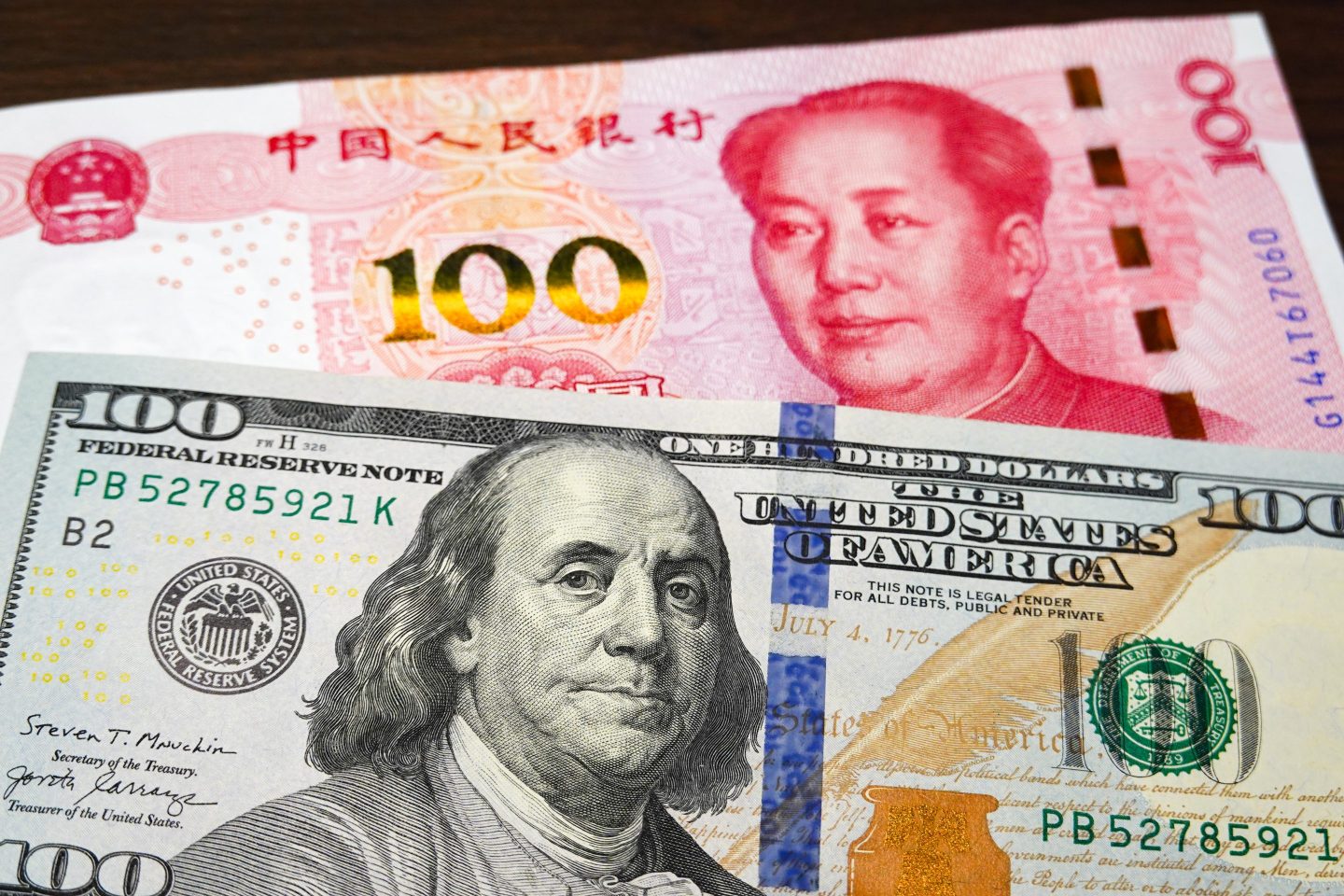
The Russian ruble by Wednesday had bounced back from the fall it took after the U.S. and European allies moved to bury the Russian economy under thousands of new sanctions over its invasion of Ukraine. Russian President Vladimir Putin has resorted to extreme financial measures to blunt the West’s penalties and inflate his currency.
While the West has imposed unprecedented levels of sanctions against the Russian economy, Russia’s Central Bank has jacked up interest rates to 20% and the Kremlin has imposed strict capital controls on those wishing to exchange their rubles for dollars or euros.
It’s a monetary defense Putin may not be able to sustain as long-term sanctions weigh down the Russian economy. But the ruble’s recovery could be a sign that the sanctions in their current form are not working as powerfully as Ukraine’s allies counted on when it comes to pressuring Putin to pull his troops from Ukraine. It also could be a sign that Russia’s efforts to artificially prop up its currency are working by leveraging its oil and gas sector.
The ruble was trading at roughly 85 to the U.S. dollar, roughly where it was before Russia started its invasion a month ago. The ruble had fallen as low as roughly 150 to the dollar on March 7, when news emerged that the Biden administration would ban U.S. imports of Russian oil and gas.
Speaking to Norway’s parliament on Wednesday, Ukraine’s president urged Western allies to inflict still greater financial pain on Russia.
“The only means of urging Russia to look for peace are sanctions,” Volodymyr Zelenskyy said in a video message from his besieged country. He added: “The stronger the sanctions packages are going to be, the faster we’ll bring back peace.”
Increasingly, European nations’ purchases of Russian oil and natural gas are coming under scrutiny as a loophole and lifeline for the Russian economy.
“For Russia, everything is about their energy revenues. It’s half their federal budget. It’s the thing that props up Putin’s regime and the war,” said Tania Babina, an economist at Columbia University who was born in Ukraine.
Babina is currently working with a group of 200 Ukrainian economists to more accurately document how effective the West’s sanctions are in stymying Putin’s war-making capabilities.
The ruble has also risen amid reports that the Kremlin has been more open to cease-fire talks with Ukraine. U.S. and Western officials have expressed skepticism about Russia’s announcement that it would dial back operations.
President Joe Biden promoted the success of the sanctions — some of the toughest ever imposed on a nation — while he was in Poland last week. “The ruble almost is immediately reduced to rubble,” Biden said.
Sanctions on Russian financial institutions and companies, on trade and on Putin’s power brokers were crushing the country’s economic growth and prompting hundreds of international companies to stop doing business there, Biden noted.
Russian efforts to counter those sanctions by propping up the ruble can only go so far.
Russia’s Central Bank cannot keep raising interest rates because doing so will eventually choke off credit to businesses and borrowers. At some point, individuals and businesses will develop ways to go around Russia’s capital controls by moving money in smaller amounts. As the penalties depress the Russian economy, economists say that will eventually weigh down the ruble. Without these efforts, Russia’s currency would almost certainly be weaker.
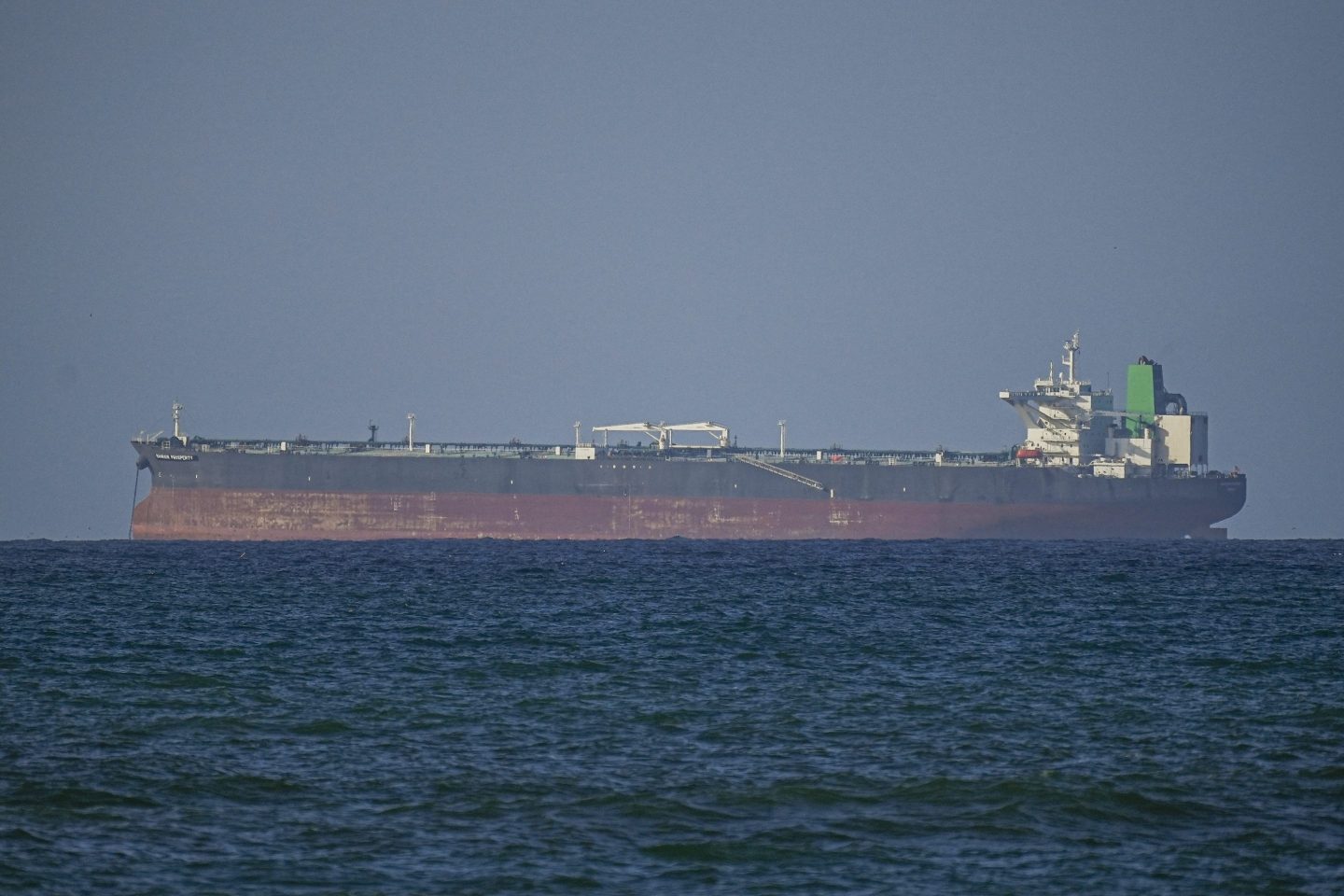
But Russia’s oil and gas exports have continued to Europe as well as to China and India. Those exports have acted as an economic floor for the Russian economy, which is dominated by the energy sector. In the European Union, a dependence on Russian gas for electricity and heating has made it significantly more difficult to turn off the spigot, which the Biden administration did when it banned the relatively small amount of petroleum that the U.S. imports from Russia.
“The U.S. has already banned imports of Russian oil and natural gas, and the United Kingdom will phase them out by the end of this year. However, these decisions will not have a meaningful impact unless and until the EU follows suit,” wrote Benjamin Hilgenstock and Elina Ribakova, economists with the Institute of International Finance, in a report released Wednesday.
Hilgenstock and Ribakova estimate that if the EU, Britain and the U.S. were to ban Russian oil and gas, the Russian economy could contract more than 20% this year. That’s compared with projections for up to a 15% contraction, as sanctions stand now.
Knowing this, Putin has greatly leveraged Europe’s dependence on its energy exports to its advantage. Putin has called for Russia’s Central Bank to force foreign gas importers to purchase rubles and use them to pay state-owned gas supplier Gazprom. It’s unclear whether Putin can make good on his threat.
The White House and economists have argued that the impact of sanctions takes time, weeks or months for full effect as industries shut down due to a lack of materials or capital or both. But the administration’s critics say the ruble’s recovery shows the White House needs to do more.
“The ruble’s rebound would seem to indicate that U.S. sanctions haven’t effectively crippled Russia’s economy, which is the price Putin should have to pay for his war,” said Sen. Pat Toomey, R-Pa.
“To give Ukraine a fighting chance, the U.S. must sever Putin’s revenue stream by cutting off Russian oil and gas sales globally,” Toomey said in an email to The Associated Press.
Sen. Sherrod Brown, chairman of the Senate Banking, Housing and Urban Affairs Committee, said Wednesday that lawmakers are considering ways to expand the sanctions Biden recently imposed on members of the Russian parliament “and probably widen that to other political players.” Brown, D-Ohio, said lawmakers also are weighing more penalties against banks.
Western leaders, under Biden’s encouragement, embraced sanctions as their toughest weapon to try to compel Russia to reverse its invasion of Ukraine, which is not a member of NATO and not protected under that bloc’s mutual defense policy.
Some of the allies now acknowledge their governments may need to redouble financial punishment against Russia.
British Prime Minister Boris Johnson said Wednesday that the Group of Seven major industrial nations should “intensify sanctions with a rolling program until every single one of (Putin’s) troops is out of Ukraine.”
But that’s a tougher ask for other European countries such as Germany, which depend on Russia for vital natural gas and oil. The EU overall gets 10% of its oil from Russia and more than one-third of its natural gas.
Many of those countries have pledged to wean themselves off that dependence — but not immediately.
If European nations did move more quickly off Russian petroleum, wrote analyst Charles Lichfield of the Atlantic Council, “a more comprehensive embargo from Europe would threaten Russia’s current account surplus — suddenly making it more difficult to pay public-sector salaries and wage war.”
He noted that “such an outcome may be beyond the reach of Western consensus.”
Never miss a story: Follow your favorite topics and authors to get a personalized email with the journalism that matters most to you.