• Home
  • Latest
  • Fortune 500
  • Finance
  • Tech
  • Leadership
  • Lifestyle
  • Rankings
  • Multimedia
Commentarypublic health

ESG is not enough. It’s time to add an H

By
Michelle A. Williams
and
Patricia Geli
Patricia Geli
Down Arrow Button Icon
By
Michelle A. Williams
and
Patricia Geli
Patricia Geli
Down Arrow Button Icon
March 14, 2022, 8:25 AM ET
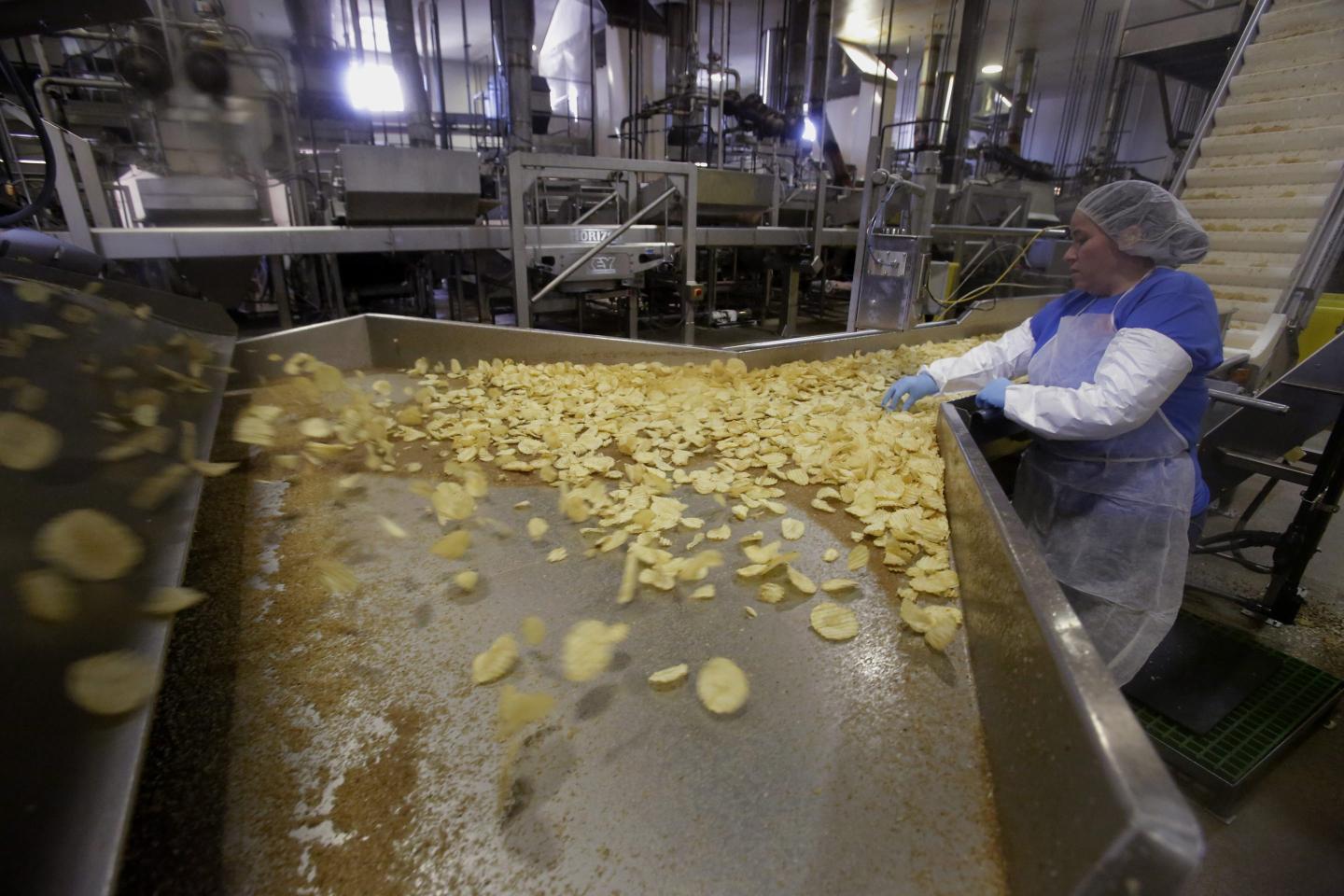
Every business should asses its impact on the health of employees, communities, and consumers. For a food processor, that might mean reformulating products to improve their nutritional profile.
Every business should asses its impact on the health of employees, communities, and consumers. For a food processor, that might mean reformulating products to improve their nutritional profile.Meg Roussos—Bloomberg/Getty Images

More than a decade of sustained focus on ESG principles has driven substantial change: Nearly all the world’s largest companies now disclose their impact on the environment and proudly tout their sustainability efforts. Yes, there is some hype, but the movement has genuinely and impressively changed corporate behavior.

Imagine what we could accomplish with a similar focus on public health.

In every corner of the world, from the poorest nations to the wealthiest, the COVID-19 pandemic has exposed an urgent need to build a more equitable, nimble, and muscular infrastructure to protect, promote, and preserve health and wellbeing. Part of this task must fall to local and federal governments—but they can’t do it all. The private sector has the resources and reach to make an enormous difference. It just needs the will.

That’s where the ESG framework provides a model. We must make protecting and promoting health every bit as essential as environmental, social, and governance principles for any business looking to win favor with customers, investors, and employees.

It’s time to add an H to ESG.

This H+ESG movement should be led by institutional investors, who have considerable clout. The assets in their ESG funds almost doubled during 2021 to nearly $4 trillion, according to a Morningstar analysis.

Adding health as a metric would be a smart move. Research consistently shows that a focus on employee wellbeing boosts stock performance. One notable study published last year found that a fund comprised of health-first businesses consistently outperformed the market by two percent a year over 10 years.

Fortune 500 CEOs are also key to this movement. They must offer highly visible support for initiatives to improve the health of their teams and their communities­. Rather than breaking the bank, these actions can actually help the bottom line.

A recent study from the Harvard T.H. Chan School of Public Health found that building managers could dramatically improve indoor ventilation rates for less than $40 per person in any climate zone in the U.S.–and that the improved air quality would boost productivity by the equivalent of $6,500 per employee per year. That’s a remarkable return on investment. Nationally, improving the quality of indoor environments by adopting “healthy building” principles could yield an annual economic benefit of $20 billion.

Healthy buildings are just the start. Even before the pandemic, poor health cost the U.S. economy about $3.2 trillion a year from premature deaths and lost productivity. An H+ESG agenda could reduce both that cost and the human suffering it reflects.

Though a plethora of standards and tools have been developed to help companies manage and disclose ESG practices and to help investors assess ESG performance, there is still a need for convergence around core metrics to enhance transparency. The World Economic Forum has taken an important step in this direction by outlining common metrics for consistent reporting of sustainable value creation–but they do not fully capture the importance of public health. The WEF’s key metric for health and wellbeing, for instance, is work-related injury. That’s a necessary metric, but it’s nowhere near sufficient.

What would a true H+ESG business look like? At the Reform for Resilience Commission, we believe it would meet three core principles: Care for the team, care for the community, and care for society.

We must scrutinize our own business models to make sure we are doing as much as possible to promote health and wellbeing. For a food processor, that might mean reformulating products to improve their nutritional profile, which would have an enormous impact. Reducing sodium content in global diets by 30% could prevent 40 million deaths over 25 years.

These investments can make business as well as moral sense. For example, investing to strengthen public health infrastructure in the global South would not only improve millions of lives but also strengthen supply chains and protect export markets by building resilience against future pandemics.

All this might sound like a pipe dream, but the momentum behind the ESG movement shows it can be done. Whether they’re investing in sustainability out of idealism, self-interest, or a cynical bid to win over customers, executives are moving in the right direction. In recent years, 2,000 companies have set a science-based target for reducing carbon emissions, and one-third of Europe’s largest public companies have pledged to reach net zero by 2050. The Harvard Business Review recently declared: “Sustainable business went mainstream in 2021.” We can do the same for health-conscious businesses.

CEOs looking for a place to start might check out the Robert Wood Johnson Foundation’s Culture of Health initiative, which lays out a blueprint for building a healthier society, and the growing stakeholder capitalism movement, which emphasizes building long-term value by addressing the needs of society, not just shareholders.

Public companies are currently drafting their 2021 annual reports, crammed with glowing examples of their ESG successes. We hope next year’s editions will add another chapter. We must nurture the mindset that protecting wellbeing is a private-sector responsibility. It’s past time for H+ESG.

Patricia Geli is a research scientist at the Harvard T.H. Chan School of Public Health and the executive director of the Reform for Resilience Commission’s North American Hub. Michelle A. Williams is the Dean of the Faculty at Harvard Chan School and co-chair of the Reform for Resilience Commission.

More must-read commentary published by Fortune:

  • Stop asking women how we manage work-life balance. Most of us don’t
  • It’s not a Great Resignation–it’s a Great Rethink
  • The media’s racial bias is also happening off screen
  • The Great Business Retreat matters in Russia today–just as it mattered in 1986 South Africa
  • Offices are obsolete—and so are the managers who insist you must go back
Never miss a story: Follow your favorite topics and authors to get a personalized email with the journalism that matters most to you.
About the Authors
By Michelle A. Williams
See full bioRight Arrow Button Icon
By Patricia Geli
See full bioRight Arrow Button Icon

Latest in Commentary

Finance
Lorem ipsum dolor sit amet, consectetur adipiscing elit, sed do eiusmod tempor incididunt ut labore et dolore magna aliqua. Ut enim ad minim veniam
By Fortune Editors
October 20, 2025
Finance
Lorem ipsum dolor sit amet, consectetur adipiscing elit, sed do eiusmod tempor incididunt ut labore et dolore magna aliqua. Ut enim ad minim veniam
By Fortune Editors
October 20, 2025
Finance
Lorem ipsum dolor sit amet, consectetur adipiscing elit, sed do eiusmod tempor incididunt ut labore et dolore magna aliqua. Ut enim ad minim veniam
By Fortune Editors
October 20, 2025
Finance
Lorem ipsum dolor sit amet, consectetur adipiscing elit, sed do eiusmod tempor incididunt ut labore et dolore magna aliqua. Ut enim ad minim veniam
By Fortune Editors
October 20, 2025
Finance
Lorem ipsum dolor sit amet, consectetur adipiscing elit, sed do eiusmod tempor incididunt ut labore et dolore magna aliqua. Ut enim ad minim veniam
By Fortune Editors
October 20, 2025
Finance
Lorem ipsum dolor sit amet, consectetur adipiscing elit, sed do eiusmod tempor incididunt ut labore et dolore magna aliqua. Ut enim ad minim veniam
By Fortune Editors
October 20, 2025

Most Popular

Finance
Lorem ipsum dolor sit amet, consectetur adipiscing elit, sed do eiusmod tempor incididunt ut labore et dolore magna aliqua. Ut enim ad minim veniam
By Fortune Editors
October 20, 2025
Finance
Lorem ipsum dolor sit amet, consectetur adipiscing elit, sed do eiusmod tempor incididunt ut labore et dolore magna aliqua. Ut enim ad minim veniam
By Fortune Editors
October 20, 2025
Finance
Lorem ipsum dolor sit amet, consectetur adipiscing elit, sed do eiusmod tempor incididunt ut labore et dolore magna aliqua. Ut enim ad minim veniam
By Fortune Editors
October 20, 2025
Finance
Lorem ipsum dolor sit amet, consectetur adipiscing elit, sed do eiusmod tempor incididunt ut labore et dolore magna aliqua. Ut enim ad minim veniam
By Fortune Editors
October 20, 2025
Finance
Lorem ipsum dolor sit amet, consectetur adipiscing elit, sed do eiusmod tempor incididunt ut labore et dolore magna aliqua. Ut enim ad minim veniam
By Fortune Editors
October 20, 2025
Finance
Lorem ipsum dolor sit amet, consectetur adipiscing elit, sed do eiusmod tempor incididunt ut labore et dolore magna aliqua. Ut enim ad minim veniam
By Fortune Editors
October 20, 2025
Fortune Secondary Logo
Rankings
  • 100 Best Companies
  • Fortune 500
  • Global 500
  • Fortune 500 Europe
  • Most Powerful Women
  • Future 50
  • World’s Most Admired Companies
  • See All Rankings
Sections
  • Finance
  • Fortune Crypto
  • Features
  • Leadership
  • Health
  • Commentary
  • Success
  • Retail
  • Mpw
  • Tech
  • Lifestyle
  • CEO Initiative
  • Asia
  • Politics
  • Conferences
  • Europe
  • Newsletters
  • Personal Finance
  • Environment
  • Magazine
  • Education
Customer Support
  • Frequently Asked Questions
  • Customer Service Portal
  • Privacy Policy
  • Terms Of Use
  • Single Issues For Purchase
  • International Print
Commercial Services
  • Advertising
  • Fortune Brand Studio
  • Fortune Analytics
  • Fortune Conferences
  • Business Development
  • Group Subscriptions
About Us
  • About Us
  • Editorial Calendar
  • Press Center
  • Work At Fortune
  • Diversity And Inclusion
  • Terms And Conditions
  • Site Map
  • About Us
  • Editorial Calendar
  • Press Center
  • Work At Fortune
  • Diversity And Inclusion
  • Terms And Conditions
  • Site Map
  • Facebook icon
  • Twitter icon
  • LinkedIn icon
  • Instagram icon
  • Pinterest icon

Latest in Commentary

trump
CommentaryZoom
The U.S. has a $282 billion trade surplus you’ve never heard of — and it’s at risk
By Josh KallmerApril 19, 2026
15 hours ago
benioff
CommentarySalesforce
AI’s next act: how Salesforce is turning efficiency gains into revenue
By Keith Ferrazzi and Wendy SmithApril 18, 2026
2 days ago
trump
CommentaryWhite House
Trump has already endorsed the Monroe Doctrine. Now he needs to endorse the Truman Doctrine
By Robert HormatsApril 18, 2026
2 days ago
trump
CommentaryManufacturing
Tariffs alone won’t save American manufacturing — here’s what actually will
By Johan "Kip" EidebergApril 18, 2026
2 days ago
hormuz
CommentaryIran
With Hormuz under strain, a trade corridor built for resilience faces a real-world test
By Angela Chitkara and Samantha SuttonApril 17, 2026
2 days ago
broker
CommentarySoftware
The 3 forces quietly dismantling the business model that made enterprise software fabulously profitable
By Michael Jacobides and Stefano PuntoniApril 17, 2026
3 days ago

Most Popular

'We should absolutely be concerned about non-college-educated men today': higher rents, living at home, falling out of the labor market
Economy
'We should absolutely be concerned about non-college-educated men today': higher rents, living at home, falling out of the labor market
By Catherina GioinoApril 18, 2026
2 days ago
The record-setting U.S. drought is so bad that 97% of the Southeast and two-thirds of the West are parched
North America
The record-setting U.S. drought is so bad that 97% of the Southeast and two-thirds of the West are parched
By Seth Borenstein and The Associated PressApril 18, 2026
1 day ago
Thousands of CEOs admit AI had no impact on employment or productivity—and it has economists resurrecting a paradox from 40 years ago
AI
Thousands of CEOs admit AI had no impact on employment or productivity—and it has economists resurrecting a paradox from 40 years ago
By Sasha RogelbergApril 19, 2026
10 hours ago
The $6 billion Vatican Bank was beset by scandals, disastrous investments—and ties to the Mafia. How Pope Francis tried to fix it
Banking
The $6 billion Vatican Bank was beset by scandals, disastrous investments—and ties to the Mafia. How Pope Francis tried to fix it
By Marco Quiroz-GutierrezApril 18, 2026
1 day ago
Putin finally admits Russia's economy is in trouble and grasps for answers, after warnings about a financial crisis have been piling up
Economy
Putin finally admits Russia's economy is in trouble and grasps for answers, after warnings about a financial crisis have been piling up
By Jason MaApril 18, 2026
1 day ago
MacKenzie Scott has donated more than $26 billion—but it's barely made a dent in her net worth because of the power of Amazon shares
Success
MacKenzie Scott has donated more than $26 billion—but it's barely made a dent in her net worth because of the power of Amazon shares
By Sydney LakeApril 18, 2026
1 day ago

© 2026 Fortune Media IP Limited. All Rights Reserved. Use of this site constitutes acceptance of our Terms of Use and Privacy Policy | CA Notice at Collection and Privacy Notice | Do Not Sell/Share My Personal Information
FORTUNE is a trademark of Fortune Media IP Limited, registered in the U.S. and other countries. FORTUNE may receive compensation for some links to products and services on this website. Offers may be subject to change without notice.