At last, it’s a good time to be a worker.
In the United States, nominal wage growth spiked by 4.4% last year, and employers are budgeting for another decent pay rise in 2022.
Across the Atlantic, the news is even better for those who are paid for their labor.
According to professional recruitment firm Robert Walters, payroll budgets for British firms are expected to increase by 10% to 15% this year, the largest increase since 2008. At the high end of the range—15%—that budget outlay for salaries would come in at roughly three times the rate of inflation in the United Kingdom, giving workers real gains that far outpace salary-eating inflation. Firms in Germany, France, Spain, Switzerland, and the Netherlands are planning to budget similar amounts this year to attract and keep talent, according to Robert Walters.
You can be excused for not being able to remember the last time workers held the power in wage negotiations. Even with the tightest labor market in basically ever, U.S. workers have essentially the same purchasing power as they did 40 years ago (and most gains have gone to the highest paid).
It’s been a while since Europeans saw a pay boom, too. In the early aughts, much of Europe was going through what economists called a kind of “golden age” for workers: Job opportunities were plentiful, and household incomes soared. Between 1999 and 2008, per capita income in the euro area took off, gaining 49% over that span.
The global financial crisis put an abrupt end to all that. Wage growth around Europe shrank beginning in the tail half of 2008 and remained stagnant as the much of the continent entered a lost decade of low growth and minuscule inflation.
A new wage cycle is emerging now, however, one that again distinctly favors the worker. For some specialist trades—such as IT specialists, legal pros and operations chiefs—the lost decade has come to an abrupt end with wage growth on the rise—even far outpacing inflation.
“Our recruiters are saying this fight for talent will be with us for a while,” says Ruman Gill, a spokeswoman for Robert Walters.
But a “while” can mean a lot of things, and current data and past precedent suggest that the best time to lock in that raise is 2022—maybe, for some, 2023, too.
Gung ho for gehaltserhöhung
As is the case in the United States, workers around Europe are buzzing once again about pay rises, or Gehaltserhöhung, as they’re called in Germany, or aumento dello stipendio (Italy). As 2021 closed out, average nominal pay—not accounting for inflation, which is sky-high across the developed world—in the U.K. jumped by 4.3% year on year, and in Germany it rose 3.1% as employers across the economy try to outcompete rivals for new workers during acute labor shortages. ING was the most recent to upgrade its wage models, expecting nominal wages to grow by 3.5% annually this year and next in the eurozone as economic growth continues to surge.
There’s a distinct chance those numbers could be revised upward yet again as job-hopping is expected to kick into full gear in the first half of 2022.
That’s because Europe’s Great Resignation looks a bit different from the disruptive phenomenon seen in the United States. A lot of skilled professionals in Europe stayed on the job last year to make it to the January–February review period that’s just wrapping up, recruiters say. And now the exceptions for wage gains are sky-high. Workers in some skilled positions such as information technology and health care are expecting big double-digit percentage raises and promotions. If it doesn’t come, they’re out the door. “The period of peak Great Resignation here could come at the end of February or March,” Gill adds.
‘Favorable situation’
Companies across the board are feeling the pinch of the tight labor market. In the U.K., Marks & Spencer was the most recent employer to wade into the bidding war. The iconic British retailer announced this week it will raise the minimum wage by more than 5% to £10 ($13.60) an hour for its lowest paid staffers. It will also throw in free health checks to sweeten the offer.
Economists see raises and benefits like these and conclude, after adding up all the numbers, that this is just the beginning.
“The reason why it’s such a favorable situation for workers in the U.K. is you have, which is unprecedented, a job opening for every worker,” says Kallum Pickering, senior economist at Berenberg Bank in London. “There are 1.3 million vacancies in the U.K.—and that’s rising fast—and 1.4 million people unemployed.
“And by the spring,” he adds, “there may be a situation where you have more job openings than unemployed workers.” That will put even more pressure on wages as the search for talent intensifies.
In contrast, during the last golden age for workers, 20 years ago, there were on average three unemployed workers for every job opening in Britain. That kind of data tells Pickering the employee will have the upper hand for some time in negotiating wage increases.
“This is a normal business cycle, in a way that we didn’t see after the global financial crisis,” he says.
The dreaded I-word
It’s not just fewer bodies driving up wages. The highest inflation in a generation—it’s running at 5.5% in the U.K. and 5% in the eurozone; in the United States it’s at 7.5%—is also bringing employees and bosses back to the negotiating table to keep pay in line with a ballooning cost of living.
This pressure on wages is beginning to unnerve both employers and some central bankers. Earlier this month, Bank of England governor Andrew Bailey bemoaned the pace of wage gains in the U.K., warning “it will get out of control.” That comment generated a national discussion about whether “pay rises” were somehow bad for the U.K. economy.
The upshot: The Brits, by and large, aren’t buying Bailey’s call for pay restraint.
There could be a silver lining for both workers and central bankers: The consensus in Europe is that rising prices will soon peak (if they haven’t already). Inflation is seen as coming down further and faster in the eurozone and the U.K. than in the U.S., Berenberg forecasts.
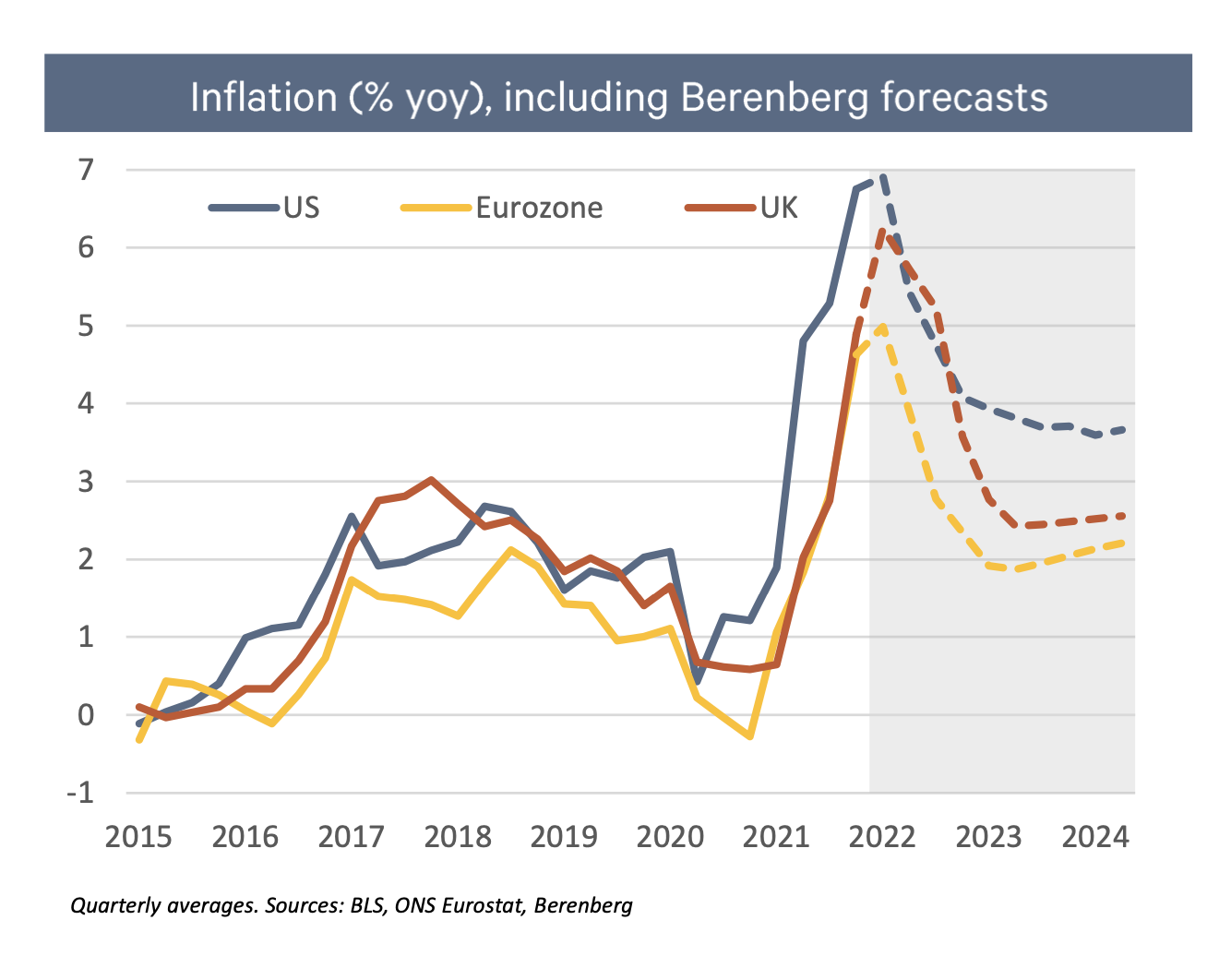
That would give workers improved real-wage gains. The bigger question for policymakers: Would it be enough to cool off pay rises?
Pickering, for one, views us at the early to mid-stage of a larger economic cycle: “You generally have a few years in which things get better, until it becomes unsustainable,” and at that point, a central bank reacts by raising rates and essentially pours water on labor markets and whole economies that are running too hot.
Those actions can take well over a year before consumers, employers, and workers see the effects.
In other words: Employees could have the upper hand next year as well—but it won’t last forever.
Never miss a story: Follow your favorite topics and authors to get a personalized email with the journalism that matters most to you.