Infrastructure is the backbone of our economy and society. When it works, it goes unnoticed. But today we’re noticing it because it’s broken—potholes in the streets, power outages from California to Texas, dangerous water coming out of our taps. We desperately need to rebuild our crumbling, aging infrastructure, but we also need to ensure that we are building the right infrastructure for the decades to come.
We have always heard that infrastructure is one of the few nonpartisan political topics, one where both Republicans and Democrats alike can agree about the needs of our country and about the benefits to their constituents. The $1 trillion bipartisan infrastructure package the U.S. Senate is expected to finalize this week highlights that. Climate policy, too, was once nonpartisan. Remember when major-party candidates John McCain and Barack Obama were both extolling the virtues of pricing carbon pollution in 2008? As we’ve just heard from the Intergovernmental Panel on Climate Change—the United Nations authoritative body for assessing current climate science—the climate crisis is speeding away from us and the planet is certain to get hotter. The infrastructure we are building today needs to prepare us for a vastly different type of world than the stuff the Public Works Administration built 75 years ago.
This is not your grandparents’ or even your parents’ infrastructure. Regardless of whether President Biden can push through a $550 billion or $2 trillion infrastructure bill, local communities are screaming that they need reliable, safe, responsive, affordable, and sustainable infrastructure. Cities, companies, and local communities aren’t waiting for slow federal policy, because the technology and capital available today are constantly creating more options to meet their needs, and we don’t have the luxury of time to wait to solve our problems.
Make no mistake: There’s no single solution to climate change or rebuilding our infrastructure. What we need is an “all of the above” infrastructure policy to meet this all-hands-on-deck moment. Having transparent, long-term, certain policy is the only way to get the private sector to join in the effort to solve these infrastructure problems. Let’s not fall prey to thinking it’s a black-and-white choice between big renewable power plants, or distributed, community solar projects and battery storage systems. Politicians and pundits may be polarized, but those of us who are financing, operating, and building infrastructure today know it will take the coordinated actions of many stakeholders to build the backbone of our economy for both today and tomorrow.
Today, our world is marked by uncertainty driven by multiple factors: a global pandemic, a rapidly changing workforce, a volatile climate, digitization, global interdependencies, and rising inequality. More than two-thirds (70%) of global emissions today stem from operating and building infrastructure, according to the World Bank. Every moment we waste without building cleaner, more resilient infrastructure makes our planet more risky for the future.
Infrastructure—more than any other type of investment—is a bet for future generations. Each time we greenlight a project, we are implicitly stating that it will be useful for the next 30 or even 50 years. We need all of this infrastructure to work together. We do not have to choose between rebuilding our electric grid or neglecting it. Building solar and batteries and microgrids at the same time as we modernize the electric grid will make our large renewable projects and electric vehicle chargers more effective. Broadband connectivity enables us to use all this infrastructure in smarter ways, flexing with the advent of additional technology and data tools. Of course, we all want to get rid of those potholes and traffic choke points that cost us billions of dollars in congestion and productivity losses. An “all of the above” approach to infrastructure recognizes the magnitude of the problems we face as well as the urgency of solving them. We need our government to think as much about how they coordinate these projects as how they spend on them.
Government is uniquely qualified to solve infrastructure problems. While almost every other stakeholder in infrastructure has a shorter-term time horizon, the government can afford to—or rather, must—take the 50-year to 100-year view, even if the decision-makers are up for reelection every two, four, or six years. Very few actors in the private sector are incentivized to take multi-decade perspectives or obligations—that is why we need clear policy from government—but we can partner to build the world our children and their children deserve.
Rebounding from a missed opportunity
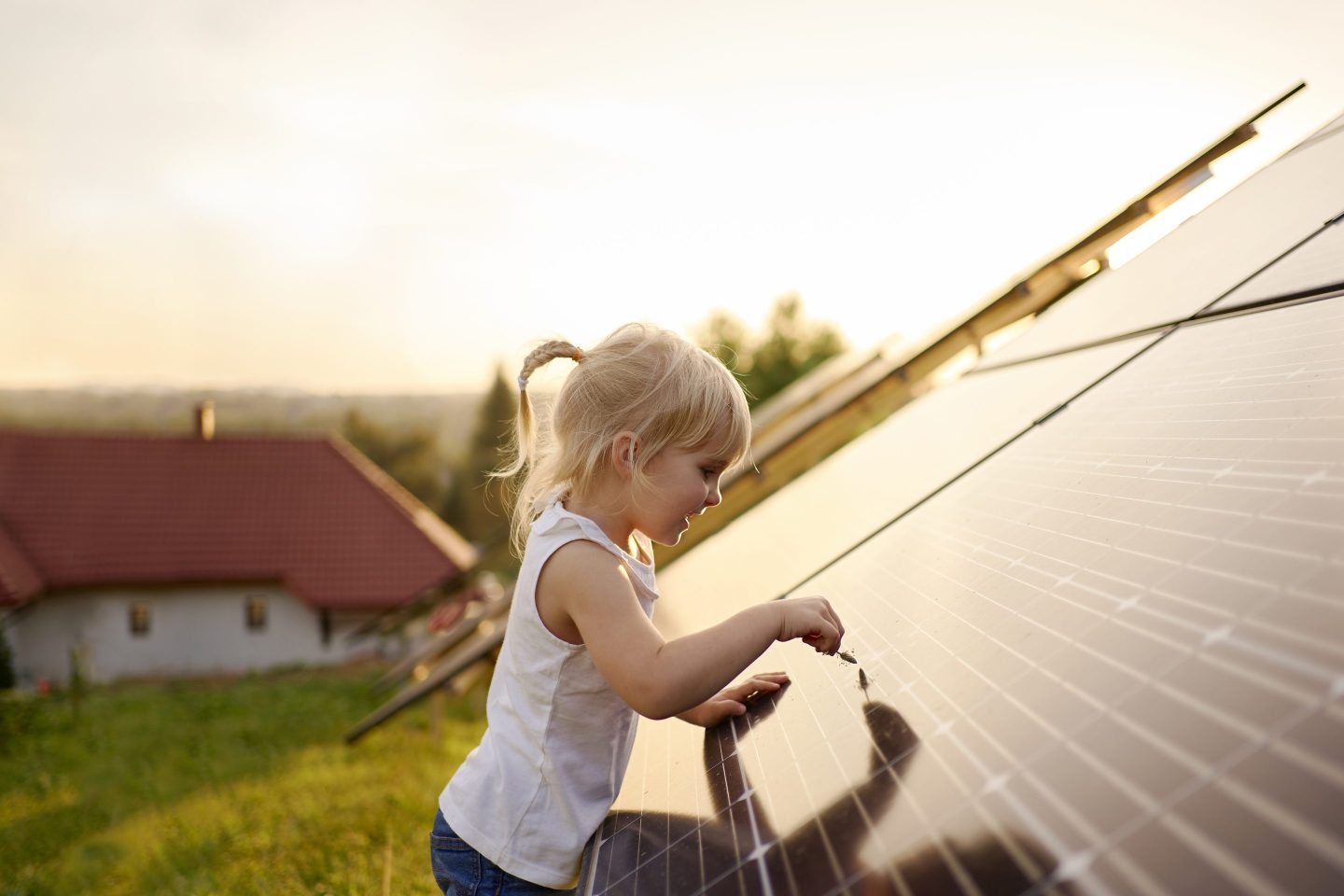
The infrastructure we need today isn’t one-size-fits-all. It’s cleaner, cheaper, more flexible, and resilient. It’s smaller scale, making a lighter impact on the planet while also providing peace of mind. The surging renewable energy sector of the past few years—from solar farms and farm-based biogas facilities to electric-vehicle charging depots and campus-size microgrids—highlights the dynamism of swiftly changing demands from consumers, cities, and communities. Our infrastructure will be around for a long time, so we need to get it right.
The big public works projects included in this latest, scaled-down bill—roads, highways, trains, and water pipelines—are needed to secure our current infrastructure, and they’re popular with constituents who can see what we have today. The projects that are missing or cut out from the legislation are those smaller, fast-to-build projects that give us more flexibility for the future. It’s a missed opportunity to clarify the rules of the game to get projects built faster. But we still have the chance to build the projects we need.
In the private sector, we know how to build these projects. Distributed, sustainable projects get built faster because they have fewer stakeholders per project than big power plants or bridges. Communities benefit quickly because they avoid the traditional long review processes and intensive permitting of traditional infrastructure. With distributed infrastructure projects, we are cutting ribbons every day. And this isn’t just climate infrastructure; spending on these projects represents thousands of local, good-paying jobs and a chance for workers to benefit their own communities directly with fast, new, efficient, and reliable energy and resources. We should continue to push our legislators to build infrastructure that’s useful for its entire 30 to 50 years of life.
Building this infrastructure today also offers more value: Equipment costs in fast-growing clean energy sectors like solar, wind, and storage have gone down 80% to 90% in the last decade alone, according to BloombergNEF, as we’ve built more projects and gotten better at it.
Let’s remember what we can do when we align our incentives to build infrastructure together. The Federal Highway Administration was the largest infrastructure investment the U.S. has ever made, and it elevated our middle class for decades, provided access to jobs and education, and created the foundation of our dynamic economy. The infrastructure we need today is also building the foundation for the generations not yet born. Today, we need any and all types of sustainable infrastructure to rebuild our world together.
Scott E. Jacobs is the chief executive and cofounder of Generate Capital. Generate builds, owns, operates, and finances more than 2,000 sustainable infrastructure assets across North America.
Subscribe to Fortune Daily to get essential business stories straight to your inbox each morning.