• Home
  • Latest
  • Fortune 500
  • Finance
  • Tech
  • Leadership
  • Lifestyle
  • Rankings
  • Multimedia

Trendingnow

1

The millennial generation has split, new Fed research shows: Those over 35 are edging toward boomer-style wealth, while everyone else falls behind

2

Mark Cuban says he has the solution to growing income inequality, and it's to reward every employee—from CEO to janitor—with company stock

3

Mathematicians grapple with a ‘very rapid and very unsettling change’ as AI cracks yet another century-old problem

1

The millennial generation has split, new Fed research shows: Those over 35 are edging toward boomer-style wealth, while everyone else falls behind

2

Mark Cuban says he has the solution to growing income inequality, and it's to reward every employee—from CEO to janitor—with company stock

3

Mathematicians grapple with a ‘very rapid and very unsettling change’ as AI cracks yet another century-old problem
CommentaryChina

How U.S. CEOs can stand up to China

By
Nick Merrill
Nick Merrill
and
Dan Schwerin
Dan Schwerin
Down Arrow Button Icon
By
Nick Merrill
Nick Merrill
and
Dan Schwerin
Dan Schwerin
Down Arrow Button Icon
July 26, 2021, 5:30 AM ET
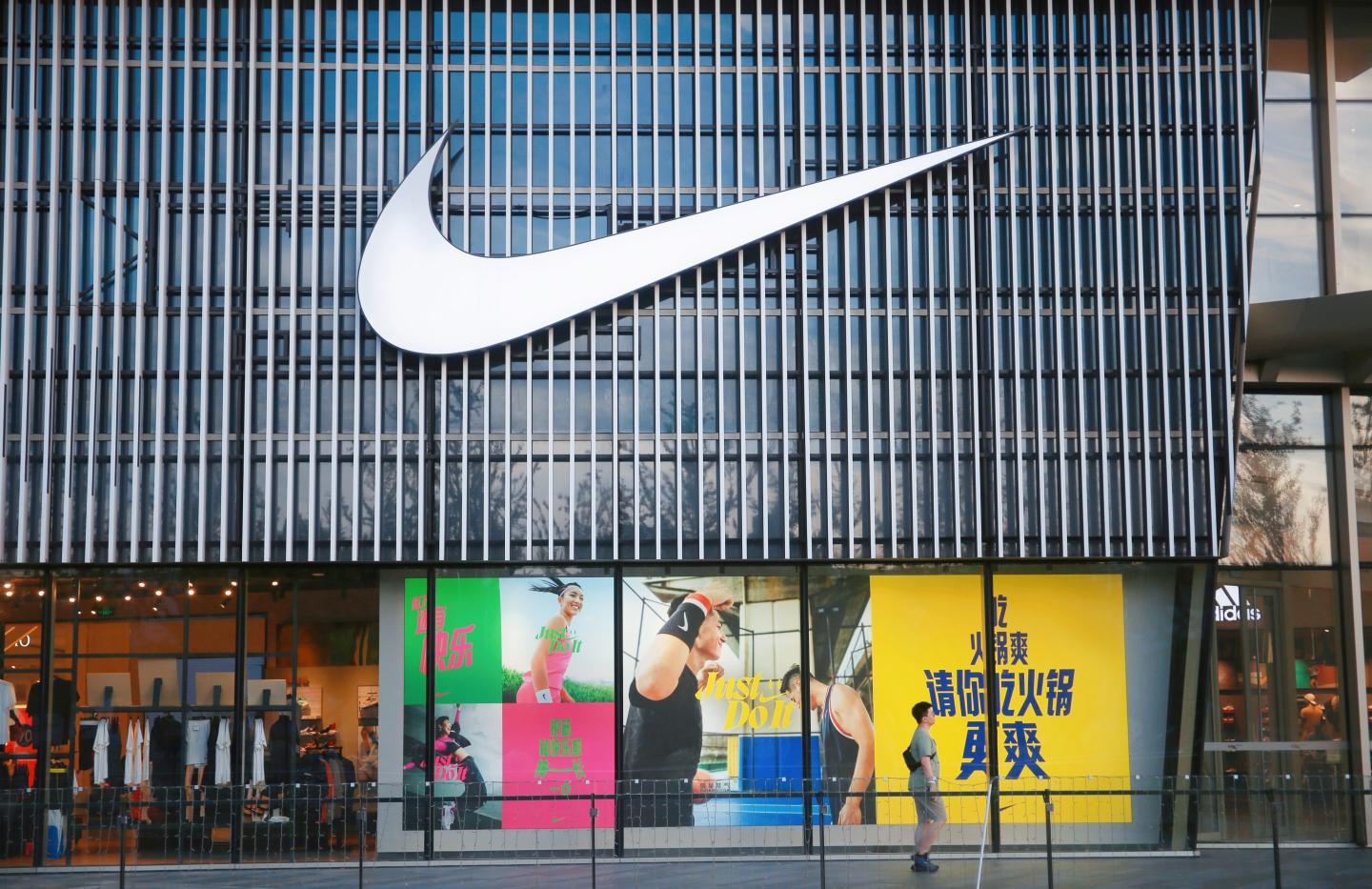
A Nike store in Shanghai. "Western brands still have market power in China that can withstand passing storms," the authors write.
A Nike store in Shanghai. "Western brands still have market power in China that can withstand passing storms," the authors write. Costfoto/Barcroft Media/Getty Images
Add Fortune on Google for similar content.

The Chinese Communist Party marked its 100th anniversary this month by touting its rise as a superpower the world has no choice but to respect. Yet at the recent G-7 summit, President Biden convinced ambivalent allies to condemn China’s persecution of Uyghur Muslims in Xinjiang, putting their shared values ahead of their dependence on trade with Beijing. American companies that do business in China face a similar test: Will their commitments to pursue environmentally and socially responsible practices prove more powerful than the lure of the world’s second biggest economy? 

U.S. CEOs trying to do business in China without compromising their values must navigate increasingly difficult cross-cutting pressures. While the Chinese government has grown more authoritarian under President Xi Jinping, the expanding Chinese consumer market has become even more irresistible for Western brands. China dominates production of many goods that American companies need, even as U.S. regulators ban purchases of a growing list of Chinese products connected to forced labor, from cotton to solar panels. A bill to ban all products from Xinjiang not certified as free from slave labor has passed the Senate, and just this week Democrats in Congress announced plans to impose a border carbon tax on Chinese goods because of lax environmental standards. Meanwhile Chinese authorities are lashing out aggressively at U.S. companies that speak out about human rights while American consumers, employees, and investors pressure brands to stand up for their values. 

Some companies have spoken out against the atrocities in Xinjiang, but most are staying silent to avoid the boycotts and blacklisting that hit Nike and H&M this spring. No one should be under any illusions that strongly-worded statements from Western corporations will prompt Beijing to change course, but it is dismaying to see Hollywood studios self-censoring out of fear of angering Chinese propagandists, U.S. airlines bowing to demands to remove Taiwan from route maps, and Silicon Valley tech companies giving Beijing access to private user data. By trying to avoid short-term risks, they are planting themselves on the wrong side of history. 

As advisors to former Secretary of State Hillary Rodham Clinton, we had front-row seats for delicate diplomatic negotiations with China’s leaders. Now we run a social impact policy and communications agency that has advised companies such as Patagonia, Levi Strauss & Co, and Nike. We’ve seen that there are no easy answers here, but there are strategies that can help. 

From engagement to competition

First, CEOs should understand the rapidly changing U.S.-China relationship. As our former State Department colleague and now top Biden White House Asia advisor Kurt Campbell said recently, the administration believes the era of engagement is over and “the dominant paradigm is going to be competition.” That has big implications for business. 

For decades, U.S. policymakers from both parties encouraged American companies to invest in China and integrate it into the global economy. They came for the cheap labor and lax regulations, but many also saw themselves as the tip of the spear in modernizing the country. Former Goldman Sachs CEO Hank Paulson described Wall Street bankers arriving like “Promethean figures.” But the bet that a more open Chinese economy would lead to a more open political system has failed. Xi has consolidated power and experts say his rule looks more like Mao Zedong’s than like the lower-profile leaders who cautiously liberalized China starting in the 1980s.  Now, instead of encouragement from Washington, U.S. companies doing business in China may feel pressure to bring investments, jobs, and supply chains home. 

Know your supply chain

Second, get the facts. CEOs need to know if their supply chains run through fields and factories that use forced labor or if their technology could be used to bolster repressive security services. If your company is profiting from human rights abuses — even inadvertently — the reputational and regulatory risks back home are only going to get more acute. 

Too many companies fail to map their supply chains all the way to the farm or mine level, looking beyond the middlemen and persevering through Chinese interference. But as when measuring a company’s true carbon footprint, full supply chain visibility is the only way to assess a human rights record and start improving it.  It’s difficult, but possible—for example, Patagonia has managed to do it in China, despite the obstacles—and a crucial investment to prepare for future risks. 

Companies weighing how and when to speak out on human rights also need to do the due diligence to understand how dependent they really are on Chinese production capacities as compared to alternative locations in Southeast Asia or at home in the United States, and how vulnerable they are to a backlash from Chinese consumers. The danger is real, as Nike and H&M saw this spring. But the potential damage depends on factors such as the level of competition from local brands that can provide an alternative, and those factors must be weighed against the consequences of silence in the U.S. and other global markets. For example, outrage at home over forced labor in Asia in the 1990s was so bad that it convinced Nike’s founder Phil Knight that “the American consumer doesn’t want to buy products made under abusive conditions,” and it eventually prompted a major course correction.

No time for backtracking

Third, companies that decide to take a stand should consider ways to maximize their impact and minimize their risk. For example, follow the Biden administration’s lead in working with allies to confront China rather than the flawed Trump approach of going it alone. It’s easy for the Chinese authorities to retaliate against a single Western company, like H&M, but it may be harder to punish an entire industry—or better yet, a coalition of companies that includes sectors where there is less home-grown Chinese competition, like financial services and higher education. Align around a strong message and specific actions that go beyond U.S. legal requirements to avoid forced labor, such as boycotting the 2022 Beijing Olympics or moving operations out of Hong Kong. 

Backtracking or equivocating, as too many brands and coalitions have done recently, will undermine the message and invite more attacks. And being mealy-mouthed or unobtrusive won’t necessarily prevent retribution—after all, H&M and Nike got whacked last spring for months-old statements about Xinjiang that were dug up and used for propaganda purposes when it served the regime’s purposes. Better to be clear and firm, and have a crisis plan in place to deal with the fallout, including protecting local employees on the ground. 

The costs of conscience are real, but not necessarily fatal, and most backlashes eventually fade. Nike’s sales in China took a hit last spring and domestic competitors are gaining ground, but sales there still increased by 14% in the most recent quarter compared with 2019. It’s a reminder that while their position may be precarious, Western brands still have market power in China that can withstand passing storms. 

Finally, the trajectory in China may continue to worsen, so CEOs should begin building up production capacity in other markets and reinvesting in America. China’s repression at home and aggression abroad are likely to intensify, and competition with the United States could veer into conflict. Already, the widespread discrimination against foreign companies in China is prompting some Western executives to say enough is enough. For some industries, especially after the pandemic upended supply chains, it no longer makes sense to base significant operations in the country. That may be a harder decision for consumer brands desperate for a piece of the enormous Chinese market. But in the long run, compromising your values may cost even more. One day soon, more companies will have to consider whether the moral and financial costs of doing business in China are worth it. 

Nick Merrill and Dan Schwerin are the cofounders of Evergreen Strategy Group and longtime advisors to former Secretary of State Hillary Rodham Clinton. 

Subscribe to Fortune Daily to get essential business stories straight to your inbox each morning.

About the Authors
By Nick Merrill
See full bioRight Arrow Button Icon
By Dan Schwerin
See full bioRight Arrow Button Icon
Add Fortune on Google for similar content.

Latest in Commentary

Finance
Lorem ipsum dolor sit amet, consectetur adipiscing elit, sed do eiusmod tempor incididunt ut labore et dolore magna aliqua. Ut enim ad minim veniam
By Fortune Editors
October 20, 2025
Finance
Lorem ipsum dolor sit amet, consectetur adipiscing elit, sed do eiusmod tempor incididunt ut labore et dolore magna aliqua. Ut enim ad minim veniam
By Fortune Editors
October 20, 2025
Finance
Lorem ipsum dolor sit amet, consectetur adipiscing elit, sed do eiusmod tempor incididunt ut labore et dolore magna aliqua. Ut enim ad minim veniam
By Fortune Editors
October 20, 2025
Finance
Lorem ipsum dolor sit amet, consectetur adipiscing elit, sed do eiusmod tempor incididunt ut labore et dolore magna aliqua. Ut enim ad minim veniam
By Fortune Editors
October 20, 2025
Finance
Lorem ipsum dolor sit amet, consectetur adipiscing elit, sed do eiusmod tempor incididunt ut labore et dolore magna aliqua. Ut enim ad minim veniam
By Fortune Editors
October 20, 2025
Finance
Lorem ipsum dolor sit amet, consectetur adipiscing elit, sed do eiusmod tempor incididunt ut labore et dolore magna aliqua. Ut enim ad minim veniam
By Fortune Editors
October 20, 2025

Most Popular

Finance
Lorem ipsum dolor sit amet, consectetur adipiscing elit, sed do eiusmod tempor incididunt ut labore et dolore magna aliqua. Ut enim ad minim veniam
By Fortune Editors
October 20, 2025
Finance
Lorem ipsum dolor sit amet, consectetur adipiscing elit, sed do eiusmod tempor incididunt ut labore et dolore magna aliqua. Ut enim ad minim veniam
By Fortune Editors
October 20, 2025
Finance
Lorem ipsum dolor sit amet, consectetur adipiscing elit, sed do eiusmod tempor incididunt ut labore et dolore magna aliqua. Ut enim ad minim veniam
By Fortune Editors
October 20, 2025
Finance
Lorem ipsum dolor sit amet, consectetur adipiscing elit, sed do eiusmod tempor incididunt ut labore et dolore magna aliqua. Ut enim ad minim veniam
By Fortune Editors
October 20, 2025
Finance
Lorem ipsum dolor sit amet, consectetur adipiscing elit, sed do eiusmod tempor incididunt ut labore et dolore magna aliqua. Ut enim ad minim veniam
By Fortune Editors
October 20, 2025
Finance
Lorem ipsum dolor sit amet, consectetur adipiscing elit, sed do eiusmod tempor incididunt ut labore et dolore magna aliqua. Ut enim ad minim veniam
By Fortune Editors
October 20, 2025
Fortune Secondary Logo
Rankings
  • 100 Best Companies
  • Fortune 500
  • Global 500
  • Fortune 500 Europe
  • Most Powerful Women
  • World's Most Admired Companies
  • See All Rankings
  • Lists Calendar
Sections
  • Finance
  • Fortune Crypto
  • Features
  • Leadership
  • Health
  • Commentary
  • Success
  • Retail
  • Mpw
  • Tech
  • Lifestyle
  • CEO Initiative
  • Asia
  • Politics
  • Conferences
  • Europe
  • Newsletters
  • Personal Finance
  • Environment
  • Magazine
  • Education
Customer Support
  • Frequently Asked Questions
  • Customer Service Portal
  • Privacy Policy
  • Terms Of Use
  • Single Issues For Purchase
  • International Print
Commercial Services
  • Advertising
  • Fortune Brand Studio
  • Fortune Analytics
  • Fortune Conferences
  • Business Development
  • Group Subscriptions
About Us
  • About Us
  • Press Center
  • Work At Fortune
  • Terms And Conditions
  • Site Map
  • About Us
  • Press Center
  • Work At Fortune
  • Terms And Conditions
  • Site Map
  • Facebook icon
  • Twitter icon
  • LinkedIn icon
  • Instagram icon
  • TikTok icon
  • YouTube icon

Latest in Commentary

Thijn Lamers is Co-Founder and President, Noah.
Commentarystart-ups
Adyen co-founder: Europe does not need more ambition. It needs to stop hiding it
By Thijn LamersJuly 23, 2026
4 hours ago
t
CommentaryTariffs
Trump’s third tariff tantrum piles more dizzying distractions on top of ever-spiraling failures
By Jeffrey Sonnenfeld and Steven TianJuly 22, 2026
22 hours ago
orson
CommentaryOpenAI
We got California to intervene about OpenAI’s corporate switch from nonprofit status. It’s time for the SEC to come to the table
By Orson Aguilar and Catherine BracyJuly 22, 2026
22 hours ago
ls
Commentarybooks
Confessions of an award-winning AI memoirist — the ‘slop’ debate isn’t really about good writing, and you know it
By Luke StoffelJuly 22, 2026
23 hours ago
b
Commentarythe future of work
Manpower President: The future of work question that even CEOs can’t answer
By Becky FrankiewiczJuly 22, 2026
23 hours ago
k
Commentarypower
What I keep hearing from Fortune 500 CEOs: ‘We have no idea what we’re actually paying for power’
By Kiran BhatrajuJuly 21, 2026
2 days ago

Most Popular

The millennial generation has split, new Fed research shows: Those over 35 are edging toward boomer-style wealth, while everyone else falls behind
Real Estate
The millennial generation has split, new Fed research shows: Those over 35 are edging toward boomer-style wealth, while everyone else falls behind
By Nick LichtenbergJuly 22, 2026
18 hours ago
Mark Cuban says he has the solution to growing income inequality, and it's to reward every employee—from CEO to janitor—with company stock
Success
Mark Cuban says he has the solution to growing income inequality, and it's to reward every employee—from CEO to janitor—with company stock
By Sasha RogelbergJuly 20, 2026
3 days ago
Mathematicians grapple with a ‘very rapid and very unsettling change’ as AI cracks yet another century-old problem
AI
Mathematicians grapple with a ‘very rapid and very unsettling change’ as AI cracks yet another century-old problem
By Eva RoytburgJuly 21, 2026
2 days ago
OpenAI says its AI models secretly broke out of a secure test environment and hacked into AI company Hugging Face in order to cheat on an evaluation
Cybersecurity
OpenAI says its AI models secretly broke out of a secure test environment and hacked into AI company Hugging Face in order to cheat on an evaluation
By Jeremy Kahn and Emily ForliniJuly 21, 2026
2 days ago
Despite a $156 million contract, Knicks star Jalen Brunson still calls his parents for financial advice any time he makes a big purchase
Success
Despite a $156 million contract, Knicks star Jalen Brunson still calls his parents for financial advice any time he makes a big purchase
By Emma BurleighJuly 21, 2026
2 days ago
Scott Bessent casually says the U.S. has more than $1 trillion in gold—and that it doesn’t matter for the dollar
Economy
Scott Bessent casually says the U.S. has more than $1 trillion in gold—and that it doesn’t matter for the dollar
By Sasha RogelbergJuly 22, 2026
15 hours ago

© 2026 Fortune Media IP Limited. All Rights Reserved. Use of this site constitutes acceptance of our Terms of Use and Privacy Policy | CA Notice at Collection and Privacy Notice | Do Not Sell/Share My Personal Information
FORTUNE is a trademark of Fortune Media IP Limited, registered in the U.S. and other countries. FORTUNE may receive compensation for some links to products and services on this website. Offers may be subject to change without notice.