Countries in Africa are losing ground, it’s time to better understand the racial wealth gap, and hey! Some important history you didn’t learn in school.
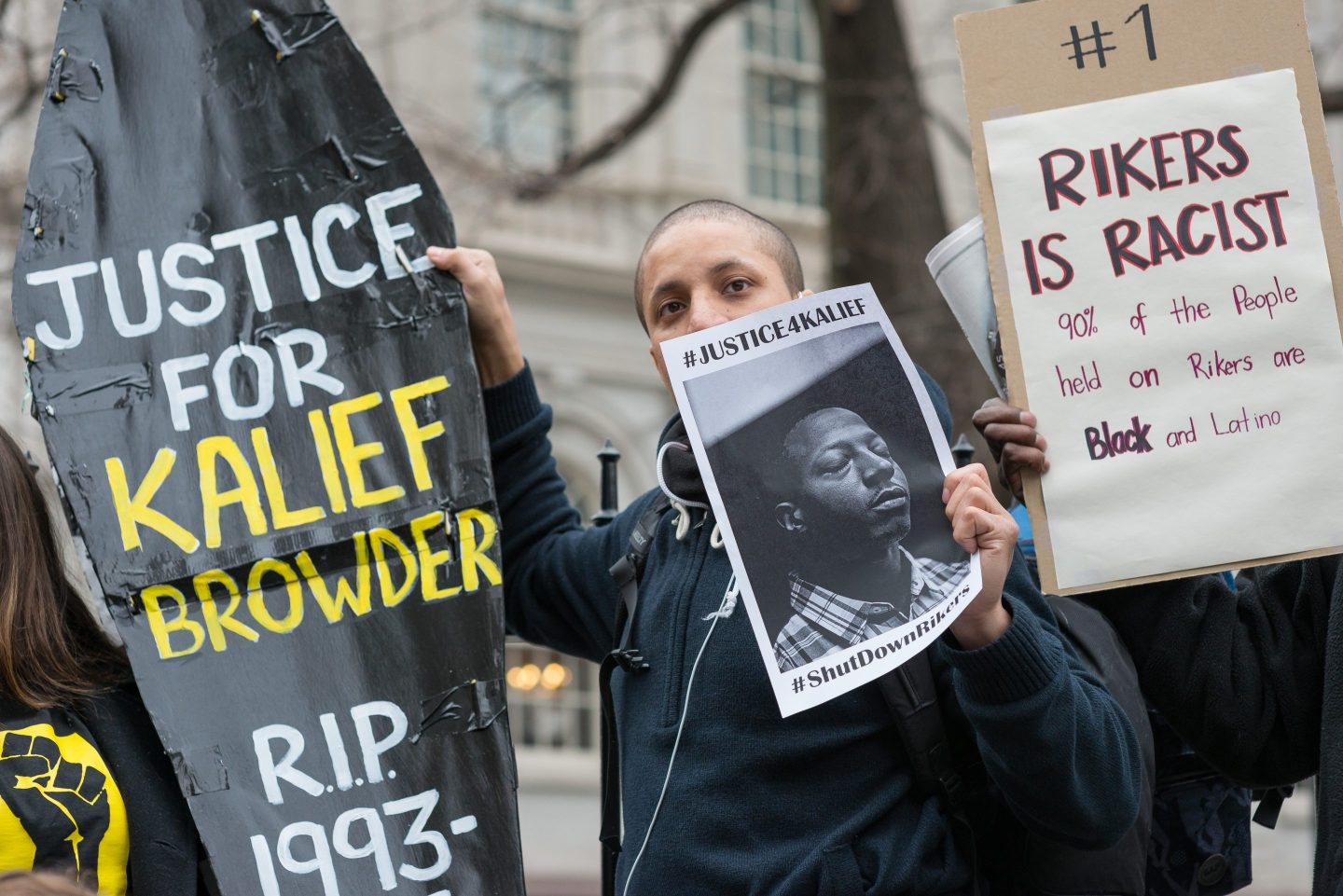
But first, here’s your Kalief Browder memorial, in Haiku.
I think about the
backpack, mostly. Often when
I see my kids drag
one off their backs, filled
with books and dead snacks and paper
and my hopes and dreams,
I think about the
backpack that Kalief did not
steal and wonder where
it ended up. Is it
sitting quarantine idle?
A landfill somewhere?
Does it hold the hopes
and dreams of sweet Kalief that
we allowed to die?
Wishing you a hopeful weekend.
Ellen McGirt
@ellmcgirt
Ellen.McGirt@fortune.com
On Point
In search of a prosperous, sustainable Africa At the Fortune Global Forum this week, I caught up with Mo Ibrahim, the founder and chair of the Mo Ibrahim Foundation, to talk about the third wave of COVID infections, the struggle to distribute vaccines, and the economic downturn that is poised to undue decades of growth. (I encourage all of you to read this recent report from the Mo Ibrahim Foundation which helps illuminate the challenges facing countries in Africa now.) We discussed good governance, anti-corruption measures and the kinds of financial tools that could kickstart growth. Clean energy is clearly one way forward. “Green really fits very well with Africa, and it's going to change people's lives [and] bring a lot of people into the production zone,” he said. “What we need to do is very clear.”
Fortune
Understanding the racial wealth gap “Unequal,” a series produced by Harvard, explores the origins of racial inequality in the U.S. This installment focuses on the racial wealth gap. The piece provides helpful historical context, while accumulating research from a variety of perspectives. For those struggling to parse the current backlash to critical race theory, there’s some fodder here as well, with receipts. “Today’s African American adults and children are living with the legacy of discrimination, inequality, and exclusion, from slavery to redlining and other discriminatory practices,” says Alexandra Killewald, professor of sociology in the Faculty of Art and Sciences.“And in turn, white Americans are benefiting from legacies of advantage.”
The Harvard Gazette
Kalief Browder died by suicide six years ago this week and we have done little to process or address the many ways he was failed by society. Sixteen-year-old Browder was incarcerated for a stealing a backpack, a charge he vehemently denied. He was beaten and abused inside Rikers, and spent about two years in solitary confinement. I refer you back to this piece by Jennifer Gonnerman, a reporter who knew Browder well and had reported his story numerous times. Browder had bravely shared his tale many times and earned the attention of many high-profile fans, but in the end, even Jay-Z could not save him.
The New Yorker
On background
Today in history you should have learned: An enslaved man named Onesimus shared his knowledge of the inoculation techniques he'd experienced in West Africa, which helped public officials stem the tide of a terrible smallpox epidemic that infected nearly half of Boston's 11,000 residents in 1721. Onesimus was enslaved by a man you've probably heard of: Cotton Mather, the Puritan minister best known for his role in setting the stage for the Salem witch trials. Mather had been interested in the inoculation science that was emerging around the world, but the idea was still controversial. Onesimus shared the details with Mather, who took the unusual step of transcribing Onesimus's instructions word for word, complete with his African accent. "People take juice of smallpox and cuttee skin, and put in a drop." You'll find the story around the 15:30 mark of this fascinating podcast.
HUB History
What's a good death? The ideas around "dying well" varies from person to person, and typically reflect their religious views, social norms, and beliefs about what makes for a good life. But African Americans are more likely to be burdened by disease, die sooner and more uncomfortably, than white Americans. The reasons are complex, but bias is a clear factor. African Americans are less likely to receive adequate pain management, personalized care or survive surgical procedures, write Jason Ashe and Danielle L. Beatty Moody in The Conversation. And we're also exposed to the untimely deaths of loved ones at an earlier age. "As African American scholars, we argue the ‘art of dying well' may be a distant and romantic notion for the African American community," they write.
The Conversation
The Muslim tradition of science and speculative fiction Muhammad Aurangzeb Ahmad has a wonderful resume: senior data scientist at Groupon, associate professor of computer science at the University of Washington, inventor, and artist. He's also proud of the long Muslim tradition of speculative writing and fiction, which began during the Islamic Golden Age. It was designed, in part, to explore the human challenges of cultural integration during a time of rapid territorial expansion. Ahmad says the first Arabic novel, Alive, Son of Awake, was about a child raised on a remote island by a gazelle, with no access to human culture until he meets a castaway. Please credit the Muslim world for an early entrance into feminist fiction with Sultana's Dream, a 1905 feminist tract set in a world called "Ladyland."
Aeon
This edition of raceAhead is edited by Wandy Felicita Ortiz
Today's mood board
Our mission to make business better is fueled by readers like you. To enjoy unlimited access to our journalism, subscribe today.