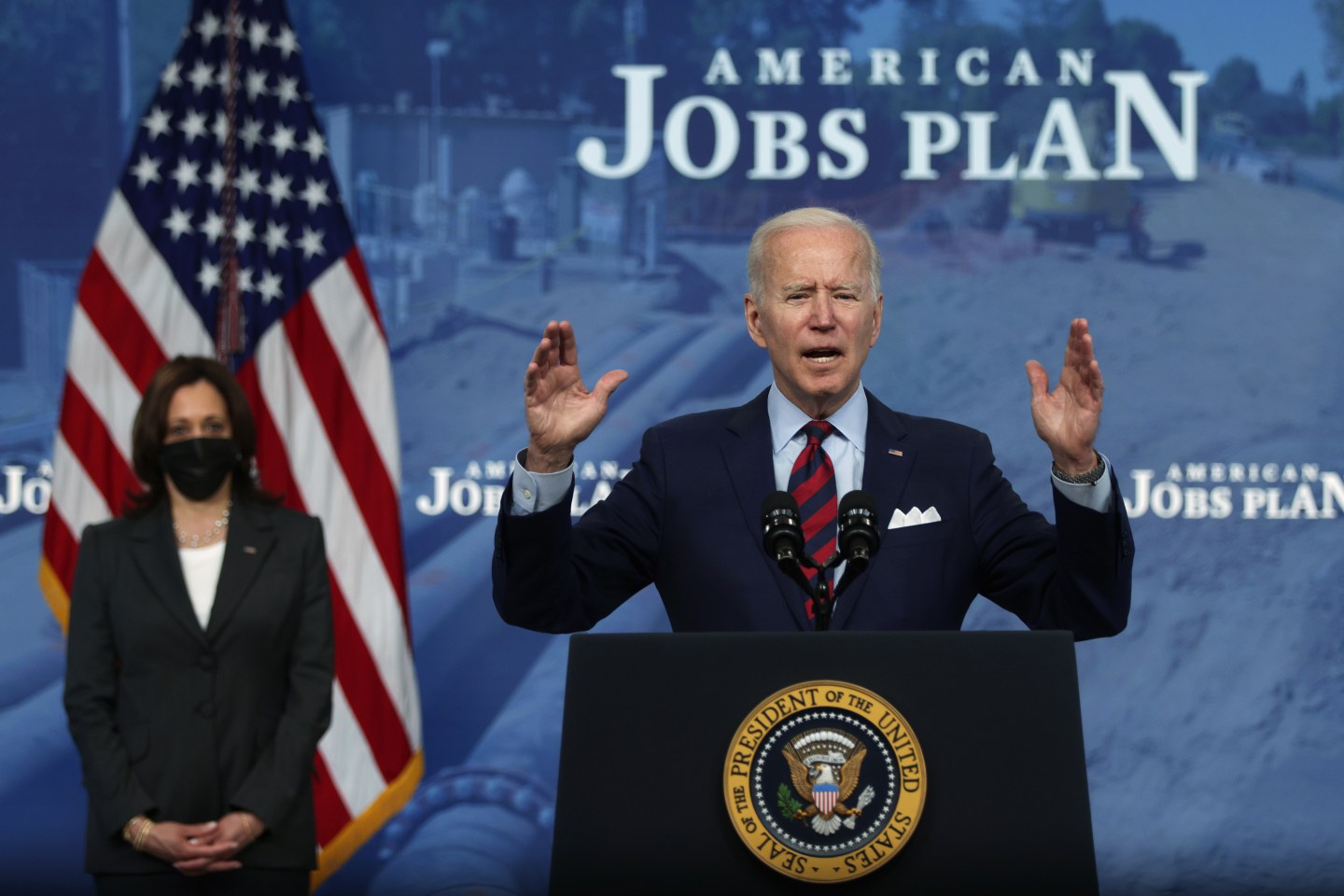
While President Biden discussed his $2 trillion infrastructure plan just outside Pittsburgh, my mind was 15 miles away in the city’s Hill District. The Hill’s story represents that of many Black and brown communities—a story of public infrastructure intending to serve all instead becoming private infrastructure serving a privileged white few.
As an academic whose work intersects engineering, sociology, and public policy, I want actionable commitments to undergird Biden’s ambitious equity goals. My work highlights three ideas that can inform this road ahead.
First, use, develop, and enforce equity metrics to guide infrastructure siting and replacement.
We tend to build infrastructure around outdated systems, locking in their inequities. Using data up to 2010, my colleagues and I find communities with greater percentages of African Americans and Hispanics are still associated with fewer bridges. In an upcoming study, my colleagues and I find that even one new bridge in a city increases high-growth startup rates by 16%. Infrastructure therefore continues to systematically shut out Black and brown communities from accessing economic opportunities.
We need equity metrics that disrupt this vicious cycle. This study provides one method that uses Census tract demographic data to ensure greater focus not just on what infrastructure is being built, but where and for whom.
This would also better prioritize limited infrastructure funds. According to the most recent Infrastructure Report Card from the American Society of Civil Engineers, it would take until 2071 to fully repair our bridge system under current investment levels. Biden’s plan will make a significant dent in that, but clearly cannot do it all.
Including equity metrics to further prioritize this backlog does not just right historical wrongs; it is simply good business. Bridges do not just transport people, goods, and services; they transport ideas and, with them, hope and opportunity. Through equity-driven infrastructure siting and replacement, Biden could widen access to the American dream via our infrastructure.
Second, set ambitious targets for involving businesses run by underrepresented groups.
Biden’s plan wants 40% of climate and clean infrastructure investment benefits to go to disadvantaged communities. While significantly abating historical environmental damages, investment could be steered to business as usual under the guise of advancing these benefits.
To prevent that from happening, what about a 40% target for local disadvantaged business enterprises (DBEs)? The U.S. Transportation Department’s DBE program currently uses a 10% target that includes DBEs “ready, willing, and able” to contribute to projects. Setting this 40% number—along with workforce training and lending terms that expand the pool of DBEs that can compete for contracts—would better ensure targets actually translate to direct community investment.
Here again, this makes economic sense. I identified local skills as a key factor that influences the sustainability of rural water systems. If aforementioned equity metrics are coupled with training that cultivates local skills, Biden’s plan will make a profoundly lasting impact on Black and brown communities.
Third, legally enforce community review processes that hold development projects accountable.
The Hill District is Pittsburgh’s largest predominantly Black neighborhood. After World War II, the Civic Arena and Crosstown Expressway (I-579) cut right through this vibrant community, displacing 8,000 residents, one-fifth of the Hill’s population. Construction started in July 2019 (with anticipated completion in November 2021) on the publicly funded I-579 CAP Urban Connector Project, which hopes to attract more equitable development projects to the neighborhood. This mirrors what Biden is attempting to do with his $20 billion infrastructure initiative, part of which will “reconnect neighborhoods cut off by historic investments.”
But it doesn’t always work out that way. When the Pittsburgh Penguins–led group acquired development rights to the area, the community successfully organized and fought to have the group sign a community plan to guide development and implement a review panel to ensure block-by-block accountability to this plan.
Yet rather than working through these mechanisms, the investor group went behind the community’s back to successfully lobby for a merger of two Hill District Census tracts. This allows this high-end development to exploit Opportunity Zone tax credits designed for the Hill’s neighboring low-income residents, a tactic that developers have used across the country. Such projects should not be allowed to proceed until mutually agreed milestones are met to prevent circumvention of review processes.
By taking these steps, Biden can transform the historical narrative around infrastructure. Accompanying ambitious equity goals with no-nonsense enforcement that keeps projects accountable to local communities could help America begin the process of redressing long-standing infrastructural wrongs.
Daniel Armanios is an assistant professor in the department of engineering and public policy at Carnegie Mellon University, where he researches issues at the nexus between infrastructure and equity.