Our mission to make business better is fueled by readers like you. To enjoy unlimited access to our journalism, subscribe today.
Late last week, Italy blocked a shipment of the AstraZeneca COVID-19 vaccine intended for Australia. The obstruction came as part of a conflict between the European Union and AstraZeneca over vaccine production shortfalls, and the incident has quickly become a flashpoint for fears of “vaccine nationalism.”
Vaccine nationalism is the impulse to restrict or control international medical trade for the benefit of local constituents. Italy’s interference is just the latest in a series of such efforts. Others include early moves by rich countries to monopolize vaccine supplies, measures in India to slow the production of vaccines for export, and a push in the U.S. to reduce reliance on international medical supply chains.
The motivation behind these actions seems entirely sensible: Increase domestic control of crucial medical supplies. But economists and medical industry analysts warn that the impulse could also impose a variety of long-term costs on the global economy—and even worsen the pandemic in the near term.
“It’s a very, very slippery slope,” warns Daniel Chancellor, lead health care industry analyst with Informa Pharma Intelligence. “It’s very easy to get drawn into a tit for tat [on trade] that then escalates into something much bigger.”
Causing $119 billion in damage
As vaccine nationalism goes, Italy’s seizure of a shipment of vaccines is an unusually direct intervention. The move serves as a public rebuke to AstraZeneca for what the EU says are its failures to meet a manufacturing agreement.
Citing manufacturing problems, AstraZeneca in late January cut delivery targets to the bloc by 60%, contributing to a painfully slow vaccine rollout in much of the EU. Soon after, EU authorities instituted the rule that allowed Italy to hold back doses meant to be shipped elsewhere. Both French and German health ministers defended the Italian intervention, emphasizing that it was a specific reaction to the conflict with AstraZeneca. Meanwhile, Australia’s health authorities said the loss of the shipment’s 250,000 doses won’t have a major impact on their vaccination program.
This is, in some sense, a fight between winners. The EU and Australia are among the wealthy nations that have already bought their way to the front of the vaccine line. Many advanced economies are on track to vaccinate every willing citizen this year, whereas poor countries may vaccinate only 10% of their populations.
The global inequality will hurt more than just poor nations. By monopolizing early vaccine shipments, wealthy countries will lengthen the duration of the pandemic overall, a study from the World Economic Forum claims. The delays will also exacerbate already serious trade declines caused by the pandemic and thereby cause, WEF estimates, as much as $119 billion per year in economic damage to those very same rich countries.
Ridiculous, selfish, and counterproductive
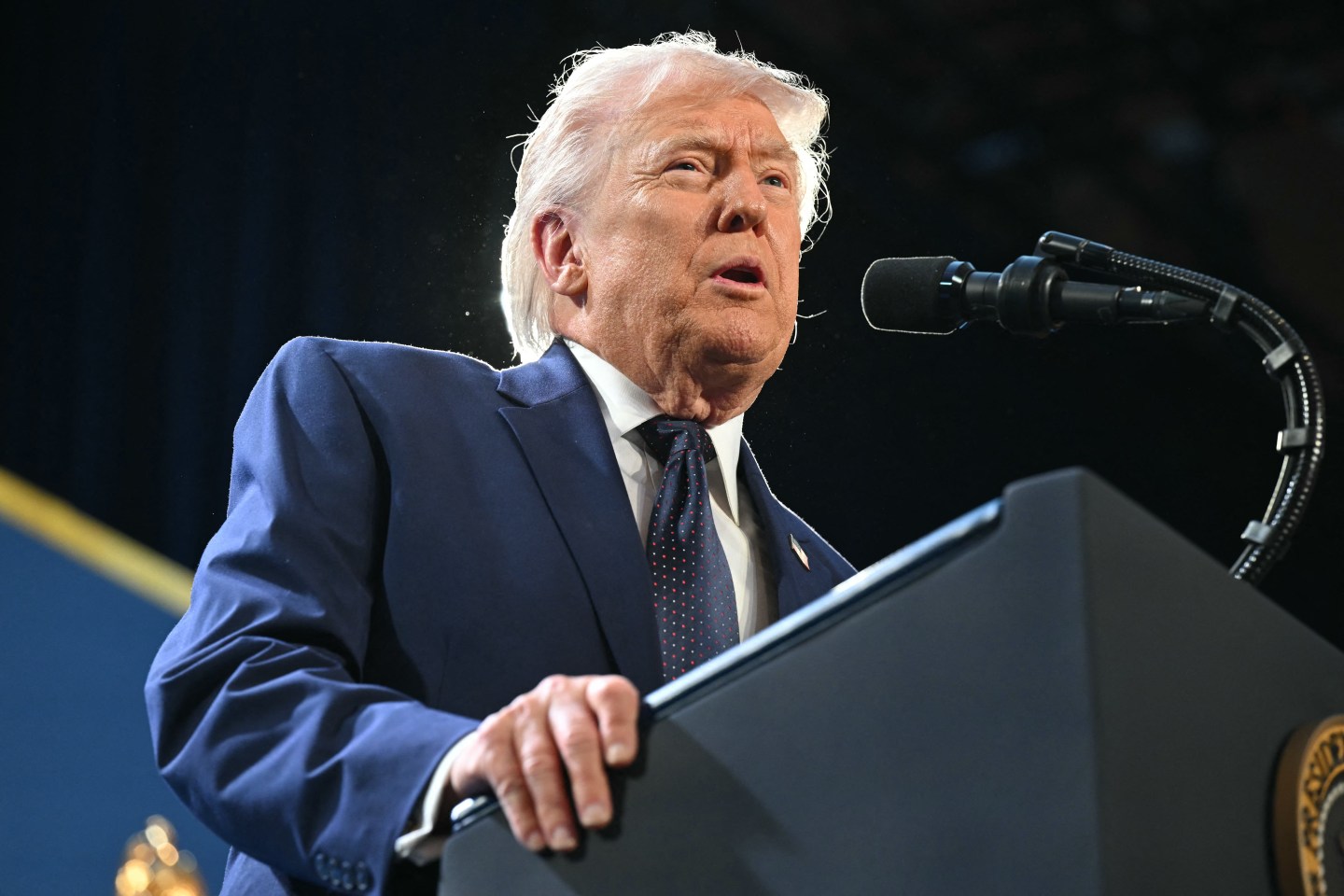
While eyes are on Italy now, the U.S. has also taken an overtly nationalist approach to vaccination. Under former President Donald Trump, the U.S. withdrew participation and funds from the World Health Organization and its COVAX initiative, an effort to purchase and distribute vaccines for the developing world. Trump officials at the time emphasized the importance of focusing on vaccinating Americans.
The Biden administration is continuing the approach, albeit in a more nuanced way. In late February, President Biden signed an executive order setting up a large-scale review of supply chains in pharmaceutical and other key industries. The review comes partly in response to shortages of personal protective equipment, or PPE, early in the pandemic, and could lead to pressure for U.S. companies to move production back home from countries like China in a process known as “reshoring.”
Those disastrous PPE shortages in the U.S., which put crucial health care workers at deadly risk, make the project appealing on national security grounds. But it reflects the same protectionist impulse as Italy’s seizure, and it has highly adverse economic effects, according to Charles Kenny of the Center for Global Development.
“It’s just sort of a ridiculous and selfish and counterproductive approach to global health,” Kenny said last week on the podcast Slate Money. “To think we’re going to produce all our health supplies at home and we’re going to keep them, keep them for us, it’s the wrong direction.”
The protectionist impulse
In another troubling recent example, the Serum Institute of India announced in late February that it had been instructed to prioritize production for domestic use. The guidance is expected to further slow production of 240 million AstraZeneca doses earmarked for COVAX participant countries, and it could represent a further headwind for Europe, which was considering importing doses from India.
These rising barriers illustrate the basic danger of the protectionist impulse: As nations make their own self-interested decisions, they can cause larger, but less obvious, harm.
No country exists in a vacuum. “Italy prioritizing its own citizens…while popular domestically, it could be very damaging,” Chancellor says. “Italy relies on imports as well.”
Tighter controls on medical trade could harm even countries with robust medical industries, given the complexity of modern supply chains. “You don’t know if that O-ring is made in China or somewhere else,” says Lawrence Ganti, president of SiO2 Materials Science, a U.S.-based maker of vaccine vials, referring to a vial component no longer widely produced in the U.S. “What happens if that supply gets cut?”
While Ganti acknowledges the risk of countries limiting exports on key supplies, he says he supports efforts to bolster domestic U.S. supply chains through strategic investment. SiO2 has itself benefited from a form of vaccine nationalism, through a $143 million investment from the U.S. government to scale up production of its innovative glass-alternative vials.
In the context of rising barriers, countries without large domestic medical industries are in the worst position. “Countries like Canada, like South Africa, they’re running scared,” Ganti says. “They’re saying, Shoot, I don’t have vials, I don’t have syringes, I don’t have local [vaccine] production. How do I secure vaccine doses for my people?”
Despite the ill effects, an inexorable logic fuels the protectionist impulse. European countries “are not doing anything different from what we’re doing,” Ganti says. They’re saying, “We should secure vaccine for our people.”
More health care and Big Pharma coverage from Fortune:
- State-by-state map: Georgia and D.C. lag in COVID vaccine rollout
- Only one of the Big Four vaccine makers produced a COVID-19 winner. What happens next?
- No pharmacy for miles: How rural Americans are getting overlooked in the COVID vaccine rollout
- Why improved access and awareness are key to a more equitable vaccine rollout
- One hospital says telehealth has made its COVID vaccine rollout three to four times as efficient