Almost a year into COVID-19, women across the U.S. are contending with a public health crisis, an economic crisis, and, on top of those challenges, a caregiving crisis.
In addition to the serious health consequences of COVID-19, the pandemic has wrought a severe economic toll, particularly for women of color. Women have lost significantly more jobs than men since the pandemic began, eviscerating more than 30 years of progress in labor force participation in just one year. And short of leaving the labor force entirely, women, especially moms, are having to work part-time or drop out intermittently, which adds up to less economic security in the short and long term.
The devastating impact on women’s employment is due to a collision of forces. The economy has been hit hardest in female-dominated industries like retail and restaurants. On top of job loss in those sectors, women in jobs deemed “essential” during the pandemic—in grocery stores, nursing homes and hospitals, and childcare centers—have long contended with volatile schedules and limited or no access to paid sick days or family leave, and those job conditions have made it even harder to stay on the job during the pandemic. These women, who are often low-paid women of color, have risked their health and scrambled to care for their own families so that they can care for others’.
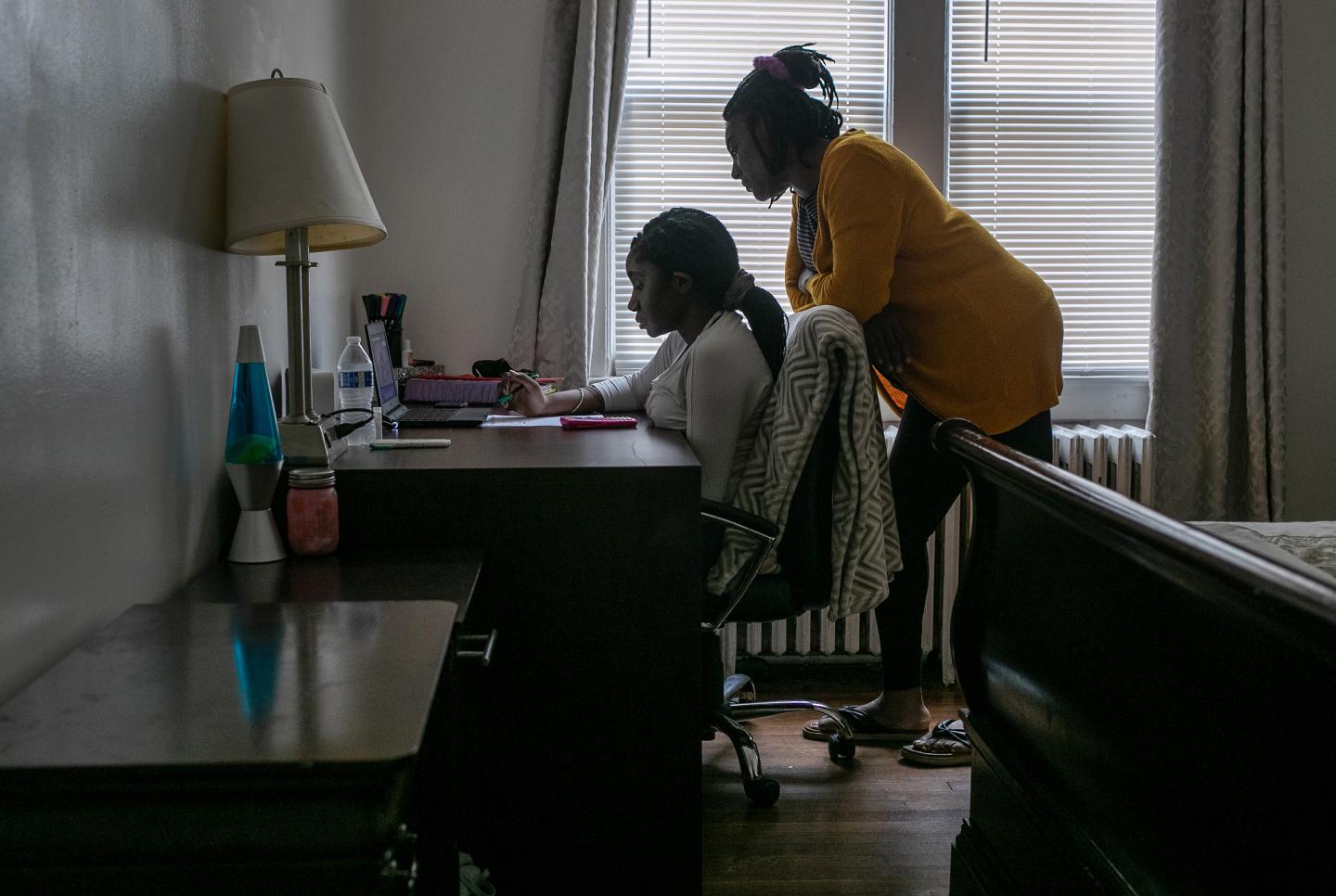
Women across the country have also been forced to take on additional burdens at home. They are filling in as teachers and childcare providers—with schools remote and childcare centers shuttered—or negotiating care for sick or aging parents and other loved ones. Girls, too, disproportionately girls of color, are stepping up to take on additional caregiving responsibilities at home while also navigating the challenges of virtual learning. Without a care infrastructure in place, women in the U.S. are bearing the brunt.
Of course, millions of working families were barely treading water before the pandemic. The lack of policies to support workers and their families—like affordable childcare, paid family and medical leave, and long-term care—has forced generations of women to do the full-time job of caregiving along with a full-time job or jobs in the workforce. Still others are part of the care workforce themselves, disproportionately Black women and Latinas, who have long been undervalued and underpaid.
The pandemic has brought this struggle to light—and made it worse. According to a recent survey of workers, more women than men report an increase in caregiving responsibilities. More women than men cite caregiving responsibilities as the reason they left their jobs. And more women than men have said that they anticipate losing paid work because of unpaid caregiving responsibilities.
This has a domino effect. Women pay a price for their disproportionate responsibilities at home, in the form of lower pay, more part-time work, or time out of the labor force altogether. This often adds up to financial insecurity over the course of a career for them and their families and for generations that follow.
The first major hurdle to addressing the overlapping health, economic, and caregiving crises is to bring the coronavirus pandemic under control and deliver immediate relief through the President’s American Rescue Plan. The plan provides resources to get vaccines in arms and children safely back in school. It includes up to $1,400 individual payments and expansion of the child tax credit to $3,000 per child and of the earned income tax credit. It boosts funding for programs to protect survivors of gender-based violence, housing and food assistance, and unemployment insurance for those who remain out of work, among other important provisions.
The American Rescue Plan also addresses head-on the childcare challenges that have contributed to the significant reduction in women’s labor force participation by expanding support for hard-hit childcare providers and helping families struggling to afford care for their children. This is a critical first step toward building a care infrastructure that must also include investments in paid family and medical leave, long-term care, and high-quality jobs for caregivers.
The President and vice president have committed to act quickly and boldly. As Vice President Harris recently said, “The longer we wait to act, the harder it will be to bring those millions of women back into the workforce.” The economic and caregiving crises are disproportionately impacting women, and women of color most of all, but the long-term consequences will be felt by us all. If we act now to provide immediate economic relief and a path to longer-term recovery, we will both improve the health and security of families and restore and strengthen our economy.
Jennifer Klein and Julissa Reynoso are cochairs of the White House Gender Policy Council.