• Home
  • Latest
  • Fortune 500
  • Finance
  • Tech
  • Leadership
  • Lifestyle
  • Rankings
  • Multimedia
CommentaryChina

China is leaning into antitrust regulation to stay competitive with the U.S.

By
Angela Huyue Zhang
Angela Huyue Zhang
Down Arrow Button Icon
By
Angela Huyue Zhang
Angela Huyue Zhang
Down Arrow Button Icon
February 8, 2021, 7:00 PM ET
Increasing antitrust regulation in China’s tech sector is not simply about enforcing rules, writes Angela Huyue Zhang.
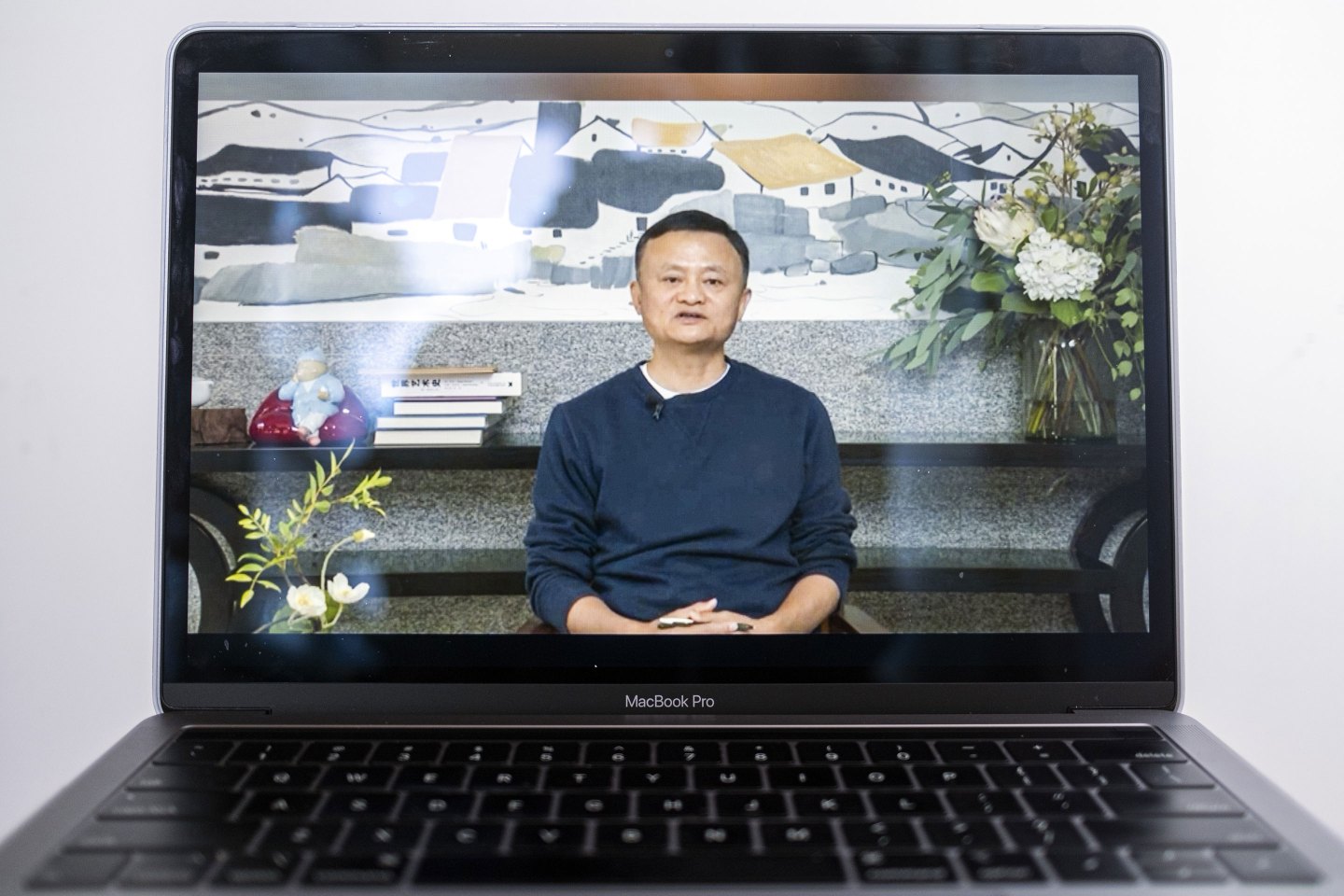
Increasing antitrust regulation in China’s tech sector is not simply about enforcing rules, writes Angela Huyue Zhang.Justin Chin—Bloomberg/Getty Images

The Ant Group is planning a major revamp in response to pressure from Chinese financial regulators, just three months after Jack Ma’s outspoken remarks against them. New antitrust rules concerning tech firms went into effect on Sunday.

While Ma’s critical speech may have been the tipping point for the government to rein in Big Tech, there have been long-standing economic, social, and industrial policy issues that merit the government’s action. 

In fact, Beijing’s recent efforts to strengthen antitrust regulation in the tech sector are motivated by a larger goal: to become a technology superpower and achieve self-sufficiency so that China no longer needs to rely on the West.

In this regard, how China handles antitrust law offers it a distinct competitive advantage, particularly compared with the U.S., which is also grappling with how to handle tech giants. Even though efforts to rein in companies such as Google and Facebook have gathered momentum, the U.S. government has significantly less leverage than China when it comes to antitrust law. Indeed, any U.S. legislative changes will take years to enact, and existing antitrust cases brought against Big Tech also face uphill battles in U.S. courts.

China shares some of the same concerns as the U.S. over increasing market concentration in the tech sector. Moreover, the enormous commercial success of Chinese online tech businesses such as Alibaba and Tencent have resulted in a high concentration of wealth—there are 878 billionaires in China, the highest number in the world. 

However, these companies do not thrive because they develop innovative technologies. Rather, they build smart apps that make it easier for consumers to connect with merchants. Even though China has emerged at the forefront of e-commerce and digital payment, Chinese Big Tech still owes its success, to a large extent, to China’s vast consumer market.  

This ferocious competition between Chinese tech firms trying to grab larger shares of the Chinese consumer market has led to many social problems. By setting tight delivery times, the algorithms of Chinese online delivery apps encourage their drivers to speed dangerously, resulting in more traffic accidents. The recent deaths of two young employees at Pinduoduo, a rising Chinese e-retailer and formidable competitor to Alibaba, have sparked a heated debate about the culture of overworking at Chinese tech firms.

What’s more, despite their sophisticated software development capabilities, companies such as Tencent and Alibaba have yet to develop foundational technologies. China’s fragility in technological innovation was clearly exposed during the Sino-American trade war—the operations of national champions such as ZTE and Huawei could be easily interrupted if the U.S. government withheld the supply of key components such as semiconductors.

China’s weakness in technological innovation explains Beijing’s recent emphasis on achieving technological self-reliance and its desire to push Chinese tech giants in this direction. Since China is the only country apart from the U.S. to have Internet giants, these tech firms are in a good position to develop digital technologies for the country. In some ways, Chinese tech giants have responded to the government’s call. Tencent has promised to invest $70 billion in new digital infrastructure. In 2019, Alibaba unveiled its first chip to power artificial intelligence. Baidu is betting heavily on driverless cars. 

But Beijing wants more. Its intentions were clearly revealed in a recent editorial by the People’s Daily, a Communist Party mouthpiece, which chided tech firms for investing in the “community group-buying” market. The commentator instead urged Chinese Internet giants to forge ahead with higher ambitions, such as advancing technological innovations to clear China’s bottleneck in the intensive Sino-American rivalry, rather than focusing on selling cabbages.

In the meantime, antitrust law enforcement gives Beijing significant regulatory leverage to push its tech firms in the direction it desires. Antitrust law grants the central government strong sanctioning powers, allowing it to impose anything from astronomical monetary fines to severe structural remedies. The Chinese antitrust regulator also possesses vast administrative discretion while being subject to little judicial oversight. Furthermore, Chinese antitrust law enforcement is spearheaded by a central ministry that follows the central government’s directives carefully.   

As Chinese tech giants have amassed significant market power, they have become vulnerable to antitrust regulatory attacks. And just as U.S. and EU regulators are tightening their antitrust scrutiny over Big Tech, the Chinese antitrust authority also has perfectly legitimate reasons to do so. The regulatory vulnerability of Chinese Big Tech, in turn, facilitates their cooperation with Beijing to help the latter achieve its goals, be it in antitrust or other industrial policy matters.

Indeed, the Chinese government views antitrust law as a powerful multipurpose tool not only for tackling monopolies, but also for achieving a wide variety of policy objectives, such as maintaining price stability, industrial planning, and trade and foreign policy. Thus, the absence of checks and balances in Chinese antitrust enforcement, supposedly an institutional weakness, could actually be a strength for Beijing as it pushes tech giants and the country toward achieving technological self-sufficiency.

Angela Huyue Zhang is the director of the Center for Chinese Law at the University of Hong Kong. She is the author of Chinese Antitrust Exceptionalism: How the Rise of China Challenges Global Regulation.

More opinion from Fortune:

  • Invest in Black women to drive the economy forward
  • Biden wants government to “buy American.” Using Amazon could make that hard to do
  • With so much training, why are there still so many bad leaders?
  • Ed Helms: To solve our student debt crisis, we need to fix political corruption first
  • A “startup visa” will help Biden jump-start the economy

About the Author
By Angela Huyue Zhang
See full bioRight Arrow Button Icon

Latest in Commentary

Finance
Lorem ipsum dolor sit amet, consectetur adipiscing elit, sed do eiusmod tempor incididunt ut labore et dolore magna aliqua. Ut enim ad minim veniam
By Fortune Editors
October 20, 2025
Finance
Lorem ipsum dolor sit amet, consectetur adipiscing elit, sed do eiusmod tempor incididunt ut labore et dolore magna aliqua. Ut enim ad minim veniam
By Fortune Editors
October 20, 2025
Finance
Lorem ipsum dolor sit amet, consectetur adipiscing elit, sed do eiusmod tempor incididunt ut labore et dolore magna aliqua. Ut enim ad minim veniam
By Fortune Editors
October 20, 2025
Finance
Lorem ipsum dolor sit amet, consectetur adipiscing elit, sed do eiusmod tempor incididunt ut labore et dolore magna aliqua. Ut enim ad minim veniam
By Fortune Editors
October 20, 2025
Finance
Lorem ipsum dolor sit amet, consectetur adipiscing elit, sed do eiusmod tempor incididunt ut labore et dolore magna aliqua. Ut enim ad minim veniam
By Fortune Editors
October 20, 2025
Finance
Lorem ipsum dolor sit amet, consectetur adipiscing elit, sed do eiusmod tempor incididunt ut labore et dolore magna aliqua. Ut enim ad minim veniam
By Fortune Editors
October 20, 2025

Most Popular

Finance
Lorem ipsum dolor sit amet, consectetur adipiscing elit, sed do eiusmod tempor incididunt ut labore et dolore magna aliqua. Ut enim ad minim veniam
By Fortune Editors
October 20, 2025
Finance
Lorem ipsum dolor sit amet, consectetur adipiscing elit, sed do eiusmod tempor incididunt ut labore et dolore magna aliqua. Ut enim ad minim veniam
By Fortune Editors
October 20, 2025
Finance
Lorem ipsum dolor sit amet, consectetur adipiscing elit, sed do eiusmod tempor incididunt ut labore et dolore magna aliqua. Ut enim ad minim veniam
By Fortune Editors
October 20, 2025
Finance
Lorem ipsum dolor sit amet, consectetur adipiscing elit, sed do eiusmod tempor incididunt ut labore et dolore magna aliqua. Ut enim ad minim veniam
By Fortune Editors
October 20, 2025
Finance
Lorem ipsum dolor sit amet, consectetur adipiscing elit, sed do eiusmod tempor incididunt ut labore et dolore magna aliqua. Ut enim ad minim veniam
By Fortune Editors
October 20, 2025
Finance
Lorem ipsum dolor sit amet, consectetur adipiscing elit, sed do eiusmod tempor incididunt ut labore et dolore magna aliqua. Ut enim ad minim veniam
By Fortune Editors
October 20, 2025
Fortune Secondary Logo
Rankings
  • 100 Best Companies
  • Fortune 500
  • Global 500
  • Fortune 500 Europe
  • Most Powerful Women
  • Future 50
  • World’s Most Admired Companies
  • See All Rankings
Sections
  • Finance
  • Fortune Crypto
  • Features
  • Leadership
  • Health
  • Commentary
  • Success
  • Retail
  • Mpw
  • Tech
  • Lifestyle
  • CEO Initiative
  • Asia
  • Politics
  • Conferences
  • Europe
  • Newsletters
  • Personal Finance
  • Environment
  • Magazine
  • Education
Customer Support
  • Frequently Asked Questions
  • Customer Service Portal
  • Privacy Policy
  • Terms Of Use
  • Single Issues For Purchase
  • International Print
Commercial Services
  • Advertising
  • Fortune Brand Studio
  • Fortune Analytics
  • Fortune Conferences
  • Business Development
About Us
  • About Us
  • Editorial Calendar
  • Press Center
  • Work At Fortune
  • Diversity And Inclusion
  • Terms And Conditions
  • Site Map
Fortune Secondary Logo
  • About Us
  • Editorial Calendar
  • Press Center
  • Work At Fortune
  • Diversity And Inclusion
  • Terms And Conditions
  • Site Map
  • Facebook icon
  • Twitter icon
  • LinkedIn icon
  • Instagram icon
  • Pinterest icon

Latest in Commentary

taylor
CommentaryMarketing
How fandom became culture’s power center — and a blueprint for Gen Z’s economic influence
By Reid LitmanFebruary 21, 2026
11 hours ago
igor
CommentaryMarkets
If the recent AI and crypto shocks upset you, you’re tracking the wrong cycle
By Igor PejicFebruary 21, 2026
12 hours ago
ceos
CommentaryTariffs and trade
We heard CEOs rip into Trump’s tariffs behind the scenes and the Supreme Court just vindicated them
By Jeffrey Sonnenfeld, Steven Tian and Stephen HenriquesFebruary 20, 2026
1 day ago
AI
CommentaryCareers
Something big is happening in AI, but that’s the only thing Matt Shumer got right
By Neil Chilson and Kevin FrazierFebruary 20, 2026
1 day ago
wealth
CommentaryMillionaires
Are you a ‘hidden millionaire?’
By Joanna RotenbergFebruary 20, 2026
1 day ago
laid off
CommentaryJobs
The billion-dollar justification: why AI giants need you to fear for your job
By David StoutFebruary 19, 2026
2 days ago

Most Popular

placeholder alt text
Innovation
The U.S. spent $30 billion to ditch textbooks for laptops and tablets: The result is the first generation less cognitively capable than their parents
By Sasha RogelbergFebruary 21, 2026
13 hours ago
placeholder alt text
Economy
Fed confirms it obeyed U.S. Treasury request for an unusual ‘rate check,’ weakening the dollar against foreign currencies
By Jim EdwardsFebruary 19, 2026
3 days ago
placeholder alt text
Big Tech
Peter Thiel and other tech billionaires are publicly shielding their children from the products that made them rich
By Marco Quiroz-GutierrezFebruary 21, 2026
12 hours ago
placeholder alt text
AI
‘I’m deeply uncomfortable’: Anthropic CEO warns that a cadre of AI leaders, including himself, should not be in charge of the technology’s future
By Sasha RogelbergFebruary 19, 2026
2 days ago
placeholder alt text
Arts & Entertainment
Gen Zers and millennials flock to so-called analog islands 'because so little of their life feels tangible'
By Michael Liedtke and The Associated PressFebruary 20, 2026
1 day ago
placeholder alt text
AI
Sam Altman says the quiet part out loud, confirming some companies are ‘AI washing’ by blaming unrelated layoffs on the technology
By Sasha RogelbergFebruary 19, 2026
2 days ago

© 2026 Fortune Media IP Limited. All Rights Reserved. Use of this site constitutes acceptance of our Terms of Use and Privacy Policy | CA Notice at Collection and Privacy Notice | Do Not Sell/Share My Personal Information
FORTUNE is a trademark of Fortune Media IP Limited, registered in the U.S. and other countries. FORTUNE may receive compensation for some links to products and services on this website. Offers may be subject to change without notice.