This is the web version of Eastworld, Fortune’s newsletter focused on business and technology in Asia. Subscribe here to get future editions in your inbox.
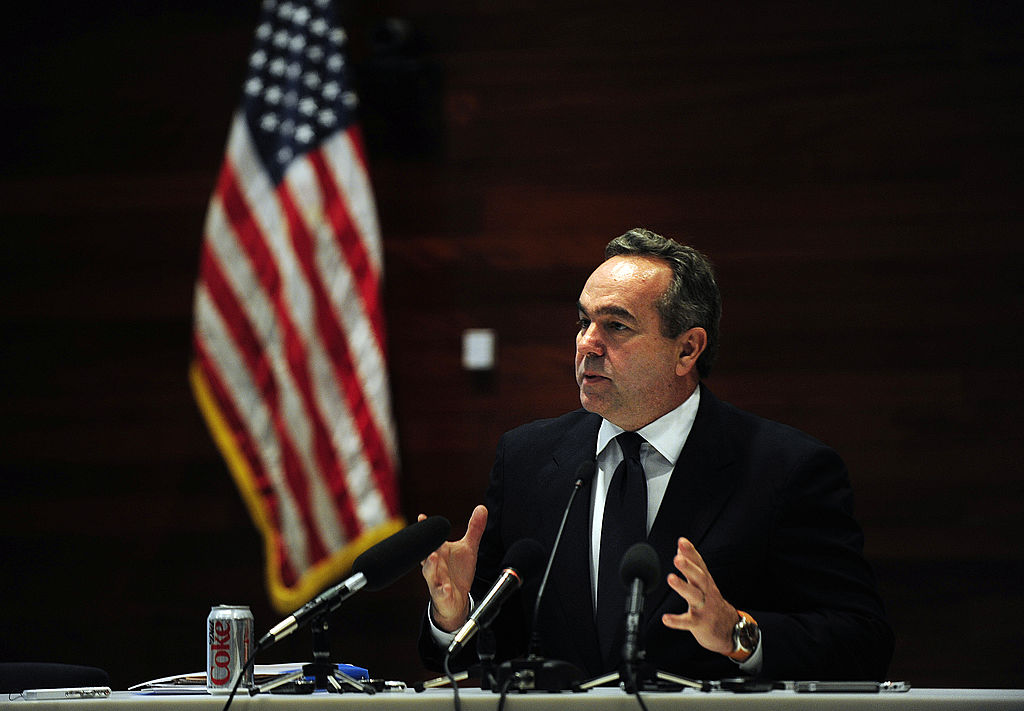
Joe Biden has picked Obama administration veteran Kurt Campbell for a newly created position as senior official for Asia policy, a spokesman for the president-elect’s transition team said Wednesday.
Campbell is a former Pentagon official who rose to become the top U.S. diplomat for Asia in Hillary Clinton’s State Department. He’s a pillar of the Washington policy establishment—polished diplomat, skilled bureaucrat, and respected foreign policy theorist—and boasts an impressive network of relationships in Asia and on Capitol Hill.
In the Biden administration, Campbell’s title will be “Indo-Pacific coordinator.” (Biden apparently rejected an earlier suggestion to call the new role “Asia czar.”) Campbell will report directly to National Security Council adviser Jake Sullivan and be granted broad authority to integrate China policy across “every government agency.”
Washington Post columnist Josh Rogin hails Campbell’s appointment as a decision that “should reassure nervous Asian allies that the Biden administration is taking the China challenge seriously.”
But it may raise hackles in Beijing. Campbell is a China hawk, widely credited as the architect of the Obama administration’s 2012 “pivot to Asia” strategy, which called for taking a more confrontational approach to dealing with China while bolstering U.S. military resources and diplomatic relationships in the rest of the region.
Campbell has elaborated on the approach in a 2016 book, The Pivot: The Future of American Statecraft in Asia, and a series of subsequent articles in Foreign Affairs. In a 2018 essay co-written with Ely Ratner, who is expected take a senior Asia-related post in the Biden administration, Campbell essentially sided with the Trump administration in declaring America’s four-decades-long policy of engagement with China a failure.
“Washington once again put too much faith in its power to shape China’s trajectory,” they wrote. “All sides of the policy debate erred: free traders and financiers who foresaw inevitable and increasing openness in China, integrationists who argued that Beijing’s ambitions would be tamed by greater interaction with the international community, and hawks who believed that China’s power would be abated by perpetual American primacy. Neither carrots nor sticks have swayed China as predicted.”
Critics of Obama’s pivot strategy, which was later rebranded a “rebalance,” have argued that it actually aggravated tensions in the Asia-Pacific because it signaled to Beijing that the U.S. was determined to contain China militarily. Some have even argued that the Communist Party’s lurch to more authoritarian style of governance under Xi Jinping was a direct response to the U.S. shift.
In a 2019 essay entitled “Competition Without Catastrophe,” Campbell and Sullivan stress that containment wasn’t a goal of the pivot strategy. Cold War-style “containment” won’t work for dealing with China, they argue, because China is a far more formidable competitor than the old Soviet Union. The aim of U.S. policy should be figuring out how to co-exist with China, not how to change it. American policymakers, they suggest, risk repeating old mistakes if they assume that “competition can succeed in transforming China where engagement failed—this time forcing capitulation or even collapse.”
In a new Foreign Affairs essay, published this week, Campbell and co-author Rush Doshi, director of the Brookings Institution’s China Strategy Initiative, outline how the U.S. can “shore up” security in Asia by focusing on building alliances in the region, a task they acknowledge as “among the most challenging in the history of modern statecraft.”
It’s also among the most urgent—and Campbell now has an opportunity to put his theory to the test.
Clay Chandler
clay.chandler@fortune.com
This edition of Eastworld was curated and produced by Grady McGregor. Reach him at grady.mcgregor@fortune.com.
Eastworld news
Cotton ban
The U.S. announced Wednesday that is blocking all imports of cotton and tomatoes from China’s western Xinjiang province in a move meant to punish China’s treatment of its minority Uyghur population in the region. The ban comes amid reports of China’s forced labor practices and human rights abuses in what it calls vocational training centers. The ban comes amid global apparel companies facing increasing scrutiny regarding their supply chains in China and sourcing cotton products from Xinjiang. Wall Street Journal
A branding problem
The COVID-19 vaccine developed by German biotechnology firm BioNTech, in partnership with U.S. pharmaceutical giant Pfizer and China's Fosun Pharma, became one of the world's most sought-after vaccines after it posted a 95% efficacy rate in preventing COVID-19 infections. Mainland-based Fosun is responsible for distributing the vaccine in Greater China—which it defines as mainland China, Hong Kong, Macau, and Taiwan—but it may face a branding problem in some of those regions. Taiwan officially bans any vaccine coming from China, while activists in Hong Kong have urged the government not to import any Chinese-made vaccines. Fortune
Portfolio maintenance
The U.S. government will allow Americans to continue investing in Chinese tech giants Alibaba, Baidu, and Tencent, according to the Wall Street Journal. The U.S. Defense Department had weighed including the three companies—worth a combined $1.4 trillion in market capitalization—on a list of firms deemed to be supporting China’s military. Late last year, President Trump issued the executive order barring Americans from investing in firms with close ties to the Chinese military. Alibaba and Baidu are listed in New York, while Tencent is listed in Hong Kong. Wall Street Journal
Musk’s love affair with China
Tesla CEO Elon Musk may be China’s favorite foreign capitalist. Even amid rising U.S.-China tensions, Tesla has closely aligned itself with China’s government and economic policies—and it's paid off. The company has received preferential treatment from Beijing. After beginning production in late 2019, Tesla’s Shanghai Gigafactory has already been a massive success, as cars began rolling off the production line in late 2019 less than a year after Tesla broke ground on building the factory. Tesla’s Model 3 was also China’s most popular EV for much of 2020. But, as experts note, Musk’s success in China may only last as long as China is incentivized to support him. Bloomberg
Uncertainty in Macau
Sheldon Adelson, the controversial billionaire Republican donor and casino mogul, died this week, creating uncertainties in Macau, the world’s largest gambling market. Adelson may be more famous for his casino properties in Las Vegas, but Macau has played a larger role in growing his $33 billion personal fortune. Adelson's Las Vegas Sands was Macau’s largest casino and recreation complex operator at the time of the tycoon's death, but it may be under threat as the city plans to reallocate its casino licenses. Caixing Global
Pandemic origins
A panel of scientists dispatched by the World Health Organization arrived in China on Thursday to investigate the origins of the COVID-19 pandemic. The scientists will begin their investigation after a 14-day quarantine in Wuhan and will attempt to get a clearer idea of how the virus may have jumped from animals to humans. China had delayed the visit for weeks, prompting a rare rebuke from the head of the WHO. For China’s government, the Nikkei Asian Review writes, the visit is a sensitive issue since Beijing doesn’t want the WHO examining its performance in containing the virus in the early stages of the outbreak. Fortune
Coronavirus by country
China has now put over 22 million people under lockdown as it battles its worst COVID-19 outbreak since last summer. The country is recording roughly 109 cases per day in the last week. That's paltry compared to nearly 250,000 cases per day in the U.S., but China's government hopes to completely eradicate community spread by forcing residents of three cities near Beijing not to leave their homes. The lockdowns come just weeks before the Chinese New Year holiday, which China had hoped would be a chance for travelers to freely move around the country and showcase the country's ability to defeat the virus. Fortune
Markets and movers
Baidu—The Chinese search engine giant is teaming up with Chinese automaker Geely to make electric vehicles. Baidu will combine its autonomous driving technology with Geely’s electric vehicle manufacturing capabilities. CNN
Byju – India’s largest online education start-up has signed a deal to acquire the country’s test prep leader Aakash education Services for $1 billion, according to Bloomberg. Byju raised hundreds of millions of dollars in 2020 while demand for its online services skyrocked amid the pandemic. Bloomberg
Tesla – The American electric vehicle giant has registered a subsidiary company in India this week, kickstarting Tesla’s efforts to break into India's largely untapped electric vehicle market. Deal Street Asia
Apple – South Korean automaker Hyundai plans to sign a deal with U.S. tech giant Apple to produce self-driving cars and may aim to launch a car in 2027, according to South Korean media. Reuters
Anheuser-Busch InBev – The world’s largest beer maker has merged with Vietnam’s SAB Beer in a deal that will dissolve SAB Beer and shift resources to making AB InBev beers like Hoegaarden, Budweiser, and Beck. Reuters
Final figure
50.4%
On Tuesday, Brazilian authorities said Chinese vaccine maker Sinovac’s vaccine was 50.4% effective in preventing COVID-19 infections, a significant drop from the 78% figure they had claimed one week prior. The 50.4% rate is far below the 95% and 94% figures posted by American vaccine makers Pfizer and Moderna, respectively, but officials claimed Sinovac's vaccine still offered strong protection in preventing moderate and severe COVID-19 infections. The sobering news has not appeared to slow demand for Sinovac’s vaccine, as Turkish and Indonesian authorities approved the vaccine this week and began rolling it out to their citizens. Fortune