Looking back at 2020, it seems like our world turned upside down, from a global pandemic and climate catastrophes down to the mundane details of what it means to go to work each day. But the silver lining for most people with an office job is that, in the long run, the rise of remote work could be the best thing to happen to knowledge work in generations.
If you heard what was coming a year ago, you wouldn’t have believed it. “Work as we know it is over. Let’s all go home, sit on our couches with our laptops, and figure out what to do from there.” A new study by Dropbox and the Economist Intelligence Unit (EIU) shows people are working longer hours and feeling more stressed since going remote. It can be hard to imagine something good coming out of this.
But we’ve already gained a lot, such as the ability to work from anywhere and extra hours to spend with family or however we choose. The vast majority of employees already say they don’t want to return to pre-pandemic office work when this is over. That’s clear in Dropbox’s internal surveys and in our study with EIU; workers say that the advantages of working remotely outweigh negatives by a wide margin.
And the benefits will become clearer over time. Employees will escape grueling commutes and gain more control over their life choices. Companies will grow stronger as they integrate dispersed talent with diverse perspectives. Opportunity will spread far beyond exclusive urban clusters.
As the advantages of distributed work become the norm, employees will demand them. Companies that understand this and adapt will be the winners in this new world. They’ll attract the top talent, ship the best products, and earn the most market share. Those that don’t evolve will be left behind.
But to make the most of this opportunity, we’ll need to fundamentally reimagine the experience of work itself. Distributed work is a new medium. The processes and tools we’re using now were duct-taped together in response to the pandemic. But what if we built them for the new world? How might we intentionally redesign work to unlock the potential of this new distributed model?
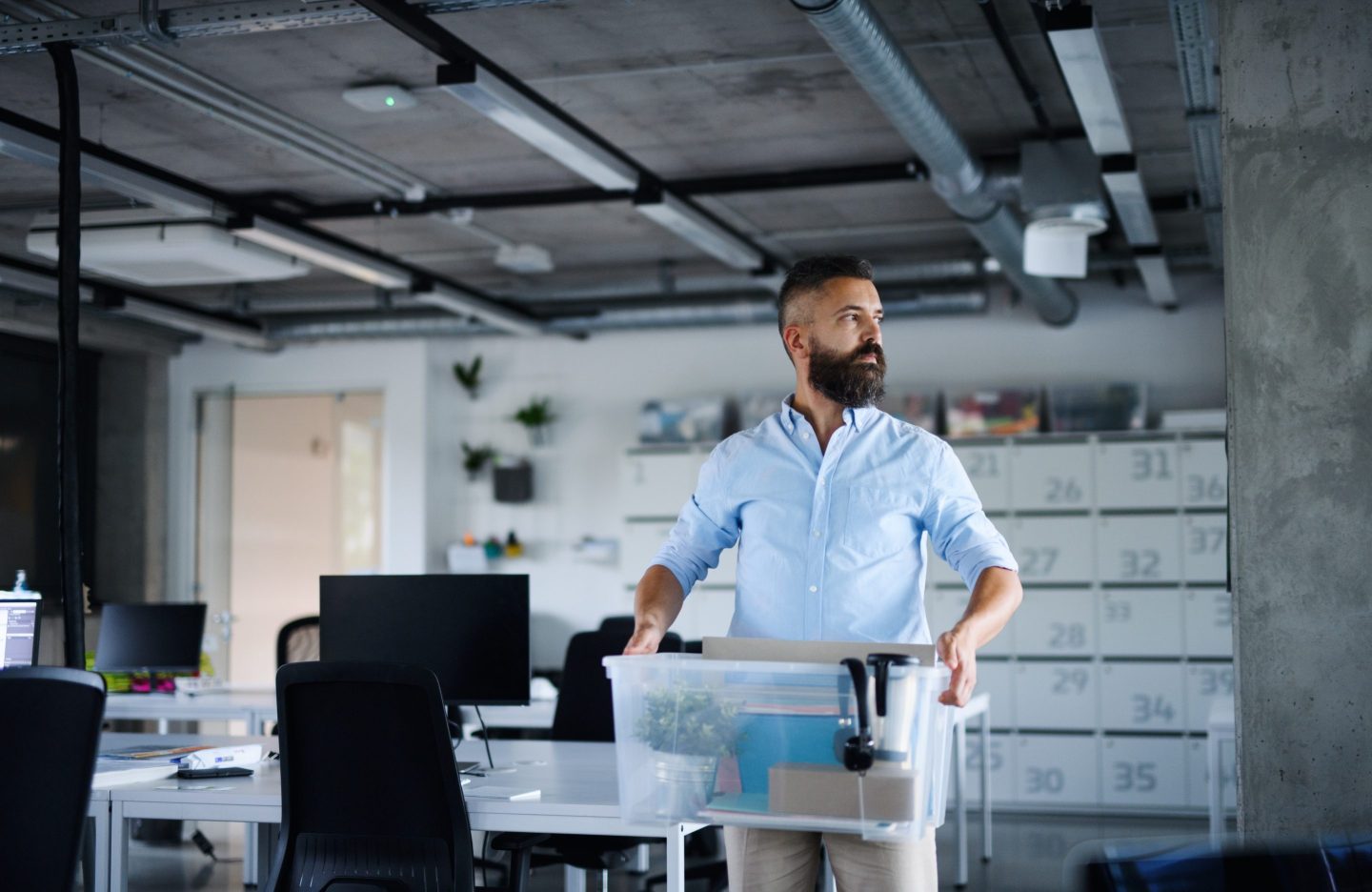
Let’s start with the obvious: offices. Knowledge work has outgrown a physical setting where everyone spends the workday together. In our study with EIU, workers said they were able to focus better at home than they were before. But they also feel disconnected and said it’s harder to begin new projects with multiple collaborators while remote. Distributed work lets us redefine “the workplace” to mean “anywhere work happens,” and get the best of both worlds. At Dropbox, we’ve decided that focused work should happen at home (or anywhere private), while our offices will be repurposed for fostering human connection.
Next, let’s reimagine the workweek. The 40-hour office workweek with a daily commute was an artifact of factory work. Back in the day, you had to be in a physical location with others to do your work. Today, more and more people are employed in some kind of knowledge work that can be done asynchronously.
We now have the opportunity to redesign the workweek flexibly around individual needs. But it’ll require a new social contract at work. Companies will have to trust employees to get their work done without constantly monitoring face time, and people will have to take more accountability for their results.
Maybe you’re a night owl or an early bird. Maybe childcare means your best work hours rotate daily. If “the workplace” now means wherever work happens, “the workweek” will mean whenever work happens best for each person. At Dropbox, we’re embracing nonlinear work. We’re limiting core collaboration hours and encouraging employees to customize their own schedules beyond that.
Reimagining the workweek is a shift in mindset as much as scheduling. With it will come the ability to prioritize and create time to shut off. It will also make work more sustainable. The antidote to burnout isn’t necessarily working fewer hours—it’s being fully present for what matters most to you, both in your work life and personal life.
Lastly, there’s the technology we use at work. New digital experiences will make all this possible. Machine learning and smart software platforms will make it easy to organize all of a company’s information so employees can find what’s relevant to them without asking colleagues for it in real time. Infinite digital conference rooms will allow you to have a space for each working group where all your project materials and meeting notes are always available, and no one but you ever erases your whiteboard.
These new experiences will go far beyond what physical spaces can accommodate, just as a Google or Wikipedia search surpasses any physical library. They’ll let companies move beyond rigid systems and real-time meetings for decision-making. They’ll help us prioritize and spend more time on deep, focused work. We’ve only scratched the surface of what’s possible when we design for a distributed workforce.
We’ve gone through a one-way door. The shift to distributed work is the biggest transformation to knowledge work since the term was invented in 1959. Its impact will be comparable to the rise of mobile and the cloud. Distributed work will unlock the potential of these technologies in the same way the highway system unlocked the potential of cars and ultimately reconfigured modern life.
While it’s clear we’re not going back, the way we experience work physically and digitally on the other side of this door is still largely to be determined. It’s up to all of us—from business veterans to those just entering the workforce—to seize the opportunity. We get to decide how we want to work and to reinvent it for the better.
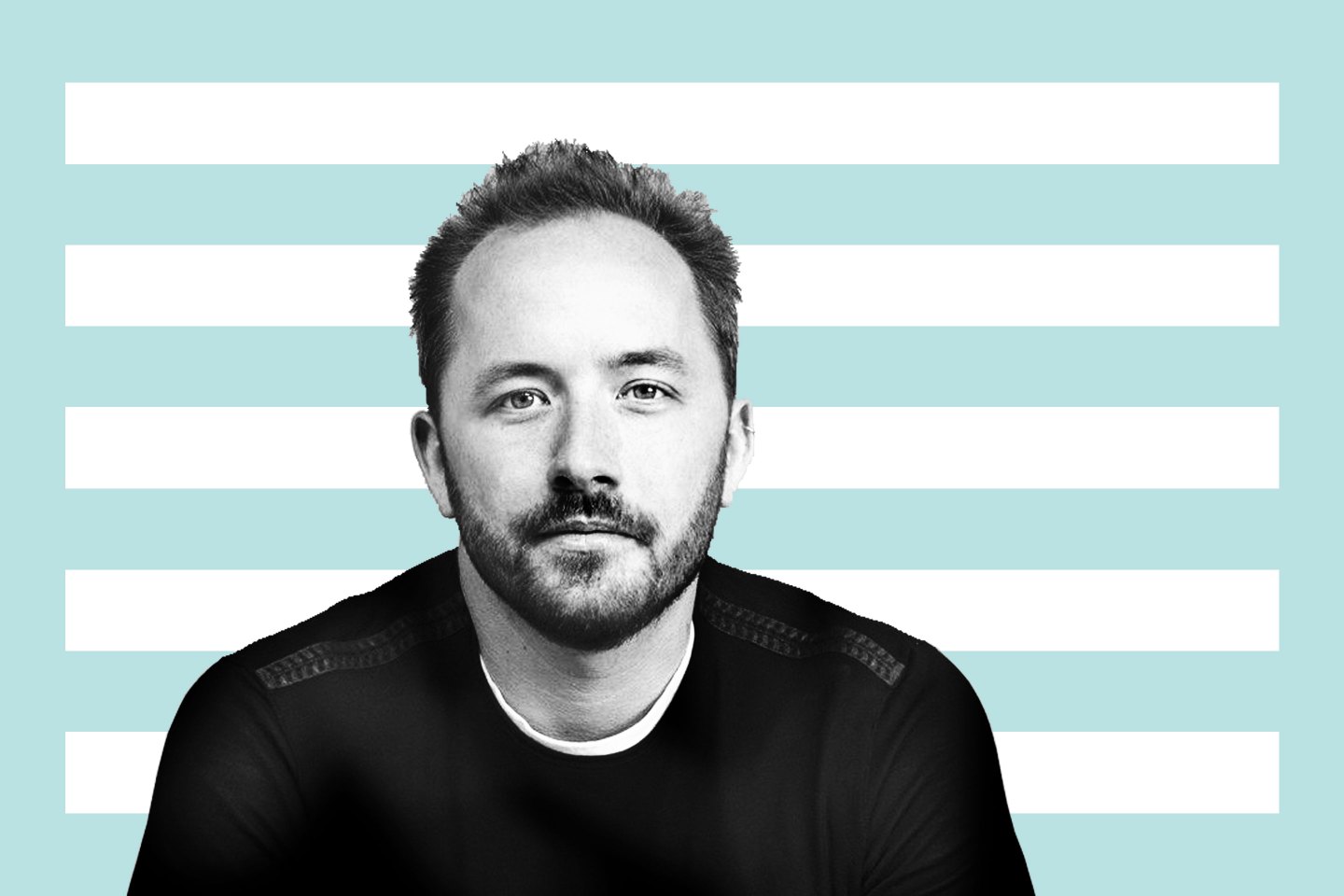
Drew Houston is the cofounder and CEO of Dropbox.