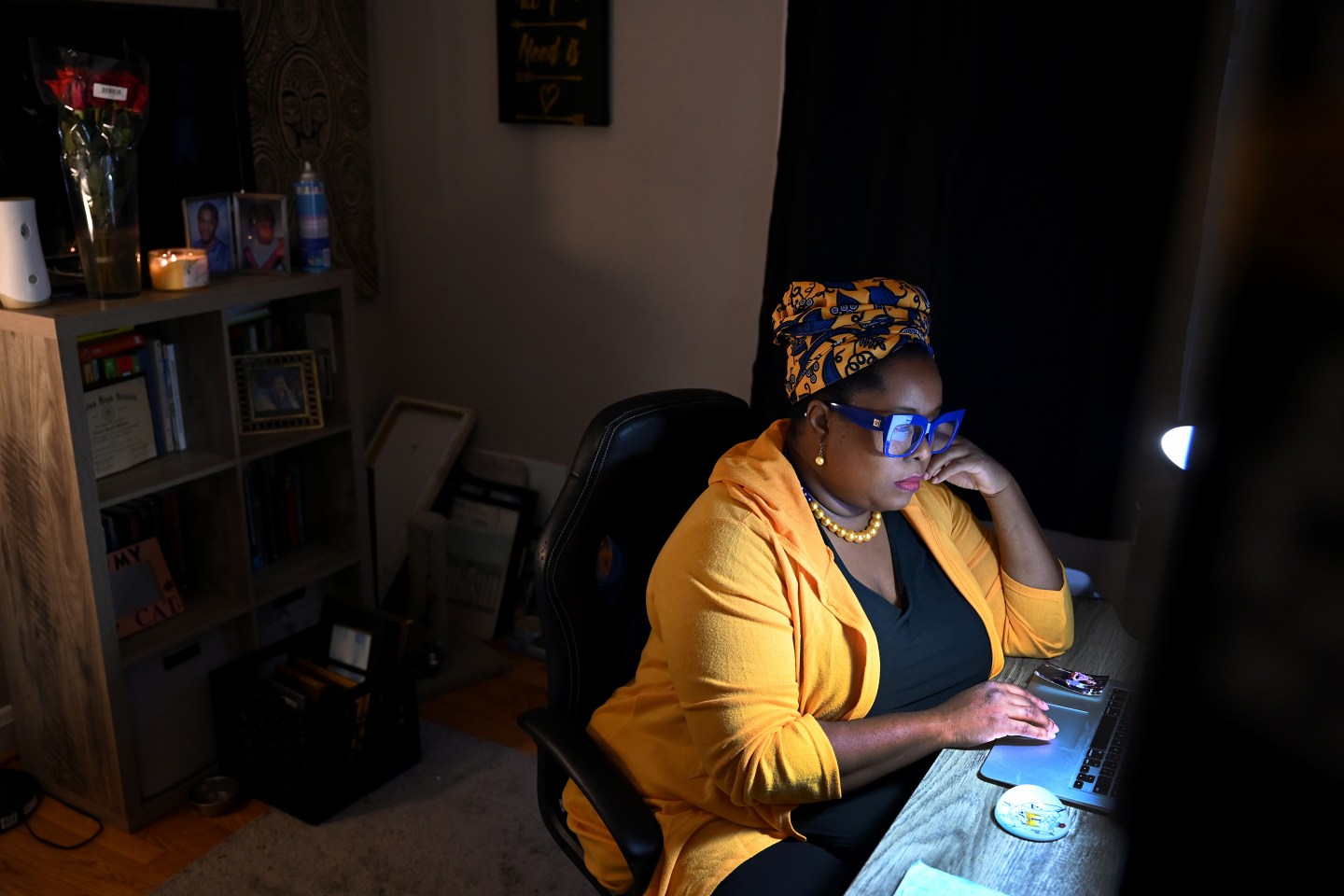
In 2020, working women suffered unprecedented losses, facing both disproportionate job loss and a mushrooming of caregiving responsibilities—a combination that could ultimately roll back much of the progress women have made in the workforce over the past years and decades.
But, with a new year, a new presidential administration, and a coronavirus vaccine on the horizon, do women stand a chance of recovering in 2021?
Six experts—from Melinda Gates to Time’s Up CEO Tina Tchen—weighed in on the question. All emphasized the critical importance of addressing key gaps like accessible childcare and paid family leave. But from unique perches—lobbying Congress on these issues, working with businesses to better serve female workers, and analyzing economic data—each has a different outlook for the new year.
Read their predictions, hopes, and goals for 2021 below:
Kimberly Churches, CEO, American Association of University Women
We really learned this year that it’s not work-life balance—it’s work-life blend. Increased flexibility in the workplace is going to be a real top trend we’re going to see in 2021. Getting through this crisis and looking at true recovery means we have to center helping women getting through this too.
As we enter the 117th Congress, we’re going to see even more bills coming forward around transparency: on pay equity, on practices in the workplace on flexibility, and on access to care—like the Paycheck Fairness Act and the FAMILY Act.
These bills, though, were written prior to the pandemic. So I think you’ll see a lot of organizations, elected officials, and policymakers working to make sure that they get it right for a post-COVID-19 world. I think we’re going to see those those bills come forward with with a few edits and tweaks that can better meet where workplaces should be going as they fully embrace diversity, equity, and inclusion—especially given what we’ve learned this year.
Melinda Gates, cochair of the Bill & Melinda Gates Foundation, founder of Pivotal Ventures, and author of The Moment of Lift
Women have suffered the worst of the 2020 recession. They could suffer the worst of the 2021 recovery, too.
A big reason is caregiving. Even before COVID-19, women were nearly three times as likely as men to quit their jobs to take care of a family member. Now, they’re leaving the workforce in record numbers. A recent survey found that a staggering one in four women is considering downshifting her career or quitting her job because of increased caregiving responsibilities during the pandemic.
It keeps me up at night to think that when businesses reopen, there could be a lot of empty desks where women used to sit. That’s the path we’re headed on unless lawmakers finally give the caregiving crisis the attention it deserves. To start, we need a national paid family and medical leave policy—now. We’re the only industrialized nation without one. We also need federal action to stabilize the teetering childcare industry and to direct additional resources to long-term-care services and supports so that ill and aging adults have options besides relying on a mother or a daughter.
If we ignore these needs, it’ll deepen the recession and slow recovery for everyone. If we recognize that caregiving is infrastructure and invest in it accordingly, women may just save our economy.
C. Nicole Mason, president and CEO, Institute for Women’s Policy Research
In the short term of the first quarter of the year, I expect to see more women exiting the workforce, especially if schools remain closed and day cares remain closed. I expect to see some women having to make that choice. In the second quarter of the year, we’ll see women being able to return to the workforce because of the stability that predictable care provides. I think we have a long road ahead of us.
I don’t think recovery is going to be swift. I just don’t. I think that it’ll be slow. And it might seem accelerated at the beginning when stay-at-home orders are 100% lifted. But some of the jobs that we’ve lost will not be coming back. I think we’re still a couple years out for full recovery, in terms of pre-pandemic levels of employment for women. But I believe there’s going to be a robust recovery plan similar to the one in 2008. Hopefully, that’ll give the economy a boost, but also help women workers who were most impacted.
Tina Tchen, president and CEO, Time’s Up

When I was in the White House 12 years ago, we came out of the gate with a Recovery Act to try to stimulate the economy—that was very much job one for us. Vice President Biden, at the time, led that recovery effort. And I expect that now–President-elect Biden will do the same—and that the economic team he has put in place understands this.
I’m hopeful that, even more than we saw 12 years ago, individual companies will respond with their own policies and their own investment in the workforce—so that we can actually see change take place in how we invest in our workforce, like building a caregiving infrastructure.
I really do think that 2021 can be the year in which we make that kind of generational, transformational change.
Rachel Thomas, cofounder and CEO, LeanIn.org

When experts talk about the “future of work,” we’re often talking about artificial intelligence or automation or robotics. COVID-19 has pushed us in a different direction: the future of work for women. It’s really clear that remote work is here to stay; 90% of companies think more work will be done remotely after COVID-19.
On the positive side, women, particularly mothers and caregivers, are highly likely to take advantage of this option. But it’s going to be critically important that we create a culture that embraces and doesn’t stigmatize remote work.
If we’re not thoughtful about the long-term shift to remote work, it may end up creating two classes of employees: those that don’t have a lot of caregiving responsibilities and will get lots of face time with managers, and those who do have caregiving responsibilities—predominantly women—who may end up paying for working remotely with fewer opportunities, less face time with senior leaders, and fewer chances to advance.
Jasmine Tucker, director of research, National Women’s Law Center

If this recession is anything like past ones, women are going to be experiencing unemployment in 2021; Black women after the Great Recession experienced double-digit unemployment rates for about 60 consecutive months; meanwhile, white men never reached double digits.
We’ve seen 2.2 million women completely drop out of the workforce. We wiped out a decade of gains in terms of employment for women in one month; we are now 30-plus years back in our labor force participation rate.
Now there are two people looking for work for every job opening—so employers are going to be choosy about who they’re hiring. I hate to think that this is true, but we’ve seen it over and over: Employers are racist and sexist and ageist. They’re not going to hire the women of color, or they’re going to hire them for the lower-paying job. Older women might not come back to the labor force at all.
For Black women and Latinas, the wage gap has robbed them of their ability to have savings; when they reenter the workforce, they’re going to be more likely to just take the first thing that comes along—often at a lower level than where they were before. Whereas a white man who has more savings and more resources might be able to wait a little longer.
The impact is going to be long and hard. Without any action now, there’s just no way that women are going to claw back and recoup the losses.
More on the most powerful women in business from Fortune:
- 2020’s Most Powerful Women list
- Female founders under fire: Are women in the startup world being unfairly targeted?
- “There simply isn’t the trust”: The fight to overcome vaccine skepticism in the Black community
- Why wealthy women of color are more confident investors than their white female peers
- Former White House insiders on Biden’s 4 biggest day one priorities