• Home
  • Latest
  • Fortune 500
  • Finance
  • Tech
  • Leadership
  • Lifestyle
  • Rankings
  • Multimedia

Neither Trump nor Biden can save Big Oil from its biggest problem: Too much oil

By
Katherine Dunn
Katherine Dunn
Down Arrow Button Icon
By
Katherine Dunn
Katherine Dunn
Down Arrow Button Icon
October 29, 2020, 1:13 PM ET

From Pennsylvania fracking country to the deserts of Saudi Arabia, 2020 has been a brutal year for the world’s oil and gas producers.

Next week’s presidential elections won’t change that fact.

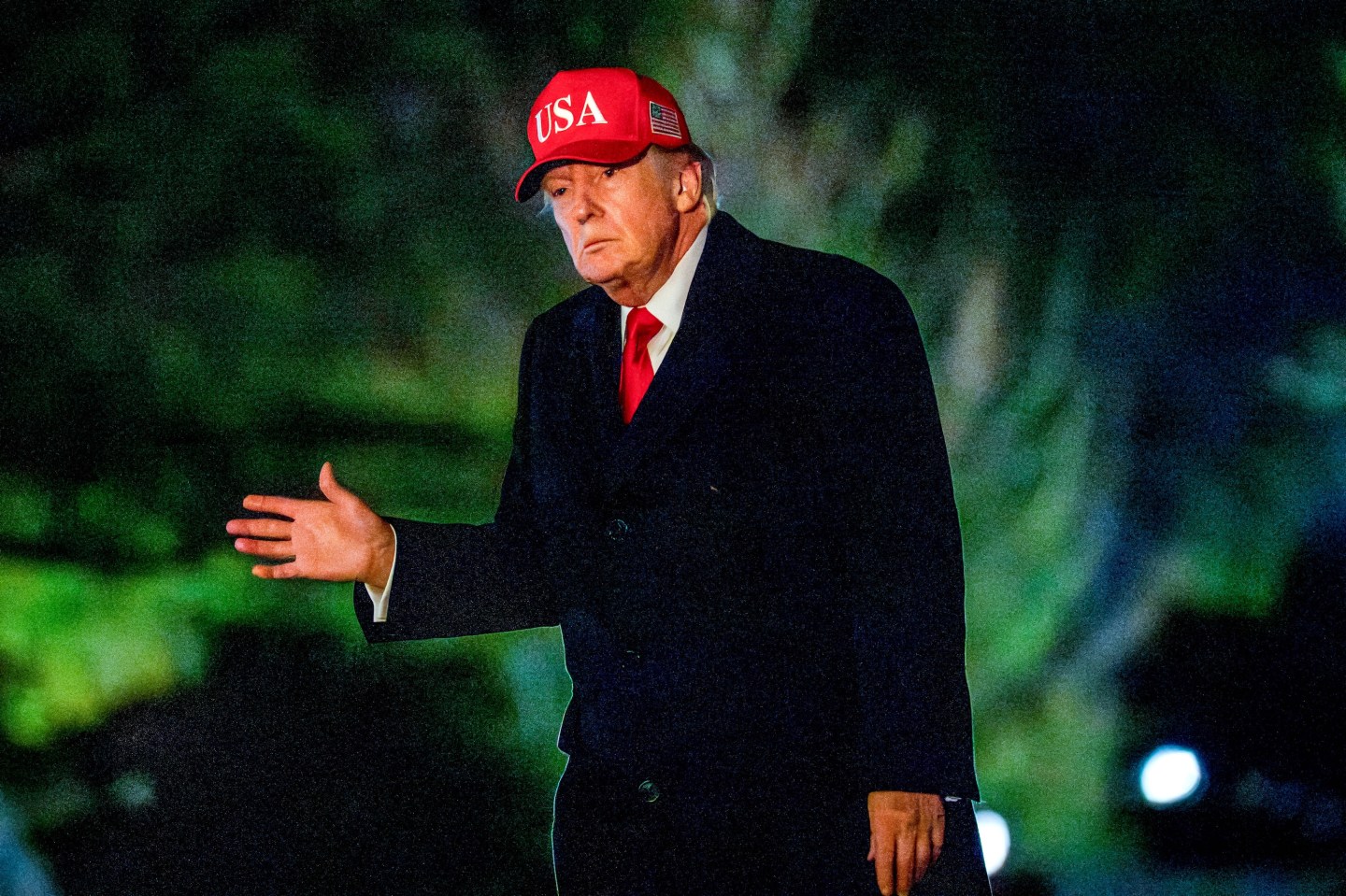
At first glance, that doesn’t seem to make sense. After all, the two candidates represent starkly different visions of the future when it comes to oil and gas, and climate change. President Trump has put fracking at the centerpiece of his reelection campaign and wants to expand drilling on federal land. Joe Biden vows the U.S. will rejoin the Paris Agreement if he wins. He also says he’ll lift sanctions on Iran and invest heavily in renewables.

In the short term, none of that will save the oil majors. Oil on Thursday hit a four-month low with Brent at $37.55/barrel, and WTI at $35.93/barrel.

“The U.S. election is across the corner, but, even though the outcome will indeed affect markets, on the short term no significant changes are expected,” wrote Bjørnar Tonhaugen, head of oil markets at Rystad Energy, this morning from Oslo. The effect on prices is “muted,” he said. The market is focused on other factors: whether Europe, for example, is headed back into lockdown—France is the latest—while U.S. stockpiles, which are at their highest level since July, aren’t helping support the price, either. Other analysts have also flagged a cease-fire in Libya, a conflict-ridden producer, which has put its production back on track.

All of these global forces point to a big headache for Big Oil: There’s simply too much oil on the market. Whoever wins the election next week won’t change that.

A COVID-19 energy economy

Oil’s biggest nemesis right now isn’t the political winds. It’s the pandemic.

In April, spiking COVID-19 infections and lockdowns plunged the world’s economies into historic recessions, crushing oil demand. The International Energy Agency dubbed the month “black April.” Meanwhile, a shortage of storage space for oil that people no longer wanted produced a financial panic that resulted in oil briefly dropping to around negative $40/barrel—a bizarre event that upturned most of the orthodoxy about how oil markets work.

The price drop produced high-profile bankruptcies and consolidations, particularly in the highly indebted U.S. shale sector, which was pushing the U.S. to record production highs before the pandemic. Going into the winter, global oil demand for 2020 is still expected to be 8.4 million barrels per day lower than last year. The scale of the global pandemic, and how it has reshaped our relationship with energy use, is beyond the scope of even the U.S. election.

But it’s not as if U.S. politics is powerless to make things worse. Traders have been flagging the future of Iranian sanctions as one of those events that could turn the energy markets upside down. The imposition of those sanctions removed an estimated 2.7 million a day from global markets. Some expect that Biden would remove those sanctions—but that would only return more oil back to global markets.

Oil markets are, at the end of the day, an extremely inaccurate, even outright misleading, tool for looking at the future of the oil and gas sector, or our global use of fossil fuels as a whole. A Trump-style, full-throated backing of the U.S. oil sector, for example, if successful, would in theory push up production—pushing prices down. That’s cheaper for the American consumer, but not better for the oil and gas sector.

On the other hand, a Biden-style push for clean and renewable energy and limits on drilling on U.S. land (the presidential candidate has been mixed on his support or lack thereof for fracking) could in theory limit the amount of oil production while renewables are still struggling to make up the gap—pushing oil prices up.

Both are also false comparisons. Trump’s support for oil and gas has not bailed out a struggling sector, nor did it breathe new life into shale—a boom that began under the Bush administration and continued under Obama with production taking flight from 2010 onwards. Even under the most ambitious political pledges, oil and gas production will not cease under a Biden administration—America is simply still too dependent. Meanwhile, renewable companies, including homegrown ones like NextEra, have gained momentum under the Trump administration, as has the stateside expansion of European giants like Iberdrola, which is turning its vast utility networks across the country low-carbon, and phasing out coal.

That’s not to downplay the impact governments, and leaders, can have on our energy systems depending on their vision for the future. Even as renewables like solar and onshore wind have become more affordable compared with conventional fuels, other potential breakthrough energy sources—like green hydrogen—remain expensive and out of reach without active government support. Vast infrastructure projects, of the kind pledged by the European Union’s green recovery plan, are of a scale that require clear government backing. The Paris Agreement, for example, requires extensive coordination among governments, which are increasingly pledging to hit net zero by 2050 (Japan and South Korea are the latest).

For the future of U.S. energy—and for the entire world—it’s difficult to overstate how much could be at stake in next week’s election. Just don’t expect to see that reflected in the price of oil.


About the Author
By Katherine Dunn
LinkedIn iconTwitter icon
See full bioRight Arrow Button Icon

Latest in

Finance
Lorem ipsum dolor sit amet, consectetur adipiscing elit, sed do eiusmod tempor incididunt ut labore et dolore magna aliqua. Ut enim ad minim veniam
By Fortune Editors
October 20, 2025
Finance
Lorem ipsum dolor sit amet, consectetur adipiscing elit, sed do eiusmod tempor incididunt ut labore et dolore magna aliqua. Ut enim ad minim veniam
By Fortune Editors
October 20, 2025
Finance
Lorem ipsum dolor sit amet, consectetur adipiscing elit, sed do eiusmod tempor incididunt ut labore et dolore magna aliqua. Ut enim ad minim veniam
By Fortune Editors
October 20, 2025
Finance
Lorem ipsum dolor sit amet, consectetur adipiscing elit, sed do eiusmod tempor incididunt ut labore et dolore magna aliqua. Ut enim ad minim veniam
By Fortune Editors
October 20, 2025
Finance
Lorem ipsum dolor sit amet, consectetur adipiscing elit, sed do eiusmod tempor incididunt ut labore et dolore magna aliqua. Ut enim ad minim veniam
By Fortune Editors
October 20, 2025
Finance
Lorem ipsum dolor sit amet, consectetur adipiscing elit, sed do eiusmod tempor incididunt ut labore et dolore magna aliqua. Ut enim ad minim veniam
By Fortune Editors
October 20, 2025

Most Popular

Finance
Lorem ipsum dolor sit amet, consectetur adipiscing elit, sed do eiusmod tempor incididunt ut labore et dolore magna aliqua. Ut enim ad minim veniam
By Fortune Editors
October 20, 2025
Finance
Lorem ipsum dolor sit amet, consectetur adipiscing elit, sed do eiusmod tempor incididunt ut labore et dolore magna aliqua. Ut enim ad minim veniam
By Fortune Editors
October 20, 2025
Finance
Lorem ipsum dolor sit amet, consectetur adipiscing elit, sed do eiusmod tempor incididunt ut labore et dolore magna aliqua. Ut enim ad minim veniam
By Fortune Editors
October 20, 2025
Finance
Lorem ipsum dolor sit amet, consectetur adipiscing elit, sed do eiusmod tempor incididunt ut labore et dolore magna aliqua. Ut enim ad minim veniam
By Fortune Editors
October 20, 2025
Finance
Lorem ipsum dolor sit amet, consectetur adipiscing elit, sed do eiusmod tempor incididunt ut labore et dolore magna aliqua. Ut enim ad minim veniam
By Fortune Editors
October 20, 2025
Finance
Lorem ipsum dolor sit amet, consectetur adipiscing elit, sed do eiusmod tempor incididunt ut labore et dolore magna aliqua. Ut enim ad minim veniam
By Fortune Editors
October 20, 2025
Fortune Secondary Logo
Rankings
  • 100 Best Companies
  • Fortune 500
  • Global 500
  • Fortune 500 Europe
  • Most Powerful Women
  • Future 50
  • World’s Most Admired Companies
  • See All Rankings
Sections
  • Finance
  • Fortune Crypto
  • Features
  • Leadership
  • Health
  • Commentary
  • Success
  • Retail
  • Mpw
  • Tech
  • Lifestyle
  • CEO Initiative
  • Asia
  • Politics
  • Conferences
  • Europe
  • Newsletters
  • Personal Finance
  • Environment
  • Magazine
  • Education
Customer Support
  • Frequently Asked Questions
  • Customer Service Portal
  • Privacy Policy
  • Terms Of Use
  • Single Issues For Purchase
  • International Print
Commercial Services
  • Advertising
  • Fortune Brand Studio
  • Fortune Analytics
  • Fortune Conferences
  • Business Development
About Us
  • About Us
  • Editorial Calendar
  • Press Center
  • Work At Fortune
  • Diversity And Inclusion
  • Terms And Conditions
  • Site Map
Fortune Secondary Logo
  • About Us
  • Editorial Calendar
  • Press Center
  • Work At Fortune
  • Diversity And Inclusion
  • Terms And Conditions
  • Site Map
  • Facebook icon
  • Twitter icon
  • LinkedIn icon
  • Instagram icon
  • Pinterest icon

Latest in

Personal FinanceBanks
Top CD rates today, March 2, 2026: Lock in up to up to 4.15%
By Glen Luke FlanaganMarch 2, 2026
15 minutes ago
Personal FinanceSavings accounts
Today’s top high-yield savings rates: Up to 5.00% on March 2, 2026
By Glen Luke FlanaganMarch 2, 2026
15 minutes ago
NewslettersTerm Sheet
Why Sequoia’s Alfred Lin isn’t worried about the SaaS-pocalypse
By Leo SchwartzMarch 2, 2026
15 minutes ago
NewslettersCEO Daily
U.S. war with Iran forces CEOs to prepare for the worst—from rising energy prices to cyber attacks
By Diane Brady and Claire ZillmanMarch 2, 2026
28 minutes ago
An intercepted projectile falls into the sea near Dubai's Palm Jumeirah archipelago on March 1, 2026. The United States and Israel launched strikes against Iran on February 28, killing Iran's supreme leader and top military leaders, prompting authorities to retaliate with strikes on Israel and US bases across the Gulf. (Photo by FADEL SENNA / AFP)
EnergyMarkets
Stocks enter global selloff but some on Wall Street are looking for assets that respond well to war
By Jim EdwardsMarch 2, 2026
34 minutes ago
NewslettersFortune Tech
Making sense of the OpenAI-Anthropic-Pentagon tempest
By Alexei OreskovicMarch 2, 2026
44 minutes ago

Most Popular

placeholder alt text
Economy
Your grandparents are the reason the U.S. isn't in a recession right now. That won't last forever
By Eleanor PringleMarch 1, 2026
1 day ago
placeholder alt text
Success
MacKenzie Scott's close relationship with Toni Morrison long before Amazon put her on the path give more than $1 billion to HBCUs
By Sasha RogelbergMarch 1, 2026
19 hours ago
placeholder alt text
Middle East
As Iran attacks Dubai, the tax-free haven for the global elite could see 'catastrophic' fallout — 'this can also send shockwaves globally'
By Jason MaMarch 1, 2026
17 hours ago
placeholder alt text
Personal Finance
Trump's universal 401(k) architect on why lower-income people distrust retirement accounts: 'they want to know what the catch is'
By Jacqueline MunisFebruary 28, 2026
2 days ago
placeholder alt text
Middle East
U.S. military gives Iran a taste of its own medicine with cheap copycat Shahed drones, while concern shifts to munitions supply in extended conflict
By Jason MaMarch 1, 2026
15 hours ago
placeholder alt text
Health
Gen Z men are eating ‘boy kibble,’ the human equivalent to dog food, to load up on protein cheaply
By Jake AngeloMarch 1, 2026
22 hours ago

© 2026 Fortune Media IP Limited. All Rights Reserved. Use of this site constitutes acceptance of our Terms of Use and Privacy Policy | CA Notice at Collection and Privacy Notice | Do Not Sell/Share My Personal Information
FORTUNE is a trademark of Fortune Media IP Limited, registered in the U.S. and other countries. FORTUNE may receive compensation for some links to products and services on this website. Offers may be subject to change without notice.