• Home
  • Latest
  • Fortune 500
  • Finance
  • Tech
  • Leadership
  • Lifestyle
  • Rankings
  • Multimedia
CommentaryImmigration

If Trump wants to boost American manufacturing, he should keep the borders open

By
Yung Wu
Yung Wu
and
Jayson Myers
Down Arrow Button Icon
October 29, 2020, 6:00 PM ET
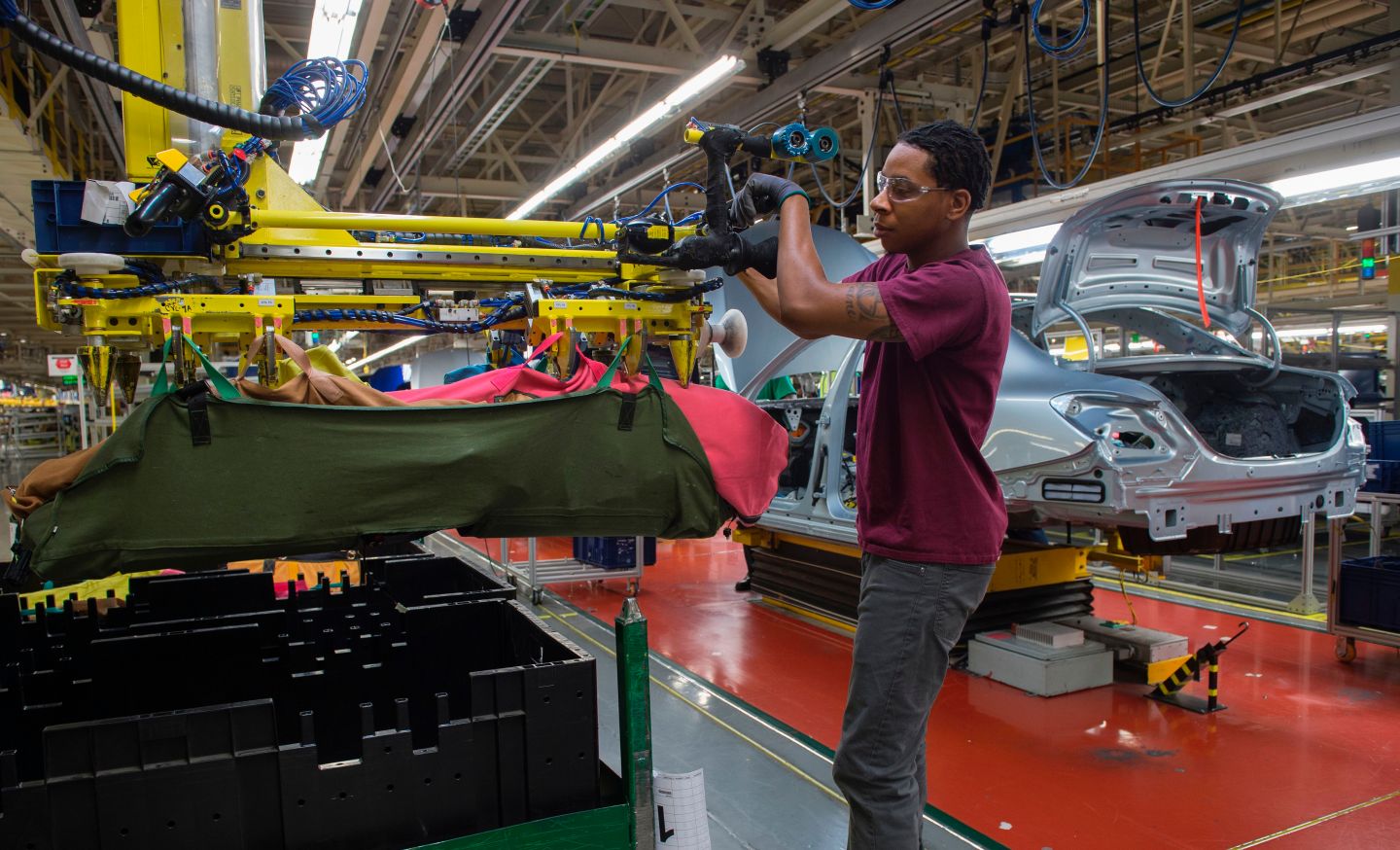
An employee uses a robotic arm at an auto factory. In North American advanced manufacturing, the authors write, “talented hires commonly have to come through customs to reach the lab or factory floor.”
An employee uses a robotic arm at an auto factory. In North American advanced manufacturing, the authors write, “talented hires commonly have to come through customs to reach the lab or factory floor.”(Photo: ANDREW CABALLERO-REYNOLDS/AFP via Getty Images)

On the campaign trail and in front of White House cameras, President Trump talks frequently about bringing back factory jobs, steel jobs, and coal jobs. It’s a seductive idea. But if America truly wants to rebuild its manufacturing sector, its government should be actively working to outfit its workforce for the factories of the future, not the past. 

How can the country’s leaders accomplish that? The first step is to be straight with Americans about what the economic future really holds in store. Meanwhile, U.S. political leaders should be working with educators and industry to close the gaps in Americans’ STEM skills. At the same time, policymakers should be reversing course on the country’s current harmful immigration policies, keeping America’s borders open to talented immigrants with the right training to help industry make the leap.

Here in Ontario, we lost 250,000 factory jobs during the recession of 2008, from a population of just 12 million. Despite some recent automotive factory closures, fresh opportunities are beginning to sprout in the “advanced manufacturing” space. We’ve created 45,000 new jobs in automotive computing, clean vehicles, chemicals, advanced textiles, medical devices, semiconductors and pharmaceuticals. 

For President Trump and U.S. industry stakeholders, simply wishing for the old ways to return can’t make it so. North American manufacturing is never going back to being the giant employer it was in its heyday. Decades of globalization and outsourcing have split the sector into two segments—low-skill, low-wage assembly line work, and advanced manufacturing jobs that pay better but require advanced skills. 

An industry resurgence is possible but only with inclusive policies and open borders.

Elbow grease and innovation

Advanced manufacturing is now a technology business that relies on a balance between elbow grease and innovation. Seasoned line workers and highly skilled engineers need to work in parallel or together, depending on the sector, to propel manufacturing forward and keep the industry afloat. In North America, many advanced manufacturing jobs require specialized skills and sector expertise—and in many cases, the workers who are qualified enough for these positions come from abroad. Meanwhile, local engineering talent is lacking, and talented hires commonly have to come through customs to reach the lab or factory floor.

Advanced manufacturing is crucial to the global economy. It’s an Industrial Revolution business that now runs on cutting-edge technology. In Canada, we’ve seen positive news: Advanced manufacturing employment numbers have risen significantly since 2010—by 98% in agricultural chemicals, 45% in aerospace, 42% in industrial machinery, 22% in auto parts and 17% in medical equipment. For context, 761,000 people were counted as working in Canada’s advanced manufacturing sector as of February 2020.

Since the beginning of the pandemic, we’ve seen companies of all sizes, from iconic Ford to the youngest startups, pivot toward making personal protective equipment and other COVID-related manufactured goods. There is an evolving culture of collaboration championed by companies like StarFish Medical in Victoria, British Columbia, which brought together their network of manufacturers and suppliers to rapidly design and manufacture a fully featured ICU ventilator in Canada. Precision Biomonitoring of Guelph, Ontario, also set an example with partnerships across the country that enabled a rapid production scale-up of point-of-need tests and accessibility for Indigenous communities in northern Ontario. 

Simultaneously, there’s a growing trend toward near-shoring and technology nationalism in both the U.S. and Canada, championing locally made and distributed products. Meanwhile, issues sourcing critical PPE for essential workers and medical professionals on the front lines of COVID-19 response have exposed supply chain and manufacturing talent gaps in a variety of industries, including pharmaceuticals, medical devices, semiconductors, automotive, aerospace, textiles and chemicals, communications and IT hardware manufacturing.

With the right talent stream, even automation can be a job creator. Despite global industry fallout from the 2008 recession, advanced manufacturing’s resurgence over the past decade offers fresh opportunities that have already created thousands of factory jobs in Canada and expanded to new sectors of the economy. While U.S. educational institutions provide world-class engineering and manufacturing opportunities, the barrier to pursuing careers in the field for foreign and local talent can be high due to visa complications or restrictions, tuition, entry requirements, or a combination of all three. That’s why North America needs to prioritize welcoming qualified global talent and making it easier for them to help run automated advanced manufacturing processes and production.  

Advanced manufacturing has the potential to power the future. But in order to achieve that vision, production needs to be globally competitive. America needs immediate policy changes to reverse harmful visa restrictions and boost global investment in strengthening supply chains to optimize for innovation. At the same time, there needs to be a concerted effort by U.S. government leaders—preferably in partnership with industry and academia—to address STEM skill gaps.

At the end of the day, the products of the future must be developed in line with innovation. To get there, the U.S. needs an all-hands-on-deck approach to ensuring that advanced manufacturing’s future is borderless and resilient.

Yung Wu is the CEO of MaRS Discovery District, based in Toronto. Jayson Myers is the CEO of Next Generation Manufacturing Canada, based in Hamilton, Ontario.

About the Authors
By Yung Wu
See full bioRight Arrow Button Icon
By Jayson Myers
See full bioRight Arrow Button Icon

Latest in Commentary

Finance
Lorem ipsum dolor sit amet, consectetur adipiscing elit, sed do eiusmod tempor incididunt ut labore et dolore magna aliqua. Ut enim ad minim veniam
By Fortune Editors
October 20, 2025
Finance
Lorem ipsum dolor sit amet, consectetur adipiscing elit, sed do eiusmod tempor incididunt ut labore et dolore magna aliqua. Ut enim ad minim veniam
By Fortune Editors
October 20, 2025
Finance
Lorem ipsum dolor sit amet, consectetur adipiscing elit, sed do eiusmod tempor incididunt ut labore et dolore magna aliqua. Ut enim ad minim veniam
By Fortune Editors
October 20, 2025
Finance
Lorem ipsum dolor sit amet, consectetur adipiscing elit, sed do eiusmod tempor incididunt ut labore et dolore magna aliqua. Ut enim ad minim veniam
By Fortune Editors
October 20, 2025
Finance
Lorem ipsum dolor sit amet, consectetur adipiscing elit, sed do eiusmod tempor incididunt ut labore et dolore magna aliqua. Ut enim ad minim veniam
By Fortune Editors
October 20, 2025
Finance
Lorem ipsum dolor sit amet, consectetur adipiscing elit, sed do eiusmod tempor incididunt ut labore et dolore magna aliqua. Ut enim ad minim veniam
By Fortune Editors
October 20, 2025

Most Popular

Finance
Lorem ipsum dolor sit amet, consectetur adipiscing elit, sed do eiusmod tempor incididunt ut labore et dolore magna aliqua. Ut enim ad minim veniam
By Fortune Editors
October 20, 2025
Finance
Lorem ipsum dolor sit amet, consectetur adipiscing elit, sed do eiusmod tempor incididunt ut labore et dolore magna aliqua. Ut enim ad minim veniam
By Fortune Editors
October 20, 2025
Finance
Lorem ipsum dolor sit amet, consectetur adipiscing elit, sed do eiusmod tempor incididunt ut labore et dolore magna aliqua. Ut enim ad minim veniam
By Fortune Editors
October 20, 2025
Finance
Lorem ipsum dolor sit amet, consectetur adipiscing elit, sed do eiusmod tempor incididunt ut labore et dolore magna aliqua. Ut enim ad minim veniam
By Fortune Editors
October 20, 2025
Finance
Lorem ipsum dolor sit amet, consectetur adipiscing elit, sed do eiusmod tempor incididunt ut labore et dolore magna aliqua. Ut enim ad minim veniam
By Fortune Editors
October 20, 2025
Finance
Lorem ipsum dolor sit amet, consectetur adipiscing elit, sed do eiusmod tempor incididunt ut labore et dolore magna aliqua. Ut enim ad minim veniam
By Fortune Editors
October 20, 2025
Rankings
  • 100 Best Companies
  • Fortune 500
  • Global 500
  • Fortune 500 Europe
  • Most Powerful Women
  • Future 50
  • World’s Most Admired Companies
  • See All Rankings
Sections
  • Finance
  • Leadership
  • Success
  • Tech
  • Asia
  • Europe
  • Environment
  • Fortune Crypto
  • Health
  • Retail
  • Lifestyle
  • Politics
  • Newsletters
  • Magazine
  • Features
  • Commentary
  • Mpw
  • CEO Initiative
  • Conferences
  • Personal Finance
  • Education
Customer Support
  • Frequently Asked Questions
  • Customer Service Portal
  • Privacy Policy
  • Terms Of Use
  • Single Issues For Purchase
  • International Print
Commercial Services
  • Advertising
  • Fortune Brand Studio
  • Fortune Analytics
  • Fortune Conferences
  • Business Development
About Us
  • About Us
  • Editorial Calendar
  • Press Center
  • Work At Fortune
  • Diversity And Inclusion
  • Terms And Conditions
  • Site Map

© 2025 Fortune Media IP Limited. All Rights Reserved. Use of this site constitutes acceptance of our Terms of Use and Privacy Policy | CA Notice at Collection and Privacy Notice | Do Not Sell/Share My Personal Information
FORTUNE is a trademark of Fortune Media IP Limited, registered in the U.S. and other countries. FORTUNE may receive compensation for some links to products and services on this website. Offers may be subject to change without notice.


Most Popular

placeholder alt text
Economy
For the first time since Trump’s tariff rollout, import tax revenue has fallen, threatening his lofty plans to slash the $38 trillion national debt
By Sasha RogelbergDecember 12, 2025
9 days ago
placeholder alt text
Success
The scientist who helped create AI says it’s only ‘a matter of time’ before every single job is wiped out—even safer trade jobs like plumbing
By Orianna Rosa RoyleDecember 19, 2025
2 days ago
placeholder alt text
Future of Work
A Walmart employee nearly doubled her pay after entering its pipeline for skilled tradespeople. 'I was able to move out of my parents' house'
By Anne D'Innocenzio and The Associated PressDecember 20, 2025
16 hours ago
placeholder alt text
Future of Work
Meet a 55-year-old automotive technician in Arkansas who didn’t care if his kids went to college: ‘There are options’
By Muskaan ArshadDecember 21, 2025
7 hours ago
placeholder alt text
Future of Work
'They'll lose their humanity': Dartmouth professor says he's surprised just how scared his Gen Z students are of AI
By Nick LichtenbergDecember 20, 2025
1 day ago
placeholder alt text
Economy
Sneaking unemployment rate means the U.S. economy is inching closer to a key recession indicator, says Moody’s
By Eleanor PringleDecember 19, 2025
2 days ago

Latest in Commentary

sustainability
CommentarySustainability
2025: the year sustainability didn’t die 
By Andrew WinstonDecember 21, 2025
3 hours ago
Thomas “Tom” McInerney is President, CEO and a Director of Genworth Financial
CommentaryCaregiving
I’m a CEO who’s spent nearly 40 years talking to presidents, lawmakers and leaders about our long-term care crisis. They knew this moment was coming
By Thomas McInerneyDecember 19, 2025
2 days ago
Kristin Olson
Commentaryinvesting advice
I lead Goldman Sachs’ alternatives for wealth globally. Around the world, investors want to know more 
By Kristin OlsonDecember 19, 2025
2 days ago
unemployed
CommentaryLayoffs
The AI efficiency illusion: why cutting 1.1 million jobs will stifle, not scale, your strategy
By Katica RoyDecember 18, 2025
3 days ago
Muddu
CommentaryIT
IT service is reaching its breaking point. At Salesforce, we see 3 tipping points
By Muddu SudhakarDecember 18, 2025
3 days ago
small business
CommentaryLayoffs
Our data shows that companies of 500 and fewer workers mostly avoided the AI layoffs. They’re making AI work for them
By Gabby BurlacuDecember 18, 2025
3 days ago










