• Home
  • Latest
  • Fortune 500
  • Finance
  • Tech
  • Leadership
  • Lifestyle
  • Rankings
  • Multimedia

Trendingnow

1

Jeff Bezos wants the bottom half of earners to pay zero income tax—he says nurses making just $75K should save $12K a year

2

Indeed chief economist says we’re entering an era of ‘great mismatch’ thanks to a generational imbalance of workers

3

Apple’s Steve Wozniak says he cofounded the tech giant after 5 rejections from HP—not to ‘make money.’ For years, his paycheck was just $50

1

Jeff Bezos wants the bottom half of earners to pay zero income tax—he says nurses making just $75K should save $12K a year

2

Indeed chief economist says we’re entering an era of ‘great mismatch’ thanks to a generational imbalance of workers

3

Apple’s Steve Wozniak says he cofounded the tech giant after 5 rejections from HP—not to ‘make money.’ For years, his paycheck was just $50
Magazine

The activist employee hasn’t gone away

Geoff Colvin
By
Geoff Colvin
Geoff Colvin
Senior Editor-at-Large
Down Arrow Button Icon
Geoff Colvin
By
Geoff Colvin
Geoff Colvin
Senior Editor-at-Large
Down Arrow Button Icon
September 21, 2020, 8:00 AM ET
Photo-Illustration bt Selman Design

As the election approaches, the building trend of employee activism against employers seems to be taking a benign turn—but don’t imagine that America’s employers and workers are now united in peace and love. While high-profile employee walkouts and protests have faded in the pandemic era, a new kind of friction, with higher stakes, is on the way. The election’s outcome will strongly influence how it plays out.

The largest employee protests have shocked many. Last year some 3,000 Amazon employees walked out in opposition to the company’s climate policy, and hundreds of Wayfair workers walked out to protest the company’s sale of furniture to U.S. immigrant detention centers. In 2018 an estimated 20,000 Google employees marched to protest the company’s generous severance payment to an executive accused of sexual misconduct. Such large-scale employee revolts over issues unrelated to pay, benefits, or working conditions were unprecedented. Something truly new was happening in the workplace.

Temporary factors have tamped down the activism so far this year. It’s hard to organize attention-grabbing walkouts when everyone is working from home. In addition, intense social activism in the form of massive nationwide protests over racial inequities and police behavior have largely outweighed complaints against individual companies. 
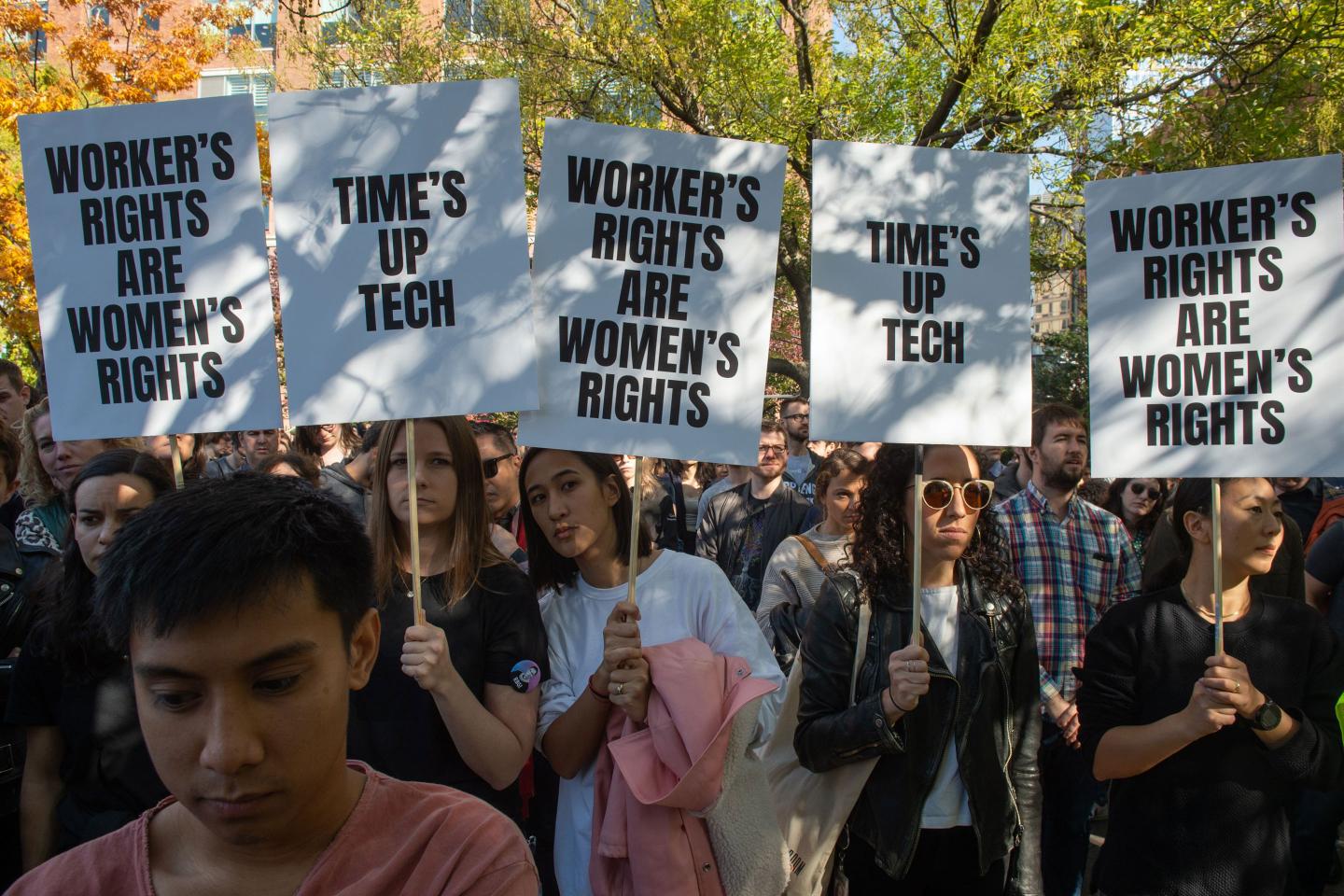
Google employees stage a walkout on November 1, 2018, in New York, over sexual harassment.
BRYAN R. SMITHAFP via Getty Images

At least for the moment, hundreds of companies have also found a welcome way to unite employee activism with corporate purpose. They’re offering incentives for employees to vote and facilitate voting (see sidebar). Workers and employers are likely relieved to be collaborating on what they agree is good for the country.

Such amity is only a lull, however, as these two groups work out the terms of a new relationship. “Employee activism has become normalized,” says Leslie Gaines-Ross, who recently left the Weber Shandwick communications firm after 14 years there researching corporate reputation and, more recently, employee activism. “It’s now permissible to take sides on social and political issues. Everyone is taking sides—CEOs, coaches, Nobel Prize winners. It’s normal today.” 

Still, it’s one thing to take sides, another to carry placards down the street denouncing your employer for behavior that doesn’t affect your paycheck or safety. Recent research from the University of Southern California finds that most companies aren’t prepared for such baffling behavior. In a survey of public relations executives, most said their companies have no policies on employee activism, and most don’t even know whether their companies support employee involvement in activist activities.

Today’s employee activism is explained in part by the psyche of millennials, for whom such seemingly bizarre behavior doesn’t seem bizarre at all. They’re just as aware as their elders that it risks getting them fired, says 2019 research from Weber Shandwick. They just don’t care as much. 
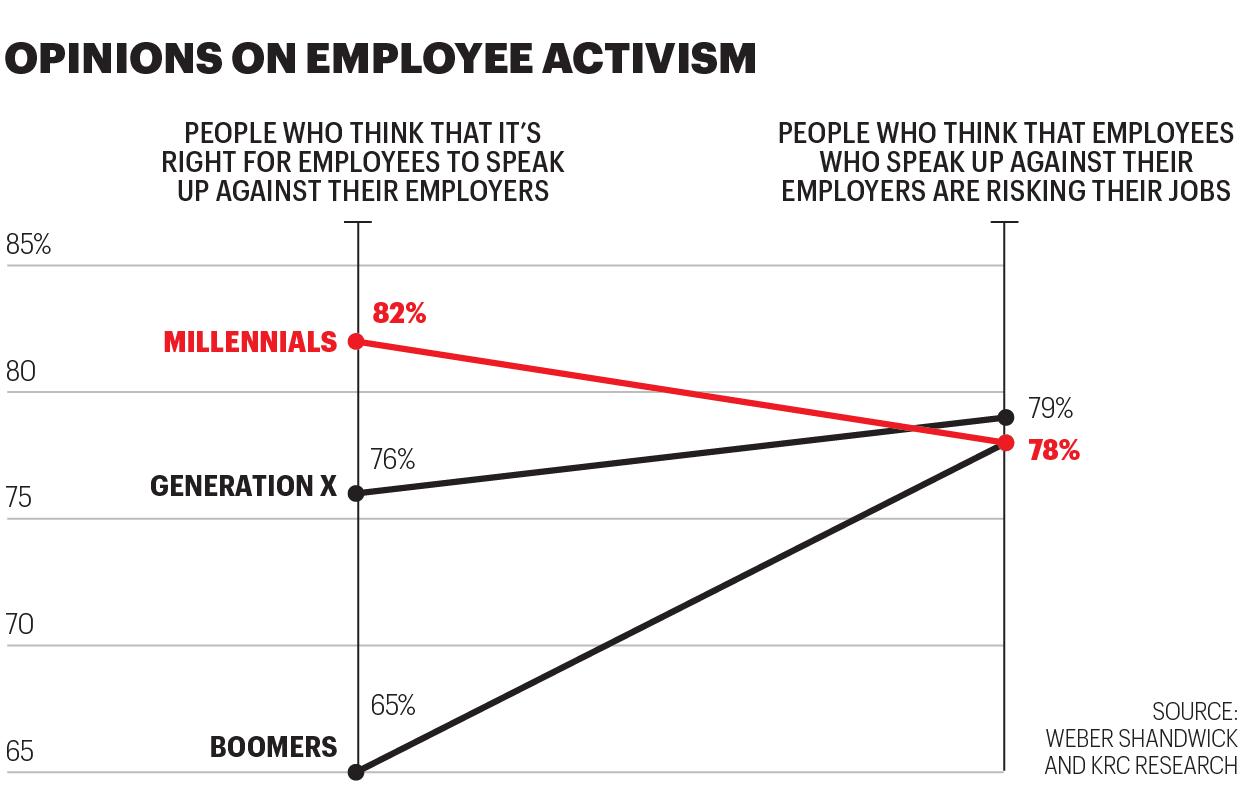
The reason is that, on average, millennials much more than previous generations value working for a company with a noble mission, recognized for making a positive impact on society. Research from Deloitte finds that 80% of them say they’d be more motivated working for such a company. Because so many of them feel that way, working for one of those companies gives them prestige among their peers.

Result: For millennials especially—and increasingly for workers of all ages—an employer’s behavior in the larger world is part of the employee’s working conditions. It isn’t irrelevant. It’s the kind of thing for which workers go on strike.

That fact has been noticed by organizations that help workers go on strike, labor unions. Employee activists “see the value of collective action. It makes their voices more powerful,” says Elizabeth Shuler, secretary-treasurer of the AFL-CIO. When an Amazon activist group, Amazon Employees for Climate Justice, held an online conference in April, a key speaker was AFL-CIO president Richard Trumka, the most powerful person in U.S. labor.

Organizers of the walkouts at Amazon and Google have conferred with officials of various unions—which group initially approached the other is not clear—and have met with other employees about potentially unionizing. Google executives have met with IRI Consultants, one of the many firms that advise companies on how to prevent unionization, and the company fired some of the activists for violating corporate policies. (Firing someone for advocating unionization is illegal.) 

Amazon has also fired employee activists, a move that CEO Jeff Bezos defended at the company’s annual meeting in May. “We support every employee’s right to criticize their employer’s working conditions,” he said, “but that also doesn’t mean that they’re allowed to not follow internal policies.” 

The almost entirely nonunionized big tech firms are far from the only ones with activist employees, but they are the most prominent. For them especially, employee activism could evolve into a fight over unionization. “The tech industry is the next frontier for the labor movement,” says the AFL-CIO’s Shuler. In January the Communications Workers of America launched the Campaign to Organize Digital Employees (CODE). Its initial targets are the video game makers.

Success for the established unions is not assured. While a Biden victory in November would strengthen their position enormously, many tech workers and millennials are leery of unions as relics of a bygone age. And some successful companies—think of Nike and Patagonia—have embraced employee activism and even led it, to their benefit. What seems certain is that such activism will continue to grow, bumping up uncomfortably against the hard realities of running a business. 

Newsletter-Red-Line-15
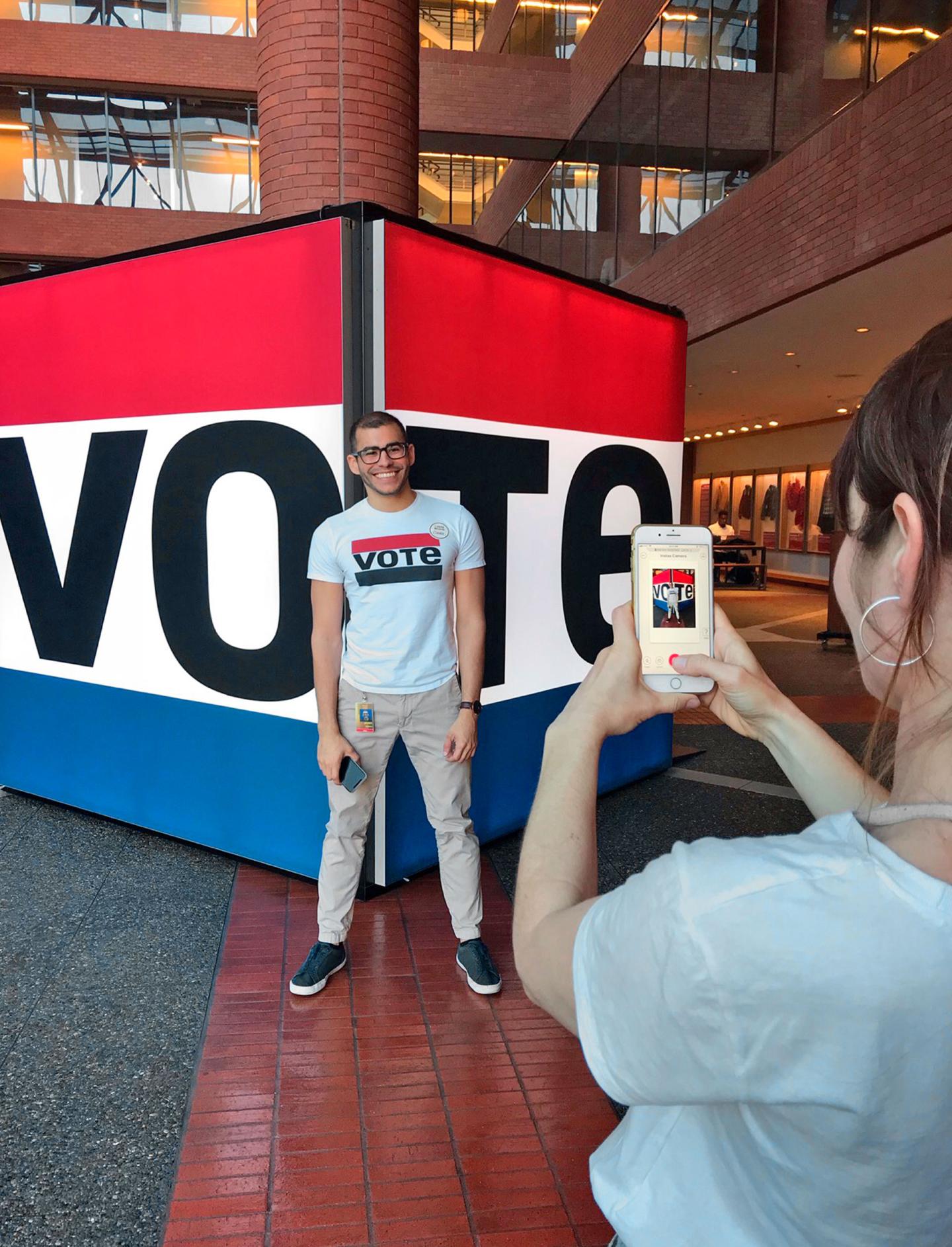
Time to Vote wants employers to pay its workers for time they spend voting and volunteering on Election Day. It’s had an astonishing effect on poll worker recruitment.
COURTESY LEVI STRAUSS & CO

Big business for the civic good

Time to Vote wants employers to pay their workers for time they spend voting and volunteering on Election Day. It’s had an astonishing effect on poll worker recruitment.

It’s a striking new phenomenon in this election year: More than 900 companies are offering to pay employees for the time they spend voting in November, and in many cases for staffing polling places. The catalyst is Time to Vote, a nonpartisan, business-backed nonprofit formed in 2018 by Levi Strauss, Patagonia, PayPal, and other major corporations. In this year’s combustible political atmosphere, its uncontroversial purpose has struck a chord. It also alleviates a COVID-19 problem: Many poll workers are elderly and shouldn’t spend a long day interacting with thousands of strangers. Time to Vote set a goal of recruiting 250,000 poll workers this year. By early September it had recruited 350,000.

A version of this article appears in the October 2020 issue of Fortune.

About the Author
Geoff Colvin
By Geoff ColvinSenior Editor-at-Large
LinkedIn iconTwitter icon

Geoff Colvin is a senior editor-at-large at Fortune, covering leadership, globalization, wealth creation, the infotech revolution, and related issues.

See full bioRight Arrow Button Icon

Latest from the Magazine

Finance
Lorem ipsum dolor sit amet, consectetur adipiscing elit, sed do eiusmod tempor incididunt ut labore et dolore magna aliqua. Ut enim ad minim veniam
By Fortune Editors
October 20, 2025
Finance
Lorem ipsum dolor sit amet, consectetur adipiscing elit, sed do eiusmod tempor incididunt ut labore et dolore magna aliqua. Ut enim ad minim veniam
By Fortune Editors
October 20, 2025
Finance
Lorem ipsum dolor sit amet, consectetur adipiscing elit, sed do eiusmod tempor incididunt ut labore et dolore magna aliqua. Ut enim ad minim veniam
By Fortune Editors
October 20, 2025
Finance
Lorem ipsum dolor sit amet, consectetur adipiscing elit, sed do eiusmod tempor incididunt ut labore et dolore magna aliqua. Ut enim ad minim veniam
By Fortune Editors
October 20, 2025
Finance
Lorem ipsum dolor sit amet, consectetur adipiscing elit, sed do eiusmod tempor incididunt ut labore et dolore magna aliqua. Ut enim ad minim veniam
By Fortune Editors
October 20, 2025
Finance
Lorem ipsum dolor sit amet, consectetur adipiscing elit, sed do eiusmod tempor incididunt ut labore et dolore magna aliqua. Ut enim ad minim veniam
By Fortune Editors
October 20, 2025

Most Popular

Finance
Lorem ipsum dolor sit amet, consectetur adipiscing elit, sed do eiusmod tempor incididunt ut labore et dolore magna aliqua. Ut enim ad minim veniam
By Fortune Editors
October 20, 2025
Finance
Lorem ipsum dolor sit amet, consectetur adipiscing elit, sed do eiusmod tempor incididunt ut labore et dolore magna aliqua. Ut enim ad minim veniam
By Fortune Editors
October 20, 2025
Finance
Lorem ipsum dolor sit amet, consectetur adipiscing elit, sed do eiusmod tempor incididunt ut labore et dolore magna aliqua. Ut enim ad minim veniam
By Fortune Editors
October 20, 2025
Finance
Lorem ipsum dolor sit amet, consectetur adipiscing elit, sed do eiusmod tempor incididunt ut labore et dolore magna aliqua. Ut enim ad minim veniam
By Fortune Editors
October 20, 2025
Finance
Lorem ipsum dolor sit amet, consectetur adipiscing elit, sed do eiusmod tempor incididunt ut labore et dolore magna aliqua. Ut enim ad minim veniam
By Fortune Editors
October 20, 2025
Finance
Lorem ipsum dolor sit amet, consectetur adipiscing elit, sed do eiusmod tempor incididunt ut labore et dolore magna aliqua. Ut enim ad minim veniam
By Fortune Editors
October 20, 2025
Fortune Secondary Logo
Rankings
  • 100 Best Companies
  • Fortune 500
  • Global 500
  • Fortune 500 Europe
  • Most Powerful Women
  • World's Most Admired Companies
  • See All Rankings
  • Lists Calendar
Sections
  • Finance
  • Fortune Crypto
  • Features
  • Leadership
  • Health
  • Commentary
  • Success
  • Retail
  • Mpw
  • Tech
  • Lifestyle
  • CEO Initiative
  • Asia
  • Politics
  • Conferences
  • Europe
  • Newsletters
  • Personal Finance
  • Environment
  • Magazine
  • Education
Customer Support
  • Frequently Asked Questions
  • Customer Service Portal
  • Privacy Policy
  • Terms Of Use
  • Single Issues For Purchase
  • International Print
Commercial Services
  • Advertising
  • Fortune Brand Studio
  • Fortune Analytics
  • Fortune Conferences
  • Business Development
  • Group Subscriptions
About Us
  • About Us
  • Press Center
  • Work At Fortune
  • Terms And Conditions
  • Site Map
  • About Us
  • Press Center
  • Work At Fortune
  • Terms And Conditions
  • Site Map
  • Facebook icon
  • Twitter icon
  • LinkedIn icon
  • Instagram icon
  • Pinterest icon

Latest from the Magazine

Microsoft lost its way in the AI race. Can Copilot get it back on course?
MagazineMicrosoft
Microsoft lost its way in the AI race. Can Copilot get it back on course?
By Jeremy KahnMay 21, 2026
3 days ago
Why the AI field’s biggest names are betting billions on ‘world models’
MagazineAutomation
Why the AI field’s biggest names are betting billions on ‘world models’
By Sharon GoldmanMay 20, 2026
4 days ago
High gas prices are just the beginning: How the Iran war is changing the global energy map
MagazineIran
High gas prices are just the beginning: How the Iran war is changing the global energy map
By Jordan BlumMay 19, 2026
5 days ago
How EarthRanger uses AI to help protect endangered species—and boost the wildlife tourism industry
MagazineAfrica
How EarthRanger uses AI to help protect endangered species—and boost the wildlife tourism industry
By Alexandra KirkmanMay 18, 2026
6 days ago
Anduril CEO Brian Schimpf
MagazineDefense
Inside Anduril: Meet the quiet engineer-CEO building America’s $31 billion weapons startup
By Allie GarfinkleMay 6, 2026
18 days ago
A Michigan farm town voted down plans for a giant OpenAI-Oracle data center. Weeks later, construction began
MagazineData centers
A Michigan farm town voted down plans for a giant OpenAI-Oracle data center. Weeks later, construction began
By Sharon GoldmanMay 6, 2026
18 days ago

Most Popular

Jeff Bezos wants the bottom half of earners to pay zero income tax—he says nurses making just $75K should save $12K a year
Success
Jeff Bezos wants the bottom half of earners to pay zero income tax—he says nurses making just $75K should save $12K a year
By Preston ForeMay 21, 2026
2 days ago
Indeed chief economist says we’re entering an era of ‘great mismatch’ thanks to a generational imbalance of workers
Success
Indeed chief economist says we’re entering an era of ‘great mismatch’ thanks to a generational imbalance of workers
By Emma BurleighMay 22, 2026
1 day ago
Apple’s Steve Wozniak says he cofounded the tech giant after 5 rejections from HP—not to ‘make money.’ For years, his paycheck was just $50
Success
Apple’s Steve Wozniak says he cofounded the tech giant after 5 rejections from HP—not to ‘make money.’ For years, his paycheck was just $50
By Preston ForeMay 22, 2026
1 day ago
Microsoft reports are exposing AI's real cost problem: Using the tech is more expensive than paying human employees
AI
Microsoft reports are exposing AI's real cost problem: Using the tech is more expensive than paying human employees
By Jake AngeloMay 22, 2026
1 day ago
Bolt CEO says he let go of his entire HR team for creating problems that didn’t exist: ‘Those problems disappeared when I let them go’ 
Workplace Culture
Bolt CEO says he let go of his entire HR team for creating problems that didn’t exist: ‘Those problems disappeared when I let them go’ 
By Preston ForeMay 19, 2026
4 days ago
Current price of oil as of May 22, 2026
Personal Finance
Current price of oil as of May 22, 2026
By Joseph HostetlerMay 22, 2026
1 day ago

© 2026 Fortune Media IP Limited. All Rights Reserved. Use of this site constitutes acceptance of our Terms of Use and Privacy Policy | CA Notice at Collection and Privacy Notice | Do Not Sell/Share My Personal Information
FORTUNE is a trademark of Fortune Media IP Limited, registered in the U.S. and other countries. FORTUNE may receive compensation for some links to products and services on this website. Offers may be subject to change without notice.