• Home
  • News
  • Fortune 500
  • Tech
  • Finance
  • Leadership
  • Lifestyle
  • Rankings
  • Multimedia
Europe

Europe’s leaders want to create a ‘new Bauhaus’ as part of its Green Deal. But what does that even mean?

By
David Meyer
David Meyer
Down Arrow Button Icon
By
David Meyer
David Meyer
Down Arrow Button Icon
September 16, 2020, 9:43 AM ET

It was the design school whose legacy can be found in the gadgets we carry—Apple’s Steve Jobs and Jony Ive took clear inspiration—and some of the world’s most iconic buildings. Now, the spirit of the Bauhaus has been invoked once more, in the context of Europe’s grand plan to go green.

On Wednesday, European Commission President Ursula von der Leyen gave her first State of the European Union speech, in which she announced more ambitious targets for the EU’s “Green Deal”—a fusing of pandemic-recovery initiatives with the environmental programs that were already on the agenda when the coronavirus struck.

A big part of that green plan relates to cars and their emissions, but the other notable strand relates to the energy efficiency of buildings, which needs to be stepped up if the EU is to cut carbon emissions by 55% by 2030, as von der Leyen’s commission is now proposing.

The refurbishment of buildings is a worthy but generally dull subject. So, what if it were to be jazzed up a little?
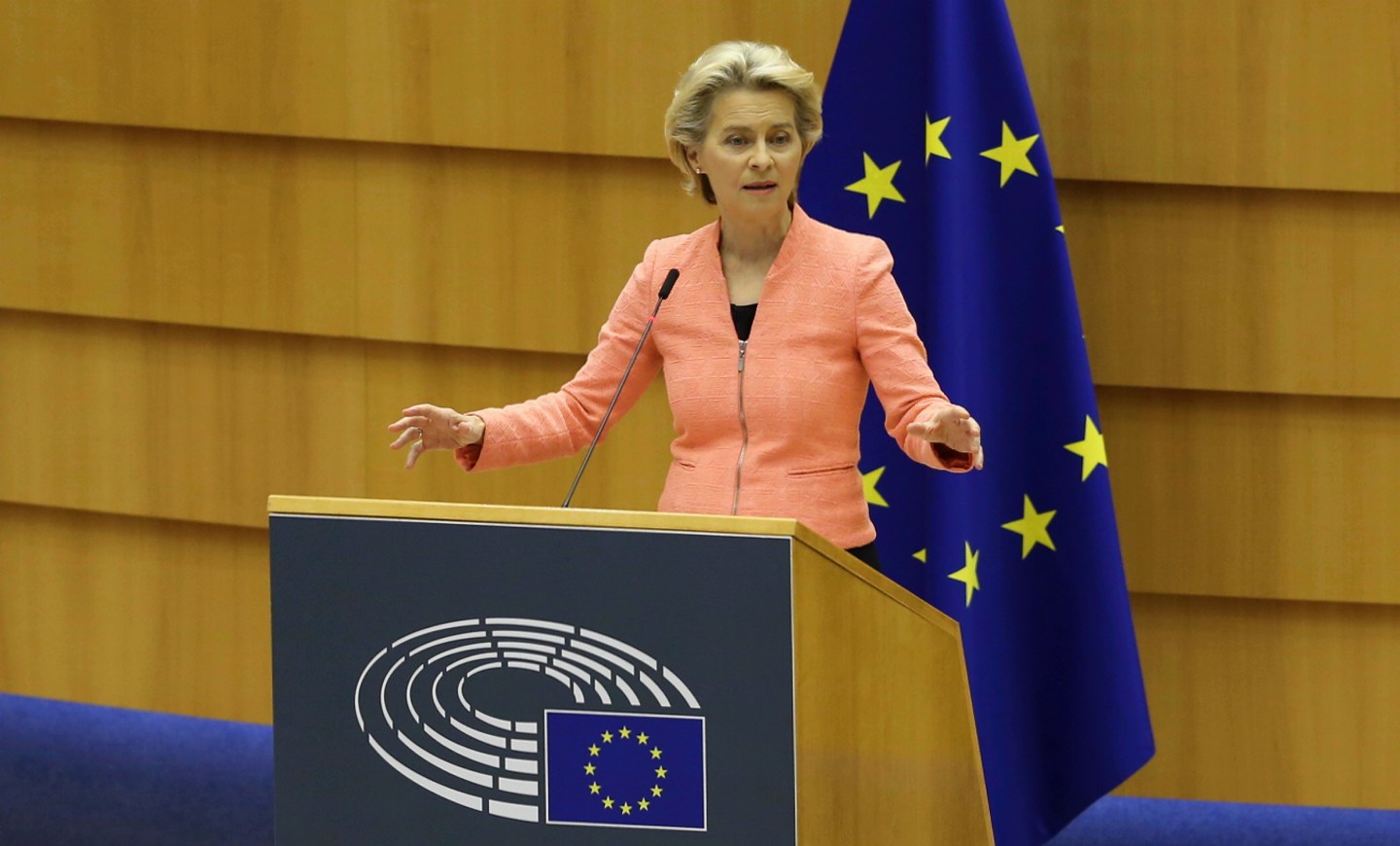
European Commission President Ursula von der Leyen during the State of the European Union debate in Brussels on Sept. 16, 2020.
Dursun Aydemir-Anadolu Agency via Getty Images

“This is not just an environmental or economic project: It needs to be a new cultural project for Europe,” VdL (as she is known in Brussels) said in her speech. “Every movement has its own look and feel. And we need to give our systemic change its own distinct aesthetic—to match style with sustainability.

“This is why we will set up a new European Bauhaus—a cocreation space where architects, artists, students, engineers, designers work together to make that happen.”

The OG Bauhaus

The Bauhaus (“construction house”) was a revolutionary project when it was founded in Weimar, Germany, in the wake of the First World War.

Like the space VdL is apparently envisioning now, it was a multidisciplinary collective that brought together architects (its founder was the modernist pioneer Walter Gropius), artists (including the painters Wassily Kandinsky and Paul Klee), photographers, typographers, and furniture-makers.

“Bauhaus” is sometimes seen as shorthand for minimalism, which is true to an extent—the aphorism “Less is more” came from star Bauhaus architect Ludwig Mies van der Rohe—but the real keys to the aesthetic are the marriage of efficiency and beauty, the embrace of mass-production technology, and the “honest” use and presentation of materials. (The latter principle was particularly visible in the Bauhaus-inspired brutalist movement of mid–20th century architecture, with its mania for naked concrete.)

As Gropius put it in 1926: “An object is defined by its nature. In order, then, to design it to function correctly—a container, a chair, or a house—one must first of all study its nature: For it must serve its purpose perfectly, that is, it must fulfill its function usefully, be durable, economical, and ‘beautiful.’”

It’s not hard to see how such principles translated into gadgets such as Apple’s iPod, some of the more classic furniture designs from Ikea, and structures such as van der Rohe’s Seagram Building on Park Avenue and Gropius’s John F. Kennedy Federal Building in Boston.
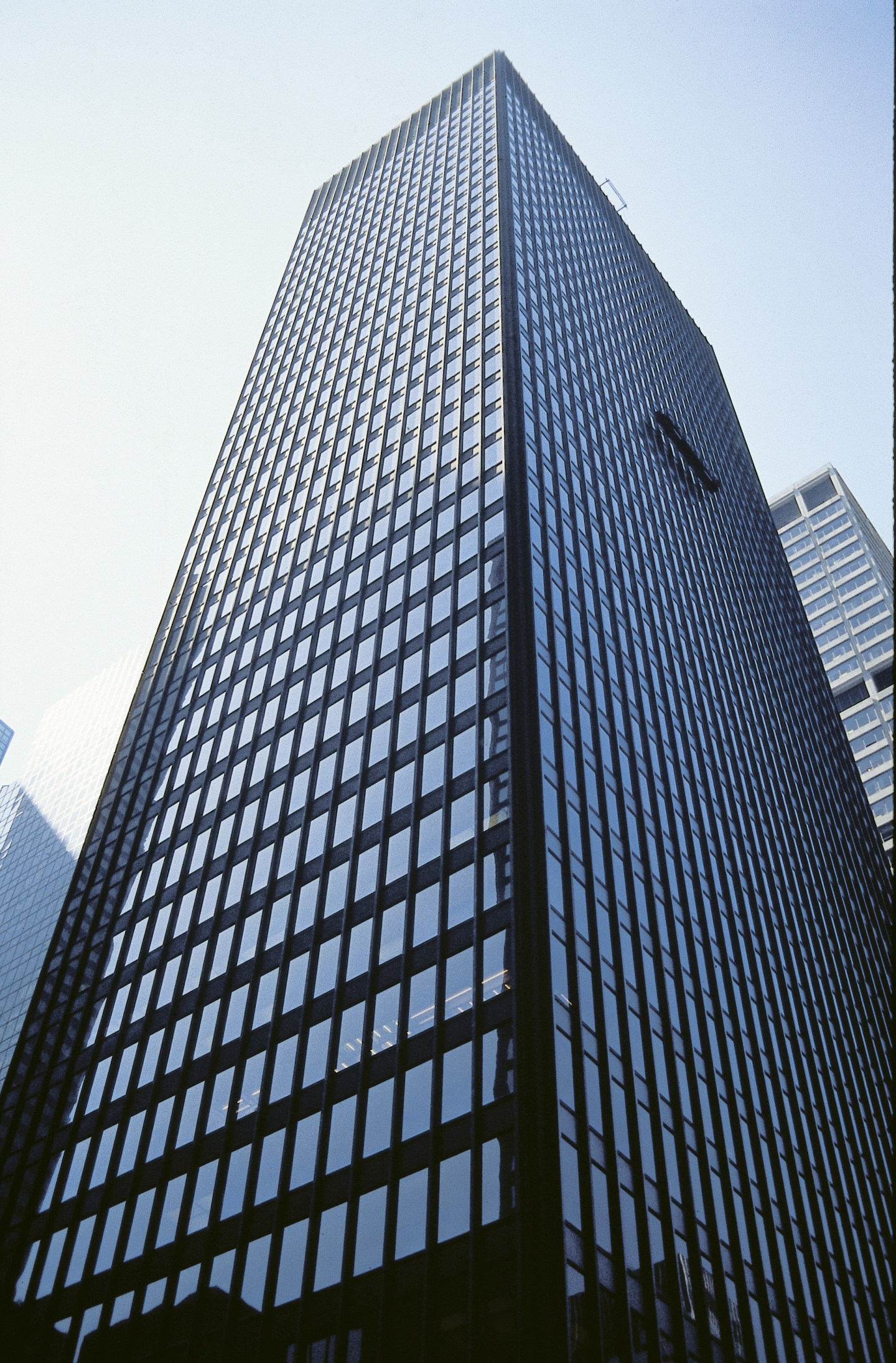
The Seagram Building in New York City was built in 1958. Its architects were Ludwig Mies van der Rohe and Philip Johnson. (Photo by Independent Picture Service/Universal Images Group via Getty Images)

It’s also not hard to see why the Nazis, with their love for traditionalism and the backward-looking Romantic aesthetic, hated this anti-adornment, relentlessly futuristic movement, which they saw as Communist and “degenerate.” The Bauhaus closed in 1933, as Adolf Hitler took power. But its students carried its ideas across the world.

Once more, with feeling

VdL’s invocation of the Bauhaus might seem a little whimsical at a time when Europe is facing the double whammy of a pandemic and a climate emergency, but it does make quite a bit of sense.

The ambition of the Green Deal will not pan out without mass production. For example, the prefabricated insulation panels that are needed to modernize old, drafty buildings must be manufactured at scale, and fast.
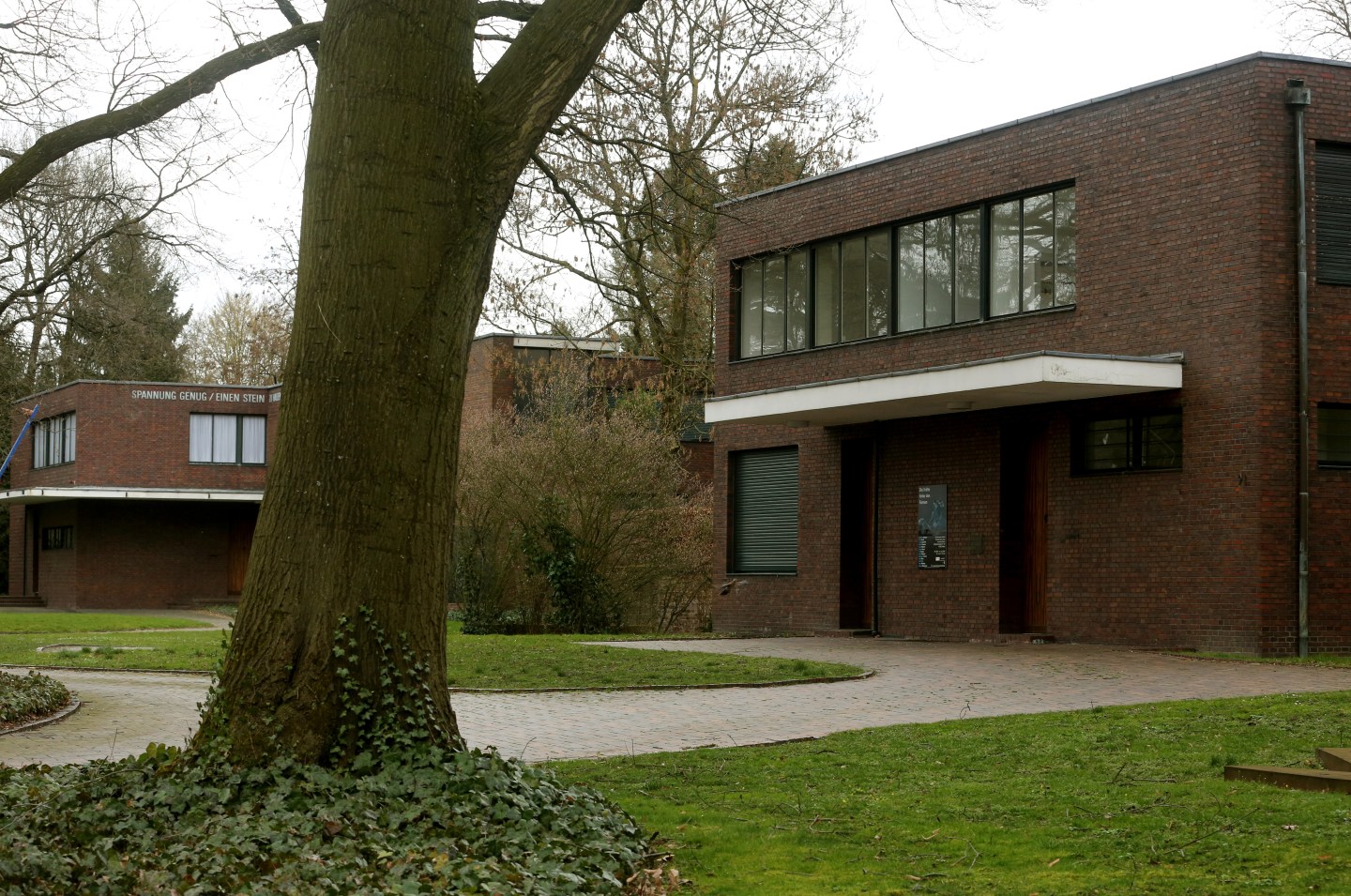
The Haus Esters (L) and the Haus Lange in Krefeld, Germany, 30 March 2016. Both houses were built by Bauhaus architect Ludwig Mies van der Rohe for Hermann Lange and Josef Esters.
The Haus Esters (left) and the Haus Lange in Krefeld, Germany, March 30, 2016. Both houses were built by Bauhaus architect Ludwig Mies van der Rohe for Josef Esters and Hermann Lange.
Roland Weihrauch-picture alliance via Getty Images

What’s more, they ought to look good. Such a monumental effort would be slowed down without the buy-in of the people who live in and around these buildings. Form and function need to go hand in hand, Bauhaus-style—though taste is a personal matter, and there will doubtless be many people who don’t approve of whatever aesthetic the “new European Bauhaus” comes up with.

But there’s a political aspect to the idea, too, and it’s one that will probably cause some trouble down the line.

Just as it boasts many cuisines, Europe has a huge variety of architectural styles; the streets of Helsinki look nothing like those of Paris. The idea of coming up with some sort of distinct aesthetic for the EU’s systemic change, as von der Leyen puts it, goes beyond the more typical Brussels fare of standardizing emissions targets and trying to create “European champions” in the industrial and digital sectors; it risks treading on the contentious territory of standardized culture.

But then again, the Bauhaus was always an internationalist movement, and its legacy could hardly be more impressive—and relevant—to this day. Maybe, just maybe, Europe really could come up with a successor that proves as useful and influential.


About the Author
By David Meyer
LinkedIn icon
See full bioRight Arrow Button Icon

Latest in

A stack of gold bars.
Personal Financegold prices
Current price of gold as of December 5, 2025
By Danny BakstDecember 5, 2025
3 minutes ago
Trump
Personal FinanceHealth Insurance
Trump wants more health savings accounts. A catch: they can’t pay insurance premiums
By Amanda Seitz and KFF Health NewsDecember 5, 2025
18 minutes ago
Steve Milton is the CEO of Chain, a culinary-led pop-culture experience company founded by B.J. Novak and backed by Studio Ramsay Global.
CommentaryFood and drink
Affordability isn’t enough. Fast-casual restaurants need a fandom-first approach
By Steve MiltonDecember 5, 2025
20 minutes ago
Paul Atkins
CommentaryCorporate Governance
Turning public companies into private companies: the SEC’s retreat from transparency and accountability
By Andrew BeharDecember 5, 2025
23 minutes ago
Current price of silver as of Friday, December 5, 2025
Personal Financesilver
Current price of silver as of Friday, December 5, 2025
By Joseph HostetlerDecember 5, 2025
48 minutes ago
Netflix
Big TechNetflix
Netflix lines up $59 billion of debt for Warner Bros. deal
By Natalie Harrison, Janine Panzer and BloombergDecember 5, 2025
55 minutes ago

Most Popular

placeholder alt text
Economy
Two months into the new fiscal year and the U.S. government is already spending more than $10 billion a week servicing national debt
By Eleanor PringleDecember 4, 2025
1 day ago
placeholder alt text
Success
‘Godfather of AI’ says Bill Gates and Elon Musk are right about the future of work—but he predicts mass unemployment is on its way
By Preston ForeDecember 4, 2025
22 hours ago
placeholder alt text
Success
Nearly 4 million new manufacturing jobs are coming to America as boomers retire—but it's the one trade job Gen Z doesn't want
By Emma BurleighDecember 4, 2025
23 hours ago
placeholder alt text
Success
Nvidia CEO Jensen Huang admits he works 7 days a week, including holidays, in a constant 'state of anxiety' out of fear of going bankrupt
By Jessica CoacciDecember 4, 2025
22 hours ago
placeholder alt text
Economy
Tariffs and the $38 trillion national debt: Kevin Hassett sees ’big reductions’ in deficit while Scott Bessent sees a ‘shrinking ice cube’
By Nick LichtenbergDecember 4, 2025
21 hours ago
placeholder alt text
Health
Bill Gates decries ‘significant reversal in child deaths’ as nearly 5 million kids will die before they turn 5 this year
By Nick LichtenbergDecember 4, 2025
1 day ago
Rankings
  • 100 Best Companies
  • Fortune 500
  • Global 500
  • Fortune 500 Europe
  • Most Powerful Women
  • Future 50
  • World’s Most Admired Companies
  • See All Rankings
Sections
  • Finance
  • Leadership
  • Success
  • Tech
  • Asia
  • Europe
  • Environment
  • Fortune Crypto
  • Health
  • Retail
  • Lifestyle
  • Politics
  • Newsletters
  • Magazine
  • Features
  • Commentary
  • Mpw
  • CEO Initiative
  • Conferences
  • Personal Finance
  • Education
Customer Support
  • Frequently Asked Questions
  • Customer Service Portal
  • Privacy Policy
  • Terms Of Use
  • Single Issues For Purchase
  • International Print
Commercial Services
  • Advertising
  • Fortune Brand Studio
  • Fortune Analytics
  • Fortune Conferences
  • Business Development
About Us
  • About Us
  • Editorial Calendar
  • Press Center
  • Work At Fortune
  • Diversity And Inclusion
  • Terms And Conditions
  • Site Map

© 2025 Fortune Media IP Limited. All Rights Reserved. Use of this site constitutes acceptance of our Terms of Use and Privacy Policy | CA Notice at Collection and Privacy Notice | Do Not Sell/Share My Personal Information
FORTUNE is a trademark of Fortune Media IP Limited, registered in the U.S. and other countries. FORTUNE may receive compensation for some links to products and services on this website. Offers may be subject to change without notice.