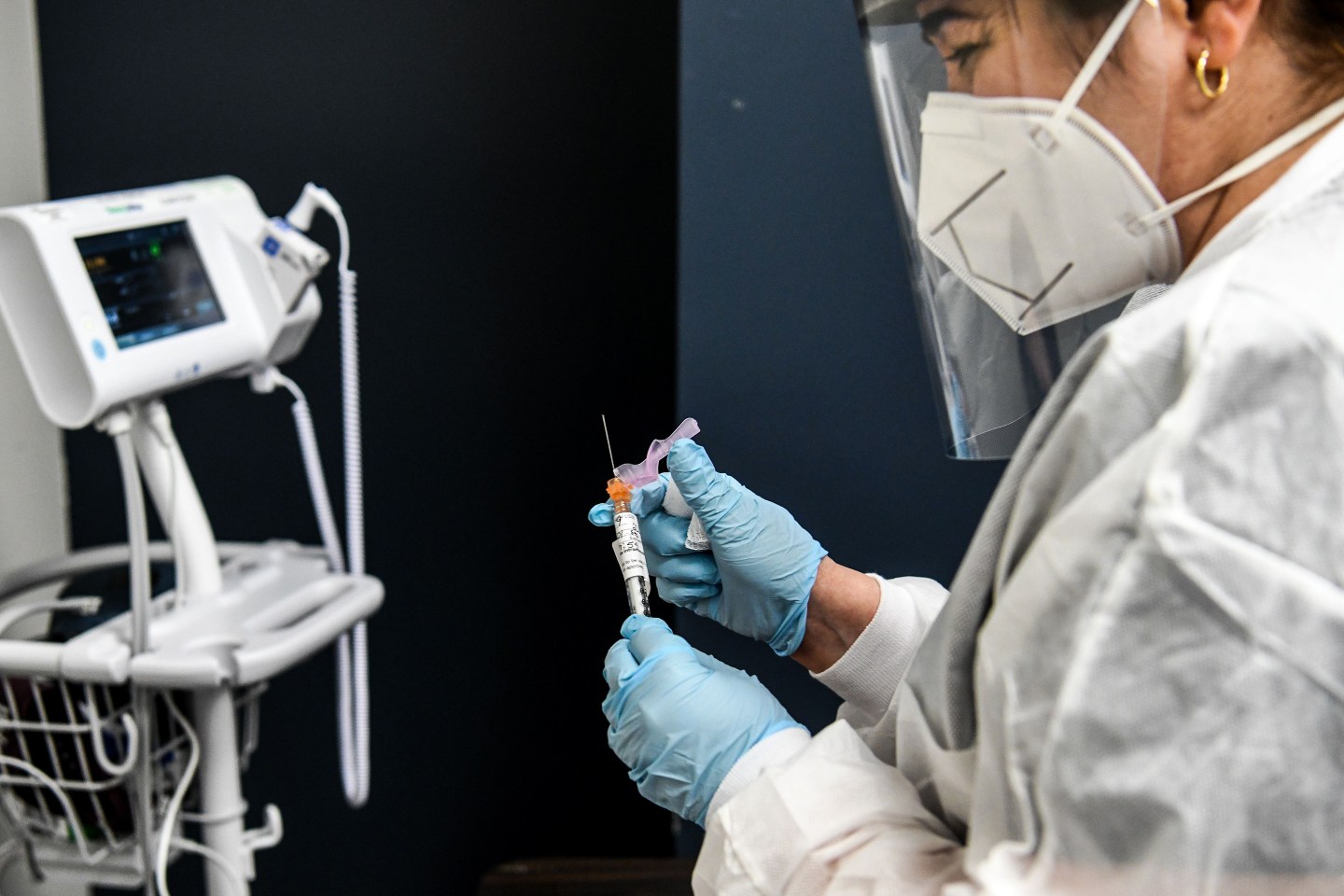
With COVID-19 still raging in the U.S. and the death toll approaching 200,000 Americans and 1 million people worldwide, a safe and effective vaccine is required to stop the spread of the disease and restart the economy.
All eyes are on the pharmaceutical industry, as leading companies have moved ahead to discover, test, and manufacture a vaccine faster than ever before. Many of the world’s best scientists are focused on this goal. To accelerate the availability of a vaccine in record time, the Trump administration launched Operation Warp Speed, funding multiple vaccine candidates through an accelerated development process and committing to purchase hundreds of millions of doses of approved vaccines.
Trying to speed up science carries many risks, especially for a novel virus like this one, which is not well understood nor easily characterized. Scientific discoveries cannot be driven by timetables like the upcoming Presidential election is.
To address these risks, the following questions must be answered:
1. Will there be safety issues not revealed in early clinical trials?
2. Will the vaccines be sufficiently effective to stop COVID-19’s spread?
3. Will the American people have enough confidence to get vaccinated?
4. Will there be sufficient quantities of vaccines available, and who gets priority?
5. If multiple vaccines are approved, how will people know which one to get?
6. Will political pressure influence the approval process?
Safety
Time pressure to complete the trials raises concerns that safety issues may appear only after millions of people have been vaccinated. Moncef Slaoui, head of Operation Warp Speed’s vaccine development arm, has said there is a “very, very low chance” of a vaccine being approved by election day, and that he will resign if he feels pressure to approve an unsafe vaccine.
On Sept. 9, clinical trials for AstraZeneca’s leading vaccine candidate were halted after a patient developed neurological symptoms, illustrating the care that must be taken in testing new vaccines. (Those trials have since resumed after a careful clinical review.) Learning of safety issues after millions of healthy people have been vaccinated would be devastating to the nation’s health and public confidence.
Effectiveness
The Food and Drug Administration (FDA) has set the minimum threshold for a vaccine’s effectiveness at 50%, essentially the same bar as flu vaccines, but influenza has a far lower risk of death than COVID-19 does. With 50% effectiveness, will the public feel sufficiently confident to resume their normal lives—working in crowded spaces, attending concerts or sporting events, going into crowded bars and restaurants, or taking long airplane flights? Hopefully, pharmaceutical makers will be able to develop a vaccine with substantially more than 50% effectiveness.
Public confidence
A Sept. 10 Kaiser Family Foundation poll found that 54% of Americans would not want to receive a vaccine approved prior to election day on Nov. 3. Meanwhile, anti-vaccine activists are using COVID-19 to stoke fears about the safety of all vaccines. Thus, it is essential to build public confidence in the vaccine’s safety and effectiveness, so more people will volunteer to get vaccinated.
Availability
Once approved, a vaccine is unlikely to be widely available for several months. Health care workers should have priority access. After that, how will priorities be established to determine who gets the vaccine? Priorities should be based on risk stratification, with more immediate access given to vulnerable populations such as the elderly, people with diabetes and obesity, or people in high-risk occupations.
Determining which one to get
With major pharmaceutical companies spending billions of dollars to create an effective vaccine, several candidates will eventually be approved by the FDA, each with its own scientific approach and level of effectiveness. The first vaccine will get the publicity, but will it be the most effective? Consumers will need sufficient information to decide which vaccine to receive, and they should get that information from their physicians, not pharmaceutical ads on television or word of mouth.
Political intervention
There are growing concerns about politics entering into FDA decisions, especially if approval or an emergency use authorization (EUA) is granted prior to the Nov. 3 election. The aforementioned Kaiser poll found that 61% of Americans are worried the FDA will rush to approve a vaccine due to political pressure.
These concerns are heightened by the FDA’s premature EUA of hydroxychloroquine prior to testing last spring, an approval the FDA later withdrew. Additionally, a recent National Institutes of Health panel criticized the FDA for its EUA of convalescent plasma without having performed randomized tests. For such an important health care decision, political pressure has no place in the vaccine approval process.
A plan to win the public’s confidence
The COVID-19 crisis will not end until we have one or more safe, effective, and widely available vaccines. Regulators and health care leaders, backed up by political leaders, must take the lead in building public confidence in the integrity of the entire vaccine development and distribution process.
The pharmaceutical industry and public health officials must emphasize safety first. On Sept. 8, nine leading pharmaceutical companies signed a pledge to “only submit for approval or emergency use authorization after demonstrating safety and efficacy through a Phase 3 clinical study that is designed and conducted to meet requirements of … the FDA.” This pledge was signed by the CEOs of AstraZeneca, BioNTech, GlaxoSmithKline, Johnson & Johnson, Merck, Moderna, Novavax, Pfizer, and Sanofi.
A safe and effective vaccine holds the key to stopping the spread of COVID-19 and fully restarting the economy. When a vaccine is ultimately approved, the public must be able to rely on public health officials and physicians who have carefully reviewed clinical trial data. In order to build public confidence, health care leaders—independent from politicians—must step up to the challenge of ensuring COVID-19 vaccines are safe, effective, and available to those most in need first.
Bill George is senior fellow at Harvard Business School and former chair and CEO of Medtronic. He is the author of Discover Your True North.