• Home
  • Latest
  • Fortune 500
  • Finance
  • Tech
  • Leadership
  • Lifestyle
  • Rankings
  • Multimedia
Commentary

COVID proves that companies need to reduce their dependence on China

By
Nilesh Patel
Nilesh Patel
Down Arrow Button Icon
By
Nilesh Patel
Nilesh Patel
Down Arrow Button Icon
September 11, 2020, 11:30 AM ET
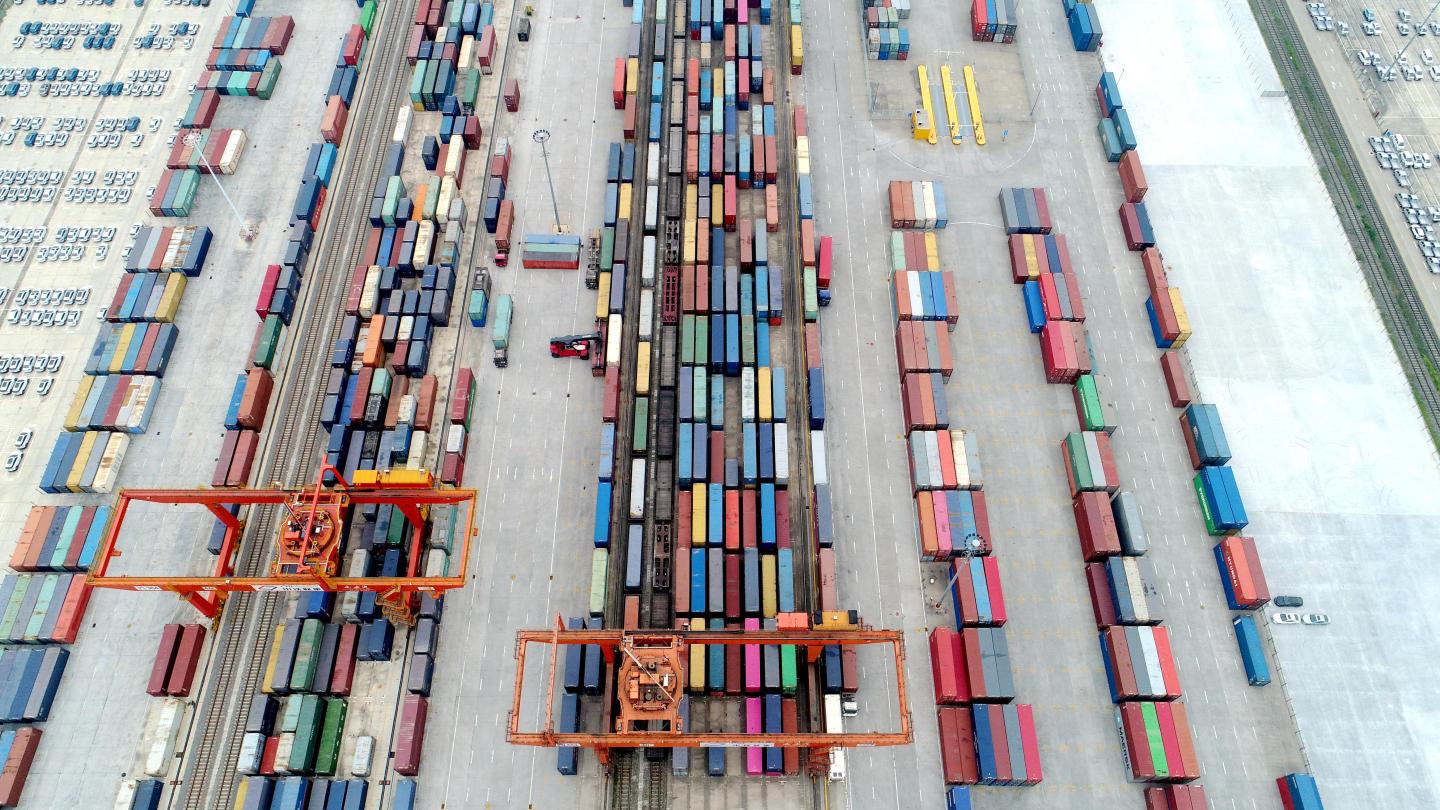
Containers stacked at a railway station in Xi'an, China. The COVID-19 crisis has illustrated the risks of relying too heavily on China as a chief manufacturing hub, writes Nilesh Patel. (Photo by Zhang Yuan/China News Service via Getty Images)
Containers stacked at a railway station in Xi'an, China. The COVID-19 crisis has illustrated the risks of relying too heavily on China as a chief manufacturing hub, writes Nilesh Patel. (Photo by Zhang Yuan/China News Service via Getty Images)Zhang Yuan/China News Service/Getty Images

For decades, China has served as the go-to manufacturing destination for global companies. But recent events suggest that the tide may be turning. Consider these examples:

  • Apple supplier Foxconn announced in July that it plans to invest $1 billion in India, part of a quiet and gradual production shift by Apple away from China.
  • Hasbro, the world’s largest publicly traded toymaker, has said that it hopes to have only 50% of its production coming from China by the end of 2020, shifting away from China in favor of new plants in Vietnam and India. 
  • Nintendo is shifting some production of its Switch videogame console to Southeast Asia from China. 
  • Japan passed a record economic stimulus package to help Japanese companies shift manufacturing away from China and either back to Japan or other countries.

Geopolitical tensions are fueling this trend. The U.S. and China have been in a wide-ranging trade war for more than two years. Military conflict along the India-China border, rising tensions between the Beijing government and Taiwan aggravated by aggressive Chinese behavior in the South China Sea, and China’s tightening restrictions on democracy in Hong Kong are all making global businesses warfy. And China’s handling of the COVID-19 pandemic in its early days has increased distrust among its trading partners.

The COVID-19 crisis has illustrated both the soft risks (such as reputation damage) and rigid risks (such as disruption of supply chains) of relying on China as a chief manufacturing hub. Companies outside China may now feel pressure to reshore manufacturing to home countries or find more suitable low-cost alternatives in Asia, Eastern Europe, and the Americas. Alternately, they may now feel a need to develop a diversification strategy that includes a combination of those regions, including the one where their global headquarters is located.

The argument becomes more convincing every day. The government of China’s moves in recent years signals harsher government control at home and more geopolitical and economic bullying overseas. Germany and other European countries have had to call on firms to reduce their dependence on China. And long before the advent of the coronavirus pandemic, the United States had concerns about its growing reliance on China. 

Diversifying investments—and supply chains

In my earlier years, I was taught to diversify my investments, always, to hedge against the risks associated with certain stocks, bonds, and funds. But are global companies ready to diversify? 

Any company currently dependent on China will need to manufacture their products in an increasingly larger group of low-cost countries possessing the human capital, quality standards, logistics, and supply chains to deliver goods on time to customers.

But this next-wave of countries can’t operate like China. This group of nations must have amenable regulations and trade policies to attract international investors, understandable labor laws, and clear respect for intellectual property. They also must enact quality certification processes to offset risks of disruptions in times of uncertainty.

Apple, Hasbro, and Nintendo are only some of the latest companies to make a move to shift some production away from China. Many apparel companies have successfully moved and mitigated the risks to other low-end alternative options to China. For example, Nike now makes its lower-end shoes in Vietnam. Since 2010, Adidas has cut the share of footwear it makes in China in half, and most of that manufacturing business has moved to Vietnam. 

For longer-term success, new-country partners will need to train and develop senior business leaders. And organizations must be inculcated with effective cross-cultural tools to thrive with a global mindset toward working with new clients in a new environment—and away from over-reliance on yesterday’s game, China. 

Short-term challenges, long-term sustainability 

The pandemic has given some businesses a rude awakening about their dependence on China. But there is no reason to believe that relocation of supply chains can’t be achieved. Companies will have to embrace short-term challenges associated with diversification from Chinese locations and go through the growing pains needed to design a long-term sustainable future, one without reliance on China.

It does not pay to rely on a single place for manufacturing operations and supply chain processes. The global companies that are heavily reliant on China for global sourcing and production must diversity away of China to reduce future disruptions and risks to their business and customers. 

Nilesh Patel is chief executive and global management strategist at Opitive Consulting.

About the Author
By Nilesh Patel
See full bioRight Arrow Button Icon

Latest in Commentary

Finance
Lorem ipsum dolor sit amet, consectetur adipiscing elit, sed do eiusmod tempor incididunt ut labore et dolore magna aliqua. Ut enim ad minim veniam
By Fortune Editors
October 20, 2025
Finance
Lorem ipsum dolor sit amet, consectetur adipiscing elit, sed do eiusmod tempor incididunt ut labore et dolore magna aliqua. Ut enim ad minim veniam
By Fortune Editors
October 20, 2025
Finance
Lorem ipsum dolor sit amet, consectetur adipiscing elit, sed do eiusmod tempor incididunt ut labore et dolore magna aliqua. Ut enim ad minim veniam
By Fortune Editors
October 20, 2025
Finance
Lorem ipsum dolor sit amet, consectetur adipiscing elit, sed do eiusmod tempor incididunt ut labore et dolore magna aliqua. Ut enim ad minim veniam
By Fortune Editors
October 20, 2025
Finance
Lorem ipsum dolor sit amet, consectetur adipiscing elit, sed do eiusmod tempor incididunt ut labore et dolore magna aliqua. Ut enim ad minim veniam
By Fortune Editors
October 20, 2025
Finance
Lorem ipsum dolor sit amet, consectetur adipiscing elit, sed do eiusmod tempor incididunt ut labore et dolore magna aliqua. Ut enim ad minim veniam
By Fortune Editors
October 20, 2025

Most Popular

Finance
Lorem ipsum dolor sit amet, consectetur adipiscing elit, sed do eiusmod tempor incididunt ut labore et dolore magna aliqua. Ut enim ad minim veniam
By Fortune Editors
October 20, 2025
Finance
Lorem ipsum dolor sit amet, consectetur adipiscing elit, sed do eiusmod tempor incididunt ut labore et dolore magna aliqua. Ut enim ad minim veniam
By Fortune Editors
October 20, 2025
Finance
Lorem ipsum dolor sit amet, consectetur adipiscing elit, sed do eiusmod tempor incididunt ut labore et dolore magna aliqua. Ut enim ad minim veniam
By Fortune Editors
October 20, 2025
Finance
Lorem ipsum dolor sit amet, consectetur adipiscing elit, sed do eiusmod tempor incididunt ut labore et dolore magna aliqua. Ut enim ad minim veniam
By Fortune Editors
October 20, 2025
Finance
Lorem ipsum dolor sit amet, consectetur adipiscing elit, sed do eiusmod tempor incididunt ut labore et dolore magna aliqua. Ut enim ad minim veniam
By Fortune Editors
October 20, 2025
Finance
Lorem ipsum dolor sit amet, consectetur adipiscing elit, sed do eiusmod tempor incididunt ut labore et dolore magna aliqua. Ut enim ad minim veniam
By Fortune Editors
October 20, 2025
Fortune Secondary Logo
Rankings
  • 100 Best Companies
  • Fortune 500
  • Global 500
  • Fortune 500 Europe
  • Most Powerful Women
  • Future 50
  • World’s Most Admired Companies
  • See All Rankings
Sections
  • Finance
  • Fortune Crypto
  • Features
  • Leadership
  • Health
  • Commentary
  • Success
  • Retail
  • Mpw
  • Tech
  • Lifestyle
  • CEO Initiative
  • Asia
  • Politics
  • Conferences
  • Europe
  • Newsletters
  • Personal Finance
  • Environment
  • Magazine
  • Education
Customer Support
  • Frequently Asked Questions
  • Customer Service Portal
  • Privacy Policy
  • Terms Of Use
  • Single Issues For Purchase
  • International Print
Commercial Services
  • Advertising
  • Fortune Brand Studio
  • Fortune Analytics
  • Fortune Conferences
  • Business Development
About Us
  • About Us
  • Editorial Calendar
  • Press Center
  • Work At Fortune
  • Diversity And Inclusion
  • Terms And Conditions
  • Site Map
Fortune Secondary Logo
  • About Us
  • Editorial Calendar
  • Press Center
  • Work At Fortune
  • Diversity And Inclusion
  • Terms And Conditions
  • Site Map
  • Facebook icon
  • Twitter icon
  • LinkedIn icon
  • Instagram icon
  • Pinterest icon

Latest in Commentary

world's fair
CommentaryRobots
Something big is happening in AI, but panic is the wrong reaction
By Peter CappelliFebruary 28, 2026
1 hour ago
putin
CommentaryRussia
Exclusive analysis: we looked at the 400 western firms still in Russia. Their paltry size strips Putin’s bluff bare naked
By Jeffrey Sonnenfeld, Stephen Henriques, Jake Waldinger and Giuseppe ScottoFebruary 27, 2026
23 hours ago
roth
CommentaryLeadership
The AI resource reallocation challenge: How can companies capture the value of time?
By Erik RothFebruary 27, 2026
1 day ago
will
CommentaryAdvertising
I’m one of America’s top pollsters and I’ve got a warning for the AI companies: customers aren’t sold on ads
By Will JohnsonFebruary 27, 2026
1 day ago
the pitt
CommentaryDEI
‘The Pitt’: a masterclass display of DEI in action 
By Robert RabenFebruary 26, 2026
2 days ago
david booth
CommentaryMarkets
3 lessons from investing’s ‘moneyball’ moment
By David BoothFebruary 25, 2026
3 days ago

Most Popular

placeholder alt text
Success
Japanese companies are paying older workers to sit by a window and do nothing—while Western CEOs demand super-AI productivity just to keep your job
By Orianna Rosa RoyleFebruary 27, 2026
21 hours ago
placeholder alt text
Innovation
An MIT roboticist who cofounded bankrupt robot vacuum maker iRobot says Elon Musk’s vision of humanoid robot assistants is ‘pure fantasy thinking’
By Marco Quiroz-GutierrezFebruary 25, 2026
3 days ago
placeholder alt text
Commentary
'The Pitt': a masterclass display of DEI in action 
By Robert RabenFebruary 26, 2026
2 days ago
placeholder alt text
Success
Walmart exec says U.S. workforces needs to take inspiration from China where ‘5 year-olds are learning DeepSeek’
By Preston ForeFebruary 27, 2026
1 day ago
placeholder alt text
Economy
It’s more than George Clooney moving to France: America is becoming the ‘uncool’ country that people want to move away from
By Nick LichtenbergFebruary 27, 2026
1 day ago
placeholder alt text
Law
China's government intervenes to show Michigan scientists were carrying worms, not biological materials
By Ed White and The Associated PressFebruary 26, 2026
2 days ago

© 2026 Fortune Media IP Limited. All Rights Reserved. Use of this site constitutes acceptance of our Terms of Use and Privacy Policy | CA Notice at Collection and Privacy Notice | Do Not Sell/Share My Personal Information
FORTUNE is a trademark of Fortune Media IP Limited, registered in the U.S. and other countries. FORTUNE may receive compensation for some links to products and services on this website. Offers may be subject to change without notice.










