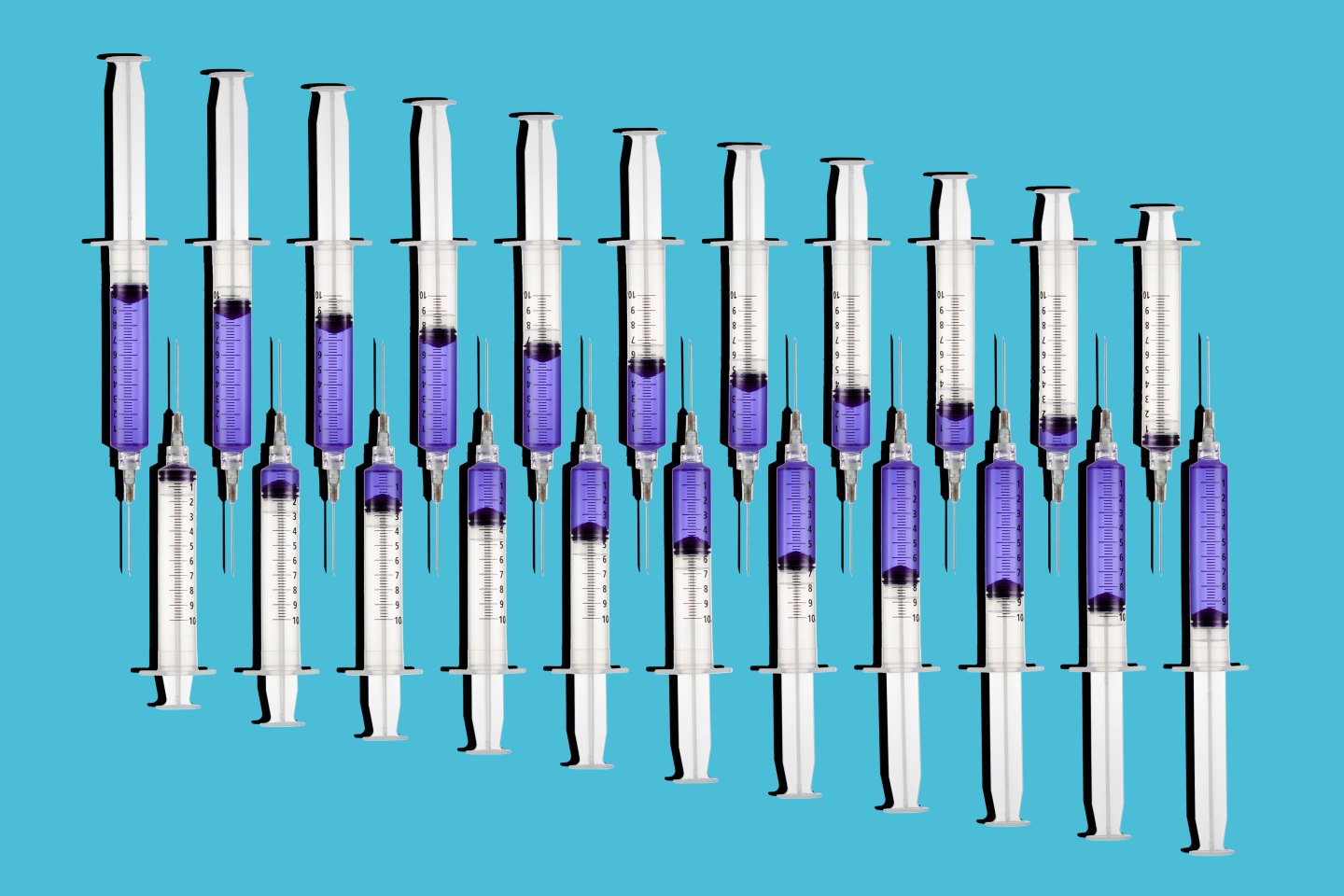
Since the onset of the COVID-19 pandemic, the world’s top scientists have been working 24/7 toward a common goal: to save thousands of lives by rapidly developing treatments and vaccines against the SARS-CoV-2 virus. Equally importantly, we must ensure that all treatments and vaccines are safe and that we produce enough vaccines to ensure that every person—regardless of age, gender, geographic location or wealth status—will be protected.
The global health care community is coming together to succeed on each of these fronts. Buoyed by our shared sense of humanity—and with support from governments and philanthropic entities—we have already overcome immense hurdles that initially lay in the way. Indeed, just a year ago many would have thought it impossible to create an effective, safe vaccine in less than a decade. But that timeline is not an option in the face of COVID-19. Now, in a matter of months, there are dozens of vaccine candidates in various stages of development. (Sanofi is among the many pharmaceutical companies working on a coronavirus vaccine.)
This rapid progress should be viewed as a reason to hope—not just that we’ll have a vaccine (or several) in the near future, but that the entire health care ecosystem has evolved to be faster, more collaborative, and more innovative. It’s also signaled a need to wholeheartedly embrace digitization across the industry. These evolutions, if embraced long term, could save thousands of lives beyond COVID-19. They could mean bringing life-changing medicines to patients suffering from debilitating diseases of all kinds—from cancer, to autoimmune disorders, to heart disease.
Countries are beginning to emerge from lockdowns and people are testing the waters of returning to normalcy. But when the pandemic does truly pass, we must resist the urge to return to the status quo and instead invent the “new normal.” We must put every step of how we bring breakthroughs to patients under a microscope. Encouragingly, there are two monumental evolutions that gained steam during the COVID-19 era that have the potential to drastically reduce the time it takes to bring a new medication to patients.
Faster drug development
Clinical trials determine whether a new drug will safely and effectively treat an illness. But trials can take a long time. For decades, the clinical trial process has centered around a model called randomized clinical trials. While effective, this traditional model follows rigid guidelines and typically takes about seven years to complete. For patients without a viable treatment option, seven years is simply too long to wait.
This timeline certainly isn’t acceptable in the fight to find treatments for COVID-19. Thankfully, the use of technologies such as A.I. are proving extremely effective in speeding up some of the most time-consuming steps, such as identifying the most promising drug candidates, scanning existing drugs that might hit new targets to treat other illnesses, and finding the right trial sites. We must make these types of tools common practice.
But COVID-19 researchers are also straying from traditional models and using a type of clinical model called adaptive clinical trials. Adaptive clinical trials are more flexible, and faster. Under a traditional trial model, recruiting trial participants alone can take seven months. But under an adaptive model, this is done in half the time. These trials also lead to more drugs making it through to market (about 13% more), partly because researchers can modify a trial’s endpoint based on the interim data instead of having to wait until the trial concludes.
In just a matter of months, several COVID-19 vaccines and treatments have entered human trials under this new model. Imagine if we can replicate this incredible speed in the battles against other deadly diseases. Suddenly, a patient who has exhausted available treatment options has reason to hope that a medicine could come.
Faster drug approvals
From start to finish, the regulatory approval process for a new drug can take 12 to 15 years. Obtaining approval from regulatory bodies such as the Food and Drug Administration (FDA) is a necessarily stringent process, because you simply cannot cut corners when it comes to ensuring patient safety.
But the urgency of the COVID-19 pandemic has shown that it is possible to speed up the development process while preserving the highest possible standards for safety. In March, the FDA launched the Coronavirus Treatment Acceleration Program. Generally, the FDA can take up to 30 days to review investigational new drug proposals. Now, for COVID-19 vaccines and treatments, it’s being done in 24-48 hours. While the FDA’s review of investigational new drug proposals is only a small part of the overall development process, it is very encouraging to see this level of agility in response to a critical medical need.
While we have yet to witness how quickly post-trial COVID-19 review and approvals will be conducted, we have every reason to expect this process to be faster than normal. Our experience with COVID-19 suggests that it could become the new standard to complete the approval process in just a handful of years—versus a decade or more—for any urgently needed treatment.
The challenge going forward
The pandemic has proven beyond a doubt that as an industry, we can move together at unprecedented speed. Now, in programs such as the National Institutes of Health’s Accelerating COVID-19 Therapeutic Interventions and Vaccines initiative, we have models for unprecedented harmonious collaboration between the private and public sectors and between otherwise competitive private companies. We’ve seen what happens when we share information and data, we’ve proven timelines can be shortened.
Moving forward, our challenge as an industry lies in turning these temporary measures into permanent industrywide evolution. As an industry, pharma has been slow to adopt digitization, and it’s clear that this approach won’t suffice in the modern era of medicine. After all, if our patients are using telemedicine to interact with their doctor, shouldn’t we be able to do the same to make new data and important safety information available on demand for the doctors who need to know more about new medications? If we don’t act now, it won’t be long before we’re not just failing to evolve, but actually falling behind.
For the foreseeable future, we will all continue to work tirelessly to fight this behemoth virus. But at the same time, we must grasp this opportunity to weed out decades-old processes and protocols that can be replaced with modernized models or fortified by digital technologies. If we fail to do so, millions of patients will wait longer for new treatments that could change their lives. We owe it to these patients to not waste this moment.
Paul Hudson is CEO of Sanofi.