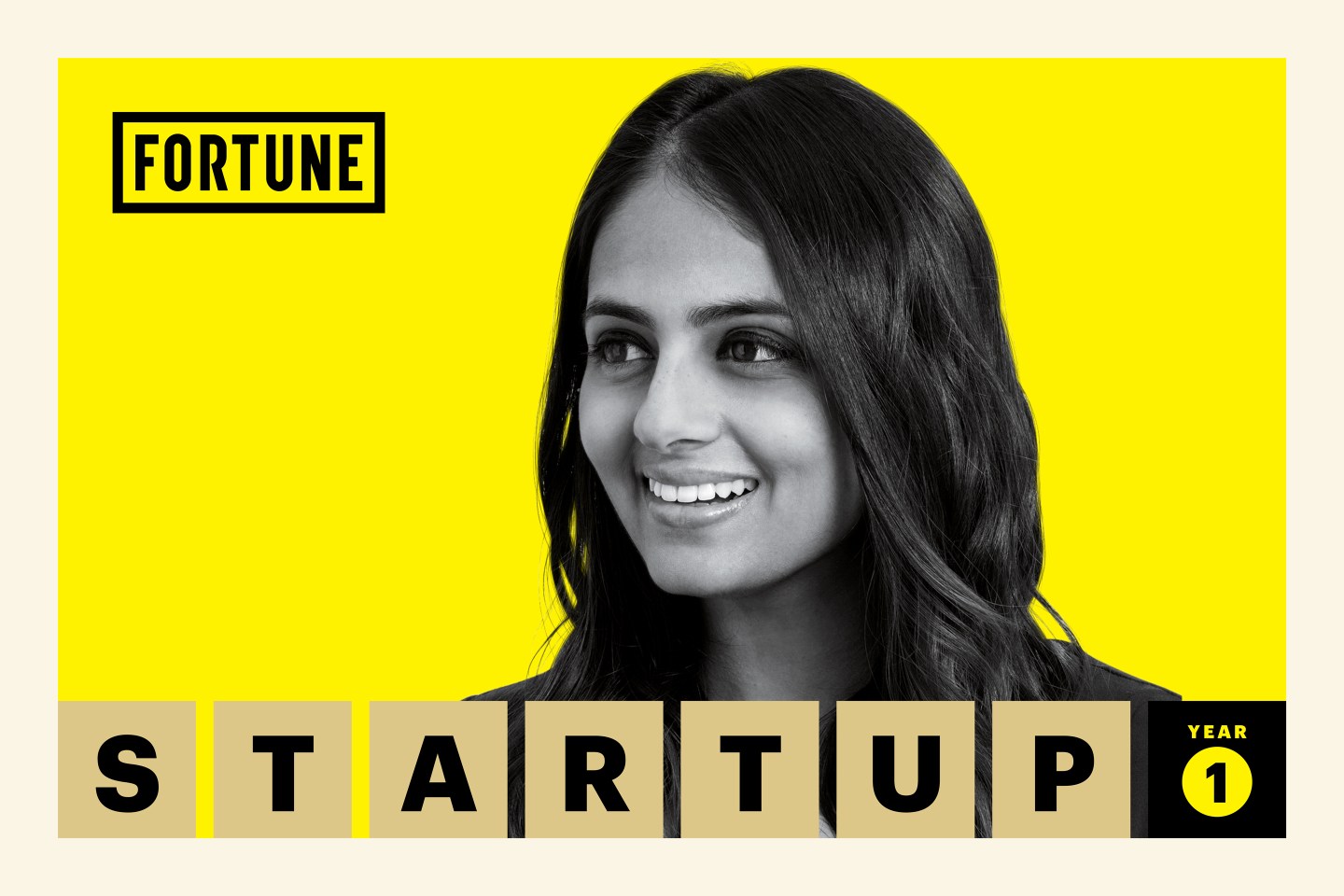
This is an installment in a special series, Startup Year One, interviewing startup founders about the major lessons they learned in the immediate aftermath of their business’s first year of operation.
Aishwarya Iyer and her family emigrated from India to the U.S. when she was just 6 months old in the 1980s, and she grew up mostly in Houston. Iyer says she was expected to become a doctor, engineer, or a lawyer—but she was intent on breaking molds.
Iyer attended New York University, studying at the Gallatin School of Individualized Study. She started her career at L’Oréal, under the Lancôme brand, and has worked at a number of venture-backed startups in communications and public affairs.
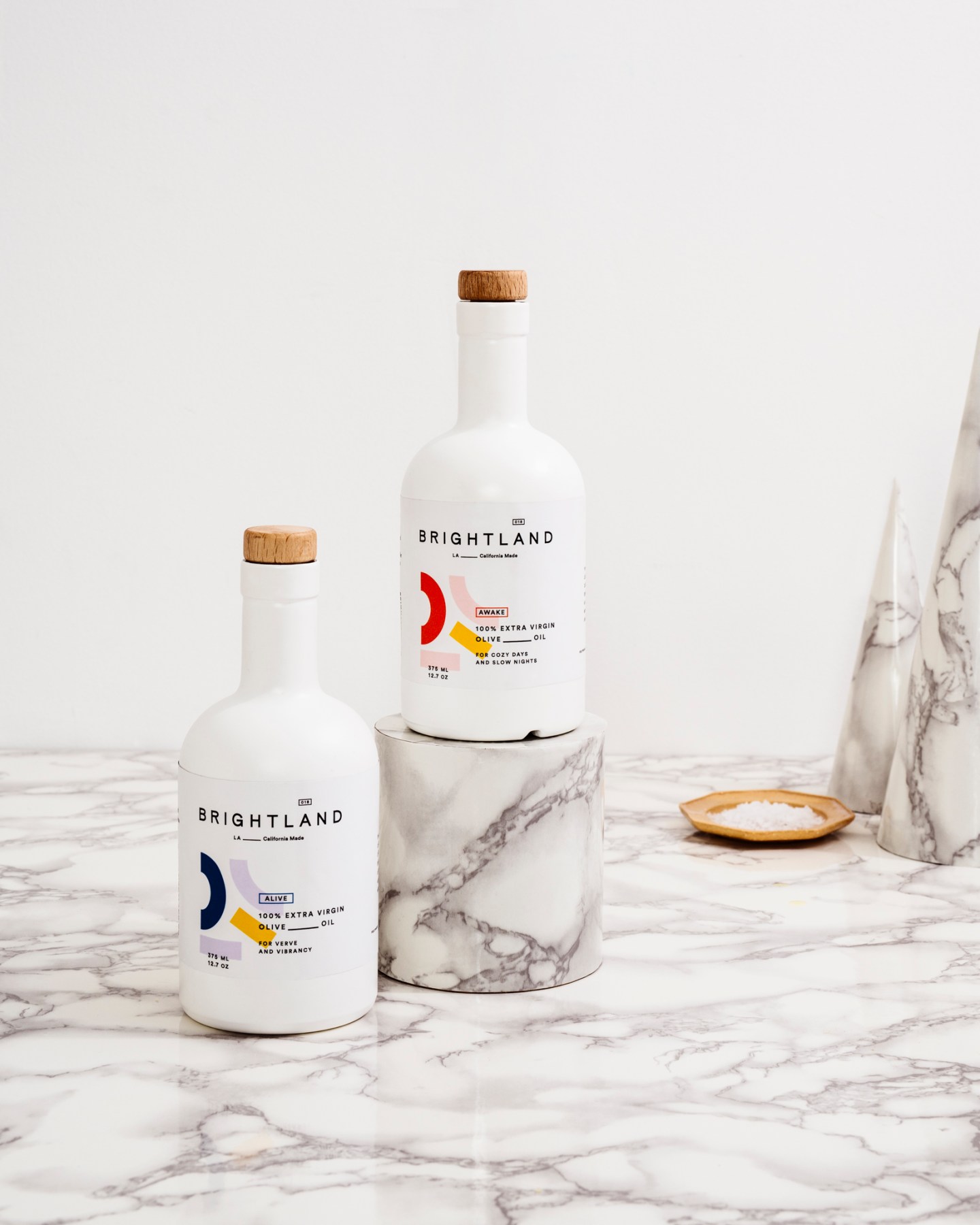
Iyer has since launched her own company, Brightland, a handcrafted extra virgin olive oil brand.
Fortune recently spoke with Iyer to learn more about the startup’s first year in business, the lessons learned, the hurdles overcome, and plans for the next year.
The following interview has been condensed and lightly edited for clarity.
Fortune: Olive oil is one of those kitchen staples that virtually everyone has, but it’s not necessarily a business everyone can get into. Much like wine, it has a history of being associated with family-owned producers. What inspired the launch of Brightland? And how does it stand apart from what else is already on the market?
Iyer: When I met my partner in New York City in 2014 and started cooking meals at home, we both found ourselves left with consistent, uncomfortable stomach pain. After cutting out the obvious culprits like bread, cheese, even spices, the only constant left was olive oil. The discovery inspired some research where I quickly discovered that nearly 70% of olive oil Americans consume is already rotten or rancid due to a fraud-ridden industry with little to no transparency. I was determined to shine light on the dark industry.
So I pivoted careers and set out to create a bold, elevated, and traceable solution to pantry staples, beginning with olive oil. I moved to Los Angeles, and researched the domestic olive oil industry that is burgeoning here in California.
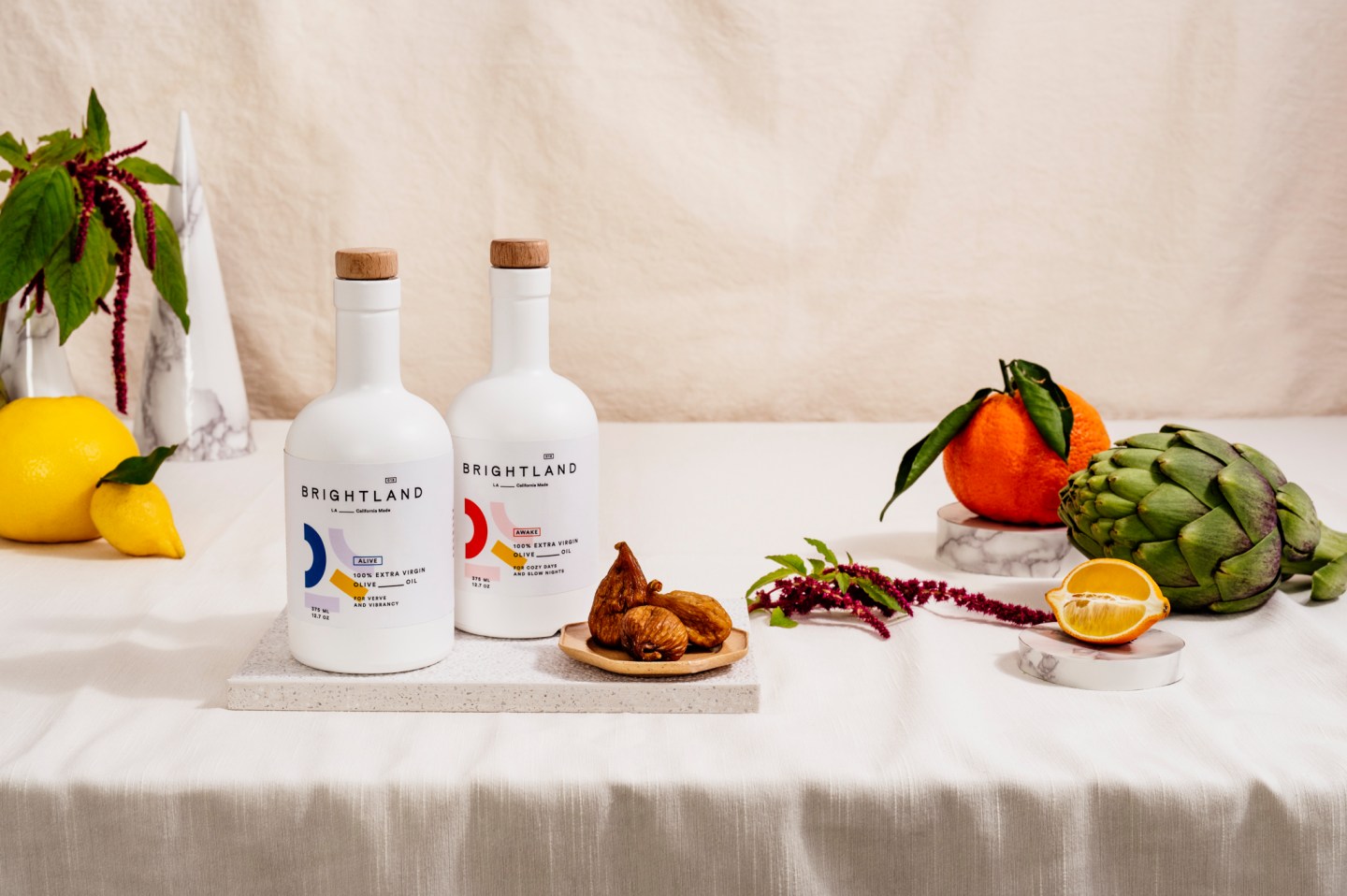
Brightland officially launched in 2018. We partner with family farms that practice organic practices, pay fair wages, and are crafting fresh extra virgin olive oil. We also made a conscious decision to focus on design; our bottles do not look like traditional olive oils. Now we are in the process of launching our first category outside of olive oil, and we are applying the same framework around sourcing, finding the right nutrient-dense farm partner, using fresh fruit, and incorporating design into everything we put out into the world.
As founder and CEO of your own brand, what does an average day look like for you?
We are a very small team, and right now we are all fortunate to be able to be remote working from our homes. We do not have Slack, by design, and it is a decision I made early on, after working at companies that clearly did not understand boundaries. I decided that I would hold off on implementing Slack as a workplace tool for as long as possible. So we pick up the phone and call each other, or we send emails.
A typical day could be reviewing editorial and social content, discussing product road maps, inventory projections, and timelines with our operations lead, looking at our [profit and loss] and budgets, DM-ing with customers on social, jumping on calls with brand partners, reviewing new site design and dev edits, and of course, recipe and product testing before we are about to launch something new.
What were some of the biggest hurdles you faced in the first year of business? What surprised you the most?
I bootstrapped the company for the first 12 months and did not take any outside capital—zero friends and family, angels, etc.—so we had to be incredibly scrappy with everything from creative and marketing to inventory planning and cash flow. I thought that would be the most challenging part of the business, but it was actually my mind.
I had to stop thinking from a “scarcity” mindset to an “abundance” mindset, and that was a huge shift that was quite challenging—and continues to be challenging when you’re surrounded by the incessant noise, especially on social media. It’s incredibly important for an entrepreneur to live in the abundance mindset, because that is when you can make decisions that are positive, optimistic, and fit your values. Operating from a place of scarcity leads to short-term, panicked, FOMO thinking, and decision making that ultimately hurts the brand and business. It’s exhausting for the entrepreneur to be coming from that place.
As the pandemic continues, the outlook for retail is only looking more dire, but grocery is typically recession-proof space. Still, Brightland might be regarded as more of a premium product for consumers. Does Brightland plan to adjust its business plan for the immediate future?
We have always been a [direct-to-consumer]-first business with strategic retail partners who we work with. When COVID started, we lost some large [purchase orders] from a few retail partners, but we saw a spike on our DTC channel. Since people are at home and cooking more, we introduced a digital content series called “On the Bright Side,” where we have been hosting cooking episodes, Q&As with experts in wine, cheese, tea, etc., and live watercolor paintings, to serve as a place for some positivity and calming content.
At the same time, how has the economic shutdown affected the future of the business, from product development to raising capital?
The shutdown has slowed things down for us internally. In some ways, it has allowed us to truly focus, and in other ways, everything in our supply chain is slower. We are working on three new products right now. Getting samples, working with our partners, farms, and vendors, and liaising as a remote team have definitely slowed down the usual sprinting process.
Looking beyond the post-pandemic era, which could be anywhere from a year to a few years from now, how do you plan to grow Brightland and what do you want the business to look like five years from now?
Before we become a larger organization, we want to set some foundations. We are actively building an intersectional environmentalism framework that will apply to all Brightland hiring, creative, partnerships, editorial, alliance and overall business strategy. Intersectional environmentalism is an inclusive version of environmentalism that advocates for both the protection of people and the planet. We have been so inspired by the work of Leah Thomas, an intersectional environmental activist who officially coined the term.
We have also been championing the concept of analog versus digital. I firmly believe that we are all way too addicted to our phones. So as a brand, we always encourage our customers and community to take a step back, spend time in their kitchens without devices, and savor simple, everyday moments at home.