• Home
  • Latest
  • Fortune 500
  • Finance
  • Tech
  • Leadership
  • Lifestyle
  • Rankings
  • Multimedia
MagazineThe Big Idea

The case for a national primary

By
Clifton Leaf
Clifton Leaf
Down Arrow Button Icon
By
Clifton Leaf
Clifton Leaf
Down Arrow Button Icon
February 11, 2020, 6:30 AM ET

Each edition of The Big Idea puts forward a provocative proposal for making the world better.

The event prompted a thesaurus’s load of invective. It was a “fiasco,” blared the headlines—a “debacle,” a “system-wide disaster.” The Democratic Party’s Iowa caucuses, held on Feb. 3—whose outcome was still unofficial, and unclear, a week later—was “a major-league failure,” conceded Tom Perez, the chair of the Democratic National Committee. 

That it was. Vote counts in dozens of precincts didn’t add up, and a party-commissioned app that was supposed to report results quickly and accurately did neither—leaving a vast chad of uncertainty to hang over what should have been a sacred civic process. Republicans, no surprise, seized on the moment to troll the opposition. But it wasn’t long ago that they, too, found themselves in the same muddle. In the GOP’s 2012 Iowa caucuses, Mitt Romney was declared the winner—until some two weeks later, when Rick Santorum was. Odder still was who ended up receiving the bulk of Iowa’s delegates at the Republican convention that summer: third-place finisher Ron Paul. (Don’t ask.)

For this year’s snafu, it’s easy to blame, as Sen. Bernie Sanders did, the Iowa party bosses who “screwed it up badly.” But the true culprits aren’t a handful of local pols, or a poorly designed app, or even the state party’s Byzantine caucus rules. Rather, the fault lies with the current presidential nominating system itself—and with the counterintuitive, counterproductive, and counter-democratic tradition of beginning the process in Iowa, or in any other single state, for that matter.

Here’s a modest proposal: Have each major party switch to a one-day national primary.

The argument against such a change, as is so often the case in politics, centers on money: “You go to a national primary, and it’s all about money, right? It’s all about who can spend the most money advertising across the country at once,” says ­Caitlin Jewitt, an assistant professor of political science at Virginia Tech. “You don’t have nearly as much chance of a Pete Buttigieg, for instance, emerging as a strong candidate under a national primary as you do under the sequential system that we have now,” she adds, referring to the former South Bend, Ind., mayor. It’s that famed small-town “retail politicking” of Iowa and New Hampshire, say boosters—months and months of diner pop-ins, meet-and-greets at the VFW, and backyard Q&As—that makes a Buttigieg-like rise possible.

What the mythology leaves out, of course, is that the young mayor was already on the cover of Time magazine, a prodigious fundraiser, a darling of late-night talk shows, and gaining in the national polls long before Iowa. The popular lore also ignores the flip side: Candidates with little national recognition rarely survive the quadrennial Hunger Games of Iowa and New Hampshire, no matter how much time they spend chatting in coffee shops. Witness the nearly two dozen elected officials and other prominent figures who have quit the race or faded into the background like showroom furniture.

What the mythology also leaves out is that money is already on the ballot everywhere. You may have noticed that our quaint rolling landscape of caucuses and primaries hasn’t kept three billionaires from entering the race.

Former New York City Mayor Mike Bloomberg didn’t join the fray until November, but nonetheless spent a record $188 million in the last quarter of 2019. He continues to trail three other Democrats in national polls. Former hedge fund manager Tom Steyer has spent some $200 million of his own money so far, and he’s a favorite of just 2% of voters nationally. Money, it would seem, is necessary, but insufficient. (President Trump, our third billionaire, has so far spent little of his own money, though his 2020 campaign has raised over $200 million.)

But money isn’t the only investment that candidates make. Even more precious is time. Consider former U.S. Congressman John Delaney, a respected centrist Democrat, who declared his candidacy in July 2017, long before any of his rivals—and spent most of the days since then in Iowa. After barnstorming each of the Hawkeye State’s 99 counties, holding 400 public events, and shaking some 24,000 hands, however, Delaney dropped out of the race—three days before a single vote was cast.

He was polling at close to 0% nationally, but perhaps his message might have resonated more with the rest of the country if he hadn’t sequestered himself in a single small state—particularly one that doesn’t quite reflect the demographic complexity of the nation.

Voters across America deserve their chance to winnow the field. And a pair of national nominating primaries, one each for Republicans and Democrats, offers the best chance of producing two nominees who can appeal to the broadest swath of the electorate come November—candidates who can connect with the fast-growing number of voters unaffiliated with either major party; those who can draw support from rural, urban, and suburban Americans; those who can stand up for collaboration and compromise without being cast out by their party as a pariah.

No wonder that 58% of Democratic voters, in a Monmouth University poll this January, said they’d rather have a single, one-day national primary than keep the nominating process as is. If the majority of Democrats aren’t thrilled with their leading candidate after Super Tuesday on March 3—when 16 contests are up for grabs—you can bet the call for a national primary will grow even louder.

A version of this article appears in the March 2020 issue of Fortune with the headline “Scrap the primaries. Here’s a better way.”

More must-read stories from Fortune:

—2020 candidates’ positions, and records, on economic issues that affect women
—How a company with 120 Facebook likes ended up at the center of the Iowa caucus firestorm
—Europe’s refugee crisis is getting worse—for these children
—Fortune Explains: The debt ceiling
—America’s young voters could sway 2020 results. What will it take to get them to the polls?

Get up to speed on your morning commute with Fortune’s
CEO Daily newsletter.

About the Author
By Clifton Leaf
See full bioRight Arrow Button Icon

Latest from the Magazine

Finance
Lorem ipsum dolor sit amet, consectetur adipiscing elit, sed do eiusmod tempor incididunt ut labore et dolore magna aliqua. Ut enim ad minim veniam
By Fortune Editors
October 20, 2025
Finance
Lorem ipsum dolor sit amet, consectetur adipiscing elit, sed do eiusmod tempor incididunt ut labore et dolore magna aliqua. Ut enim ad minim veniam
By Fortune Editors
October 20, 2025
Finance
Lorem ipsum dolor sit amet, consectetur adipiscing elit, sed do eiusmod tempor incididunt ut labore et dolore magna aliqua. Ut enim ad minim veniam
By Fortune Editors
October 20, 2025
Finance
Lorem ipsum dolor sit amet, consectetur adipiscing elit, sed do eiusmod tempor incididunt ut labore et dolore magna aliqua. Ut enim ad minim veniam
By Fortune Editors
October 20, 2025
Finance
Lorem ipsum dolor sit amet, consectetur adipiscing elit, sed do eiusmod tempor incididunt ut labore et dolore magna aliqua. Ut enim ad minim veniam
By Fortune Editors
October 20, 2025
Finance
Lorem ipsum dolor sit amet, consectetur adipiscing elit, sed do eiusmod tempor incididunt ut labore et dolore magna aliqua. Ut enim ad minim veniam
By Fortune Editors
October 20, 2025

Most Popular

Finance
Lorem ipsum dolor sit amet, consectetur adipiscing elit, sed do eiusmod tempor incididunt ut labore et dolore magna aliqua. Ut enim ad minim veniam
By Fortune Editors
October 20, 2025
Finance
Lorem ipsum dolor sit amet, consectetur adipiscing elit, sed do eiusmod tempor incididunt ut labore et dolore magna aliqua. Ut enim ad minim veniam
By Fortune Editors
October 20, 2025
Finance
Lorem ipsum dolor sit amet, consectetur adipiscing elit, sed do eiusmod tempor incididunt ut labore et dolore magna aliqua. Ut enim ad minim veniam
By Fortune Editors
October 20, 2025
Finance
Lorem ipsum dolor sit amet, consectetur adipiscing elit, sed do eiusmod tempor incididunt ut labore et dolore magna aliqua. Ut enim ad minim veniam
By Fortune Editors
October 20, 2025
Finance
Lorem ipsum dolor sit amet, consectetur adipiscing elit, sed do eiusmod tempor incididunt ut labore et dolore magna aliqua. Ut enim ad minim veniam
By Fortune Editors
October 20, 2025
Finance
Lorem ipsum dolor sit amet, consectetur adipiscing elit, sed do eiusmod tempor incididunt ut labore et dolore magna aliqua. Ut enim ad minim veniam
By Fortune Editors
October 20, 2025
Fortune Secondary Logo
Rankings
  • 100 Best Companies
  • Fortune 500
  • Global 500
  • Fortune 500 Europe
  • Most Powerful Women
  • Future 50
  • World’s Most Admired Companies
  • See All Rankings
Sections
  • Finance
  • Fortune Crypto
  • Features
  • Leadership
  • Health
  • Commentary
  • Success
  • Retail
  • Mpw
  • Tech
  • Lifestyle
  • CEO Initiative
  • Asia
  • Politics
  • Conferences
  • Europe
  • Newsletters
  • Personal Finance
  • Environment
  • Magazine
  • Education
Customer Support
  • Frequently Asked Questions
  • Customer Service Portal
  • Privacy Policy
  • Terms Of Use
  • Single Issues For Purchase
  • International Print
Commercial Services
  • Advertising
  • Fortune Brand Studio
  • Fortune Analytics
  • Fortune Conferences
  • Business Development
  • Group Subscriptions
About Us
  • About Us
  • Editorial Calendar
  • Press Center
  • Work At Fortune
  • Diversity And Inclusion
  • Terms And Conditions
  • Site Map
  • About Us
  • Editorial Calendar
  • Press Center
  • Work At Fortune
  • Diversity And Inclusion
  • Terms And Conditions
  • Site Map
  • Facebook icon
  • Twitter icon
  • LinkedIn icon
  • Instagram icon
  • Pinterest icon

Latest from the Magazine

Who owns ideas in the AI age?
MagazinePublishing
Who owns ideas in the AI age?
By Francesca CassidyApril 8, 2026
2 days ago
Southeast Asia’s business leaders want wellness at work—as long as the programs get real results
Magazine100 Best Companies to Work For
Southeast Asia’s business leaders want wellness at work—as long as the programs get real results
By Alice WilliamsApril 8, 2026
2 days ago
So… what are we doing with AI? Innovating in an age of caution
MagazineStrategy
So… what are we doing with AI? Innovating in an age of caution
By Francesca CassidyApril 7, 2026
3 days ago
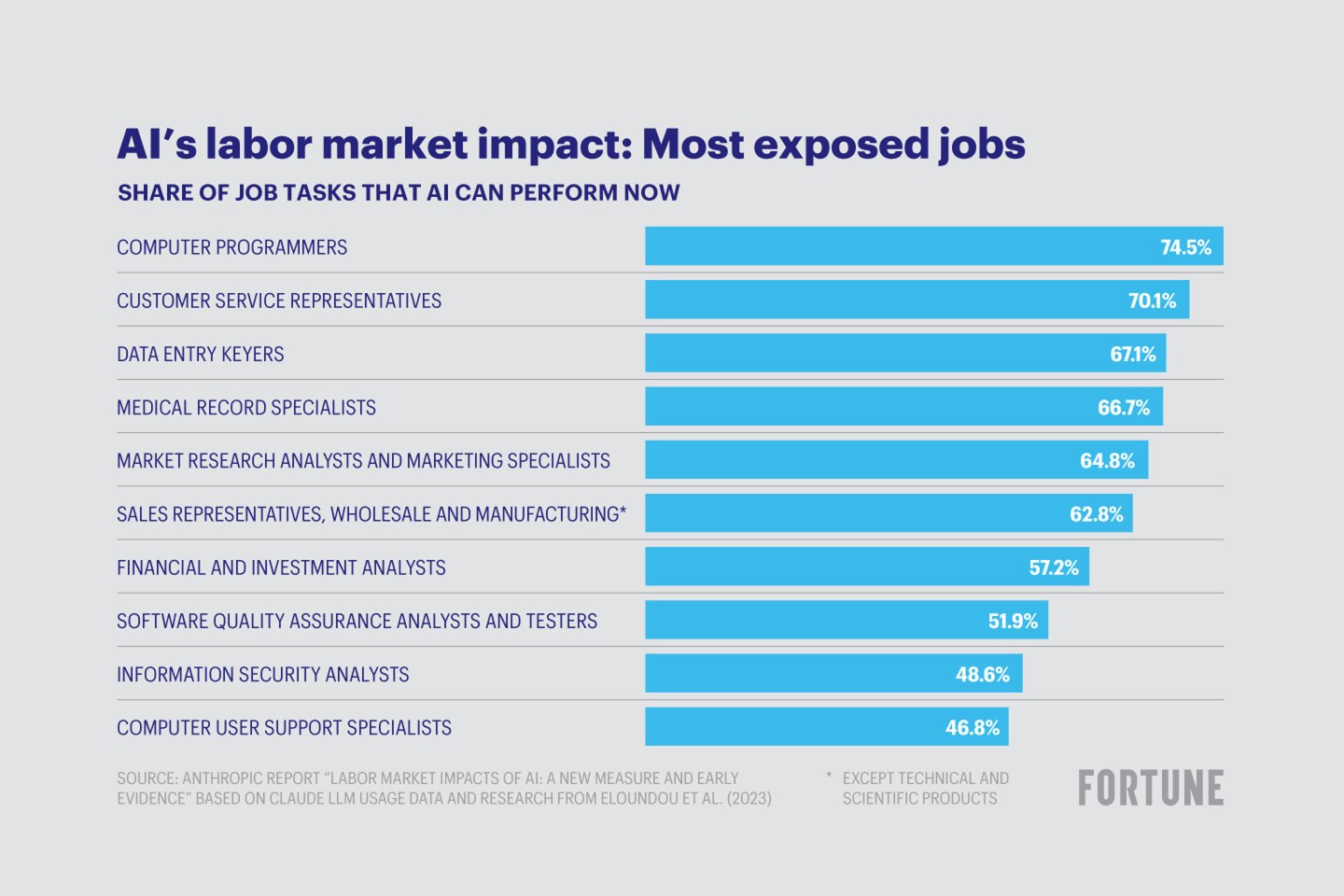
Anthropic’s research shows that AI can already do a huge portion of many jobs; its top economist talks about how that could shape the future of work
MagazineAutomation
Anthropic’s research shows that AI can already do a huge portion of many jobs; its top economist talks about how that could shape the future of work
By Matthew Heimer and Nicolas RappApril 7, 2026
3 days ago
Fortune Archives: Who gets a seat at the table?
MagazineFortune Archives
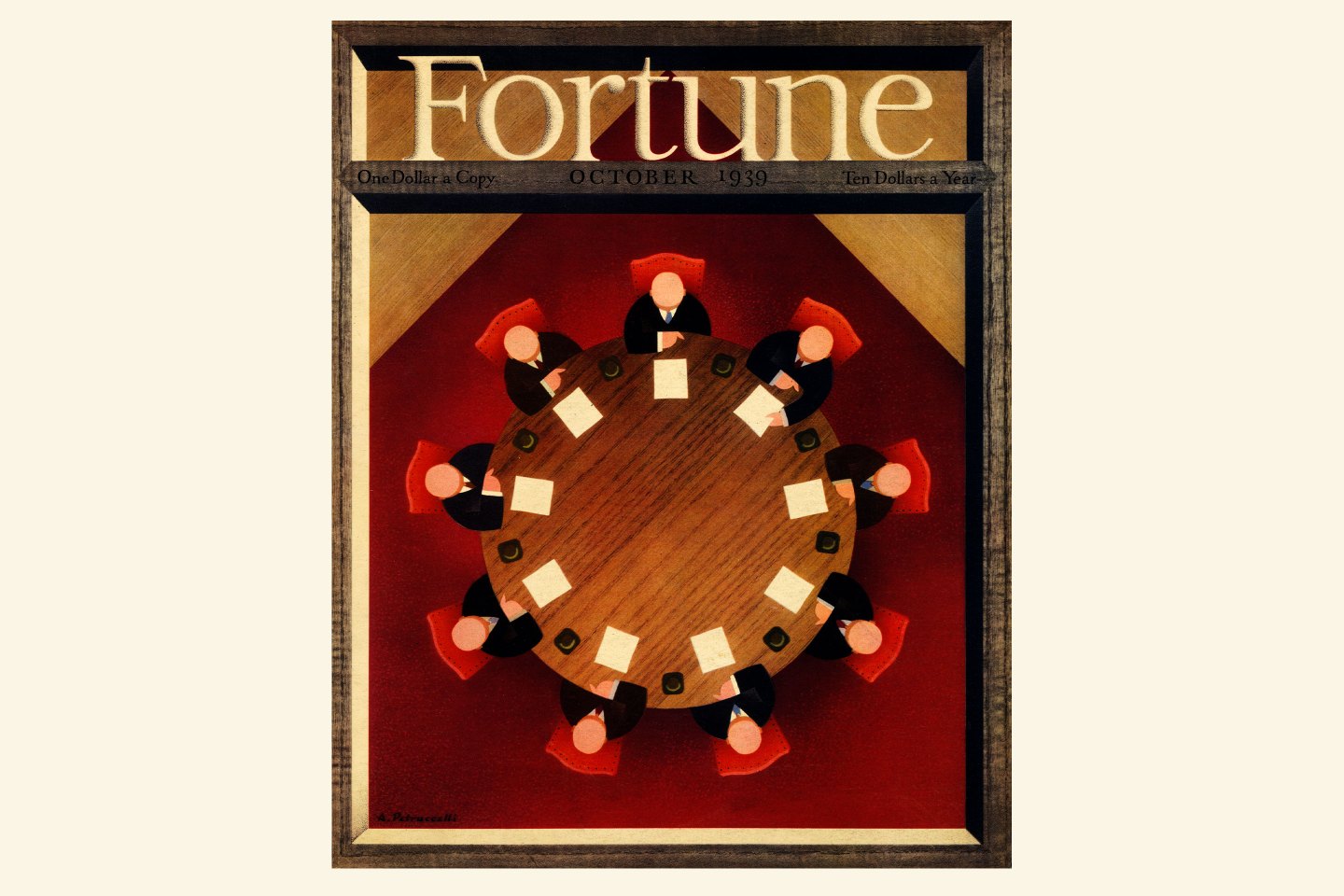
Fortune Archives: Who gets a seat at the table?
By Indrani SenApril 5, 2026
5 days ago
Watches like this $455,000 timepiece can’t be made by a machine—and that’s exactly why they’re the ultimate flex amid the analog revival
MagazineWatches
Watches like this $455,000 timepiece can’t be made by a machine—and that’s exactly why they’re the ultimate flex amid the analog revival
By Adam EraceApril 4, 2026
6 days ago

Most Popular

The U.S. government is spending $88 billion a month in interest on national debt—equal to spending on defense and education combined
Economy
The U.S. government is spending $88 billion a month in interest on national debt—equal to spending on defense and education combined
By Fortune EditorsApril 9, 2026
16 hours ago
Gen Z doesn't want your full-time job. They want several part-time roles, and it's reshaping the entire workforce
Success
Gen Z doesn't want your full-time job. They want several part-time roles, and it's reshaping the entire workforce
By Fortune EditorsApril 9, 2026
19 hours ago
2 years ago, Saudi Arabia quietly canceled the ‘petrodollar’ deal with America that wired the world economy for 50 years. Then war broke out in Iran
Energy
2 years ago, Saudi Arabia quietly canceled the ‘petrodollar’ deal with America that wired the world economy for 50 years. Then war broke out in Iran
By Fortune EditorsApril 7, 2026
2 days ago
A Meta employee created a dashboard so coworkers can compete to be the company's No. 1 AI token user—and Zuckerberg doesn't even rank in the top 250
AI
A Meta employee created a dashboard so coworkers can compete to be the company's No. 1 AI token user—and Zuckerberg doesn't even rank in the top 250
By Fortune EditorsApril 9, 2026
19 hours ago
Self-made billionaire MrBeast says his work-life balance is nonexistent and calls it a ‘miracle’ if he works less than 15-hour days: ‘I live to work’
Success
Self-made billionaire MrBeast says his work-life balance is nonexistent and calls it a ‘miracle’ if he works less than 15-hour days: ‘I live to work’
By Fortune EditorsApril 8, 2026
1 day ago
White-collar workers are quietly rebelling against AI as 80% outright refuse adoption mandates
AI
White-collar workers are quietly rebelling against AI as 80% outright refuse adoption mandates
By Fortune EditorsApril 9, 2026
17 hours ago

© 2026 Fortune Media IP Limited. All Rights Reserved. Use of this site constitutes acceptance of our Terms of Use and Privacy Policy | CA Notice at Collection and Privacy Notice | Do Not Sell/Share My Personal Information
FORTUNE is a trademark of Fortune Media IP Limited, registered in the U.S. and other countries. FORTUNE may receive compensation for some links to products and services on this website. Offers may be subject to change without notice.