
• Home
  • Latest
  • Fortune 500
  • Finance
  • Tech
  • Leadership
  • Lifestyle
  • Rankings
  • Multimedia
Coronavirus

Coronavirus, bird flu, swine fever: Why China is still so susceptible to disease outbreaks

Grady McGregor
By
Grady McGregor
Grady McGregor
Down Arrow Button Icon
Grady McGregor
By
Grady McGregor
Grady McGregor
Down Arrow Button Icon
February 6, 2020, 3:04 AM ET
China's Wuhan Coronavirus Spreads To Macau
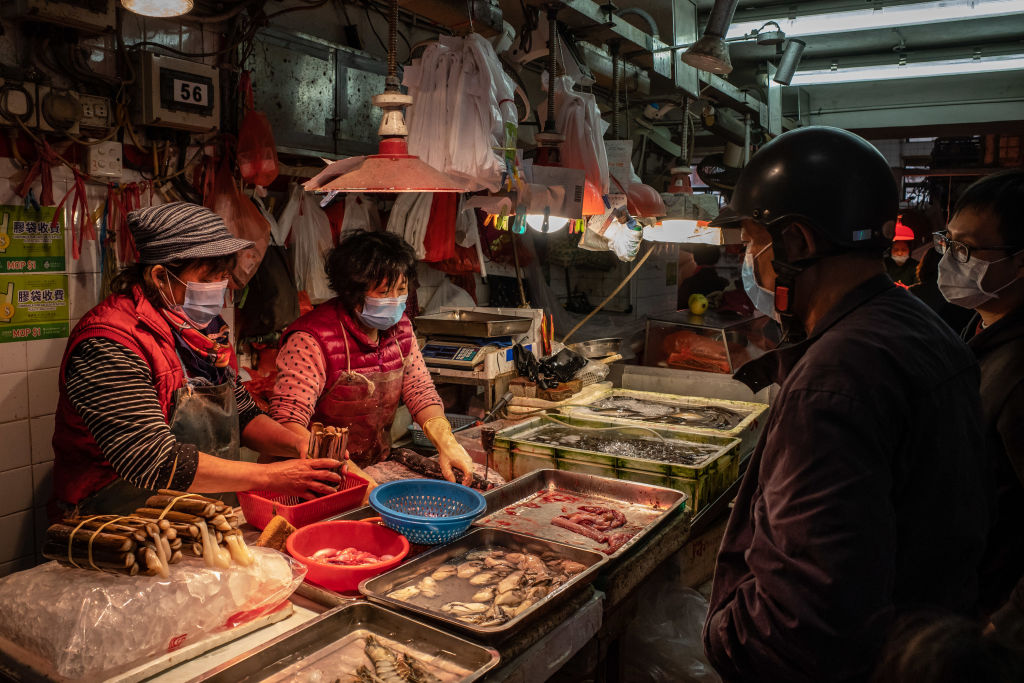
MACAU, CHINA - JANUARY 28: Residents wearing face masks purchase seafood at a wet market on January 28, 2020 in Macau, China. The number of cases of a deadly new coronavirus rose to over 4000 in mainland China Tuesday as health officials locked down the city of Wuhan last week in an effort to contain the spread of the pneumonia-like disease which medicals experts have confirmed can be passed from human to human. In an unprecedented move, Chinese authorities put travel restrictions on the city which is the epicentre of the virus and neighbouring municipalities affecting tens of millions of people. At least six people have reportedly contracted the virus in Macau. The number of those who have died from the virus in China climbed to over 100 on Tuesday and cases have been reported in other countries including the United States, Canada, Australia, France, Thailand, Japan, Taiwan and South Korea. (Photo by Anthony Kwan/Getty Images)Anthony Kwan—Getty Images

China has become an epicenter for disease outbreaks, and the problem lies in its food supply.

There have now been over 28,000 confirmed cases of coronavirus in at least 25 countries, with 563 deaths, including ones in Hong Kong and the Philippines. And all indications point to the virus breaking out in a seafood wet market in the Chinese city of Wuhan.

In 2019, China ranked 51st out of 195 countries on the Global Health Security Index for its ability to prevent and respond to disease outbreaks. While this may signal that the country is more apt to deal with outbreaks than much of the rest of the world, China—as the world’s most populous country and an economic superpower—still has significant strides to make in improving public health and safety.

While the coronavirus is the first novel disease outbreak in China in years to infect humans, in the recent past China has suffered disease outbreaks among its livestock. African Swine Fever, for instance, has devastated China’s pig population since 2018, reducing the number of pigs there by 40% and straining the country’s food supply. And just last week, China reportedly culled 18,000 chickens after finding cases of bird flu.

To be clear, the diseases share little in common genetically, according to Linda Saif, a professor in food animal health at Ohio State University, and coronavirus is the only one of these currently known to spread between and infect humans. Yet the outbreaks all point to a similar culprit: persisting problems in China’s food supply.

Amid the coronavirus crisis, China’s wet markets—featuring produce and meats and sometimes live animals—have received significant attention. Yet a seismic shift such as closing down these markets altogether might not be the answer to better controlling disease in the long term, experts say. Rather, what’s required is more regulatory enforcement on a local level, a tricky prospect for a country where power is increasingly centralized.

China’s food market

As China has transformed into a major world power in the last several decades, feeding the country of 1.4 billion has proved a challenge of outsize proportions.

The country long depended on a network of small farmers for its food; land was redistributed to individual households under Chairman Mao Zedong in the 1970s. More recently, particularly in the last few years, China has aimed to industrialize its food system.
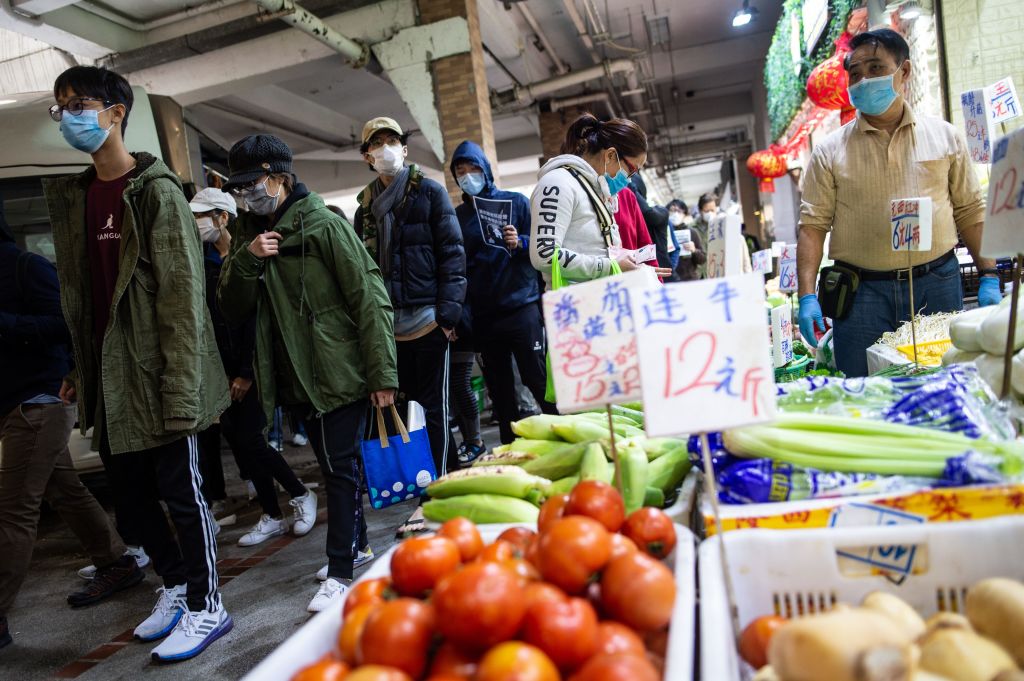
HONG KONG-CHINA-HEALTH-VIRUS
Protestors in Hong Kong gather in February to oppose government plans to convert a local heritage site into a quarantine camp amid the outbreak of the novel coronavirus which began in the central Chinese city of Wuhan.
PHILIP FONG—AFP/Getty Images

“The government in China has been making long-term pushes toward agriculture modernization including large scale farms for many years now,” said Darin Friedrichs, senior Asia commodity analyst at INTL FCStone in Shanghai.

Beijing promoted buying food from supermarkets after the spread of Severe Acute Respiratory Syndrome (SARS), which emerged from an animal market in Guangzhou. After an avian influenza outbreak in 2013, the government tried unsuccessfully to ban wet markets altogether, but was forced to reopen many of them when more dangerous black markets popped up in their place.

But scandals involving deadly infant milk powder, fake seaweed, and fraudulent shrimp have undermined the modernization efforts by compromising consumers’ confidence in mass food production. Chinese consumers continue to go to wet markets in cities across China to access fresher, cheaper meat and produce, according to Si Zhenzhong, an expert in food security and safety in China at the University of Waterloo in Ontario, Canada.

Wet markets remain a viable resource for small farmers who aren’t able to sell to large supermarket chains, said Friedrichs, “and plenty of consumers have a preference towards buying at their local wet market.” In fact, the markets account for up to half of all of China’s food goods. The day-to-day commodities that are the markets’ biggest sellers don’t necessarily pose a “disease risk.” The biggest danger comes from the live animals sometimes sold in the markets, Friedrichs said. Diseases can spread between animals during transport, and then to humans at the markets themselves, which makes the whole trade a breeding ground for disease.
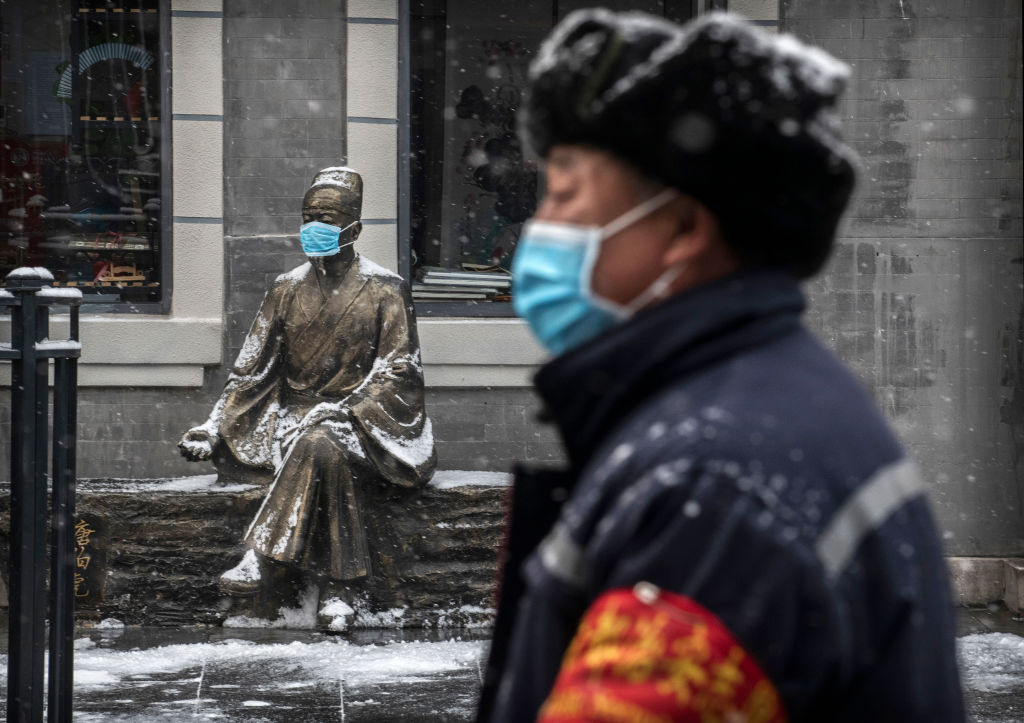
Concern In China As Mystery Virus Spreads
A Chinese man wears a protective mask as he walks in an empty commercial street in Beijing, China, in February. Much of the country has been on lockdown as a virus, believed to have started in a Wuhan wet market, sweeps the country.
Kevin Frayer—Getty Images

China has temporarily banned the sale of wild animals. Christian Walzer, chief global veterinarian for the Wildlife Conservation Society, says sales should be stopped permanently.

“The pattern (of disease outbreaks) will keep repeating itself until we ban, not only in China, but in other countries, the sale of wildlife, specifically for food and in food markets,” said Walzer.

Wild animals can carry diseases that do not ordinarily come into contact with humans, according to Walzer. Another expert, Jeroen Dewulf, a veterinarian at Ghent University in Belgium, told the Guardian that “live animals are the largest source of infection (in spreading diseases),” because it’s the most efficient way to introduce novel diseases to humans.

It seems that China might be taking these calls more seriously. On Monday, President Xi Jinping released a statement vowing to “resolutely ban and severely crack down on illegal wildlife markets and trade.”

But simply banning wildlife sales and policing wet markets might pose new problems, such as black markets for such goods. According to some experts, China needs to better enforce its existing regulations, like more regular health and safety inspections from China’s Center for Disease Control and Prevention, to more effectively control disease spread.

“What ‘wet markets’ in China require is more scientific and evidence-based regulation, rather than being abolished and driven underground,” anthropologists Christos Lynteris and Lyle Fearnley, who have studied disease outbreaks in China, argued in a recent piece for The Conversation.

Local challenges

But enforcing regulations on a local level is complicated by the growing influence of China’s central government. Local leaders are incentivized to appease Beijing, rather than raise red flags. Local officials in Wuhan have come under fire for not communicating the disease’s severity early enough, and senior party officials admitted to “shortcomings and deficiencies” in the city’s early response to the outbreak.

China’s entire state apparatus now appears fully mobilized behind containing the disease: an area with a population equal to California and New York State combined is under complete lockdown, new hospitals are being built in a matter of days, and much of the country is paralyzed by travel restrictions.

For those following African Swine Fever in the last few years, this might be a familiar story. The central government announced sweeping measures to cull hundreds of millions of pigs (and even worked with tech firms to roll out pig facial recognition technology to track sick animals) after the disease broke out in August 2018, yet today the problem remains as acute as ever. It is a worldwide epidemic that’s wiped out up to a quarter of the world’s pigs.

Edgar Wayne Johnson of Enable Ag-Tech Consulting in Beijing argues that the government “sat on [its] hands in the early stages” of the swine fever, and is still struggling to enforce local regulations.

The central government ends up exerting every ounce of its power to stop disease outbreaks like the coronavirus, yet the best solutions might be found at the bottom of China’s food chain.

More must-read stories from Fortune:

—Startup uses A.I. to identify molecules that could fight coronavirus
—Coronavirus forces China’s neighbors to make tough choices
—Asia worries about big events like the Olympics amid coronavirus spread
—China will struggle to spend its way out of the coronavirus economic slowdown
—On facial recognition, Berlin and London choose different paths
—Fortune Explains: Tariffs and trade wars

Catch up with Data Sheet, Fortune’s daily digest on the business of tech.

Sign up for the Fortune Features email list so you don’t miss our biggest features, exclusive interviews, and investigations.


About the Author
Grady McGregor
By Grady McGregor
LinkedIn iconTwitter icon
See full bioRight Arrow Button Icon

Latest in

Finance
Lorem ipsum dolor sit amet, consectetur adipiscing elit, sed do eiusmod tempor incididunt ut labore et dolore magna aliqua. Ut enim ad minim veniam
By Fortune Editors
October 20, 2025
Finance
Lorem ipsum dolor sit amet, consectetur adipiscing elit, sed do eiusmod tempor incididunt ut labore et dolore magna aliqua. Ut enim ad minim veniam
By Fortune Editors
October 20, 2025
Finance
Lorem ipsum dolor sit amet, consectetur adipiscing elit, sed do eiusmod tempor incididunt ut labore et dolore magna aliqua. Ut enim ad minim veniam
By Fortune Editors
October 20, 2025
Finance
Lorem ipsum dolor sit amet, consectetur adipiscing elit, sed do eiusmod tempor incididunt ut labore et dolore magna aliqua. Ut enim ad minim veniam
By Fortune Editors
October 20, 2025
Finance
Lorem ipsum dolor sit amet, consectetur adipiscing elit, sed do eiusmod tempor incididunt ut labore et dolore magna aliqua. Ut enim ad minim veniam
By Fortune Editors
October 20, 2025
Finance
Lorem ipsum dolor sit amet, consectetur adipiscing elit, sed do eiusmod tempor incididunt ut labore et dolore magna aliqua. Ut enim ad minim veniam
By Fortune Editors
October 20, 2025

Most Popular

Finance
Lorem ipsum dolor sit amet, consectetur adipiscing elit, sed do eiusmod tempor incididunt ut labore et dolore magna aliqua. Ut enim ad minim veniam
By Fortune Editors
October 20, 2025
Finance
Lorem ipsum dolor sit amet, consectetur adipiscing elit, sed do eiusmod tempor incididunt ut labore et dolore magna aliqua. Ut enim ad minim veniam
By Fortune Editors
October 20, 2025
Finance
Lorem ipsum dolor sit amet, consectetur adipiscing elit, sed do eiusmod tempor incididunt ut labore et dolore magna aliqua. Ut enim ad minim veniam
By Fortune Editors
October 20, 2025
Finance
Lorem ipsum dolor sit amet, consectetur adipiscing elit, sed do eiusmod tempor incididunt ut labore et dolore magna aliqua. Ut enim ad minim veniam
By Fortune Editors
October 20, 2025
Finance
Lorem ipsum dolor sit amet, consectetur adipiscing elit, sed do eiusmod tempor incididunt ut labore et dolore magna aliqua. Ut enim ad minim veniam
By Fortune Editors
October 20, 2025
Finance
Lorem ipsum dolor sit amet, consectetur adipiscing elit, sed do eiusmod tempor incididunt ut labore et dolore magna aliqua. Ut enim ad minim veniam
By Fortune Editors
October 20, 2025
Fortune Secondary Logo
Rankings
  • 100 Best Companies
  • Fortune 500
  • Global 500
  • Fortune 500 Europe
  • Most Powerful Women
  • Future 50
  • World’s Most Admired Companies
  • See All Rankings
Sections
  • Finance
  • Fortune Crypto
  • Features
  • Leadership
  • Health
  • Commentary
  • Success
  • Retail
  • Mpw
  • Tech
  • Lifestyle
  • CEO Initiative
  • Asia
  • Politics
  • Conferences
  • Europe
  • Newsletters
  • Personal Finance
  • Environment
  • Magazine
  • Education
Customer Support
  • Frequently Asked Questions
  • Customer Service Portal
  • Privacy Policy
  • Terms Of Use
  • Single Issues For Purchase
  • International Print
Commercial Services
  • Advertising
  • Fortune Brand Studio
  • Fortune Analytics
  • Fortune Conferences
  • Business Development
  • Group Subscriptions
About Us
  • About Us
  • Editorial Calendar
  • Press Center
  • Work At Fortune
  • Diversity And Inclusion
  • Terms And Conditions
  • Site Map
  • About Us
  • Editorial Calendar
  • Press Center
  • Work At Fortune
  • Diversity And Inclusion
  • Terms And Conditions
  • Site Map
  • Facebook icon
  • Twitter icon
  • LinkedIn icon
  • Instagram icon
  • Pinterest icon

Latest in

Schools across America are quietly admitting that screens in classrooms made students worse off and are reversing years of tech-first policies
InnovationEducation
Schools across America are quietly admitting that screens in classrooms made students worse off and are reversing years of tech-first policies
By Marco Quiroz-GutierrezApril 10, 2026
23 minutes ago
Dario Amodei
NewslettersTerm Sheet
What Anthropic’s too-dangerous-to-release AI model means for its upcoming IPO
By Beatrice NolanApril 10, 2026
29 minutes ago
Eva Longoria says she refused to be a ‘struggling actor’—so she worked part time as a headhunter, closing deals from her soap opera dressing room
SuccessThe Promotion Playbook
Eva Longoria says she refused to be a ‘struggling actor’—so she worked part time as a headhunter, closing deals from her soap opera dressing room
By Orianna Rosa RoyleApril 10, 2026
1 hour ago
A view of a bus shelter at Pennsylvania Avenue and 22nd Street NW where an electronic billboard and a poster display the current U.S. National debt per person and as a nation at 38 Trillion dollars on October 28, 2025 in Washington, DC.
Economynational debt
‘We owe it to the next generation’ to get national debt under control, says think-tank boss, as U.S. borrowing hits $1.2 trillion in just six months
By Eleanor PringleApril 10, 2026
1 hour ago
Mortgage rates today, April 10, 2026
Personal Financemortgages
Mortgage rates today, April 10, 2026
By Glen Luke FlanaganApril 10, 2026
1 hour ago
Current refi mortgage rates report for April 10, 2026
Personal FinanceReal Estate
Current refi mortgage rates report for April 10, 2026
By Glen Luke FlanaganApril 10, 2026
1 hour ago

Most Popular

The U.S. government is spending $88 billion a month in interest on national debt—equal to spending on defense and education combined
Economy
The U.S. government is spending $88 billion a month in interest on national debt—equal to spending on defense and education combined
By Fortune EditorsApril 9, 2026
21 hours ago
A Meta employee created a dashboard so coworkers can compete to be the company's No. 1 AI token user—and Zuckerberg doesn't even rank in the top 250
AI
A Meta employee created a dashboard so coworkers can compete to be the company's No. 1 AI token user—and Zuckerberg doesn't even rank in the top 250
By Fortune EditorsApril 9, 2026
24 hours ago
Gen Z doesn't want your full-time job. They want several part-time roles, and it's reshaping the entire workforce
Success
Gen Z doesn't want your full-time job. They want several part-time roles, and it's reshaping the entire workforce
By Fortune EditorsApril 9, 2026
1 day ago
White-collar workers are quietly rebelling against AI as 80% outright refuse adoption mandates
AI
White-collar workers are quietly rebelling against AI as 80% outright refuse adoption mandates
By Fortune EditorsApril 9, 2026
22 hours ago
Gen Z workers are so fearful AI will take their job they’re intentionally sabotaging their company’s AI rollout
AI
Gen Z workers are so fearful AI will take their job they’re intentionally sabotaging their company’s AI rollout
By Fortune EditorsApril 8, 2026
2 days ago
2 years ago, Saudi Arabia quietly canceled the ‘petrodollar’ deal with America that wired the world economy for 50 years. Then war broke out in Iran
Energy
2 years ago, Saudi Arabia quietly canceled the ‘petrodollar’ deal with America that wired the world economy for 50 years. Then war broke out in Iran
By Fortune EditorsApril 7, 2026
2 days ago

© 2026 Fortune Media IP Limited. All Rights Reserved. Use of this site constitutes acceptance of our Terms of Use and Privacy Policy | CA Notice at Collection and Privacy Notice | Do Not Sell/Share My Personal Information
FORTUNE is a trademark of Fortune Media IP Limited, registered in the U.S. and other countries. FORTUNE may receive compensation for some links to products and services on this website. Offers may be subject to change without notice.