• Home
  • Latest
  • Fortune 500
  • Finance
  • Tech
  • Leadership
  • Lifestyle
  • Rankings
  • Multimedia

Trendingnow

1

MacKenzie Scott alone accounted for one-third of America's $19.2 billion in megagifts last year

2

Philanthropy leader at Warren Buffett and Bill Gates’ Giving Pledge says children of billionaires are pushing them to give their wealth away faster

3

Elon Musk on MacKenzie Scott giving away $26 billion of her fortune: 'Sadly,' it makes the world a worse place

1

MacKenzie Scott alone accounted for one-third of America's $19.2 billion in megagifts last year

2

Philanthropy leader at Warren Buffett and Bill Gates’ Giving Pledge says children of billionaires are pushing them to give their wealth away faster

3

Elon Musk on MacKenzie Scott giving away $26 billion of her fortune: 'Sadly,' it makes the world a worse place
Tech

Into the ‘crucible’: How the government responds when GPS goes down

By
Katherine Dunn
Katherine Dunn
Down Arrow Button Icon
By
Katherine Dunn
Katherine Dunn
Down Arrow Button Icon
January 24, 2020, 8:00 AM ET
Add Fortune on Google for similar content.

This article is part of the Fortune series, “When GPS goes wrong.” 

When GPS signals were suddenly disrupted in January 2007 near the port of San Diego, the U.S. government agencies responsible for upholding the integrity of the world’s most-used satellite navigation system got a taste of what a wide-scale outage might look like. Five years later, when it happened again, they got a reminder.

The outages were most noticed in some unexpected places. They interrupted networks you wouldn’t normally associate with traveling—impacting the operations of 150 cell towers, and shutting down two entirely, while disrupting hospital pagers across downtown San Diego, according to Rick Hamilton, the GPS Information Analysis Team Lead at the U.S. Navigation Center, part of the U.S. Coast Guard.

San Diegans “got a really good idea of exactly what GPS outages cause,” said Hamilton. “Most people don’t know. They don’t even know that without the synchronized worldwide time provided by GPS, the cell phone tower can’t hand [a signal] off to the next tower,” affecting how functional mobile networks would be during a long-term outage. 

The 2007 outage lasted just a couple of hours before government officials determined where it was coming from—a stronger signal that had accidentally been emitted from a U.S. Navy ship in the harbor. While Hamilton says the incident did affect mobile service, cellphone networks could also rely on temporary backup systems designed to provide synchronized time during an outage. 

The incident resulted in a more sophisticated system for detecting GPS interference being installed at military bases around the country. And when another outage occurred in 2012—another Naval ship entered the harbor with some equipment left on that interfered with GPS—the disruption was quickly detected, and shut down.

By then, the Navigation Center was also developing an emergency-response system that’s still being refined today—to deal with suspected incidents of GPS interference, particularly ones that affect critical infrastructure. It’s a plan for what various government agencies call a “crucible” event.

What the government doesn’t have is a back-up system to compensate for a widespread failure—or a clear answer for how to approach the rise in geopolitically-motived disruption of a U.S. system in the world’s global hotspots.
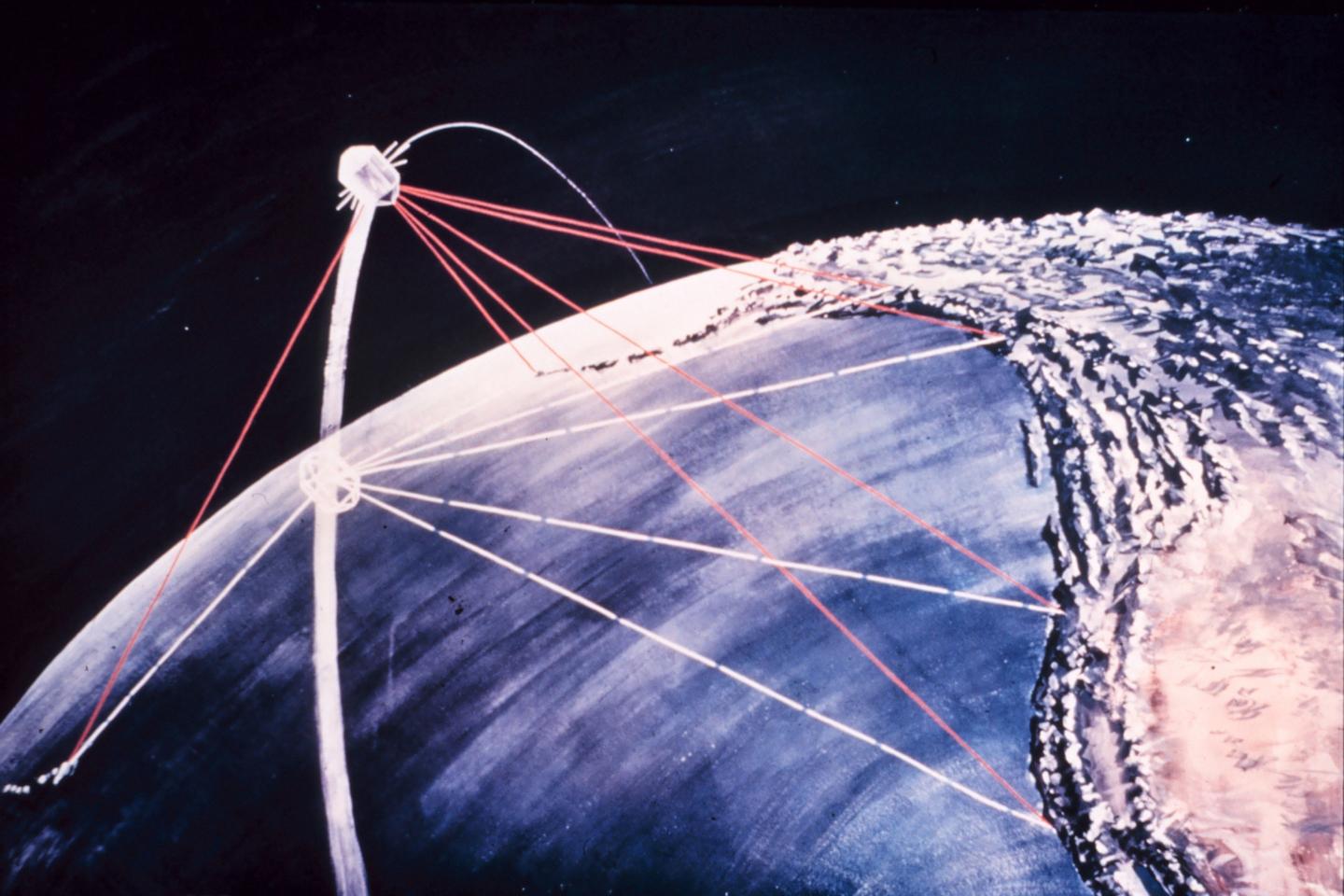
A conceptual diagram that shows how GPS triangulation works. Up to 4 of the 24 satellites in orbit transmit position and time signals that allow each user or device to determine its location.
Universal History Archive/Universal Images Group via Getty Images

‘Unknown interference’ 

The U.S. Navigation Center has published 77 reports of “unknown interference”—disruptions to GPS that could be accidental, or could be examples of nefarious “jamming” and “spoofing”—referring to hundreds of incidents dating from 2017 onwards. Together, those incidents sketch the outlines of a geopolitical heat-map: from the Black Sea to South Korea to the Mediterranean. (See main story, here.) 

But such disruptions in the U.S. remain rare. Only eight self-reported “unknown interference” events have been reported by the Coast Guard, and though that’s likely only a small portion of the total cases, experts say that the kind of disruptions now common around the Suez Canal—interference strong enough to disrupt the signal to even sophisticated receivers—are still unheard of on American soil. 

Even so, the Navigation Center has a clear approach for handling such “crucible” events, says Hamilton. Each such event triggers the co-ordination of a group of agencies including the Department of Homeland Security (DHS), the Federal Aviation Authority (FAA) and the Federal Communications Commission (FCC) which pool resources and contact local authorities to determine where an outage is coming from. Their next steps range from the high-tech—using targeted receivers run by the FAA at airports to detect the source of disruptions—to the simple, like having a state trooper drive past the area to see if their own GPS signal gives out. 

The economic fallout of a GPS outage isn’t likely to be immediate, but nonetheless, time is of the essence.

“Almost all of this critical infrastructure has some sort of back up already, but in varying levels of quality,” Hamilton explains, particularly for their timing synchronization. In the case of a long, large outage, the impact would probably be felt in waves, as various back-up systems timed out. Hamilton notes he doesn’t know exactly how long the back-up systems would last, but from experience, “some people start screaming in 30 minutes, some have three days.” 

In a worst-case scenario, the military can be brought in to find the source of the interference. That would require the relevant authorities to invoke the so-called Stafford Act, a law that can mobilize military assistance in cases of disasters or emergencies. But such a move would be rare, Hamilton says: “Over the 11 years I’ve been [in his role], I’ve never seen it get as far as the Stafford Act.” 
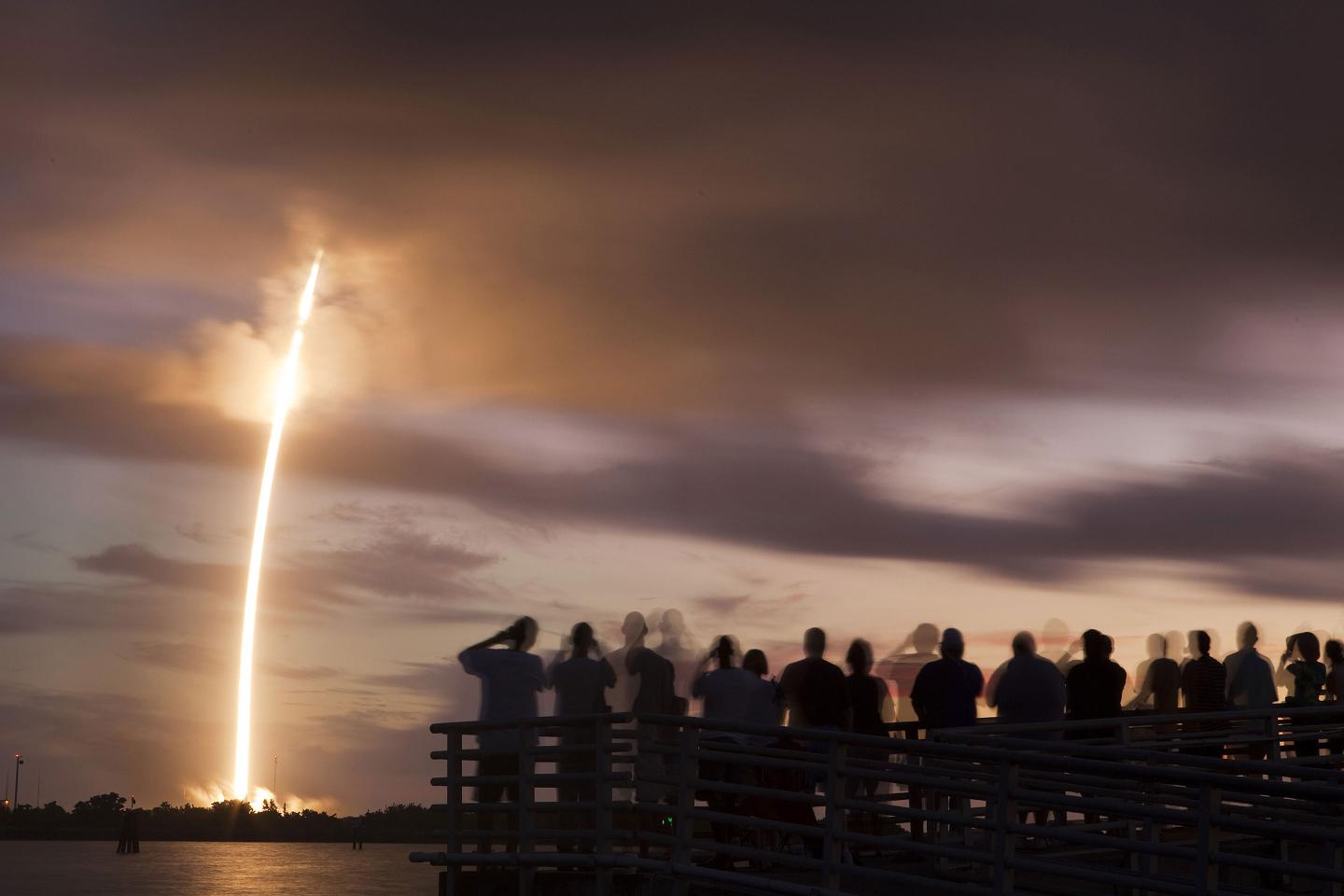
A rocket lifts off from Cape Canaveral in 2009 to put a NAVSTAR Global Positioning Satellite in place.
Matt Stroshane—Getty Images

No backup  

When it comes to a more robust backup—what to do, in other words, if even the military can’t find the source of the disruption—the government is currently at a loss. On a national level, “there is no back up [to GPS], and that is the big controversy right now,” says Hamilton.

As a result, many countries—including the U.S.—are looking increasingly at reviving navigation systems that, while widespread before GPS, have largely disappeared. 

Chief among them is the eLoran system, a system that tracks time and location using signals that are beamed from transmission towers on the ground, rather than from satellites in space as GPS does. The system was widely used into the 2000s in the U.S., and partly because its signals do not have to travel as far to reach a receiver, they are stronger and harder to disrupt. Testing for a new eLoran system and other potential back-up systems will take place this March in locations near Boston, Hampton, Virginia; and in Cape May, New Jersey, Hamilton says.

A total outage of GPS is still theoretical, and extreme—more the plot of a spy movie than a current risk.

That said, in July 2019, the European GPS equivalent, Galileo, then in its testing phase, suddenly went down for a week due to technical problems. The outage went largely unnoticed—because users could rely on signals from GPS instead. 

More must-read stories from Fortune:

—Mysterious GPS outages are wracking the shipping industry
—The long ocean voyage that helped find the flaws in GPS
—How GPS went from the tech everyone hated to the tech everyone needs
—The World’s Most Admired Companies in 2020
—The forces behind Boeing’s long descent
Catch up with Data Sheet, Fortune’s daily digest on the business of tech.

About the Author
By Katherine Dunn
LinkedIn iconTwitter icon
See full bioRight Arrow Button Icon
Add Fortune on Google for similar content.

Latest in Tech

Finance
Lorem ipsum dolor sit amet, consectetur adipiscing elit, sed do eiusmod tempor incididunt ut labore et dolore magna aliqua. Ut enim ad minim veniam
By Fortune Editors
October 20, 2025
Finance
Lorem ipsum dolor sit amet, consectetur adipiscing elit, sed do eiusmod tempor incididunt ut labore et dolore magna aliqua. Ut enim ad minim veniam
By Fortune Editors
October 20, 2025
Finance
Lorem ipsum dolor sit amet, consectetur adipiscing elit, sed do eiusmod tempor incididunt ut labore et dolore magna aliqua. Ut enim ad minim veniam
By Fortune Editors
October 20, 2025
Finance
Lorem ipsum dolor sit amet, consectetur adipiscing elit, sed do eiusmod tempor incididunt ut labore et dolore magna aliqua. Ut enim ad minim veniam
By Fortune Editors
October 20, 2025
Finance
Lorem ipsum dolor sit amet, consectetur adipiscing elit, sed do eiusmod tempor incididunt ut labore et dolore magna aliqua. Ut enim ad minim veniam
By Fortune Editors
October 20, 2025
Finance
Lorem ipsum dolor sit amet, consectetur adipiscing elit, sed do eiusmod tempor incididunt ut labore et dolore magna aliqua. Ut enim ad minim veniam
By Fortune Editors
October 20, 2025

Most Popular

Finance
Lorem ipsum dolor sit amet, consectetur adipiscing elit, sed do eiusmod tempor incididunt ut labore et dolore magna aliqua. Ut enim ad minim veniam
By Fortune Editors
October 20, 2025
Finance
Lorem ipsum dolor sit amet, consectetur adipiscing elit, sed do eiusmod tempor incididunt ut labore et dolore magna aliqua. Ut enim ad minim veniam
By Fortune Editors
October 20, 2025
Finance
Lorem ipsum dolor sit amet, consectetur adipiscing elit, sed do eiusmod tempor incididunt ut labore et dolore magna aliqua. Ut enim ad minim veniam
By Fortune Editors
October 20, 2025
Finance
Lorem ipsum dolor sit amet, consectetur adipiscing elit, sed do eiusmod tempor incididunt ut labore et dolore magna aliqua. Ut enim ad minim veniam
By Fortune Editors
October 20, 2025
Finance
Lorem ipsum dolor sit amet, consectetur adipiscing elit, sed do eiusmod tempor incididunt ut labore et dolore magna aliqua. Ut enim ad minim veniam
By Fortune Editors
October 20, 2025
Finance
Lorem ipsum dolor sit amet, consectetur adipiscing elit, sed do eiusmod tempor incididunt ut labore et dolore magna aliqua. Ut enim ad minim veniam
By Fortune Editors
October 20, 2025
Fortune Secondary Logo
Rankings
  • 100 Best Companies
  • Fortune 500
  • Global 500
  • Fortune 500 Europe
  • Most Powerful Women
  • World's Most Admired Companies
  • See All Rankings
  • Lists Calendar
Sections
  • Finance
  • Fortune Crypto
  • Features
  • Leadership
  • Health
  • Commentary
  • Success
  • Retail
  • Mpw
  • Tech
  • Lifestyle
  • CEO Initiative
  • Asia
  • Politics
  • Conferences
  • Europe
  • Newsletters
  • Personal Finance
  • Environment
  • Magazine
  • Education
Customer Support
  • Frequently Asked Questions
  • Customer Service Portal
  • Privacy Policy
  • Terms Of Use
  • Single Issues For Purchase
  • International Print
Commercial Services
  • Advertising
  • Fortune Brand Studio
  • Fortune Analytics
  • Fortune Conferences
  • Business Development
  • Group Subscriptions
About Us
  • About Us
  • Press Center
  • Work At Fortune
  • Terms And Conditions
  • Site Map
  • About Us
  • Press Center
  • Work At Fortune
  • Terms And Conditions
  • Site Map
  • Facebook icon
  • Twitter icon
  • LinkedIn icon
  • Instagram icon
  • Pinterest icon

Latest in Tech

paralegal
AIdisruption
The most reassuring argument about AI and jobs quietly explains why Gen Z can’t get one
By Nick LichtenbergJune 29, 2026
3 hours ago
This summer’s heat is a live stress test for data centers—here’s what it’s revealing in real time
AIData centers
This summer’s heat is a live stress test for data centers—here’s what it’s revealing in real time
By Tristan BoveJune 29, 2026
3 hours ago
Photo of Jim Farley
AIAutos
Ford realized AI wasn’t capable of taking human jobs years ago—and hired 350 ‘gray beard’ engineers to steer its program
By Sasha RogelbergJune 29, 2026
3 hours ago
‘Cop on your wrist’—Wearables offer tons of data, but people are still going to sleep to Netflix and TikTok
HealthBrainstorm Tech
‘Cop on your wrist’—Wearables offer tons of data, but people are still going to sleep to Netflix and TikTok
By Amanda GerutJune 29, 2026
4 hours ago
Strategy cofounder Michael Saylor sits during a conference and looks out into the crowd.
CryptoBitcoin
Strategy may sell up to $1.25 billion in Bitcoin to calm investor jitters
By Camila Grigera NaónJune 29, 2026
5 hours ago
Hyperscalers could end up resembling airlines—plagued by small margins, intense competition, and high expenses, AI skeptic warns 
AIData centers
Hyperscalers could end up resembling airlines—plagued by small margins, intense competition, and high expenses, AI skeptic warns 
By Jason MaJune 29, 2026
5 hours ago

Most Popular

MacKenzie Scott alone accounted for one-third of America's $19.2 billion in megagifts last year
Success
MacKenzie Scott alone accounted for one-third of America's $19.2 billion in megagifts last year
By Sydney LakeJune 25, 2026
5 days ago
Philanthropy leader at Warren Buffett and Bill Gates’ Giving Pledge says children of billionaires are pushing them to give their wealth away faster
Success
Philanthropy leader at Warren Buffett and Bill Gates’ Giving Pledge says children of billionaires are pushing them to give their wealth away faster
By Preston ForeJune 27, 2026
2 days ago
Elon Musk on MacKenzie Scott giving away $26 billion of her fortune: 'Sadly,' it makes the world a worse place
Success
Elon Musk on MacKenzie Scott giving away $26 billion of her fortune: 'Sadly,' it makes the world a worse place
By Sydney LakeJune 29, 2026
5 hours ago
The retired college professor fighting a $313 trespassing ticket in Wisconsin thinks he's part of a national struggle
Environment
The retired college professor fighting a $313 trespassing ticket in Wisconsin thinks he's part of a national struggle
By Catherina GioinoJune 28, 2026
2 days ago
Cristiano Ronaldo is soccer's first-ever billionaire: He went from begging for burgers outside McDonald's to landing a $400 million contract
Success
Cristiano Ronaldo is soccer's first-ever billionaire: He went from begging for burgers outside McDonald's to landing a $400 million contract
By Preston ForeJune 28, 2026
1 day ago
Ex-Google engineer says Larry Page, Sergey Brin and Sundar Pichai share the same trait—it's the lesson he swears by as a $7.2 billion AI CEO
Success
Ex-Google engineer says Larry Page, Sergey Brin and Sundar Pichai share the same trait—it's the lesson he swears by as a $7.2 billion AI CEO
By Orianna Rosa RoyleJune 28, 2026
1 day ago

© 2026 Fortune Media IP Limited. All Rights Reserved. Use of this site constitutes acceptance of our Terms of Use and Privacy Policy | CA Notice at Collection and Privacy Notice | Do Not Sell/Share My Personal Information
FORTUNE is a trademark of Fortune Media IP Limited, registered in the U.S. and other countries. FORTUNE may receive compensation for some links to products and services on this website. Offers may be subject to change without notice.