• Home
  • Latest
  • Fortune 500
  • Finance
  • Tech
  • Leadership
  • Lifestyle
  • Rankings
  • Multimedia
CommentaryCommentary

A New ‘Bill of Rights’ for Domestic Workers Will Let Them Finally Bargain Collectively

By
David Madland
David Madland
and
Adam Stromme
Adam Stromme
Down Arrow Button Icon
By
David Madland
David Madland
and
Adam Stromme
Adam Stromme
Down Arrow Button Icon
July 19, 2019, 11:12 AM ET
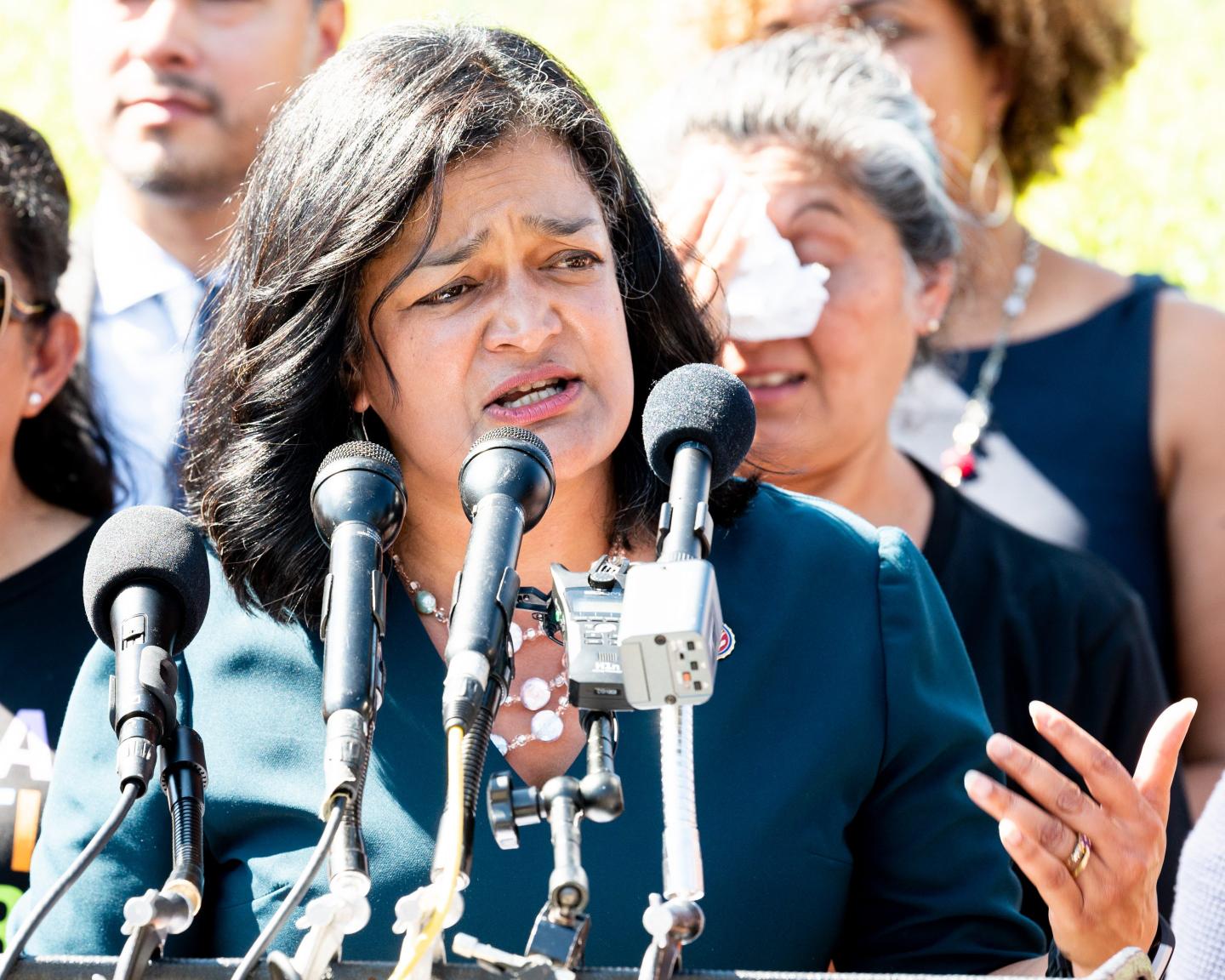
WASHINGTON, D C , UNITED STATES - 2019/07/15: U.S. Representative Pramila Jayapal (D-WA) speaking about the National Domestic Workers Bill of Rights at the Capitol in Washington, DC. (Photo by Michael Brochstein/SOPA Images/LightRocket via Getty Images)
WASHINGTON, D C , UNITED STATES - 2019/07/15: U.S. Representative Pramila Jayapal (D-WA) speaking about the National Domestic Workers Bill of Rights at the Capitol in Washington, DC. (Photo by Michael Brochstein/SOPA Images/LightRocket via Getty Images)Michael Brochstein/SOPA Images/LightRocket via Getty Images

Domestic workers—including house cleaners, nannies, and homecare workers—are among the lowest paid in the country. Most earn median wages of around $10 per hour, and only 12% receive health benefits. They also commonly navigate employment with unstable schedules, variable hours, and little job security. Not only is this a problem for the domestic workers themselves, who are overwhelmingly women of color, but also for those in need of their services—such difficult working conditions will only contribute to the significant workforce shortage as the country ages. A recently introduced bill, however, would take major steps to improve conditions for domestic workers and address these shortcomings.

The National Domestic Workers Bill of Rights, introduced by Sen. Kamala Harris and Rep. Pramila Jayapal, is noteworthy for a number of reasons. First, it would end the unfair—not to mention historically racist—exclusion of domestic workers from federal laws, ensuring these workers are protected from discrimination and have a safe workplace. Second, and as importantly, the legislation takes an innovative approach to raising standards that is well-suited to domestic work and may also provide a model for other types of jobs that increasingly resemble domestic work. The bill includes more modern workplace protections, such as requiring fair scheduling practices that ensure workers don’t lose pay due to last minute cancellations, and critically, creates a wage and standards board where workers, employers, and the public come together to discuss wages, benefits, and working conditions. 

In an industry like domestic work, workers have a hard time engaging in traditional collective bargaining—a task made even more difficult because their work is often solitary. This is further complicated because rather than a traditional worksite, the primary place of work is a home, with each worker laboring for a different employer at a different worksite, and often for multiple employers throughout the week. This also means that the employers are fundamentally different from traditional employers: they are households that employ someone not as part of a typical business but rather in addition to their regular jobs and are not accustomed to evaluating labor market conditions and bargaining with a group of workers. 

What’s more, domestic workers are often quite vulnerable, with few other options in the labor market, and thus particularly fear retaliation if they try to organize or bargain for better working conditions. And because most domestic workers have long been excluded from the National Labor Relations Act, the keystone of modern labor law that legally protects workers’ right to form a union, they don’t have much of a history of collective bargaining upon which to build. Taken together, this means that a different type of structure for bargaining is needed.

That’s why the wage and standards board introduced by the bill would be a major advancement. Such a board would create a forum to recommend standards for the industry—which can help improve job quality and help ensure that consumers are able to receive the kind of stable, quality care that they need by ensuring that enough workers want to work in the industry.

The wage and standards board will help lift domestic work above the bare minimum and make it a career that workers want because it provides a centralized location to discuss recommendations for higher standards, thus promoting the health, safety, financial security, and well-being of domestic workers. Without the board, these negotiations would not happen. The board would also be able to tailor its recommendations to the specific and sometimes changing needs of employers and workers in the industry—and thus can produce better solutions than a pure mandate would.

Such a board can also provide a model for other industries where traditional collective bargaining is particularly difficult, especially with the rise of the gig economy. Indeed, domestic work can be considered the “original” gig work as workers often need to piece together full-time employment from multiple poorly-paid jobs to make ends meet, each with minimal benefits or job security. As the U.S. continues down a path of rapidly rising income inequality in the labor market, the trend of insecure employment for domestic workers may just be a prologue for what awaits many more workers in other industries.

That’s why the Domestic Workers Bill of Rights is an essential step forward. It presents a historic opportunity to improve the working conditions for millions of workers in an industry that may be a bellwether for millions more in the casualized labor market.

David Madland is a senior fellow at the Center for American Progress. Adam Stromme is an assistant at the Center.

More opinion in Fortune:

—How Japan became a model for economic revival

—Bernie Sanders: America is drowning in student debt. Here’s my plan to end it

—Ex-Apple CEO John Sculley: Why sensors are the future of health care tech

—Most states still enforce noncompete agreements—and it’s stifling innovation

—Why recent antitrust regulation isn’t really about consumer protection

Listen to our new audio briefing, Fortune 500 Daily

About the Authors
By David Madland
See full bioRight Arrow Button Icon
By Adam Stromme
See full bioRight Arrow Button Icon

Latest in Commentary

Finance
Lorem ipsum dolor sit amet, consectetur adipiscing elit, sed do eiusmod tempor incididunt ut labore et dolore magna aliqua. Ut enim ad minim veniam
By Fortune Editors
October 20, 2025
Finance
Lorem ipsum dolor sit amet, consectetur adipiscing elit, sed do eiusmod tempor incididunt ut labore et dolore magna aliqua. Ut enim ad minim veniam
By Fortune Editors
October 20, 2025
Finance
Lorem ipsum dolor sit amet, consectetur adipiscing elit, sed do eiusmod tempor incididunt ut labore et dolore magna aliqua. Ut enim ad minim veniam
By Fortune Editors
October 20, 2025
Finance
Lorem ipsum dolor sit amet, consectetur adipiscing elit, sed do eiusmod tempor incididunt ut labore et dolore magna aliqua. Ut enim ad minim veniam
By Fortune Editors
October 20, 2025
Finance
Lorem ipsum dolor sit amet, consectetur adipiscing elit, sed do eiusmod tempor incididunt ut labore et dolore magna aliqua. Ut enim ad minim veniam
By Fortune Editors
October 20, 2025
Finance
Lorem ipsum dolor sit amet, consectetur adipiscing elit, sed do eiusmod tempor incididunt ut labore et dolore magna aliqua. Ut enim ad minim veniam
By Fortune Editors
October 20, 2025

Most Popular

Finance
Lorem ipsum dolor sit amet, consectetur adipiscing elit, sed do eiusmod tempor incididunt ut labore et dolore magna aliqua. Ut enim ad minim veniam
By Fortune Editors
October 20, 2025
Finance
Lorem ipsum dolor sit amet, consectetur adipiscing elit, sed do eiusmod tempor incididunt ut labore et dolore magna aliqua. Ut enim ad minim veniam
By Fortune Editors
October 20, 2025
Finance
Lorem ipsum dolor sit amet, consectetur adipiscing elit, sed do eiusmod tempor incididunt ut labore et dolore magna aliqua. Ut enim ad minim veniam
By Fortune Editors
October 20, 2025
Finance
Lorem ipsum dolor sit amet, consectetur adipiscing elit, sed do eiusmod tempor incididunt ut labore et dolore magna aliqua. Ut enim ad minim veniam
By Fortune Editors
October 20, 2025
Finance
Lorem ipsum dolor sit amet, consectetur adipiscing elit, sed do eiusmod tempor incididunt ut labore et dolore magna aliqua. Ut enim ad minim veniam
By Fortune Editors
October 20, 2025
Finance
Lorem ipsum dolor sit amet, consectetur adipiscing elit, sed do eiusmod tempor incididunt ut labore et dolore magna aliqua. Ut enim ad minim veniam
By Fortune Editors
October 20, 2025
Fortune Secondary Logo
Rankings
  • 100 Best Companies
  • Fortune 500
  • Global 500
  • Fortune 500 Europe
  • Most Powerful Women
  • Future 50
  • World’s Most Admired Companies
  • See All Rankings
Sections
  • Finance
  • Fortune Crypto
  • Features
  • Leadership
  • Health
  • Commentary
  • Success
  • Retail
  • Mpw
  • Tech
  • Lifestyle
  • CEO Initiative
  • Asia
  • Politics
  • Conferences
  • Europe
  • Newsletters
  • Personal Finance
  • Environment
  • Magazine
  • Education
Customer Support
  • Frequently Asked Questions
  • Customer Service Portal
  • Privacy Policy
  • Terms Of Use
  • Single Issues For Purchase
  • International Print
Commercial Services
  • Advertising
  • Fortune Brand Studio
  • Fortune Analytics
  • Fortune Conferences
  • Business Development
  • Group Subscriptions
About Us
  • About Us
  • Editorial Calendar
  • Press Center
  • Work At Fortune
  • Diversity And Inclusion
  • Terms And Conditions
  • Site Map
  • About Us
  • Editorial Calendar
  • Press Center
  • Work At Fortune
  • Diversity And Inclusion
  • Terms And Conditions
  • Site Map
  • Facebook icon
  • Twitter icon
  • LinkedIn icon
  • Instagram icon
  • Pinterest icon

Latest in Commentary

fauci
CommentaryCOVID-19 vaccines
How COVID turned America against science — and what it will take to win it back
By David Blumenthal and James A. MoroneMarch 24, 2026
22 hours ago
alex
Commentarydisruption
AI’s disruption is a choice, not a forecast
By Alex StephanyMarch 24, 2026
23 hours ago
trump
Commentarynational debt
The Treasury just declared the U.S. insolvent. The media missed it
By Steve H. Hanke and David M. WalkerMarch 23, 2026
2 days ago
kuo
CommentaryUnicorns
Alibaba.com President: The one-person unicorn is coming. AI is making it possible
By Kuo ZhangMarch 23, 2026
2 days ago
gen z
CommentaryGen Z
Gen Z is using ChatGPT to practice salary negotiations and tough conversations before they happen
By Phillip MillerMarch 22, 2026
3 days ago
world
CommentaryCapitalism
Our economy has been living in an Adam Smith world since 1776. Something different is coming
By Ravi ChaudhryMarch 22, 2026
3 days ago

Most Popular

Commentary
The Treasury just declared the U.S. insolvent. The media missed it
By Fortune EditorsMarch 23, 2026
2 days ago
Magazine
The youngest-ever female CEO of a Fortune 500 company is fighting Trump's cuts to keep Medicaid strong
By Fortune EditorsMarch 24, 2026
22 hours ago
Economy
It took 200 years for national debt to hit $1 trillion. Annual interest alone now exceeds that—a 'crushing legacy we must reverse,' says budget chair
By Fortune EditorsMarch 23, 2026
2 days ago
Energy
Nobel laureate Paul Krugman calls it 'treason': $580 million in suspicious oil futures traded minutes before Trump's Iran reversal
By Fortune EditorsMarch 24, 2026
12 hours ago
Personal Finance
Current price of gold as of March 23, 2026
By Fortune EditorsMarch 23, 2026
2 days ago
Personal Finance
Current price of oil as of March 24, 2026
By Fortune EditorsMarch 24, 2026
18 hours ago

© 2026 Fortune Media IP Limited. All Rights Reserved. Use of this site constitutes acceptance of our Terms of Use and Privacy Policy | CA Notice at Collection and Privacy Notice | Do Not Sell/Share My Personal Information
FORTUNE is a trademark of Fortune Media IP Limited, registered in the U.S. and other countries. FORTUNE may receive compensation for some links to products and services on this website. Offers may be subject to change without notice.