• Home
  • Latest
  • Fortune 500
  • Finance
  • Tech
  • Leadership
  • Lifestyle
  • Rankings
  • Multimedia

Trendingnow

1

As Big Tech showers employees with perks to win the talent war, Nvidia built a nearly $5 trillion company by making people pay for their own lunch

2

MacKenzie Scott alone accounted for one-third of America's $19.2 billion in megagifts last year

3

Current price of oil as of July 1, 2026

1

As Big Tech showers employees with perks to win the talent war, Nvidia built a nearly $5 trillion company by making people pay for their own lunch

2

MacKenzie Scott alone accounted for one-third of America's $19.2 billion in megagifts last year

3

Current price of oil as of July 1, 2026
Commentarycashless

Cashless Isn’t Just Classist—It’s Bad for Business

By
Hikmet Ersek
Hikmet Ersek
Down Arrow Button Icon
By
Hikmet Ersek
Hikmet Ersek
Down Arrow Button Icon
June 18, 2019, 7:30 AM ET
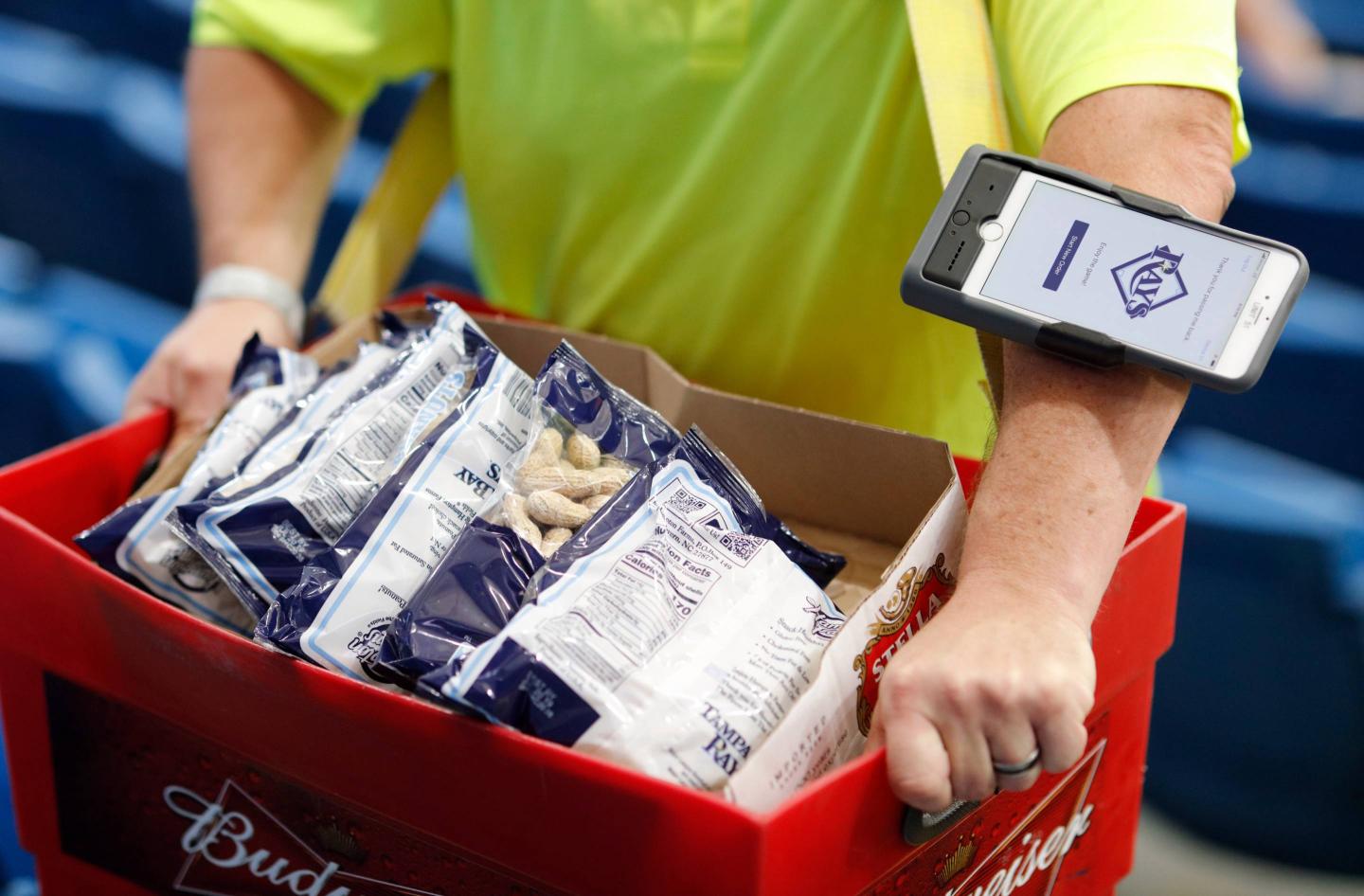
A vendor uses a cashless system to complete a sale during a baseball game at Tropicana Field in Florida.
A vendor uses a cashless system to complete a sale during a baseball game at Tropicana Field in Florida. Going cash-only marginalizes a large portion of the global economy, and leaves a lot of money on the table, writes Western Union's CEO.Mike Carlson—Getty ImagesMike Carlson—Getty Images
Add Fortune on Google for similar content.

There’s a growing debate across the U.S., and internationally, about whether businesses should be required to accept cash in face-to-face transactions.

San Francisco and Philadelphia have banned cashless-only retailing, arguing that such businesses discriminate against low-income people who might not have bank accounts. The entire state of New Jersey has done likewise. And two bills that would ban cashless stores have been introduced in Congress.

Meanwhile, the World Bank makes the case that the international rise of cashless commerce threatens to marginalize too many consumers and small businesses in emerging-market countries because people may not have bank accounts and merchants may not have access to reliable electronic payment technology.

There are compelling security, convenience, and business arguments for going cashless, of course. But such benefits would not outweigh the cost to society of leaving economically vulnerable people behind.

As CEO of one of the world’s largest digital and physical money movers (over $300 billion last year), I can see both sides of the cashless debate. But regardless of one’s view on inequality, there’s also a more pragmatic way to frame the debate. Pushing too hard and too fast toward a cashless economy is simply bad for business. If a company refuses to take cash, that leaves a lot of the world’s money on the table.

The fact is much of the world’s money still changes hands as cash. Data from the World Bank shows that small retailers transact $19 trillion in cash a year—nearly one-fourth of global GDP. And that’s not just in poor neighborhoods or low-income countries. In Europe, according to the global security company G4S, an estimated 79% of all point-of-sale transactions were conducted in cash last year—which was actually up from 60% in 2016.

In the U.S., the Federal Reserve Bank of San Francisco has calculated, even as online shopping continues to grow, 77% of payments are made in person, with cash accounting for 39% of the volume. And the Federal Deposit Insurance Corporation estimated that in 2017, 14 million adults in 8.4 million U.S. households were “unbanked”—lacking a checking or savings account.

Going cashless sounds simple but, in reality, it requires access to a debit card or mobile wallet linked to a bank account, and the necessary point-of-sale technology and network access for businesses. Around 1.7 billion adults globally do not have access to a transaction account that can be used to receive payments and make deposits. In other words, the world is still a long way from having a completely cashless economy that would function for everyone.

All it takes is a walk through a bustling market in Cairo or Nairobi to see technology’s failure to accommodate the way many people want to do business. In Kenya, where so-called branchless banking is broadly available, and 16 million transactions happen daily on the M-Pesa mobile wallet, consumers still must often convert to cash before they can pay for many daily goods because the point-of-sale infrastructure simply isn’t there.

The global economy and the global spectrum of customer needs and accessible technologies are too varied to try to move too fast on any one approach.

In many countries, even where people have the ability to make online purchases, they often still need to need to pay for them in cash. That is why Western Union created systems enabling tens of millions of consumers across Asia, Africa, and South America to shop on Amazon’s website globally and pay in-person in the local currency. That’s a lot of new potential customers—business that companies like Amazon are happy to have.

Here in the U.S., efforts at the local, state, and (now) federal level to ban cashless commerce have spurred a healthy debate and are making people more mindful of the gigantic electronic payment infrastructure that has been built behind the scenes in recent decades to enable conveniences like online shopping, automatic bill paying, and online hotel bookings. While many take these frictionless payments for granted, not everyone enjoys that privilege.

A future with more payment options and more consumer choices is a future of vastly expanded opportunities for the world’s people and businesses. But it can happen only if we demand new ways of thinking about the payments ecosystem. There’s even room for innovation in physical currency, too: Imagine issuing smart cash embedded with RFID chips that would improve security and reduce counterfeiting.

The financial industry should step up to more inclusive innovation and offer consumers solutions regardless of where they live on the financial-services spectrum, and embrace the complexity of a world where cash and digital payments coexist far into the future.

Leaders from the financial, technology, and government sectors need to come together and rethink the future of payments innovation, starting with financial inclusion as a core value. It’s not only the right thing to do—for businesses, it’s the only way to ensure full participation in the global economy.

Hikmet Ersek is president and CEO of The Western Union Company.

More opinion in Fortune:

—Private insurers are afraid of Medicare for All. They should be excited

—The Uber IPO was not a failure, but IPOs in general are a mess

—Upwork CEO: Why we scratched college degree requirements

—Does the SEC’s ICO lawsuit against Kik go too far?

—How to stop automation from leaving women behind

Listen to our new audio briefing, Fortune 500 Daily

About the Author
By Hikmet Ersek
See full bioRight Arrow Button Icon
Add Fortune on Google for similar content.

Latest in Commentary

Finance
Lorem ipsum dolor sit amet, consectetur adipiscing elit, sed do eiusmod tempor incididunt ut labore et dolore magna aliqua. Ut enim ad minim veniam
By Fortune Editors
October 20, 2025
Finance
Lorem ipsum dolor sit amet, consectetur adipiscing elit, sed do eiusmod tempor incididunt ut labore et dolore magna aliqua. Ut enim ad minim veniam
By Fortune Editors
October 20, 2025
Finance
Lorem ipsum dolor sit amet, consectetur adipiscing elit, sed do eiusmod tempor incididunt ut labore et dolore magna aliqua. Ut enim ad minim veniam
By Fortune Editors
October 20, 2025
Finance
Lorem ipsum dolor sit amet, consectetur adipiscing elit, sed do eiusmod tempor incididunt ut labore et dolore magna aliqua. Ut enim ad minim veniam
By Fortune Editors
October 20, 2025
Finance
Lorem ipsum dolor sit amet, consectetur adipiscing elit, sed do eiusmod tempor incididunt ut labore et dolore magna aliqua. Ut enim ad minim veniam
By Fortune Editors
October 20, 2025
Finance
Lorem ipsum dolor sit amet, consectetur adipiscing elit, sed do eiusmod tempor incididunt ut labore et dolore magna aliqua. Ut enim ad minim veniam
By Fortune Editors
October 20, 2025

Most Popular

Finance
Lorem ipsum dolor sit amet, consectetur adipiscing elit, sed do eiusmod tempor incididunt ut labore et dolore magna aliqua. Ut enim ad minim veniam
By Fortune Editors
October 20, 2025
Finance
Lorem ipsum dolor sit amet, consectetur adipiscing elit, sed do eiusmod tempor incididunt ut labore et dolore magna aliqua. Ut enim ad minim veniam
By Fortune Editors
October 20, 2025
Finance
Lorem ipsum dolor sit amet, consectetur adipiscing elit, sed do eiusmod tempor incididunt ut labore et dolore magna aliqua. Ut enim ad minim veniam
By Fortune Editors
October 20, 2025
Finance
Lorem ipsum dolor sit amet, consectetur adipiscing elit, sed do eiusmod tempor incididunt ut labore et dolore magna aliqua. Ut enim ad minim veniam
By Fortune Editors
October 20, 2025
Finance
Lorem ipsum dolor sit amet, consectetur adipiscing elit, sed do eiusmod tempor incididunt ut labore et dolore magna aliqua. Ut enim ad minim veniam
By Fortune Editors
October 20, 2025
Finance
Lorem ipsum dolor sit amet, consectetur adipiscing elit, sed do eiusmod tempor incididunt ut labore et dolore magna aliqua. Ut enim ad minim veniam
By Fortune Editors
October 20, 2025
Fortune Secondary Logo
Rankings
  • 100 Best Companies
  • Fortune 500
  • Global 500
  • Fortune 500 Europe
  • Most Powerful Women
  • World's Most Admired Companies
  • See All Rankings
  • Lists Calendar
Sections
  • Finance
  • Fortune Crypto
  • Features
  • Leadership
  • Health
  • Commentary
  • Success
  • Retail
  • Mpw
  • Tech
  • Lifestyle
  • CEO Initiative
  • Asia
  • Politics
  • Conferences
  • Europe
  • Newsletters
  • Personal Finance
  • Environment
  • Magazine
  • Education
Customer Support
  • Frequently Asked Questions
  • Customer Service Portal
  • Privacy Policy
  • Terms Of Use
  • Single Issues For Purchase
  • International Print
Commercial Services
  • Advertising
  • Fortune Brand Studio
  • Fortune Analytics
  • Fortune Conferences
  • Business Development
  • Group Subscriptions
About Us
  • About Us
  • Press Center
  • Work At Fortune
  • Terms And Conditions
  • Site Map
  • About Us
  • Press Center
  • Work At Fortune
  • Terms And Conditions
  • Site Map
  • Facebook icon
  • Twitter icon
  • LinkedIn icon
  • Instagram icon
  • Pinterest icon

Latest in Commentary

rn
CommentaryCryptocurrency
Former Iran director at NSC: Crypto legislation is a ticket to sanctions evasion
By Richard NephewJuly 2, 2026
4 hours ago
m
Commentary250 Years of Innovation
McKinsey chairs: Building a more resilient industrial base may require $2 trillion in investment
By Eric Kutcher and Shubham SinghalJuly 2, 2026
4 hours ago
em
Commentary250 Years of Innovation
America’s 250th birthday has Elon Musk and a record IPO. Its 15th had Alexander Hamilton — and a stock market bubble
By Owen LamontJuly 2, 2026
8 hours ago
paramount
CommentaryAntitrust
How Paramount’s theater commitments could boost local economies across the nation
By Ike BrannonJuly 2, 2026
8 hours ago
elon
CommentaryChina
China has 400 private space companies. The West is barely paying attention
By Rainer ZitelmannJuly 2, 2026
10 hours ago
senate
CommentaryCongress
One rare bipartisan AI bill is moving through Congress. Here’s why it deserves to pass
By Neil Björkman and Betsy BrewerJuly 1, 2026
1 day ago

Most Popular

As Big Tech showers employees with perks to win the talent war, Nvidia built a nearly $5 trillion company by making people pay for their own lunch
Big Tech
As Big Tech showers employees with perks to win the talent war, Nvidia built a nearly $5 trillion company by making people pay for their own lunch
By Marco Quiroz-GutierrezJuly 1, 2026
1 day ago
MacKenzie Scott alone accounted for one-third of America's $19.2 billion in megagifts last year
Success
MacKenzie Scott alone accounted for one-third of America's $19.2 billion in megagifts last year
By Sydney LakeJune 25, 2026
7 days ago
Current price of oil as of July 1, 2026
Personal Finance
Current price of oil as of July 1, 2026
By Joseph HostetlerJuly 1, 2026
1 day ago
Trump got a $78K pension from the Screen Actors Guild in 2025 because he appeared in Home Alone 2 in 1992
Politics
Trump got a $78K pension from the Screen Actors Guild in 2025 because he appeared in Home Alone 2 in 1992
By Sasha RogelbergJuly 1, 2026
1 day ago
CEO of $248 billion cybersecurity company says workers are about to face a ‘Darwinian moment’ thanks to AI: Evolve or get cut
Success
CEO of $248 billion cybersecurity company says workers are about to face a ‘Darwinian moment’ thanks to AI: Evolve or get cut
By Emma BurleighJuly 1, 2026
1 day ago
Philanthropy leader at Warren Buffett and Bill Gates’ Giving Pledge says children of billionaires are pushing them to give their wealth away faster
Success
Philanthropy leader at Warren Buffett and Bill Gates’ Giving Pledge says children of billionaires are pushing them to give their wealth away faster
By Preston ForeJune 27, 2026
5 days ago

© 2026 Fortune Media IP Limited. All Rights Reserved. Use of this site constitutes acceptance of our Terms of Use and Privacy Policy | CA Notice at Collection and Privacy Notice | Do Not Sell/Share My Personal Information
FORTUNE is a trademark of Fortune Media IP Limited, registered in the U.S. and other countries. FORTUNE may receive compensation for some links to products and services on this website. Offers may be subject to change without notice.