• Home
  • Latest
  • Fortune 500
  • Finance
  • Tech
  • Leadership
  • Lifestyle
  • Rankings
  • Multimedia
wine

These Eastern European Countries Are Home to Some of the Most Dynamic Winemakers Right Now

By
Jim Clarke
Jim Clarke
Down Arrow Button Icon
By
Jim Clarke
Jim Clarke
Down Arrow Button Icon
May 4, 2019, 7:00 AM ET
Kvevri clay amphoras.
Kvevri clay amphoras. Courtesy of Lisa GranikCourtesy of Lisa Granik

Thirty years ago, when the Berlin Wall fell and the Soviet bloc of Eastern Europe began to dismantle itself, few people were probably thinking it would change what wine they enjoyed the next time they went out to eat.

But today, one can stroll into the restaurant Freek’s Mill in Brooklyn, N.Y., and open a bottle from nations that didn’t exist 35 years ago; as a group they actually outnumber the offerings from California on the list. Eastern Europe’s wines have come into their own over the last few years, appearing on wine lists and store shelves across the United States.

Properly speaking, they have come back into their own. “They have hundreds, if not thousands, of years of winemaking history,” says Frank Dietrich of Blue Danube Imports, which specializes in the area. “Events in the 20th century—two World Wars and then the Soviet enterprise—did a lot of damage to quality wine production. Vintage by vintage quality has been improving, and people are finding their way back. It’s a very nice thing to see, and to taste.”

Countries bordering Western Europe, such as Hungary and Slovenia, were the first to reemerge. Hungary’s richly sweet Tokaji Aszu wine once earned accolades from figures like Voltaire, Queen Victoria, and Beethoven; in the 1990s, foreign investment poured in aiming to revive the almost-lost art of creating them. Among other examples, prestigious British wine writer Hugh Johnson founded the now award-winning Royal Tokaji Copmany, and American businessman Anthony Hwang established the Kiralyudvar wine estate in Hungary in 1997. Proximity to Austria’s wine regions on the western border also helped Hungary’s wine regions get back on their feet, providing an influx of knowledge and expertise.

Borders Between Wine Countries

Further south in Slovenia, the Brda region had actually been split in half by the Cold War; dividing vineyards—and even families—between Yugoslavia and Italy. On the latter side, private development continued and advanced, while the Yugoslavian government led their wine industry down a different, more industrial route.

“In former Yugoslavia, there was a push for cooperative cellars,” says Aleks Simčič, of the Edi Simčič winery in Slovenia. Authorities there and elsewhere in the Soviet Bloc reorganized vineyards to optimize mass production and volume, with little thought to quality. Redistribution of land back into private hands and some small experiments with privatized production began in the 1980s, but in most cases, local winemaking only really developed and began modernizing the ensuing decade. Edi Simčič, for example, began bottling their own wine in the 1990s, gradually expanding into exports aided by Slovenia’s acceptance into the European Union in 2004.

Aleks Simčič, of the Edi Simčič winery in SloveniaCourtesy of Brda
Courtesy of Brda

Further east, many of the new, privatized wineries nonetheless remained focused on their traditional market: Russia. The tiny country of Moldova had been the biggest wine producer of the Soviet era, responsible for every second bottle consumed in the U.S.S.R. While that continued through the 1990s, politically-driven Russian embargoes in 2006—and again in 2013—have sent Moldova looking westward and overseas for new markets.

The Birthplace of Modern Winemaking

Georgia, too, relied on the Russian market until a decade ago. “Georgia lost 90% of its market when Russia banned the import of Georgian wine back in the middle of the last decade,” says Lisa Granik, a master of wine, currently at work on a book about Georgian wine. “Thus, since at least 2010, there has been an ongoing promotional campaign in Georgia to increase exports to specific markets.”

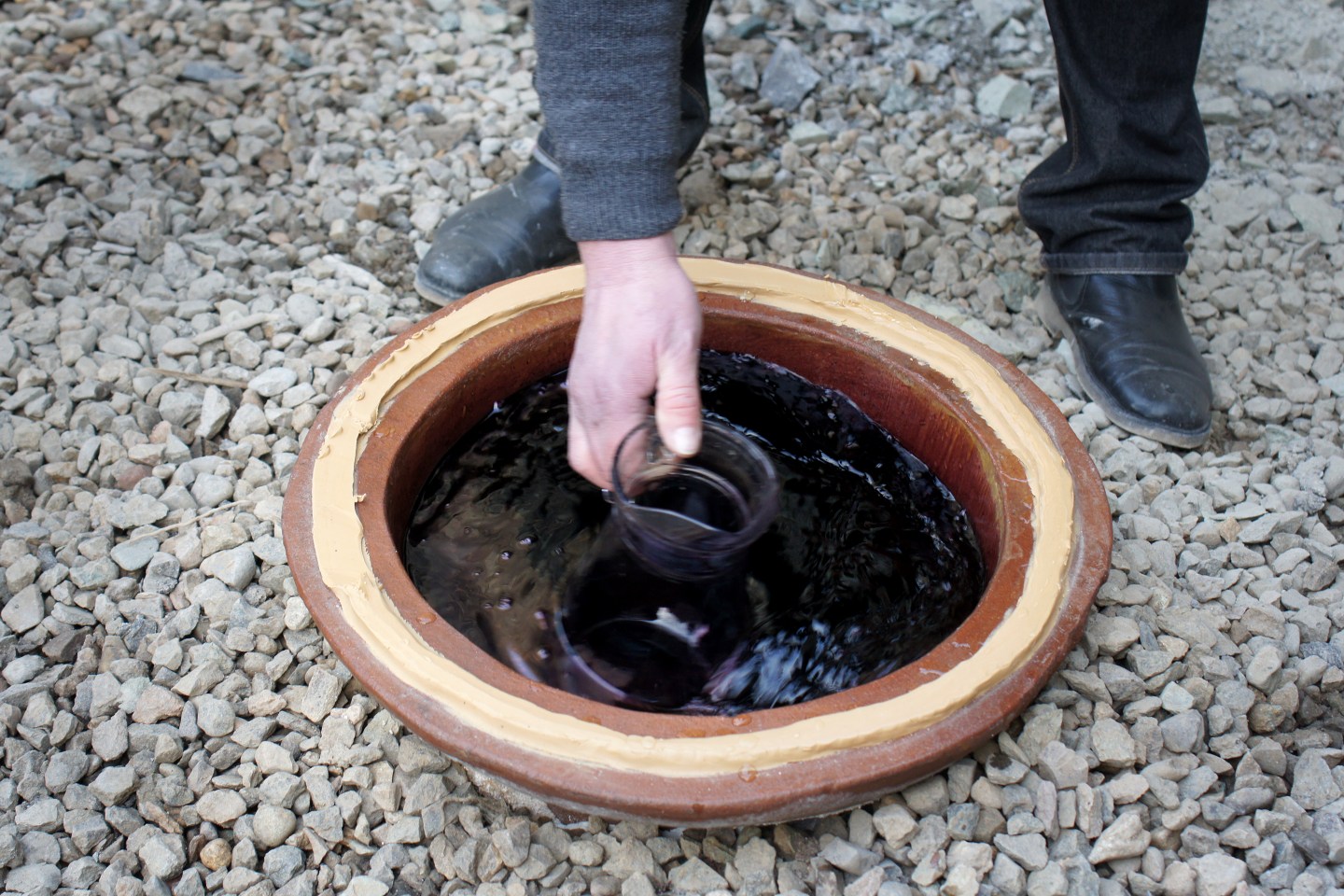
Georgia is home to some of the world’s earliest archaeological evidence of winemaking, and today, their best-known wines owe much of their character to similarly ancient winemaking techniques. Across many of the world’s wine regions stainless steel and oak barrels define modern winemaking. But some Georgian winemakers ferment their wines in Kvevri, large clay amphoras set into the ground. In addition, the grapes are fermented together with their skins and seeds. This is a normal, and yes, modern procedure for red grapes. But with white wine grapes, it creates so-called orange or amber wines, with a deeper color and additional flavor and tannic grip derived from the skins.

SONY DSC
Kvevri clay amphoras.Courtesy of Lisa Granik
Courtesy of Lisa Granik

Granik notes that amber wines have become closely associated with the natural wine movement, and that connection has helped raised awareness of the country’s wines as well. And yet, only 1% of the Georgia’s wines are actually made with Kvevri, leaving the rest of the nation’s producers to show what it can do with the same winemaking toolkit found in other parts of the world.

Grapes With National Identities

Native grape varieties can become a point of distinction, as they are in neighboring countries. While some areas have planted familiar, so-called “international varieties,” there is a huge profusion of less familiar grapes, often with hard-to-pronounce names. Some like central Europe’s Welschriesling and Blaufränkisch white wine grapes cross borders, changing only their names; others are more isolated and individual to small areas. Georgia’s winemakers might use Rkatsiteli, often blended with Mtsvane, in both Kvevri and modern styles of wine; the primary red and white grapes in Moldova, are Rară Neagră and Fetească Albă, respectively.

The Hungarian government has been pushing Furmint as the country’s leading grape; it’s an important component in the famous sweet Tokaji wines, but it is also grown in other parts of the country, making firm, world-class dry wines as well. Kiralyudvar even uses it to make a sparkling wine.

In Slovenia, Brda is home to many familiar grape varieties including Chardonnay and Merlot. But the region’s producers have decided collectively to focus on Rebula, or in Italian, Ribolla Gialla, as a calling card. It’s a decision that reflects both the grape’s potential for quality in the hilly, higher elevation vineyards that characterize the area as well as the need for the region to set itself apart in the marketplace.

Brda vineyards in Slovenia.Courtesy of Brda
Courtesy of Brda

A few decades ago, the emphasis would have gone the other way, and Eastern European growers were planting well-known varieties one might expect to find in France or California.

“I think producers have started to understand that rather than making yet another copy of what’s already around elsewhere, it’s much more interesting and ultimately more profitable to look at the native grape varieties that are unique to that place and not to be found elsewhere,” Dietrich says.

On the wine drinkers’ side, there’s also a newfound receptivity. “You have much more adventurism,” Dietrich continues. “People are not just tied to Cab and Chard as they were before; they understand and are excited that the world of wine is larger.”


About the Author
By Jim Clarke
See full bioRight Arrow Button Icon

Latest in

Finance
Lorem ipsum dolor sit amet, consectetur adipiscing elit, sed do eiusmod tempor incididunt ut labore et dolore magna aliqua. Ut enim ad minim veniam
By Fortune Editors
October 20, 2025
Finance
Lorem ipsum dolor sit amet, consectetur adipiscing elit, sed do eiusmod tempor incididunt ut labore et dolore magna aliqua. Ut enim ad minim veniam
By Fortune Editors
October 20, 2025
Finance
Lorem ipsum dolor sit amet, consectetur adipiscing elit, sed do eiusmod tempor incididunt ut labore et dolore magna aliqua. Ut enim ad minim veniam
By Fortune Editors
October 20, 2025
Finance
Lorem ipsum dolor sit amet, consectetur adipiscing elit, sed do eiusmod tempor incididunt ut labore et dolore magna aliqua. Ut enim ad minim veniam
By Fortune Editors
October 20, 2025
Finance
Lorem ipsum dolor sit amet, consectetur adipiscing elit, sed do eiusmod tempor incididunt ut labore et dolore magna aliqua. Ut enim ad minim veniam
By Fortune Editors
October 20, 2025
Finance
Lorem ipsum dolor sit amet, consectetur adipiscing elit, sed do eiusmod tempor incididunt ut labore et dolore magna aliqua. Ut enim ad minim veniam
By Fortune Editors
October 20, 2025

Most Popular

Finance
Lorem ipsum dolor sit amet, consectetur adipiscing elit, sed do eiusmod tempor incididunt ut labore et dolore magna aliqua. Ut enim ad minim veniam
By Fortune Editors
October 20, 2025
Finance
Lorem ipsum dolor sit amet, consectetur adipiscing elit, sed do eiusmod tempor incididunt ut labore et dolore magna aliqua. Ut enim ad minim veniam
By Fortune Editors
October 20, 2025
Finance
Lorem ipsum dolor sit amet, consectetur adipiscing elit, sed do eiusmod tempor incididunt ut labore et dolore magna aliqua. Ut enim ad minim veniam
By Fortune Editors
October 20, 2025
Finance
Lorem ipsum dolor sit amet, consectetur adipiscing elit, sed do eiusmod tempor incididunt ut labore et dolore magna aliqua. Ut enim ad minim veniam
By Fortune Editors
October 20, 2025
Finance
Lorem ipsum dolor sit amet, consectetur adipiscing elit, sed do eiusmod tempor incididunt ut labore et dolore magna aliqua. Ut enim ad minim veniam
By Fortune Editors
October 20, 2025
Finance
Lorem ipsum dolor sit amet, consectetur adipiscing elit, sed do eiusmod tempor incididunt ut labore et dolore magna aliqua. Ut enim ad minim veniam
By Fortune Editors
October 20, 2025
Fortune Secondary Logo
Rankings
  • 100 Best Companies
  • Fortune 500
  • Global 500
  • Fortune 500 Europe
  • Most Powerful Women
  • Future 50
  • World’s Most Admired Companies
  • See All Rankings
Sections
  • Finance
  • Fortune Crypto
  • Features
  • Leadership
  • Health
  • Commentary
  • Success
  • Retail
  • Mpw
  • Tech
  • Lifestyle
  • CEO Initiative
  • Asia
  • Politics
  • Conferences
  • Europe
  • Newsletters
  • Personal Finance
  • Environment
  • Magazine
  • Education
Customer Support
  • Frequently Asked Questions
  • Customer Service Portal
  • Privacy Policy
  • Terms Of Use
  • Single Issues For Purchase
  • International Print
Commercial Services
  • Advertising
  • Fortune Brand Studio
  • Fortune Analytics
  • Fortune Conferences
  • Business Development
  • Group Subscriptions
About Us
  • About Us
  • Editorial Calendar
  • Press Center
  • Work At Fortune
  • Diversity And Inclusion
  • Terms And Conditions
  • Site Map
  • About Us
  • Editorial Calendar
  • Press Center
  • Work At Fortune
  • Diversity And Inclusion
  • Terms And Conditions
  • Site Map
  • Facebook icon
  • Twitter icon
  • LinkedIn icon
  • Instagram icon
  • Pinterest icon

Latest in

A laptop screen shows World Liberty Financial's website
CryptoCryptocurrency
Trump-backed World Liberty Financial tokens hit all-time low on reports of insider loans
By Jack KubinecApril 10, 2026
18 minutes ago
Iran is demanding tankers in the Strait of Hormuz pay tolls in crypto: What we know so far
CryptoIran
Iran is demanding tankers in the Strait of Hormuz pay tolls in crypto: What we know so far
By Ben WeissApril 10, 2026
28 minutes ago
Kash Patel sits with his two fingers on lips
CybersecurityIran
First they went after medtech, then Kash Patel. Iranian hackers’ next target is likely ‘low-hanging fruit’ in water, energy, and tourism, experts say
By Jacqueline MunisApril 10, 2026
33 minutes ago
The 5 Best Weight Loss Pills of 2026: Expert and Doctor Approved
HealthDietary Supplements
The 5 Best Weight Loss Pills of 2026: Expert and Doctor Approved
By Emily PharesApril 10, 2026
2 hours ago
kamala
PoliticsElections
Kamala Harris says she’s ‘thinking about’ running for president again: ‘I’ll keep you posted’
By Steve Peoples, Matt Brown and The Associated PressApril 10, 2026
2 hours ago
scott bessent
CybersecurityFederal Reserve
The AI that found 27-year-old vulnerabilities no human ever caught before just forced an emergency meeting with every major Wall Street CEO
By Jake AngeloApril 10, 2026
2 hours ago

Most Popular

The U.S. government is spending $88 billion a month in interest on national debt—equal to spending on defense and education combined
Economy
The U.S. government is spending $88 billion a month in interest on national debt—equal to spending on defense and education combined
By Fortune EditorsApril 9, 2026
1 day ago
A Meta employee created a dashboard so coworkers can compete to be the company's No. 1 AI token user—and Zuckerberg doesn't even rank in the top 250
AI
A Meta employee created a dashboard so coworkers can compete to be the company's No. 1 AI token user—and Zuckerberg doesn't even rank in the top 250
By Fortune EditorsApril 9, 2026
1 day ago
Mark Cuban admits he made a mistake letting go of the Mavericks: 'I don't regret selling. I regret who I sold to'
Investing
Mark Cuban admits he made a mistake letting go of the Mavericks: 'I don't regret selling. I regret who I sold to'
By Fortune EditorsApril 9, 2026
1 day ago
'I hate working 5 days': Zoom CEO says traditional work schedules are becoming obsolete—and predicts a 3-day workweek by 2031
Success
'I hate working 5 days': Zoom CEO says traditional work schedules are becoming obsolete—and predicts a 3-day workweek by 2031
By Fortune EditorsApril 9, 2026
1 day ago
Schools across America are quietly admitting that screens in classrooms made students worse off and are reversing years of tech-first policies
Innovation
Schools across America are quietly admitting that screens in classrooms made students worse off and are reversing years of tech-first policies
By Fortune EditorsApril 10, 2026
12 hours ago
Gen Z doesn't want your full-time job. They want several part-time roles, and it's reshaping the entire workforce
Success
Gen Z doesn't want your full-time job. They want several part-time roles, and it's reshaping the entire workforce
By Fortune EditorsApril 9, 2026
1 day ago

© 2026 Fortune Media IP Limited. All Rights Reserved. Use of this site constitutes acceptance of our Terms of Use and Privacy Policy | CA Notice at Collection and Privacy Notice | Do Not Sell/Share My Personal Information
FORTUNE is a trademark of Fortune Media IP Limited, registered in the U.S. and other countries. FORTUNE may receive compensation for some links to products and services on this website. Offers may be subject to change without notice.