• Home
  • Latest
  • Fortune 500
  • Finance
  • Tech
  • Leadership
  • Lifestyle
  • Rankings
  • Multimedia
MagazineTech

Why You Should Be Worried About Tech’s Love Affair With NDAs

Jeff John Roberts
By
Jeff John Roberts
Jeff John Roberts
Editor, Finance and Crypto
Down Arrow Button Icon
Jeff John Roberts
By
Jeff John Roberts
Jeff John Roberts
Editor, Finance and Crypto
Down Arrow Button Icon
April 29, 2019, 6:30 AM ET
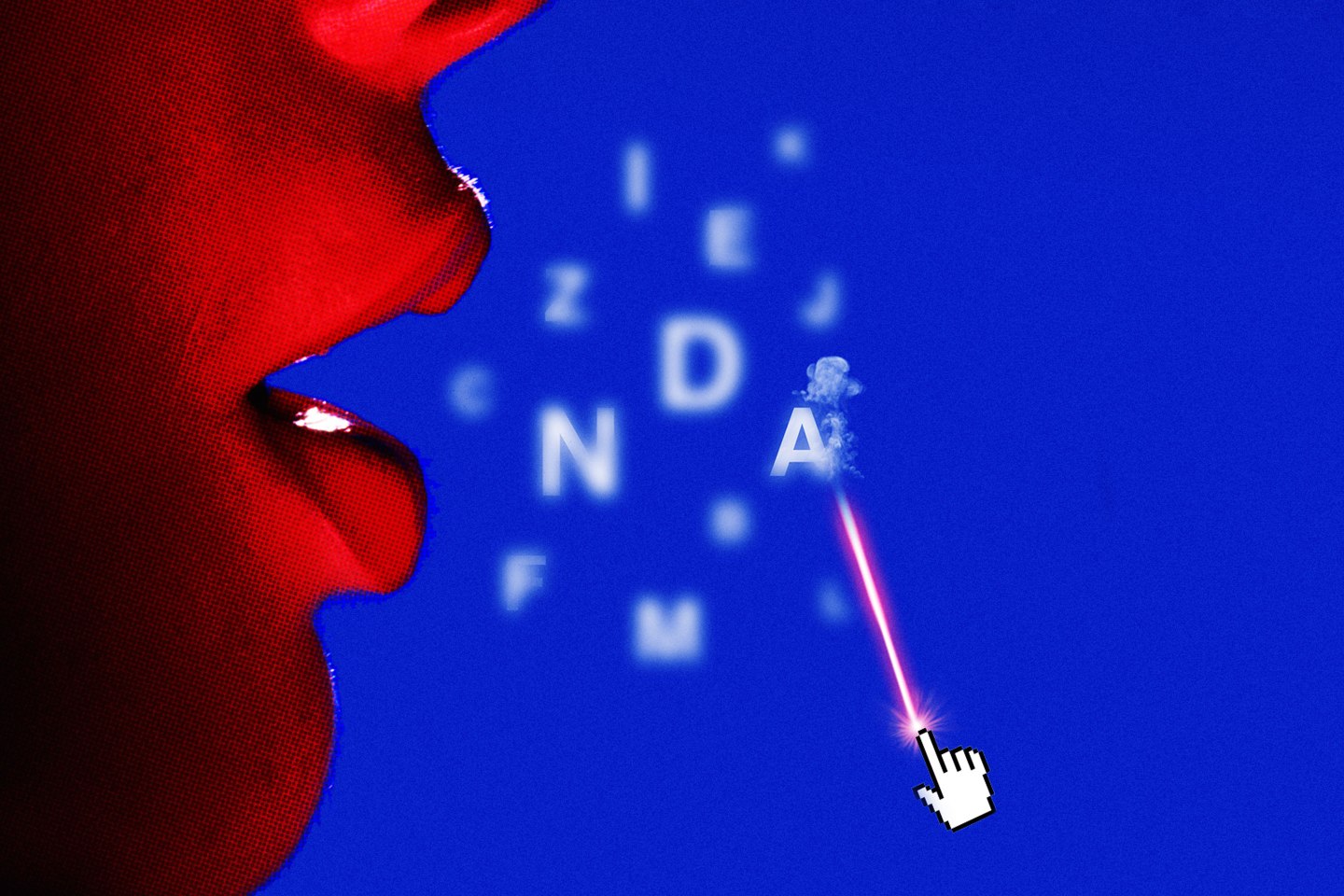
Photo Illustration by Nicolas Ortega for Fortune

Accept a Job at any Silicon Valley company, and chances are someone will ask you to sign a nondisclosure agreement. These documents, dubbed “contracts of silence” by academics, were once only required of senior managers, but today they are as common in the tech world as fleece vests.

At companies like Google, Apple, and Amazon, every low-level employee or contractor is expected to sign an NDA, and so are vendors and visitors. The contracts typically don’t specify a dollar figure for violating the terms, but they do make one thing clear: Anyone who talks too much—about anything from their salaries to their manager’s weird behavior—may be sued.

NDAs have played a central role in a number of recent tech industry controversies, raising new questions about their proliferation and scope. While businesses insist the agreements are necessary, critics say they scare people from talking about the darker sides of the industry.

When sexual harassment allegations roiled companies, including Uber, some tech workers blamed the agreements for preventing victims from speaking out. When employees at blood-testing startup Theranos grew suspicious about potential fraud by executives, they feared sounding the alarm publicly.

In February, tech-news site the Verge published an article about how Facebook moderators earning $15 a hour felt traumatized after trying to cleanse the service of porn, violent threats, and harassment. None would agree to reveal their real names, citing their NDAs.

It wasn’t always this way. According to Orly Lobel, a University of San Diego law professor who studies the agreements, NDAs became common in the 1970s as a way for tech firms to protect trade secrets, and that remains their main stated objective. Since then, however, they’ve morphed into an all-purpose cudgel to control employees and suppress criticism.

In recent years, Lobel says, companies have even started using them to prevent employees from publicly disclosing their salaries—a subtle attempt to cap wages. The muzzle could also thwart women and minorities from exposing unequal pay, a problem that many tech companies have, until recently, downplayed.

“The companies are trying to signal to employees that everything is off-limits and is proprietary,” says Lobel.

Facebook moderators working under NDAs feared revealing their names in an article about the trauma they suffered from policing the social network.Gordon Welters—Laif/Redux
Gordon Welters—Laif/Redux

This situation is unlikely to change anytime soon. While legal experts suggest judges would declare many broad NDAs unenforceable, and federal laws protect employees’ right to discuss working conditions, the issue has barely been tested in court. The reason is obvious enough.

“These agreements have the effect of terrorizing people,” says Widener University law professor Alan Garfield, a longtime critic of NDAs. “Maybe you do have a good public policy claim, but who wants to risk having high-powered lawyers threatening to sue you?”

NDAs are not impregnable, of course. Garfield points to recent “breaches of the dam.” Under pressure last year, for example, Uber stopped requiring employees to enter private arbitration or sign separate NDAs in cases involving alleged sexual harassment, practices critics had linked to tech’s overuse of NDAs.

However, such examples are outliers. As for companies like Facebook, Google, Apple, and Amazon, all of which declined to comment for this story or did not respond, they have every incentive to impose NDAs as widely as possible. Even if the contracts are on shaky legal ground, the possibility of a court challenge is remote, and there is no punishment for asking people to sign even the most outlandish NDAs. And while prospective employees could demand less restrictive NDAs as part of their salary negotiations, only the most brave (or foolish) would do so.

The upshot is that, for now, any checks on the use of NDAs may have to come from political leaders. In the same way that state attorneys general have begun to target the misuse of noncompete agreements that limit employees when switching jobs, lawmakers theoretically could punish companies that use NDAs for anything other than protecting bona fide trade secrets.

Both Garfield and Lobel also point to whistleblower laws and so-called anti-SLAPP statutes (which typically let targets of frivolous libel lawsuits collect attorney fees) as other examples of legislation aimed at promoting transparency and free speech. Such reforms take time, however, meaning tech companies will continue to require NDAs of all comers.

A version of this article appears in the May 2019 issue of Fortune with the headline “Don’t Tell Anyone.”

About the Author
Jeff John Roberts
By Jeff John RobertsEditor, Finance and Crypto
LinkedIn iconTwitter icon

Jeff John Roberts is the Finance and Crypto editor at Fortune, overseeing coverage of the blockchain and how technology is changing finance.

See full bioRight Arrow Button Icon

Latest from the Magazine

Finance
Lorem ipsum dolor sit amet, consectetur adipiscing elit, sed do eiusmod tempor incididunt ut labore et dolore magna aliqua. Ut enim ad minim veniam
By Fortune Editors
October 20, 2025
Finance
Lorem ipsum dolor sit amet, consectetur adipiscing elit, sed do eiusmod tempor incididunt ut labore et dolore magna aliqua. Ut enim ad minim veniam
By Fortune Editors
October 20, 2025
Finance
Lorem ipsum dolor sit amet, consectetur adipiscing elit, sed do eiusmod tempor incididunt ut labore et dolore magna aliqua. Ut enim ad minim veniam
By Fortune Editors
October 20, 2025
Finance
Lorem ipsum dolor sit amet, consectetur adipiscing elit, sed do eiusmod tempor incididunt ut labore et dolore magna aliqua. Ut enim ad minim veniam
By Fortune Editors
October 20, 2025
Finance
Lorem ipsum dolor sit amet, consectetur adipiscing elit, sed do eiusmod tempor incididunt ut labore et dolore magna aliqua. Ut enim ad minim veniam
By Fortune Editors
October 20, 2025
Finance
Lorem ipsum dolor sit amet, consectetur adipiscing elit, sed do eiusmod tempor incididunt ut labore et dolore magna aliqua. Ut enim ad minim veniam
By Fortune Editors
October 20, 2025

Most Popular

Finance
Lorem ipsum dolor sit amet, consectetur adipiscing elit, sed do eiusmod tempor incididunt ut labore et dolore magna aliqua. Ut enim ad minim veniam
By Fortune Editors
October 20, 2025
Finance
Lorem ipsum dolor sit amet, consectetur adipiscing elit, sed do eiusmod tempor incididunt ut labore et dolore magna aliqua. Ut enim ad minim veniam
By Fortune Editors
October 20, 2025
Finance
Lorem ipsum dolor sit amet, consectetur adipiscing elit, sed do eiusmod tempor incididunt ut labore et dolore magna aliqua. Ut enim ad minim veniam
By Fortune Editors
October 20, 2025
Finance
Lorem ipsum dolor sit amet, consectetur adipiscing elit, sed do eiusmod tempor incididunt ut labore et dolore magna aliqua. Ut enim ad minim veniam
By Fortune Editors
October 20, 2025
Finance
Lorem ipsum dolor sit amet, consectetur adipiscing elit, sed do eiusmod tempor incididunt ut labore et dolore magna aliqua. Ut enim ad minim veniam
By Fortune Editors
October 20, 2025
Finance
Lorem ipsum dolor sit amet, consectetur adipiscing elit, sed do eiusmod tempor incididunt ut labore et dolore magna aliqua. Ut enim ad minim veniam
By Fortune Editors
October 20, 2025
Fortune Secondary Logo
Rankings
  • 100 Best Companies
  • Fortune 500
  • Global 500
  • Fortune 500 Europe
  • Most Powerful Women
  • Future 50
  • World’s Most Admired Companies
  • See All Rankings
Sections
  • Finance
  • Fortune Crypto
  • Features
  • Leadership
  • Health
  • Commentary
  • Success
  • Retail
  • Mpw
  • Tech
  • Lifestyle
  • CEO Initiative
  • Asia
  • Politics
  • Conferences
  • Europe
  • Newsletters
  • Personal Finance
  • Environment
  • Magazine
  • Education
Customer Support
  • Frequently Asked Questions
  • Customer Service Portal
  • Privacy Policy
  • Terms Of Use
  • Single Issues For Purchase
  • International Print
Commercial Services
  • Advertising
  • Fortune Brand Studio
  • Fortune Analytics
  • Fortune Conferences
  • Business Development
About Us
  • About Us
  • Editorial Calendar
  • Press Center
  • Work At Fortune
  • Diversity And Inclusion
  • Terms And Conditions
  • Site Map
Fortune Secondary Logo
  • About Us
  • Editorial Calendar
  • Press Center
  • Work At Fortune
  • Diversity And Inclusion
  • Terms And Conditions
  • Site Map
  • Facebook icon
  • Twitter icon
  • LinkedIn icon
  • Instagram icon
  • Pinterest icon

Latest from the Magazine

MagazineVictoria's Secret
How Victoria’s Secret got its sexy back
By Emma HinchliffeFebruary 4, 2026
24 days ago
MagazineLetter from London
Oracle billionaire Larry Ellison’s next big bet: Redefining how long–and how well–we live
By Kamal AhmedFebruary 3, 2026
25 days ago
MagazineSilicon Valley
AI is changing the CEO’s role—and could lead to a changing of the guard
By Phil WahbaFebruary 3, 2026
25 days ago
MagazineFedEx
How FedEx CEO Raj Subramaniam is adapting to the era of ‘re-globalization’
By Nicholas GordonFebruary 1, 2026
27 days ago
MagazineEducation
The 1966 cover of Fortune Magazine welcomed the Information age. Now the AI era beckons
By Indrani SenJanuary 30, 2026
29 days ago
MagazineBonds
Bonds 101: What investors need to know about the ‘shock absorber of the portfolio’
By Jeff John RobertsJanuary 29, 2026
1 month ago

Most Popular

placeholder alt text
Success
Japanese companies are paying older workers to sit by a window and do nothing—while Western CEOs demand super-AI productivity just to keep your job
By Orianna Rosa RoyleFebruary 27, 2026
1 day ago
placeholder alt text
Success
Walmart exec says U.S. workforces needs to take inspiration from China where ‘5 year-olds are learning DeepSeek’
By Preston ForeFebruary 27, 2026
1 day ago
placeholder alt text
Commentary
'The Pitt': a masterclass display of DEI in action 
By Robert RabenFebruary 26, 2026
2 days ago
placeholder alt text
Law
China's government intervenes to show Michigan scientists were carrying worms, not biological materials
By Ed White and The Associated PressFebruary 26, 2026
2 days ago
placeholder alt text
Innovation
An MIT roboticist who cofounded bankrupt robot vacuum maker iRobot says Elon Musk’s vision of humanoid robot assistants is ‘pure fantasy thinking’
By Marco Quiroz-GutierrezFebruary 25, 2026
3 days ago
placeholder alt text
Economy
Come 2030, the U.S. deficit will be worth 5.9% of GDP—more than spending on Social Security, and equal to major health programs
By Eleanor PringleFebruary 26, 2026
2 days ago

© 2026 Fortune Media IP Limited. All Rights Reserved. Use of this site constitutes acceptance of our Terms of Use and Privacy Policy | CA Notice at Collection and Privacy Notice | Do Not Sell/Share My Personal Information
FORTUNE is a trademark of Fortune Media IP Limited, registered in the U.S. and other countries. FORTUNE may receive compensation for some links to products and services on this website. Offers may be subject to change without notice.