• Home
  • Latest
  • Fortune 500
  • Finance
  • Tech
  • Leadership
  • Lifestyle
  • Rankings
  • Multimedia

Trendingnow

1

Mark Cuban says he has the solution to growing income inequality, and it's to reward every employee—from CEO to janitor—with company stock

2

OpenAI says its AI models secretly broke out of a secure test environment and hacked into AI company Hugging Face in order to cheat on an evaluation

3

‘I want to die broke’: Billionaire philanthropist Denny Sanford dies after giving away $4 billion

1

Mark Cuban says he has the solution to growing income inequality, and it's to reward every employee—from CEO to janitor—with company stock

2

OpenAI says its AI models secretly broke out of a secure test environment and hacked into AI company Hugging Face in order to cheat on an evaluation

3

‘I want to die broke’: Billionaire philanthropist Denny Sanford dies after giving away $4 billion
CommentaryAI

Commentary: Fear of an AI Apocalypse Is Distracting Us From the Real Task at Hand

By
Richard Socher
Richard Socher
Down Arrow Button Icon
By
Richard Socher
Richard Socher
Down Arrow Button Icon
January 22, 2018, 4:01 AM ET
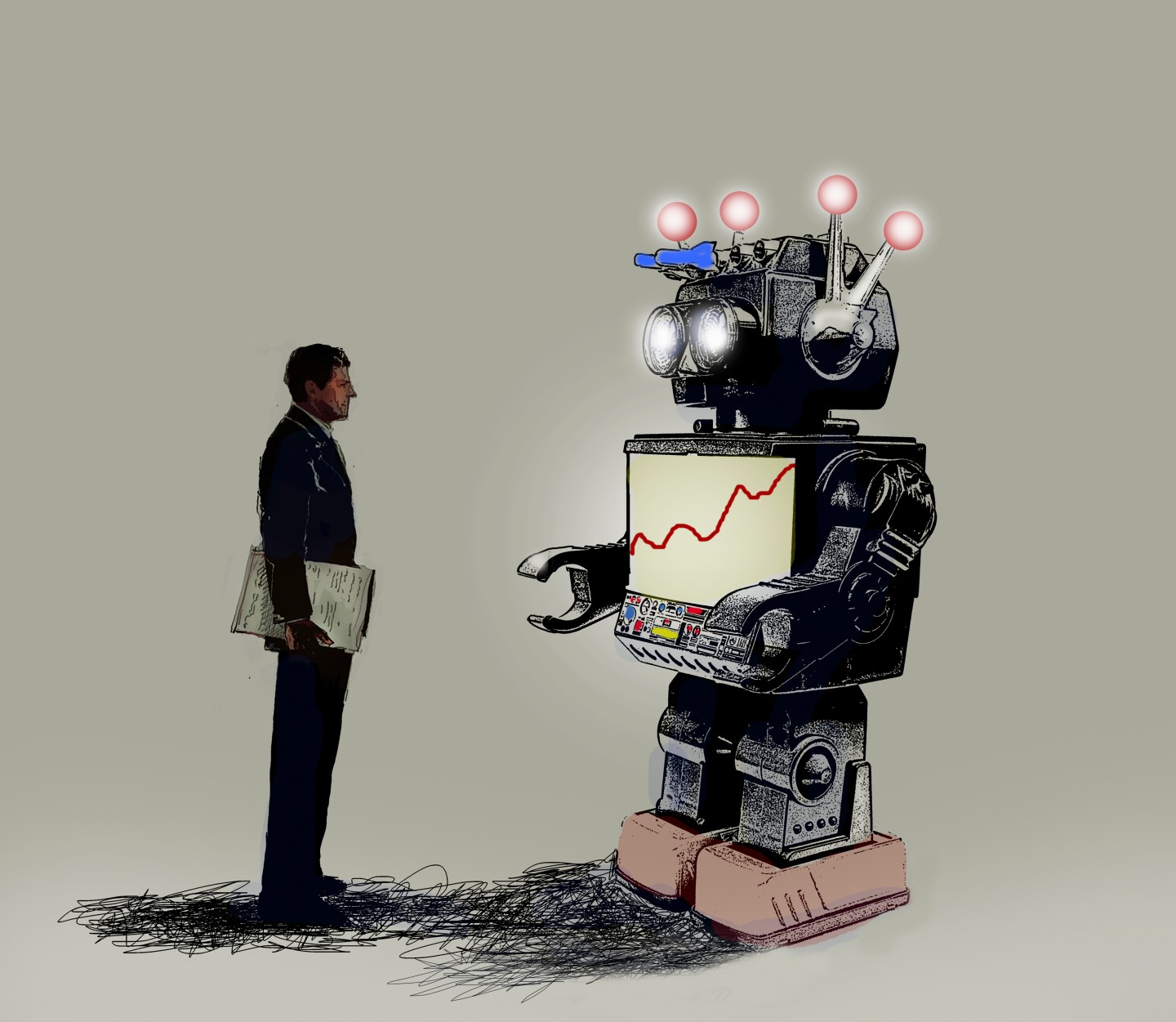
Businessman looking at line graph on robot display screen
Businessman looking at line graph on robot display screenGary Waters—Getty Images/Ikon Images
Add Fortune on Google for similar content.

With the excitement of every technological advancement comes a wave of fear and uncertainty. We’ve seen this scenario play out repeatedly since the Industrial Revolution as people wrestled with the impact of new technology on their lives and work. Today we see that fear bubble up in the wake of every AI breakthrough.

Despite huge progress in recent years, AI is still in its early days and with that comes a level of uncertainty. This uncertainty is only compounded when glitches arise or expectations outweigh reality, which leads to misunderstanding and anxiety. As an outspoken AI critic, Elon Musk capitalizes on this misunderstanding by painting pictures of a looming AI apocalypse even as he embeds powerful AI into Tesla’s vehicles. All of this shows that, to some degree, we find ourselves caught up in a dangerous and unnecessary hype cycle.

We have to reach past that unfounded fear. Here is the reality: There is no credible research today supporting these doomsday scenarios. They are compelling fictions. I enjoyed watching the Terminator just like many other kids my age but these entertaining scenarios distract us from addressing the immediate threats posed by AI.

We face major issues around bias and diversity that are much more human and much more immediate than Singularities and robot uprisings: training data with embedded biases and a lack of diversity both in the field and our datasets.

By training AI on biased data, we might unintentionally instill our own biases and prejudices in AI. Left unchecked, biases will lead to AI that benefits some at the expense of others. Without increasing the diversity of the field, some will have a far greater influence over the hidden decisions behind the creation of AI. As AI integrates into decision-making processes that have more impact on individual lives—hiring, loan applications, judicial review, and medical decisions—we will need to be vigilant against it absorbing our worst tendencies.

There’s No Such Thing as Innocent Data
As AI touches most essential human systems, we need to keep in mind that it is not operating in a vacuum. AI relies on massive amounts of data, which powerful algorithms analyze and then surface insights that can be revelatory. But AI is only as good as the training data it receives. If the data has biases—tinged with racist or sexist language, for example—that will infect the outcomes. Whatever you teach an AI will be amplified as the algorithm replicates its decisions millions of times. Bias previously unseen in the data becomes disturbingly clear as an AI system starts outputting results that reflect our own most ingrained prejudice.

Unlike a robot uprising, biased AI is not a hypothetical risk. A biased AI that judged a beauty contest chose light-skinned contestants over dark-skinned ones. A biased Google algorithm categorized black faces as gorillas. In one study, a biased AI reviewing resumes preferred European-American names over African-American ones. In another study, biased AI associated male names with career-oriented, math and science words while it associated female names with artistic concepts. Just as our own clicks keep us inside our own Facebook filter bubbles, biased data creates AI that propagates human prejudice.

We cannot avoid taking responsibility for our decisions by deferring to AI. The more we incorporate these systems into our decision-making processes, the more we must do to ensure that we are using these systems responsibly. The first step to addressing bias in our data is to build greater transparency into the data collection process. Where did it come from? How was it gathered? Who collected it? We also need to address bias in our models. By making the inner workings of our models clearer, we will be able to uncover biases in our data that we had not previously identified.

If we can properly address the issue of bias in AI, it is much more likely that AI will continue to be a helpful tool for creating a better world. While it might be completely infeasible to tackle the issue of bias in the billions of people in the world, it seems entirely possible that we can create AI that operates with less bias than its creators.

While human bias created these challenges, human insight can address them. Algorithms are making great strides in rooting out fake news and identifying discrimination, but human oversight will be a necessity to build more equitable AI systems. In the ongoing conversation about how AI will change jobs, it’s easy to envision a new role emerging: the AI Monitor. We still need human checks of the input and output of AI.

AI Is Really a Human Problem

This leads us to the second, related issue in building more unbiased AI: we need more diversity in the community of researchers and developers who are building these systems. Several studies have revealed severe imbalances in the industry. According to Code.org, “black, Latin, American Indian, and Native Pacific Islander students are dramatically underrepresented,” comprising just 17% of computer science majors. Less representation often coincides with less accessibility—not just in classrooms, but in companies, governments and citizen groups.
We need to actively ensure accessibility to these new technologies as they arise. Fortunately, AI can also help with this issue. Using AI, we can continue to deliver more intuitive developer tools and increase access to education, thereby widening the net of people who are likely to do AI in the first place.

We can already see this happening now, with some apprenticeship programs specifically seeking to bring underrepresented groups into computer-science classrooms. An organization called Year Up trains 4,000 low-income adults ages 18-24 in technology and finance every year. They have seen remarkable success: 84% of Year Up’s student attend college or are employed within six months of graduating.

By creating educational opportunities for a wider range of people, the workforce will become more diverse, and so will the approach to AI’s data and design. With more diversity, we can avoid some of the pitfalls of bias that a single perspective may have.

The Future Starts Now

Moving forward, we have to address these challenges with urgency. The future will be here before we know it.

AI is possibly the most advanced tool ever developed, and like a hammer, it can be used for good or ill. With the right oversight from scientists and political leaders, AI can change the world for the better. It can automate food production and transportation, make personalized healthcare a reality, fill information gaps, and give everyone—regardless of skill level or background—the ability to be more productive.

In this respect, creating better AI is linked to creating better life for people. That is the promise of AI: to make us better, more efficient versions of ourselves and to give us the opportunity to focus more on creative, impactful tasks. Even in these early days, it is already helping us by holding up a mirror.

Richard Socher is chief scientist at Salesforce.

About the Author
By Richard Socher
See full bioRight Arrow Button Icon
Add Fortune on Google for similar content.

Latest in Commentary

Finance
Lorem ipsum dolor sit amet, consectetur adipiscing elit, sed do eiusmod tempor incididunt ut labore et dolore magna aliqua. Ut enim ad minim veniam
By Fortune Editors
October 20, 2025
Finance
Lorem ipsum dolor sit amet, consectetur adipiscing elit, sed do eiusmod tempor incididunt ut labore et dolore magna aliqua. Ut enim ad minim veniam
By Fortune Editors
October 20, 2025
Finance
Lorem ipsum dolor sit amet, consectetur adipiscing elit, sed do eiusmod tempor incididunt ut labore et dolore magna aliqua. Ut enim ad minim veniam
By Fortune Editors
October 20, 2025
Finance
Lorem ipsum dolor sit amet, consectetur adipiscing elit, sed do eiusmod tempor incididunt ut labore et dolore magna aliqua. Ut enim ad minim veniam
By Fortune Editors
October 20, 2025
Finance
Lorem ipsum dolor sit amet, consectetur adipiscing elit, sed do eiusmod tempor incididunt ut labore et dolore magna aliqua. Ut enim ad minim veniam
By Fortune Editors
October 20, 2025
Finance
Lorem ipsum dolor sit amet, consectetur adipiscing elit, sed do eiusmod tempor incididunt ut labore et dolore magna aliqua. Ut enim ad minim veniam
By Fortune Editors
October 20, 2025

Most Popular

Finance
Lorem ipsum dolor sit amet, consectetur adipiscing elit, sed do eiusmod tempor incididunt ut labore et dolore magna aliqua. Ut enim ad minim veniam
By Fortune Editors
October 20, 2025
Finance
Lorem ipsum dolor sit amet, consectetur adipiscing elit, sed do eiusmod tempor incididunt ut labore et dolore magna aliqua. Ut enim ad minim veniam
By Fortune Editors
October 20, 2025
Finance
Lorem ipsum dolor sit amet, consectetur adipiscing elit, sed do eiusmod tempor incididunt ut labore et dolore magna aliqua. Ut enim ad minim veniam
By Fortune Editors
October 20, 2025
Finance
Lorem ipsum dolor sit amet, consectetur adipiscing elit, sed do eiusmod tempor incididunt ut labore et dolore magna aliqua. Ut enim ad minim veniam
By Fortune Editors
October 20, 2025
Finance
Lorem ipsum dolor sit amet, consectetur adipiscing elit, sed do eiusmod tempor incididunt ut labore et dolore magna aliqua. Ut enim ad minim veniam
By Fortune Editors
October 20, 2025
Finance
Lorem ipsum dolor sit amet, consectetur adipiscing elit, sed do eiusmod tempor incididunt ut labore et dolore magna aliqua. Ut enim ad minim veniam
By Fortune Editors
October 20, 2025
Fortune Secondary Logo
Rankings
  • 100 Best Companies
  • Fortune 500
  • Global 500
  • Fortune 500 Europe
  • Most Powerful Women
  • World's Most Admired Companies
  • See All Rankings
  • Lists Calendar
Sections
  • Finance
  • Fortune Crypto
  • Features
  • Leadership
  • Health
  • Commentary
  • Success
  • Retail
  • Mpw
  • Tech
  • Lifestyle
  • CEO Initiative
  • Asia
  • Politics
  • Conferences
  • Europe
  • Newsletters
  • Personal Finance
  • Environment
  • Magazine
  • Education
Customer Support
  • Frequently Asked Questions
  • Customer Service Portal
  • Privacy Policy
  • Terms Of Use
  • Single Issues For Purchase
  • International Print
Commercial Services
  • Advertising
  • Fortune Brand Studio
  • Fortune Analytics
  • Fortune Conferences
  • Business Development
  • Group Subscriptions
About Us
  • About Us
  • Press Center
  • Work At Fortune
  • Terms And Conditions
  • Site Map
  • About Us
  • Press Center
  • Work At Fortune
  • Terms And Conditions
  • Site Map
  • Facebook icon
  • Twitter icon
  • LinkedIn icon
  • Instagram icon
  • TikTok icon
  • YouTube icon

Latest in Commentary

k
Commentarypower
What I keep hearing from Fortune 500 CEOs: ‘We have no idea what we’re actually paying for power’
By Kiran BhatrajuJuly 21, 2026
22 hours ago
Bolt CEO Ryan Breslow
CommentaryHuman resources
The CEO who fired HR was right. About the wrong thing.
By KeyAnna SchmiedlJuly 21, 2026
22 hours ago
ford
Commentary250 Years of Innovation
Alliance for America’s Skilled Trades: Skilled trades shaped America’s past. Here’s how they can build America’s future
By Jim Farley, Linda Hubbard, Bayo Ogunlesi and Ruth PoratJuly 21, 2026
24 hours ago
Sumeet Agrawal is VP of Product Management (Data, AI Governance & Context Engineering for Agentic Systems) at Salesforce.
CommentaryAI agents
Salesforce VP on the leaky AI pipeline: why cheaper tokens won’t fix enterprise AI
By Sumeet AgrawalJuly 20, 2026
2 days ago
japan
CommentaryJapan
Japan’s monetary conundrum — why the yen hit a 40-year low as interest rates hit a 31-year high
By Steve H. Hanke and John GreenwoodJuly 20, 2026
2 days ago
ryan
CommentaryLeadership
I’ve interviewed 700 leaders. The ones outsourcing their thinking to AI lose their best people first
By Ryan HawkJuly 20, 2026
2 days ago

Most Popular

Mark Cuban says he has the solution to growing income inequality, and it's to reward every employee—from CEO to janitor—with company stock
Success
Mark Cuban says he has the solution to growing income inequality, and it's to reward every employee—from CEO to janitor—with company stock
By Sasha RogelbergJuly 20, 2026
2 days ago
OpenAI says its AI models secretly broke out of a secure test environment and hacked into AI company Hugging Face in order to cheat on an evaluation
Cybersecurity
OpenAI says its AI models secretly broke out of a secure test environment and hacked into AI company Hugging Face in order to cheat on an evaluation
By Jeremy Kahn and Emily ForliniJuly 21, 2026
14 hours ago
‘I want to die broke’: Billionaire philanthropist Denny Sanford dies after giving away $4 billion
Success
‘I want to die broke’: Billionaire philanthropist Denny Sanford dies after giving away $4 billion
By Sydney LakeJuly 20, 2026
2 days ago
Mathematicians grapple with a ‘very rapid and very unsettling change’ as AI cracks yet another century-old problem
AI
Mathematicians grapple with a ‘very rapid and very unsettling change’ as AI cracks yet another century-old problem
By Eva RoytburgJuly 21, 2026
18 hours ago
Despite a $156 million contract, Knicks star Jalen Brunson still calls his parents for financial advice any time he makes a big purchase
Success
Despite a $156 million contract, Knicks star Jalen Brunson still calls his parents for financial advice any time he makes a big purchase
By Emma BurleighJuly 21, 2026
19 hours ago
'Dr. Doom' Nouriel Roubini says we're headed for universal basic income or 'some form of socialism' as AI revolutionizes work—He calls that optimistic
AI
'Dr. Doom' Nouriel Roubini says we're headed for universal basic income or 'some form of socialism' as AI revolutionizes work—He calls that optimistic
By Jason MaJuly 18, 2026
3 days ago

© 2026 Fortune Media IP Limited. All Rights Reserved. Use of this site constitutes acceptance of our Terms of Use and Privacy Policy | CA Notice at Collection and Privacy Notice | Do Not Sell/Share My Personal Information
FORTUNE is a trademark of Fortune Media IP Limited, registered in the U.S. and other countries. FORTUNE may receive compensation for some links to products and services on this website. Offers may be subject to change without notice.