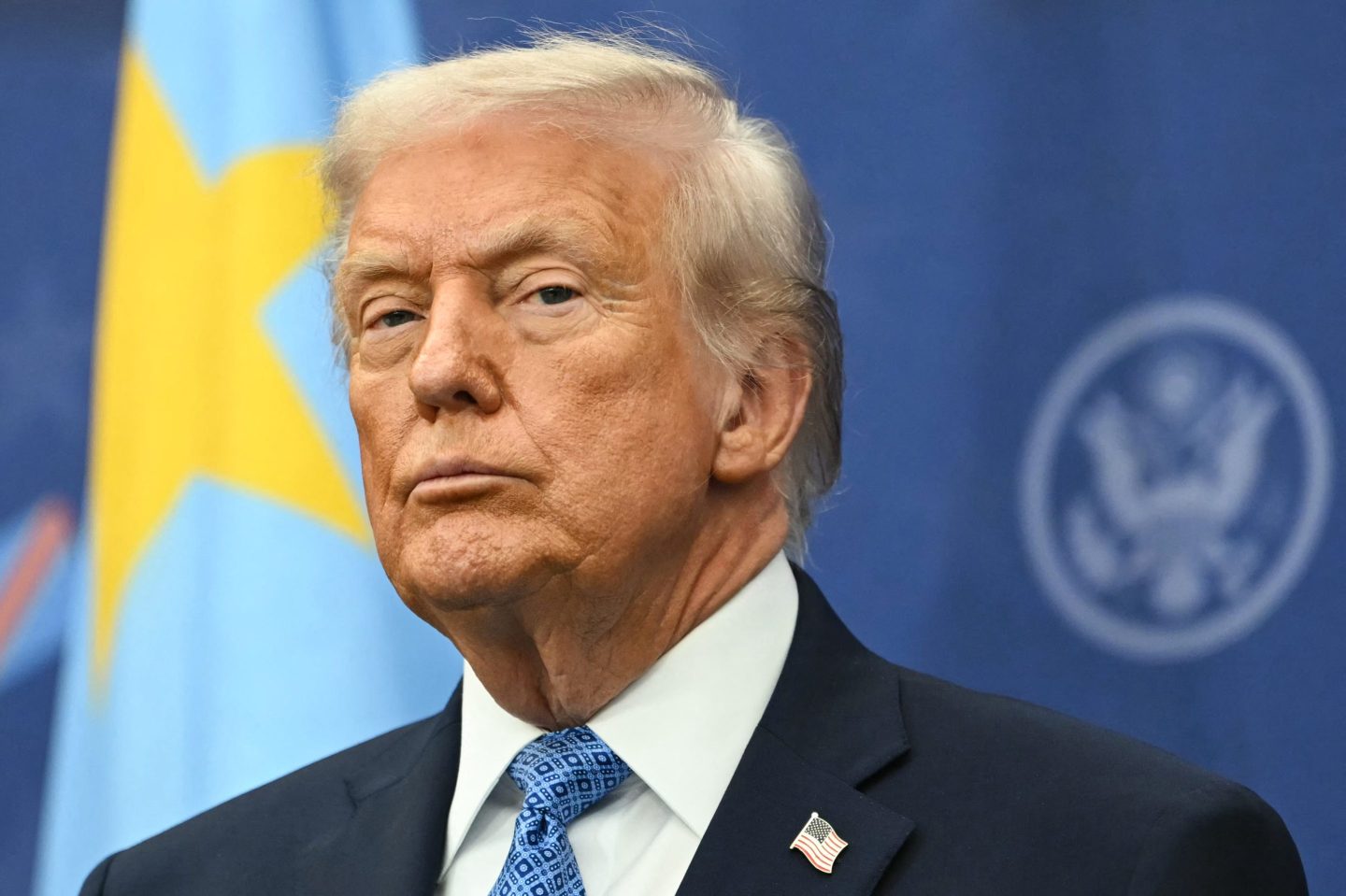
Observers long wondered what would become of Barack Obama after he left office. Young and healthy, still pondering social problems, he always seemed an unlikely candidate for the list of distant former presidents. In September 2016, he stated that then-candidate Donald Trump “appears to only care about himself,” adding that Trump “doesn’t do his homework, doesn’t know basic facts that you’d need to know.” Obama came out swinging again last week when he condemned President Trump for rescinding DACA, calling the move “cruel.” Obama is not the first former president to speak out, but he may well be transforming the post-presidency in ways no less profound than Trump’s efforts to change the presidency.
It’s typical for former presidents to disappear from public life—some died soon after leaving office, while others were so exhausted by the experience of the presidency that they withdrew from the public. But most former presidents have consciously chosen not to meddle in politics after leaving office. This retirement of former presidents has always stood as an example of a strong democracy. Unlike monarchs or dictators, American presidents surrender power. Unlike divisive partisans, departing Americans presidents promise to support their successors, regardless of party.
This wasn’t always the case, though. Throughout the 19th century, former presidents regularly communicated with their political allies in an ongoing attempt to shape policy. In fact, the man who helped create the presidency was among the first former presidents to speak out. After decades in which he kept private his copious records of the Constitutional convention, former president James Madison published those materials in the 1830s in an explicit effort to reshape national political debates.
The most publicly engaged former presidents were those who harbored ongoing political aspirations. John Quincy Adams, who served in Congress for 17 years after being voted out of the White House in 1828, had no qualms about criticizing his successors from the House floor. Among his targets was Martin Van Buren, another one-term president who, after losing his re-election bid in 1840, launched a short-lived campaign to reclaim the White House in 1844. Like any good campaigner, the Democrat Van Buren attacked the Whigs who had defeated him four years earlier. But Van Buren paled in comparison to Teddy Roosevelt, who became so disenchanted with American politics after leaving office in 1909 that he launched a third-party bid for a third term in 1912.
For the past four decades, these two visions of the former presidency have been regularly at odds. Should former presidents retire from public life, or should they continue to put themselves forward as national leaders?
Gerald Ford, Ronald Reagan, and George W. Bush followed the more traditional model, retiring quietly while vowing to offer public support and private advice for their successors. Richard Nixon, Jimmy Carter, and Bill Clinton followed a different path. In his attempts to rehabilitate his image after Watergate, Nixon sought to use books and public appearances to establish himself as an expert on foreign policy. In more than three decades since leaving the White House in 1981, Carter has spoken out on foreign and domestic policy, periodically criticizing his successors in the process. And Bill Clinton became an oddly updated version of Martin Van Buren and Teddy Roosevelt, offering increasingly pointed political commentary in support of Hillary Clinton’s political career. In the wake of Obama’s condemnation of Trump’s decision on DACA, Bill Clinton offered similar criticism.
All of which situates Obama at a precipice. If he plans to make statements similar to his comments on DACA, he operates at great risk, for he must most now find a way to lead and to mobilize without appearing to violate the deeply felt American belief that presidents must surrender their power. Trump’s critics charge him with damaging the presidency by politicizing and personalizing every act. The depth of opposition to Trump has not only led Obama to become a more active former president, but may well have enabled him to do so. The call for an opposition to Trump is so strong—especially among Democrats—that it has created a new political space for former presidents, excusing them of demand for restraint that presidents used to impose on themselves because most Americans demanded it.
And it is that relationship between Trump and Obama that explains Obama’s actions. In 2008, Obama transformed the presidency by breaking the all-white monopoly. He may well be doing so again as an outspoken former president. Obama and Trump may stand at opposite ends of the spectrum—in politics, in personality, and in public behavior—yet they nonetheless stand together in reshaping the presidency.
Peter Kastor is a Professor of History and American Culture Studies and Chair of the Department of History at Washington University in St. Louis.