
• Home
  • Latest
  • Fortune 500
  • Finance
  • Tech
  • Leadership
  • Lifestyle
  • Rankings
  • Multimedia
Leadership

Why Trump’s Justice Department Just Increased the Stakes In the Fight for LGBT Workplace Rights

Claire Zillman
By
Claire Zillman
Claire Zillman
Editor, Leadership
Down Arrow Button Icon
Claire Zillman
By
Claire Zillman
Claire Zillman
Editor, Leadership
Down Arrow Button Icon
July 27, 2017, 3:00 PM ET
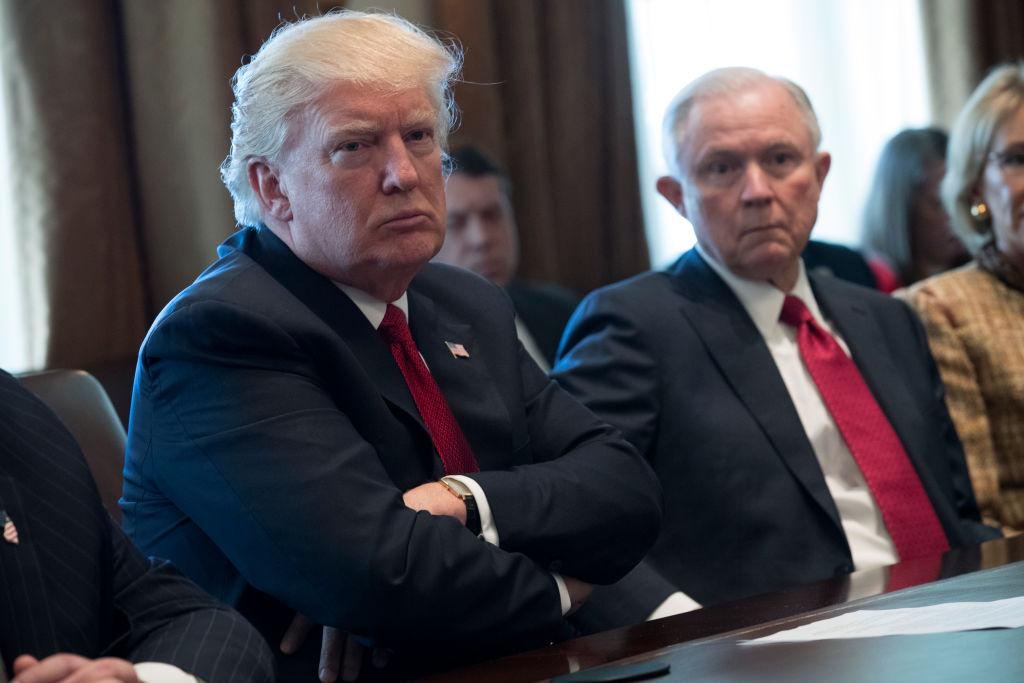
Trump Attends Panel Discussion On Opioid Addction At White House
Pool—Getty Images

The Trump administration’s Department of Justice on Wednesday undercut the stance of the Obama administration’s DOJ and another autonomous federal agency, by arguing that an existing law, Title VII of the Civil Rights Act of 1964, does not bar an employer from firing a gay employee because he or she is gay.

The filing came the same day as President Trump’s announcement that he would bar transgender troops from serving in the military. Together, the two actions fueled outrage from lawmakers, activists and other leaders who argue that the administration is seeking to roll back the rights and protections won by the LGBT community in recent years.

As a candidate, Trump largely avoided talking about issues related to sexual orientation, but often implied that he wouldn’t interfere with recent progress, even going so far as to promise gays and lesbians, “I will fight for you.”

Thank you to the LGBT community! I will fight for you while Hillary brings in more people that will threaten your freedoms and beliefs.

— Donald J. Trump (@realDonaldTrump) June 14, 2016

Since his inauguration, however, Trump has been largely silent on the issue. Social conservatives were key to his election victory, and, notably, his attorney general, Jeff Sessions, has been a longtime opponent of extending job protections based on sexual orientation.

Sexual orientation is not explicitly listed in Title VII, which protects individuals against employment discrimination on the basis of race and color, as well as national origin, sex, and religion. But the Equal Employment Opportunity Commission ruled in July 2015 that discrimination based on sexual orientation is, in essence, discrimination based on sex. Because sexual orientation can’t be defined or understood without reference to sex, the commission held, discrimination based on it is “premised on sex-based preferences, assumptions, expectations, stereotypes, or norms” and therefore barred by the law. The EEOC’s ruling was hailed as a victory for the LGBT community at the time, and under President Obama, it became the interpretation that the DOJ abided by.

Trump’s DOJ on Wednesday challenged that stance, arguing just the opposite: that Title VII does not protect against discrimination on the basis of sexual orientation. The DOJ’s opinion, filed in a brief in an ongoing legal case between a worker and his boss being heard by the Second Circuit Court of Appeals, says “the sole question here is whether, as a matter of law, Title VII reaches sexual orientation discrimination. It does not, as has been settled for decades. Any efforts to amend Title VII’s scope should be directed to Congress rather than the courts.”

The EEOC filed a motion in the same Second Circuit case just last month, reiterating its 2015 finding that Title VII bans bias based on sexual orientation.

In its filing, the DOJ acknowledged, rather frankly, that its stance on the matter contradicts that of its fellow government agency. “The EEOC is not speaking for the United States and its position about the scope of Title VII is entitled to no deference beyond its power to persuade,” the ruling says.

It’s true that courts are not bound by EEOC positions; they’re only required to honor legislation and the rulings of courts to which their cases can be appealed, including the Supreme Court. (It should be noted that the U.S. Court of Appeals for the Seventh Circuit made the same determination as the EEOC in a case in April.) But the EEOC’s decisions matter because the commission enforces Title VII, has the authority to bring lawsuits based on its rulings against private employers, and adjudicates cases brought by federal workers against federal agencies.

The DOJ meanwhile, is the defense attorney for the United States, so, in many ways, it’s just like any big employer that files an amicus brief in a case. But enforcing discrimination law in contexts outside of employment—housing, voting rights, disability—is part of the department’s mandate, meaning its stance on such issues carries more weight than other employers’, says Marcia McCormick, an employment law professor at St. Louis University School of Law.

Its filing in the Second Circuit case this week extends what has been a years-long debate over the scope of Title VII. The EEOC’s ruling on that matter in 2015 recognized that federal courts had concluded the opposite, but it said that those decisions were “dated.”

The EEOC’s stance on Title VII’s reach—spelled out in 2015—was considered a landmark decision because it gave gay workers extra cover in states that hadn’t passed their own laws barring discrimination based on sexual orientation. As of this April, 20 states have passed laws banning discrimination based on sexual orientation and gender identity; another two have passed legislation against bias based on sexual orientation only, according to the Human Rights Campaign, meaning there are 28 states where gay employees can be fired for being gay.

The DOJ’s new stance on the matter says that determining such workplace protections should be done through Congress, not through the courts. Lawmakers have pursued that route before. The federal Employment Non-Discrimination Act, which would have outlawed discrimination on the basis of sexual orientation (and, in more recent versions, gender identity) nationwide, was first introduced in 1994. Congress considered it at least 10 times in the following decade and a half, but it never became law. The current Congress, whose GOP leadership includes many social conservatives, seems highly unlikely to act on a similar bill.

The passage of such a federal measure could effectively clear up the murkiness of Title VII’s scope, but until then, the types of discrimination covered by the law will be a matter for the courts to hash out.

About the Author
Claire Zillman
By Claire ZillmanEditor, Leadership
LinkedIn iconTwitter icon

Claire Zillman is a senior editor at Fortune, overseeing leadership stories. 

See full bioRight Arrow Button Icon

Latest in Leadership

Finance
Lorem ipsum dolor sit amet, consectetur adipiscing elit, sed do eiusmod tempor incididunt ut labore et dolore magna aliqua. Ut enim ad minim veniam
By Fortune Editors
October 20, 2025
Finance
Lorem ipsum dolor sit amet, consectetur adipiscing elit, sed do eiusmod tempor incididunt ut labore et dolore magna aliqua. Ut enim ad minim veniam
By Fortune Editors
October 20, 2025
Finance
Lorem ipsum dolor sit amet, consectetur adipiscing elit, sed do eiusmod tempor incididunt ut labore et dolore magna aliqua. Ut enim ad minim veniam
By Fortune Editors
October 20, 2025
Finance
Lorem ipsum dolor sit amet, consectetur adipiscing elit, sed do eiusmod tempor incididunt ut labore et dolore magna aliqua. Ut enim ad minim veniam
By Fortune Editors
October 20, 2025
Finance
Lorem ipsum dolor sit amet, consectetur adipiscing elit, sed do eiusmod tempor incididunt ut labore et dolore magna aliqua. Ut enim ad minim veniam
By Fortune Editors
October 20, 2025
Finance
Lorem ipsum dolor sit amet, consectetur adipiscing elit, sed do eiusmod tempor incididunt ut labore et dolore magna aliqua. Ut enim ad minim veniam
By Fortune Editors
October 20, 2025

Most Popular

Finance
Lorem ipsum dolor sit amet, consectetur adipiscing elit, sed do eiusmod tempor incididunt ut labore et dolore magna aliqua. Ut enim ad minim veniam
By Fortune Editors
October 20, 2025
Finance
Lorem ipsum dolor sit amet, consectetur adipiscing elit, sed do eiusmod tempor incididunt ut labore et dolore magna aliqua. Ut enim ad minim veniam
By Fortune Editors
October 20, 2025
Finance
Lorem ipsum dolor sit amet, consectetur adipiscing elit, sed do eiusmod tempor incididunt ut labore et dolore magna aliqua. Ut enim ad minim veniam
By Fortune Editors
October 20, 2025
Finance
Lorem ipsum dolor sit amet, consectetur adipiscing elit, sed do eiusmod tempor incididunt ut labore et dolore magna aliqua. Ut enim ad minim veniam
By Fortune Editors
October 20, 2025
Finance
Lorem ipsum dolor sit amet, consectetur adipiscing elit, sed do eiusmod tempor incididunt ut labore et dolore magna aliqua. Ut enim ad minim veniam
By Fortune Editors
October 20, 2025
Finance
Lorem ipsum dolor sit amet, consectetur adipiscing elit, sed do eiusmod tempor incididunt ut labore et dolore magna aliqua. Ut enim ad minim veniam
By Fortune Editors
October 20, 2025
Fortune Secondary Logo
Rankings
  • 100 Best Companies
  • Fortune 500
  • Global 500
  • Fortune 500 Europe
  • Most Powerful Women
  • Future 50
  • World’s Most Admired Companies
  • See All Rankings
Sections
  • Finance
  • Fortune Crypto
  • Features
  • Leadership
  • Health
  • Commentary
  • Success
  • Retail
  • Mpw
  • Tech
  • Lifestyle
  • CEO Initiative
  • Asia
  • Politics
  • Conferences
  • Europe
  • Newsletters
  • Personal Finance
  • Environment
  • Magazine
  • Education
Customer Support
  • Frequently Asked Questions
  • Customer Service Portal
  • Privacy Policy
  • Terms Of Use
  • Single Issues For Purchase
  • International Print
Commercial Services
  • Advertising
  • Fortune Brand Studio
  • Fortune Analytics
  • Fortune Conferences
  • Business Development
  • Group Subscriptions
About Us
  • About Us
  • Editorial Calendar
  • Press Center
  • Work At Fortune
  • Diversity And Inclusion
  • Terms And Conditions
  • Site Map
  • About Us
  • Editorial Calendar
  • Press Center
  • Work At Fortune
  • Diversity And Inclusion
  • Terms And Conditions
  • Site Map
  • Facebook icon
  • Twitter icon
  • LinkedIn icon
  • Instagram icon
  • Pinterest icon

Latest in Leadership

dario
AIWhite House
White House chief of staff to meet with Anthropic CEO about dangerous new Mythos model, official says
By Josh Boak, Matt O'Brien and The Associated PressApril 17, 2026
9 hours ago
Karen Carter
C-SuiteFortune 500 Power Moves
Fortune 500 Power Moves: Which executives gained and lost power this week
By Fortune EditorsApril 17, 2026
11 hours ago
Business colleagues meeting in modern conference room
Workplace Culturecompany culture
The power has swung back to employers—and workers are paying for it in benefits, flexibility, and leverage
By Marco Quiroz-GutierrezApril 17, 2026
13 hours ago
Jack Dorsey, the CEO of Block
SuccessLayoffs
Twitter cofounder Jack Dorsey breaks down his thought process when he laid off 40% of his Block staff because of AI
By Emma BurleighApril 17, 2026
14 hours ago
She learned accounting before she was a teenager. Now she’s bringing Wall Street to the blockchain
NewslettersMPW Daily
She learned accounting before she was a teenager. Now she’s bringing Wall Street to the blockchain
By Sheryl EstradaApril 17, 2026
14 hours ago
Pope Leo XIV waves
SuccessWealth
Pope Leo warned the world is in ‘big trouble’ if Elon Musk becomes the first trillionaire
By Preston ForeApril 17, 2026
20 hours ago

Most Popular

Pope Leo warned the world is in ‘big trouble’ if Elon Musk becomes the first trillionaire
Success
Pope Leo warned the world is in ‘big trouble’ if Elon Musk becomes the first trillionaire
By Preston ForeApril 17, 2026
20 hours ago
A world going broke: IMF says America's $39 trillion national debt is actually a global problem—and AI may be the only rescue
Economy
A world going broke: IMF says America's $39 trillion national debt is actually a global problem—and AI may be the only rescue
By Nick LichtenbergApril 16, 2026
1 day ago
Jeff Bezos pledged $10 billion for climate change. With the 2030 clock ticking, his wife, Lauren Sánchez Bezos, is leading the charge to spend it
Environment
Jeff Bezos pledged $10 billion for climate change. With the 2030 clock ticking, his wife, Lauren Sánchez Bezos, is leading the charge to spend it
By Sydney LakeApril 15, 2026
3 days ago
Germany already told its workers to ditch four-day weeks and work-life balance. Now the government wants to cut their pay for calling in sick, too
Success
Germany already told its workers to ditch four-day weeks and work-life balance. Now the government wants to cut their pay for calling in sick, too
By Orianna Rosa RoyleApril 16, 2026
2 days ago
Iran has reopened the Strait of Hormuz—but experts say it now holds a card that works ‘almost like a nuclear deterrent’
Energy
Iran has reopened the Strait of Hormuz—but experts say it now holds a card that works ‘almost like a nuclear deterrent’
By Eva RoytburgApril 17, 2026
13 hours ago
Older millennials are starting to act like boomers in the housing market—and pulling away from the pack
Real Estate
Older millennials are starting to act like boomers in the housing market—and pulling away from the pack
By Nick LichtenbergApril 17, 2026
20 hours ago

© 2026 Fortune Media IP Limited. All Rights Reserved. Use of this site constitutes acceptance of our Terms of Use and Privacy Policy | CA Notice at Collection and Privacy Notice | Do Not Sell/Share My Personal Information
FORTUNE is a trademark of Fortune Media IP Limited, registered in the U.S. and other countries. FORTUNE may receive compensation for some links to products and services on this website. Offers may be subject to change without notice.