• Home
  • Latest
  • Fortune 500
  • Finance
  • Tech
  • Leadership
  • Lifestyle
  • Rankings
  • Multimedia
FinanceSNAP

5 Things That Should Spook Out Investors About the Snapchat IPO

By
Taylor Tepper
Taylor Tepper
Down Arrow Button Icon
By
Taylor Tepper
Taylor Tepper
Down Arrow Button Icon
March 1, 2017, 1:52 PM ET

Investors in search of the Next Big Thing will be fixated on Snap

this week.

The creator of the popular Snapchat app is set to debut on the New York Stock Exchange on Thursday, at a reported valuation of $25 billion. That would immediately make this 6-year-old, profitless social media darling more valuable than established blue chip names such as American Airlines and Viacom.

Further fueling excitement surrounding this photo sharing and instant messaging company — Snap actually refers to itself as a “camera company” — is the fact that the initial public offering market has been relatively barren over the last few years.

And Snap is the first in a series of next-gen tech leaders — a list that includes Uber, Airbnb, and Pinterest — to hit Wall Street.

But while Snapchat has proven that it’s not a fad, that doesn’t necessarily make Snap a sound investment.

Here’s why you should be concerned:

Worry #1: Is this another Twitter?

The narrative that Snap officials are trying to push on investors is one of growth and potential — in other words, this is potentially another Facebook.

At first blush, that argument seems reasonable. This Venice, Calif.-based company grew earnings to more than $400 million in 2016, up from $59 million the year before, as advertisers used the platform to reach a young millennial audience. Users under the age of 25, according to a recent company filing, visit the app 20 times a day, spending half an hour watching friends’s stories and sending pictures.

With almost 158 daily active users, Snapchat already has a bigger audience than Twitter, three-fifths of whom snap or chat daily. And there is much room to expand since the vast majority of its customers are based in the developed world. What if they figure out how to find millennials, and their parents, outside of the U.S. and Europe?

Yet it may be the case that Snapchat has to look beyond the U.S. and Europe because its daily active audience, while huge, flatlined in the final three months of 2016.

This is where Twitter

is instructive. Despite having the Commander-in-Chief as its most visible customer, Twitter has had difficulty gaining traction. Last quarter the social media platform missed revenue expectations by more than $20 million, despite seeing an increase in users and time spent on the platform. Since going public in November 2013, Twitter has lost nearly two thirds of its value.

Worry #2: There’s the Facebook factor.

While Snap wants to be seen as the next Facebook

, there’s still the old Facebook to contend with. And in the photo-sharing space, Facebook is the $392 billion elephant in Snapchat’s room.

Snap officials have noted that “Our competitors may also develop products, features, or services that are similar to ours or that achieve greater market acceptance.”

That’s code for Instagram Stories, which Facebook launched last August, around the same time Snapchat’s audience leveled off. Instagram Stories already has as many daily active users as Snapchat.

Worry #3: The deck is stacked against you in most IPOs, especially hot ones

Wall Street is littered with sexy IPOs that looked great on the first day of trading, but went downhill from there. Groupon

, Zynga

, and Twitter all fell by at least double digits in the year after their IPOs, with Groupon losing nearly 86%.

Even when Facebook launched into the world in May 2012 to much fanfare, dreams turned scary in the following months when the stock dropped by nearly 50% on fears that the social networking company couldn’t figure out mobile ads. It took almost a year before Facebook returned to its IPO-level, before quadrupling in value.

This is par for the course in IPOs.

Research by Jay Ritter, a finance professor at the University of Florida, shows that that the honeymoon period after IPOs wears off quickly. From 1970 to 2012, the typical IPO slightly outperformed similar-sized stocks in the market in the first six months of trading.

But in the second six months, IPOs gained only 0.7% on average, lagging other stocks by more than five percentage points. And in the second year, IPO shares lagged the market by more than eight percentage points.

“For risk-averse investors, my opinion is to avoid the IPO and adopt a wait-and-see approach,” writes VentureDeal.com chief executive Donovan Jones on Seeking Alpha. “Based on the company’s first few reporting periods as a public company, there may be a buying opportunity six to 10 months post-IPO at a better entry point.”

Worry #4: This stock is expensive.

Snap is going public under vastly different circumstances than Facebook. At their respective IPO dates, Facebook “reported positive 27% net income margins in the year before going public,” according to Needham’s Laura Martin, while Snap lost $515 million.

Since Snap lost so much money last year, you can’t use the traditional price/earnings ratio to gauge its frothiness. But if you look at the stock on a price/sales ratio basis, Snap is starting out from a very expensive place.

Twitter sports a P/S ratio of 4.2, according to Fortune Fortune. Google’s P/S is 5.2 and Facebook stands at 12.6. By contrast, Snap shares are at a rich 61.7.

That’s an awful lot to pay for potential. At the very least, it means that one disappointing quarter could cause investors to flee.

Worry #5: Snap has a wonky—and worrisome—share structure

Part of the allure of being a stock holder is that you get some say, in theory, in the direction of the companies you invest in. That’s not necessarily the case with Snap.

Shares come in three classes, with Class A shares holding no voting authority. B shares get some say, but C shares — controlled entirely by the company’s founders — are where the power resides.

Almost 90% of the company’s ownership is wrapped up in this class, which means the company’s co-founders Evan Spiegel and Robert Murphy will have a lot of protection from activist investors.

If the company fails to grow rapidly, they’ll have no one to blame but themselves.

But that also means that shareholders will have little recourse to affect change at the top should reality disappoint.

About the Author
By Taylor Tepper
See full bioRight Arrow Button Icon

Latest in Finance

Finance
Lorem ipsum dolor sit amet, consectetur adipiscing elit, sed do eiusmod tempor incididunt ut labore et dolore magna aliqua. Ut enim ad minim veniam
By Fortune Editors
October 20, 2025
Finance
Lorem ipsum dolor sit amet, consectetur adipiscing elit, sed do eiusmod tempor incididunt ut labore et dolore magna aliqua. Ut enim ad minim veniam
By Fortune Editors
October 20, 2025
Finance
Lorem ipsum dolor sit amet, consectetur adipiscing elit, sed do eiusmod tempor incididunt ut labore et dolore magna aliqua. Ut enim ad minim veniam
By Fortune Editors
October 20, 2025
Finance
Lorem ipsum dolor sit amet, consectetur adipiscing elit, sed do eiusmod tempor incididunt ut labore et dolore magna aliqua. Ut enim ad minim veniam
By Fortune Editors
October 20, 2025
Finance
Lorem ipsum dolor sit amet, consectetur adipiscing elit, sed do eiusmod tempor incididunt ut labore et dolore magna aliqua. Ut enim ad minim veniam
By Fortune Editors
October 20, 2025
Finance
Lorem ipsum dolor sit amet, consectetur adipiscing elit, sed do eiusmod tempor incididunt ut labore et dolore magna aliqua. Ut enim ad minim veniam
By Fortune Editors
October 20, 2025

Most Popular

Finance
Lorem ipsum dolor sit amet, consectetur adipiscing elit, sed do eiusmod tempor incididunt ut labore et dolore magna aliqua. Ut enim ad minim veniam
By Fortune Editors
October 20, 2025
Finance
Lorem ipsum dolor sit amet, consectetur adipiscing elit, sed do eiusmod tempor incididunt ut labore et dolore magna aliqua. Ut enim ad minim veniam
By Fortune Editors
October 20, 2025
Finance
Lorem ipsum dolor sit amet, consectetur adipiscing elit, sed do eiusmod tempor incididunt ut labore et dolore magna aliqua. Ut enim ad minim veniam
By Fortune Editors
October 20, 2025
Finance
Lorem ipsum dolor sit amet, consectetur adipiscing elit, sed do eiusmod tempor incididunt ut labore et dolore magna aliqua. Ut enim ad minim veniam
By Fortune Editors
October 20, 2025
Finance
Lorem ipsum dolor sit amet, consectetur adipiscing elit, sed do eiusmod tempor incididunt ut labore et dolore magna aliqua. Ut enim ad minim veniam
By Fortune Editors
October 20, 2025
Finance
Lorem ipsum dolor sit amet, consectetur adipiscing elit, sed do eiusmod tempor incididunt ut labore et dolore magna aliqua. Ut enim ad minim veniam
By Fortune Editors
October 20, 2025
Fortune Secondary Logo
Rankings
  • 100 Best Companies
  • Fortune 500
  • Global 500
  • Fortune 500 Europe
  • Most Powerful Women
  • Future 50
  • World’s Most Admired Companies
  • See All Rankings
Sections
  • Finance
  • Fortune Crypto
  • Features
  • Leadership
  • Health
  • Commentary
  • Success
  • Retail
  • Mpw
  • Tech
  • Lifestyle
  • CEO Initiative
  • Asia
  • Politics
  • Conferences
  • Europe
  • Newsletters
  • Personal Finance
  • Environment
  • Magazine
  • Education
Customer Support
  • Frequently Asked Questions
  • Customer Service Portal
  • Privacy Policy
  • Terms Of Use
  • Single Issues For Purchase
  • International Print
Commercial Services
  • Advertising
  • Fortune Brand Studio
  • Fortune Analytics
  • Fortune Conferences
  • Business Development
  • Group Subscriptions
About Us
  • About Us
  • Editorial Calendar
  • Press Center
  • Work At Fortune
  • Diversity And Inclusion
  • Terms And Conditions
  • Site Map
  • About Us
  • Editorial Calendar
  • Press Center
  • Work At Fortune
  • Diversity And Inclusion
  • Terms And Conditions
  • Site Map
  • Facebook icon
  • Twitter icon
  • LinkedIn icon
  • Instagram icon
  • Pinterest icon

Latest in Finance

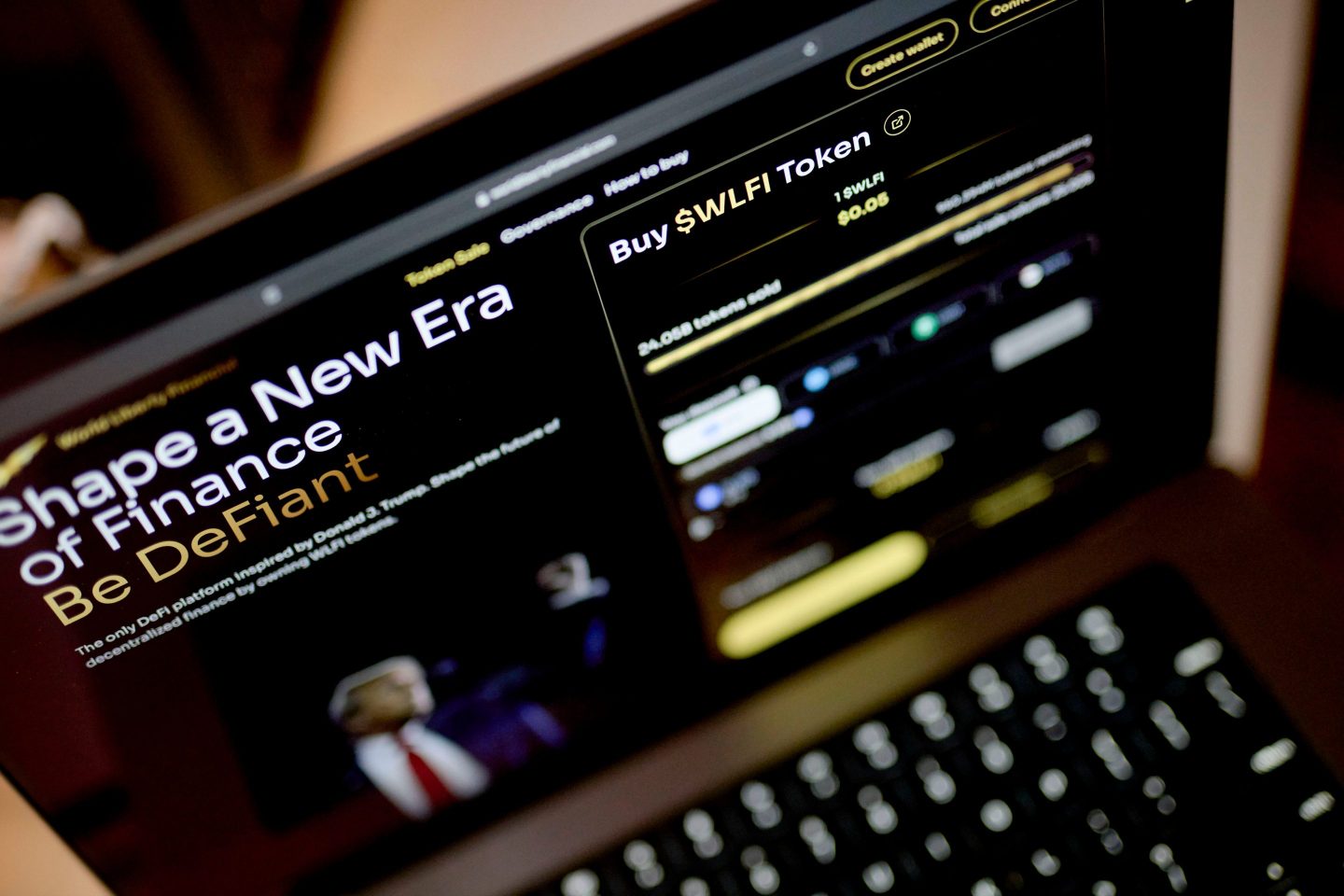
A laptop screen shows World Liberty Financial's website
CryptoCryptocurrency
Trump-backed World Liberty Financial tokens hit all-time low on reports of insider loans
By Jack KubinecApril 10, 2026
10 minutes ago
Iran is demanding tankers in the Strait of Hormuz pay tolls in crypto: What we know so far
CryptoIran
Iran is demanding tankers in the Strait of Hormuz pay tolls in crypto: What we know so far
By Ben WeissApril 10, 2026
19 minutes ago
scott bessent
CybersecurityFederal Reserve
The AI that found 27-year-old vulnerabilities no human ever caught before just forced an emergency meeting with every major Wall Street CEO
By Jake AngeloApril 10, 2026
2 hours ago
man leaning against t shirt stand
EconomyInflation
Inflation goes up by a whopping monthly rate of nearly 1%—and it’s hitting you at the grocery store and gas station
By Catherina Gioino and Eva RoytburgApril 10, 2026
2 hours ago
A young man looks at his phone, and a flurry of red arrows point downwards.
Cryptosports betting
Prediction markets have made betting easier than ever—and young men are paying the price
By Carlos GarciaApril 10, 2026
2 hours ago
evs
EconomyChina
Trump’s gift to China: a booming market for cheap, state-of-the-art EVs amid the Iran War
By Chan Ho-Him and The Associated PressApril 10, 2026
3 hours ago

Most Popular

The U.S. government is spending $88 billion a month in interest on national debt—equal to spending on defense and education combined
Economy
The U.S. government is spending $88 billion a month in interest on national debt—equal to spending on defense and education combined
By Fortune EditorsApril 9, 2026
1 day ago
A Meta employee created a dashboard so coworkers can compete to be the company's No. 1 AI token user—and Zuckerberg doesn't even rank in the top 250
AI
A Meta employee created a dashboard so coworkers can compete to be the company's No. 1 AI token user—and Zuckerberg doesn't even rank in the top 250
By Fortune EditorsApril 9, 2026
1 day ago
Mark Cuban admits he made a mistake letting go of the Mavericks: 'I don't regret selling. I regret who I sold to'
Investing
Mark Cuban admits he made a mistake letting go of the Mavericks: 'I don't regret selling. I regret who I sold to'
By Fortune EditorsApril 9, 2026
1 day ago
'I hate working 5 days': Zoom CEO says traditional work schedules are becoming obsolete—and predicts a 3-day workweek by 2031
Success
'I hate working 5 days': Zoom CEO says traditional work schedules are becoming obsolete—and predicts a 3-day workweek by 2031
By Fortune EditorsApril 9, 2026
1 day ago
Gen Z doesn't want your full-time job. They want several part-time roles, and it's reshaping the entire workforce
Success
Gen Z doesn't want your full-time job. They want several part-time roles, and it's reshaping the entire workforce
By Fortune EditorsApril 9, 2026
1 day ago
Schools across America are quietly admitting that screens in classrooms made students worse off and are reversing years of tech-first policies
Innovation
Schools across America are quietly admitting that screens in classrooms made students worse off and are reversing years of tech-first policies
By Fortune EditorsApril 10, 2026
12 hours ago

© 2026 Fortune Media IP Limited. All Rights Reserved. Use of this site constitutes acceptance of our Terms of Use and Privacy Policy | CA Notice at Collection and Privacy Notice | Do Not Sell/Share My Personal Information
FORTUNE is a trademark of Fortune Media IP Limited, registered in the U.S. and other countries. FORTUNE may receive compensation for some links to products and services on this website. Offers may be subject to change without notice.