• Home
  • Latest
  • Fortune 500
  • Finance
  • Tech
  • Leadership
  • Lifestyle
  • Rankings
  • Multimedia

2016 Wasn’t as Crazy a Year as Everyone Thinks

By
Cliff Asness
Cliff Asness
Down Arrow Button Icon
By
Cliff Asness
Cliff Asness
Down Arrow Button Icon
January 9, 2017, 6:00 AM ET
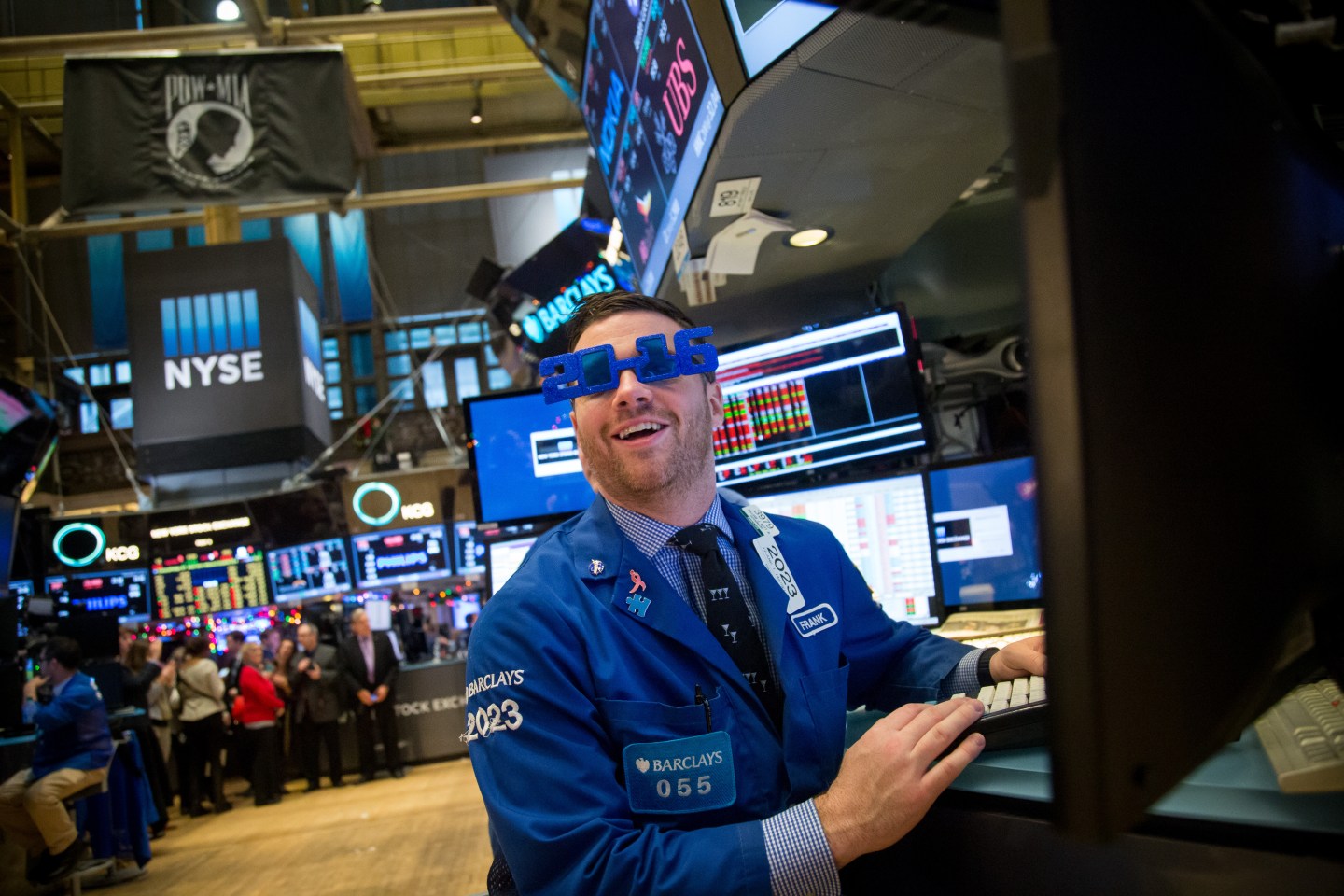
Last Day Of Trading At The NYSE As US Stocks Edge Lower, Pulling S&P 500 Into Red For The Year
Photograph by Michael Nagle — Bloomberg via Getty Images

Maybe it’s just me but a lot of end-of-year commentary about financial markets in 2016, implicitly and sometimes explicitly, makes it sound as if it was a crazy year. It wasn’t. In fact, it was amazingly normal. This is true of at least the S&P 500 (I’m not going to be more ambitious here) which is what I think many of these commentators are talking about.¹ ²

Annualized daily volatility during 2016 came in at 13.1%. Based on rolling same-length periods going back to 1929 this falls at the 47th percentile.³ You say you don’t want to compare to the craziness of the Great Depression? Maybe that leads to everything else looking calm and you don’t think that’s meaningful. That’s reasonable. Well, that same value of 13.1% is at the 54th percentile since WWII and the 42nd percentile since 1990. Pretty darn normal. Maybe people are comparing to very recent times (I would argue in error) and have been lulled into a false sense of calmness now shattered by 2016? Nope, it’s still only at the 54th percentile when compared to the last five years. Realized daily volatility simply was not high in 2016 compared to pretty much any prior period (it certainly wasn’t exceptionally low either).

Now you say you don’t like quant geek measures like volatility? OK. How about looking at the biggest (up or down so we are talking absolute value) rolling one-month4 return in 2016? That was 10.4% (the bounce back from mid-February to mid-March). How does that compare to history? That is, every year you do this same calculation and look at the biggest up or down move. Well, from 1929 to the present that 10.4% figure for 2016 comes in at the 44th percentile (i.e., 56% of the time the biggest one-month move in a rolling year is bigger than we saw in 2016). Post-war it’s the 51st percentile. From 1990 to present it falls at the 48th percentile. Even over the last five years it’s a whopping 61st percentile. Move on, nothing to see here.

OK, one more. Let’s look at the high over the last year divided by the low of the last year (the full percentage range in prices).5 In 2016 that was 24.2% (the mid-December high divided by the early/mid-February low). Wow, you could’ve made a killing buying at the low! I’m not being snarky here. Actually, yes, you could have. But was that abnormal? You know what’s coming now don’t you … ? Comparing that 24.2% to the same figure calculated each rolling year back to 1929 it comes in at the 42nd percentile. Post-war it’s the 49th percentile. From 1990 to present it’s the 50th percentile. And, over the last five years it’s the 66th percentile. Ok, that last one is getting very marginally high but only very marginally and only over the very recent period, which again I only looked at to see if people were looking at this too short a time horizon in error (yeah, that’s not a great sentence, I know). Really, again, nothing to see here. 6 7

For those who think better graphically, here are each of the three measures presented both as a histogram (with 2016 and some notable years from the latter half of the sample marked) and simply graphed through time (when the relevant comparison is the far right end point of 2016 versus the whole graph):8

1-Year Daily Rolling Volatility (1946-2016)
Histogram


Time Series Plot

Source: AQR and Bloomberg using the S&P 500 index.

Max 1-Month Absolute Return Over Prior Rolling Year (1946-2016)
Histogram


Time Series Plot


Source: AQR and Bloomberg using the S&P 500 index.

Prior 1-Year High Divided By Prior 1-Year Low (1946-2016)
Histogram


Time Series Plot


Source: AQR and Bloomberg using the S&P 500 index.

Not surprising, the pictures send the same message as the percentiles: 2016 isn’t special at all.

OK, admittedly my impression that drove this piece may be wrong. Maybe some bias is making me think a lot of commentators are talking about the 2016 stock market as if it were quite a wild ride when they generally mean something else. If so, sorry about that, but hopefully the above stats are still interesting. But, if I’m right, and you see some similar commentary, tell whoever is congratulating themselves for surviving such a crazy 2016 market that they are mistaken and they just can’t handle the truth. And, this all kind of matters as if you think 2016 was crazy, what are you going to do when something really crazy happens?

Clifford S. Asness is a founder, managing principal and chief investment officer at AQR Capital Management. He is an active researcher and has authored articles on a variety of financial topics for many publications, including The Journal of Portfolio Management, Financial Analysts Journal and The Journal of Finance.


1 Looking at Twitter hashtag #2016In3words, which seems to cover most of the crazy stuff, you see things from “PokemonGo Servers Down” to “Aleppo Trump Brexit” and “Fidel Florence Fisher”; but also a fair number of references to financial markets. If people are arguing that 2016 was a crazy year on other dimensions beyond just financial markets (e.g. populism triumphing, the Cubs winning) you won’t get an argument from me (and someone else is free to write a piece on how I’m wrong and making the same mistake that I chide others for regarding investing!).
2 Another thing often discussed about 2016 as being perhaps abnormal or shocking is the failure of active management and hedge funds. I expect/hope to write a note also on this topic soon but the data are not all in, yet. My guess is these things are also less surprising than many would guess – that popular cynicism about these things in 2016 is more about the zeitgeist catching up to the long-term evidence than about 2016 being very shocking itself – but I have to reserve judgment until we get all the numbers.
3 Using the S&P 500, I analyze rolling periods looking backwards using the same number of trading days as 2016. So I’m not comparing precisely to other calendar years except when they include the exact same number of trading days as 2016. This choice makes very little difference. Also, everything is done in price space, not total returns (i.e., no dividends), as it’s easier and looking at volatility over one year periods makes this a pretty innocuous choice.
4 I use approximately a month as it’s again a rolling constant number of days.
5 Keep in mind that this is always positive as it’s the high divided by the low but may be an up or a down depending on which price came first that year.
6 “For the super-geeks out there, the only thing I found at all high was daily kurtosis, and then really only against recent times. 2016 came in at the 64th percentile on this measure back to 1929, 67th percentile post-war, 74th percentile since 1990, and 83rd percentile versus the last five years. So, you Latvian Orthodox Gaussians can feel very mildly perturbed by 2016. But, you do get the hats so it’s all fair. And the skewness last year was actually less negative than normal so maybe even the Gaussians can feel okay.
7 I have focused only on measures of risk, volatility, or big cumulative movement. On the level of price return it’s also staggeringly normal (that is, just looking at how much money you made on the year, not a measure of “risk”). The S&P 500 was +9.5% in price return in 2016. That result falls into these percentiles: 52nd back to 1929, 51st since WWII, 48th since 1990, and 42nd in the last five years. The fact that I’m working in price returns likely affects this comparison more than all the other risk-like measures I examine above. 2016 likely looks worse historically on total return (as dividend yields now are worse than historical average and thus historical returns would go up more than 2016’s return if we included dividends) but better on excess return (as cash yields are also worse than history and differ by more than dividend yields do). I doubt this is a very big effect at all, particularly as the two effects, at least somewhat, offset.
8 I don’t graph it, or do the histogram, back to 1929 as the very high figures in the depression tend to “squash” the relevant part of the graph too much.
About the Author
By Cliff Asness
See full bioRight Arrow Button Icon

Latest in Finance

Finance
Lorem ipsum dolor sit amet, consectetur adipiscing elit, sed do eiusmod tempor incididunt ut labore et dolore magna aliqua. Ut enim ad minim veniam
By Fortune Editors
October 20, 2025
Finance
Lorem ipsum dolor sit amet, consectetur adipiscing elit, sed do eiusmod tempor incididunt ut labore et dolore magna aliqua. Ut enim ad minim veniam
By Fortune Editors
October 20, 2025
Finance
Lorem ipsum dolor sit amet, consectetur adipiscing elit, sed do eiusmod tempor incididunt ut labore et dolore magna aliqua. Ut enim ad minim veniam
By Fortune Editors
October 20, 2025
Finance
Lorem ipsum dolor sit amet, consectetur adipiscing elit, sed do eiusmod tempor incididunt ut labore et dolore magna aliqua. Ut enim ad minim veniam
By Fortune Editors
October 20, 2025
Finance
Lorem ipsum dolor sit amet, consectetur adipiscing elit, sed do eiusmod tempor incididunt ut labore et dolore magna aliqua. Ut enim ad minim veniam
By Fortune Editors
October 20, 2025
Finance
Lorem ipsum dolor sit amet, consectetur adipiscing elit, sed do eiusmod tempor incididunt ut labore et dolore magna aliqua. Ut enim ad minim veniam
By Fortune Editors
October 20, 2025

Most Popular

Finance
Lorem ipsum dolor sit amet, consectetur adipiscing elit, sed do eiusmod tempor incididunt ut labore et dolore magna aliqua. Ut enim ad minim veniam
By Fortune Editors
October 20, 2025
Finance
Lorem ipsum dolor sit amet, consectetur adipiscing elit, sed do eiusmod tempor incididunt ut labore et dolore magna aliqua. Ut enim ad minim veniam
By Fortune Editors
October 20, 2025
Finance
Lorem ipsum dolor sit amet, consectetur adipiscing elit, sed do eiusmod tempor incididunt ut labore et dolore magna aliqua. Ut enim ad minim veniam
By Fortune Editors
October 20, 2025
Finance
Lorem ipsum dolor sit amet, consectetur adipiscing elit, sed do eiusmod tempor incididunt ut labore et dolore magna aliqua. Ut enim ad minim veniam
By Fortune Editors
October 20, 2025
Finance
Lorem ipsum dolor sit amet, consectetur adipiscing elit, sed do eiusmod tempor incididunt ut labore et dolore magna aliqua. Ut enim ad minim veniam
By Fortune Editors
October 20, 2025
Finance
Lorem ipsum dolor sit amet, consectetur adipiscing elit, sed do eiusmod tempor incididunt ut labore et dolore magna aliqua. Ut enim ad minim veniam
By Fortune Editors
October 20, 2025
Fortune Secondary Logo
Rankings
  • 100 Best Companies
  • Fortune 500
  • Global 500
  • Fortune 500 Europe
  • Most Powerful Women
  • Future 50
  • World’s Most Admired Companies
  • See All Rankings
Sections
  • Finance
  • Fortune Crypto
  • Features
  • Leadership
  • Health
  • Commentary
  • Success
  • Retail
  • Mpw
  • Tech
  • Lifestyle
  • CEO Initiative
  • Asia
  • Politics
  • Conferences
  • Europe
  • Newsletters
  • Personal Finance
  • Environment
  • Magazine
  • Education
Customer Support
  • Frequently Asked Questions
  • Customer Service Portal
  • Privacy Policy
  • Terms Of Use
  • Single Issues For Purchase
  • International Print
Commercial Services
  • Advertising
  • Fortune Brand Studio
  • Fortune Analytics
  • Fortune Conferences
  • Business Development
  • Group Subscriptions
About Us
  • About Us
  • Editorial Calendar
  • Press Center
  • Work At Fortune
  • Diversity And Inclusion
  • Terms And Conditions
  • Site Map
Fortune Secondary Logo
  • About Us
  • Editorial Calendar
  • Press Center
  • Work At Fortune
  • Diversity And Inclusion
  • Terms And Conditions
  • Site Map
  • Facebook icon
  • Twitter icon
  • LinkedIn icon
  • Instagram icon
  • Pinterest icon

Latest in Finance

President Trump
Personal FinanceRetirement
Trump’s new 401(k) match collides with a harsh reality: More workers are dipping into their retirement cash just to get by
By Jake AngeloMarch 5, 2026
3 hours ago
North AmericaWorld Cup
World Cup safety is in jeopardy due to funding chaos and a lack of security coordination, U.S. host city officials warn
By Sam Klebanov and Morning BrewMarch 4, 2026
10 hours ago
Current price of Ethereum for March 4, 2026
Personal FinanceEthereum
Current price of Ethereum for March 4, 2026
By Joseph HostetlerMarch 4, 2026
10 hours ago
RetailTarget
Target is over being ‘an everything store,’ CEO says. It’s doubling down on baby items and groceries—and investing $1 billion in its supply chain
By Molly Liebergall and Morning BrewMarch 4, 2026
10 hours ago
erik
Future of WorkRobots
Top AI economist who found ‘significant and disproportionate impact’ on entry-level jobs finds link between robots and minimum wage hikes
By Nick LichtenbergMarch 4, 2026
10 hours ago
CryptoCryptocurrency
Exclusive: Venture giant a16z crypto targeting around $2 billion for its fifth fund amid blockchain market downturn, sources say
By Ben Weiss and Leo SchwartzMarch 4, 2026
10 hours ago

Most Popular

placeholder alt text
Health
Palantir and other tech companies are stocking offices with tobacco products to increase worker productivity
By Catherina GioinoMarch 4, 2026
24 hours ago
placeholder alt text
Real Estate
Meet a burned out 28-year-old who pays $168 a month in China's faux Venice to retire early from her Shanghai finance gig
By Albee Zhang and The Associated PressMarch 2, 2026
3 days ago
placeholder alt text
Cybersecurity
Cities join Amazon in cutting ties with license-plate reader Flock following Ring's Super Bowl ad—that Flock 'didn't have anything to do with'
By Catherina GioinoMarch 3, 2026
2 days ago
placeholder alt text
Success
Uber CEO says his ‘really demanding’ work culture includes expecting employees to answer his emails over the weekend: ‘Don’t come here if you want to coast’
By Emma BurleighMarch 4, 2026
15 hours ago
placeholder alt text
Personal Finance
Current price of gold as of March 3, 2026
By Danny BakstMarch 3, 2026
2 days ago
placeholder alt text
Economy
Interest on the $38.8 trillion national debt has tripled since 2020, and it already costs taxpayers more than defense and Medicaid
By Nick LichtenbergMarch 2, 2026
2 days ago

© 2026 Fortune Media IP Limited. All Rights Reserved. Use of this site constitutes acceptance of our Terms of Use and Privacy Policy | CA Notice at Collection and Privacy Notice | Do Not Sell/Share My Personal Information
FORTUNE is a trademark of Fortune Media IP Limited, registered in the U.S. and other countries. FORTUNE may receive compensation for some links to products and services on this website. Offers may be subject to change without notice.