• Home
  • Latest
  • Fortune 500
  • Finance
  • Tech
  • Leadership
  • Lifestyle
  • Rankings
  • Multimedia
CommentaryChina

China’s Failures Under Communism Are a Cautionary Lesson for Trump’s Cabinet Picks

By
Minxin Pei
Minxin Pei
Down Arrow Button Icon
By
Minxin Pei
Minxin Pei
Down Arrow Button Icon
December 4, 2016, 4:00 PM ET
TOPSHOT-CHINA-US-POLITICS-DIPLOMACY
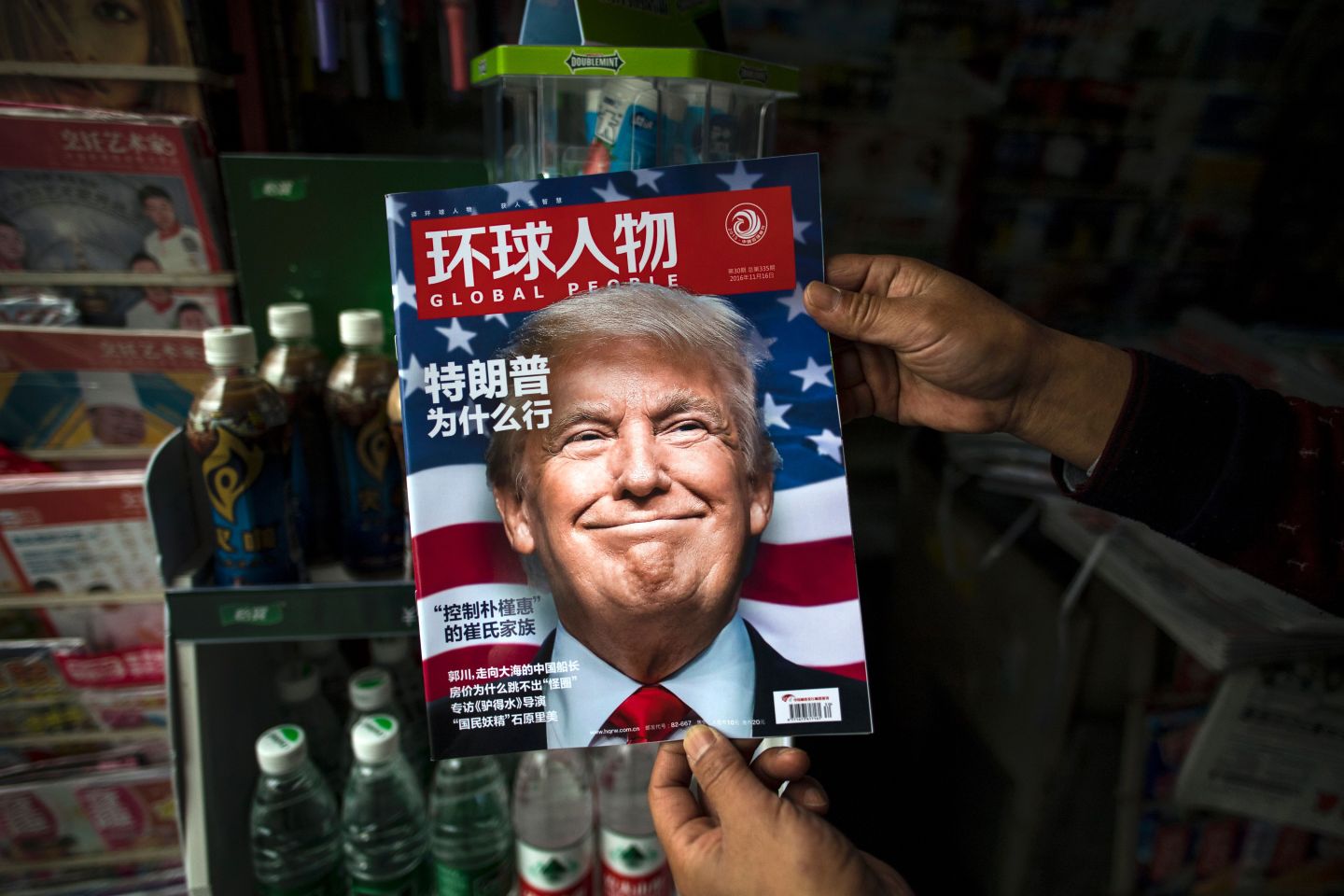
TOPSHOT - A copy of the local Chinese magazine Global People with a cover story that translates to "Why did Trump win" is seen with a front cover portrait of US president-elect Donald Trump at a news stand in Shanghai on November 14, 2016. Chinese President Xi Jinping and US president-elect Donald Trump agreed November 14 to meet "at an early date" to discuss the relationship between their two powers, Chinese state broadcaster CCTV said. / AFP / JOHANNES EISELE (Photo credit should read JOHANNES EISELE/AFP/Getty Images)Johannes Eisele — AFP/Getty Images

It may sound prosperous that President-Elect Donald J. Trump could learn anything from leaders of the Chinese Communist Party (CCP), which rules a country he has accused of stealing American jobs and concocting the hoax of climate change. But a country that has transformed itself from an impoverished communist society into a thriving capitalist one in four decades may have a thing or two to teach the former television show host of The Apprentice.

Even a casual look at how a regime dominated by fanatical communist ideologues could be converted into one led by consummate pragmatists should be especially useful for Trump. As he basks in the afterglow of his surprise victory, Trump obviously knows that his presidency — and his chances of re-election in 2020 — will depend on his economic report card in the next four years.

But based on appointments of ideological hardliners such as Tom Price (a staunch foe of Obamacare nominated to be the Secretary of Health and Human Services), Michael Flynn (Trump’s national security adviser with a dim view of Islam) and Mike Pompeo (the incoming CIA Director who has fiercely opposed the Iran nuclear agreement) and many of his campaign pledges, the chances are high that Trump could squander his limited political capital on divisive ideological issues and neglect his most important priority – getting the American economy out of its low-growth rut.

Although Chinese rulers do not have to face voters to stay in office, as Trump will likely do in four years, they have a far more intuitive sense that it is their ability to deliver economic prosperity rather than their ideological purity that will keep them in power. The transition from a radical regime guided by a utopian ideology to a pragmatic one with a laser-like focus on maintaining power by delivering superior economic performance is one of the main drivers for how China has managed to engineer an economic revolution since the late 1970s.

But the shift from an ideologically driven regime to a developmental party-state was not easy. It required Chinese leaders to be disciplined and focused on nothing else but pro-growth policies even when such policies were denounced or opposed by ideologues inside the regime. In the early years of China’s economic reform, Deng Xiaoping, the paramount leader, exemplified this pragmatist philosophy. In spite of the resistance from conservatives, Deng supported policies that attracted foreign investment, privatized agriculture, and boosted private entrepreneurship. Of course, Deng was no democrat and would side with conservatives when the CCP’s political monopoly was under attack. But on most social and cultural issues, Deng had a hands-off policy because he did not have time for such distractions.

On the international stage, Deng also pursued a pragmatic foreign policy that served only one objective: supporting China’s economic growth. Again, he knew that China needed a peaceful international environment and good relations with the world’s richest countries. During his reign, except for a brief border war with Vietnam in 1979, Deng withdrew Chinese support for leftist insurgency forces around the world, ended aid for communist regimes, and strengthened ties with the U.S., Europe, and Japan.

In retrospect, Deng’s pragmatism, which has guided the CCP’s policy for most of the post-Mao era, has saved the one-party rule.

What, if anything, can Trump learn from Deng?

To start, he should avoid becoming a prisoner of his own campaign rhetoric. For example, waging a war over the abortion issue makes no sense. It will not only polarize society but also distract Trump from other pressing economic issues. Similarly, conducting mass deportation of undocumented immigrants will hurt the economy while producing hear-rending images of families torn apart. As for picking constant fights with the media and calling for taking away the citizenship of flag-burning protesters, such acts serve only to dilute Trump’s economic message.

On the foreign policy front, Trump will need to rethink the economic consequences of his positions as well. Starting a trade war with your most important trading partners (China and Mexico, for instance) is pure folly since the certain outcome of such a confrontation is a net loss of American jobs and growth. Hectoring your long-term allies in Europe and East Asia to pony up more money for common defense may, under the best circumstances, shave a small amount off the Pentagon’s budget, but at the expense of long-term trust.

Tearing up international agreements such as the Paris Accord and the Iran nuclear deal could be disastrous, too. Except for projecting a fleeting image of a strongman, such gratuitous acts bring no economic benefits. Indeed, they are almost certain to cost Trump dearly in terms of international goodwill.

Of course, we could be wrong if Trump believes that he can win another term by running the same populist campaign in 2020. This is wishful thinking. By that time he would be part of the establishment and those who put him in office last November will not support him again unless he produces tangible economic improvements in their lives.

If the so-called communists in China have long understood the elementary lesson of performance legitimacy, the next occupant of the White House who prides himself as a savvy and successful capitalist surely knows it, too.

Minxin Pei is a professor of government at Claremont McKenna College and the author of China’s Crony Capitalism.


About the Author
By Minxin Pei
See full bioRight Arrow Button Icon

Latest in Commentary

Finance
Lorem ipsum dolor sit amet, consectetur adipiscing elit, sed do eiusmod tempor incididunt ut labore et dolore magna aliqua. Ut enim ad minim veniam
By Fortune Editors
October 20, 2025
Finance
Lorem ipsum dolor sit amet, consectetur adipiscing elit, sed do eiusmod tempor incididunt ut labore et dolore magna aliqua. Ut enim ad minim veniam
By Fortune Editors
October 20, 2025
Finance
Lorem ipsum dolor sit amet, consectetur adipiscing elit, sed do eiusmod tempor incididunt ut labore et dolore magna aliqua. Ut enim ad minim veniam
By Fortune Editors
October 20, 2025
Finance
Lorem ipsum dolor sit amet, consectetur adipiscing elit, sed do eiusmod tempor incididunt ut labore et dolore magna aliqua. Ut enim ad minim veniam
By Fortune Editors
October 20, 2025
Finance
Lorem ipsum dolor sit amet, consectetur adipiscing elit, sed do eiusmod tempor incididunt ut labore et dolore magna aliqua. Ut enim ad minim veniam
By Fortune Editors
October 20, 2025
Finance
Lorem ipsum dolor sit amet, consectetur adipiscing elit, sed do eiusmod tempor incididunt ut labore et dolore magna aliqua. Ut enim ad minim veniam
By Fortune Editors
October 20, 2025

Most Popular

Finance
Lorem ipsum dolor sit amet, consectetur adipiscing elit, sed do eiusmod tempor incididunt ut labore et dolore magna aliqua. Ut enim ad minim veniam
By Fortune Editors
October 20, 2025
Finance
Lorem ipsum dolor sit amet, consectetur adipiscing elit, sed do eiusmod tempor incididunt ut labore et dolore magna aliqua. Ut enim ad minim veniam
By Fortune Editors
October 20, 2025
Finance
Lorem ipsum dolor sit amet, consectetur adipiscing elit, sed do eiusmod tempor incididunt ut labore et dolore magna aliqua. Ut enim ad minim veniam
By Fortune Editors
October 20, 2025
Finance
Lorem ipsum dolor sit amet, consectetur adipiscing elit, sed do eiusmod tempor incididunt ut labore et dolore magna aliqua. Ut enim ad minim veniam
By Fortune Editors
October 20, 2025
Finance
Lorem ipsum dolor sit amet, consectetur adipiscing elit, sed do eiusmod tempor incididunt ut labore et dolore magna aliqua. Ut enim ad minim veniam
By Fortune Editors
October 20, 2025
Finance
Lorem ipsum dolor sit amet, consectetur adipiscing elit, sed do eiusmod tempor incididunt ut labore et dolore magna aliqua. Ut enim ad minim veniam
By Fortune Editors
October 20, 2025
Fortune Secondary Logo
Rankings
  • 100 Best Companies
  • Fortune 500
  • Global 500
  • Fortune 500 Europe
  • Most Powerful Women
  • Future 50
  • World’s Most Admired Companies
  • See All Rankings
Sections
  • Finance
  • Fortune Crypto
  • Features
  • Leadership
  • Health
  • Commentary
  • Success
  • Retail
  • Mpw
  • Tech
  • Lifestyle
  • CEO Initiative
  • Asia
  • Politics
  • Conferences
  • Europe
  • Newsletters
  • Personal Finance
  • Environment
  • Magazine
  • Education
Customer Support
  • Frequently Asked Questions
  • Customer Service Portal
  • Privacy Policy
  • Terms Of Use
  • Single Issues For Purchase
  • International Print
Commercial Services
  • Advertising
  • Fortune Brand Studio
  • Fortune Analytics
  • Fortune Conferences
  • Business Development
  • Group Subscriptions
About Us
  • About Us
  • Editorial Calendar
  • Press Center
  • Work At Fortune
  • Diversity And Inclusion
  • Terms And Conditions
  • Site Map
  • About Us
  • Editorial Calendar
  • Press Center
  • Work At Fortune
  • Diversity And Inclusion
  • Terms And Conditions
  • Site Map
  • Facebook icon
  • Twitter icon
  • LinkedIn icon
  • Instagram icon
  • Pinterest icon

Latest in Commentary

assis
CommentaryIBM
The digital sovereignty dilemma is a false choice — here’s how enterprises can have both
By Ana Paula AssisApril 9, 2026
16 hours ago
housing
CommentaryHousing
The housing market has been frozen for 3 years. Here’s why this spring could finally change that
By Jessica LautzApril 8, 2026
1 day ago
curtin
CommentaryInfrastructure
TE Connectivity CEO: the real promise of AI is long-term transformation, not short-term efficiency gains
By Terrence CurtinApril 7, 2026
2 days ago
philip
CommentaryEducation
I just became CEO of one of education’s Big 3. Here’s why AI will never replace a great teacher
By Philip MoyerApril 7, 2026
3 days ago
omar
Commentarydisruption
Pearson CEO: the AI job apocalypse is a Silicon Valley story. The data tells a different one
By Omar AbboshApril 6, 2026
3 days ago
no kings
CommentaryLeadership
America’s CEOs have become reluctant guardians of democracy
By Jeffrey Sonnenfeld and Stephen HenriquesApril 6, 2026
3 days ago

Most Popular

The U.S. government is spending $88 billion a month in interest on national debt—equal to spending on defense and education combined
Economy
The U.S. government is spending $88 billion a month in interest on national debt—equal to spending on defense and education combined
By Fortune EditorsApril 9, 2026
14 hours ago
2 years ago, Saudi Arabia quietly canceled the ‘petrodollar’ deal with America that wired the world economy for 50 years. Then war broke out in Iran
Energy
2 years ago, Saudi Arabia quietly canceled the ‘petrodollar’ deal with America that wired the world economy for 50 years. Then war broke out in Iran
By Fortune EditorsApril 7, 2026
2 days ago
Gen Z doesn't want your full-time job. They want several part-time roles, and it's reshaping the entire workforce
Success
Gen Z doesn't want your full-time job. They want several part-time roles, and it's reshaping the entire workforce
By Fortune EditorsApril 9, 2026
18 hours ago
Self-made billionaire MrBeast says his work-life balance is nonexistent and calls it a ‘miracle’ if he works less than 15-hour days: ‘I live to work’
Success
Self-made billionaire MrBeast says his work-life balance is nonexistent and calls it a ‘miracle’ if he works less than 15-hour days: ‘I live to work’
By Fortune EditorsApril 8, 2026
1 day ago
Gen Z workers are so fearful AI will take their job they’re intentionally sabotaging their company’s AI rollout
AI
Gen Z workers are so fearful AI will take their job they’re intentionally sabotaging their company’s AI rollout
By Fortune EditorsApril 8, 2026
1 day ago
A Meta employee created a dashboard so coworkers can compete to be the company's No. 1 AI token user—and Zuckerberg doesn't even rank in the top 250
AI
A Meta employee created a dashboard so coworkers can compete to be the company's No. 1 AI token user—and Zuckerberg doesn't even rank in the top 250
By Fortune EditorsApril 9, 2026
17 hours ago

© 2026 Fortune Media IP Limited. All Rights Reserved. Use of this site constitutes acceptance of our Terms of Use and Privacy Policy | CA Notice at Collection and Privacy Notice | Do Not Sell/Share My Personal Information
FORTUNE is a trademark of Fortune Media IP Limited, registered in the U.S. and other countries. FORTUNE may receive compensation for some links to products and services on this website. Offers may be subject to change without notice.