This presidential election will be the first since the U.S. Supreme Court decided Shelby County v. Holder in 2013, which struck down a key provision of the Voting Rights Act of 1965. The loss of that clause, which liberals had seen as a crowning achievement of the Civil Rights movement, makes it easier for states to adopt voting laws that can have an adverse impact on minority voters.
That’s important for any election, but especially for this one, in which a strong turnout among people of color—especially African-Americans and Hispanics—is expected to be vital to Democrat Hillary Clinton’s chances of winning.
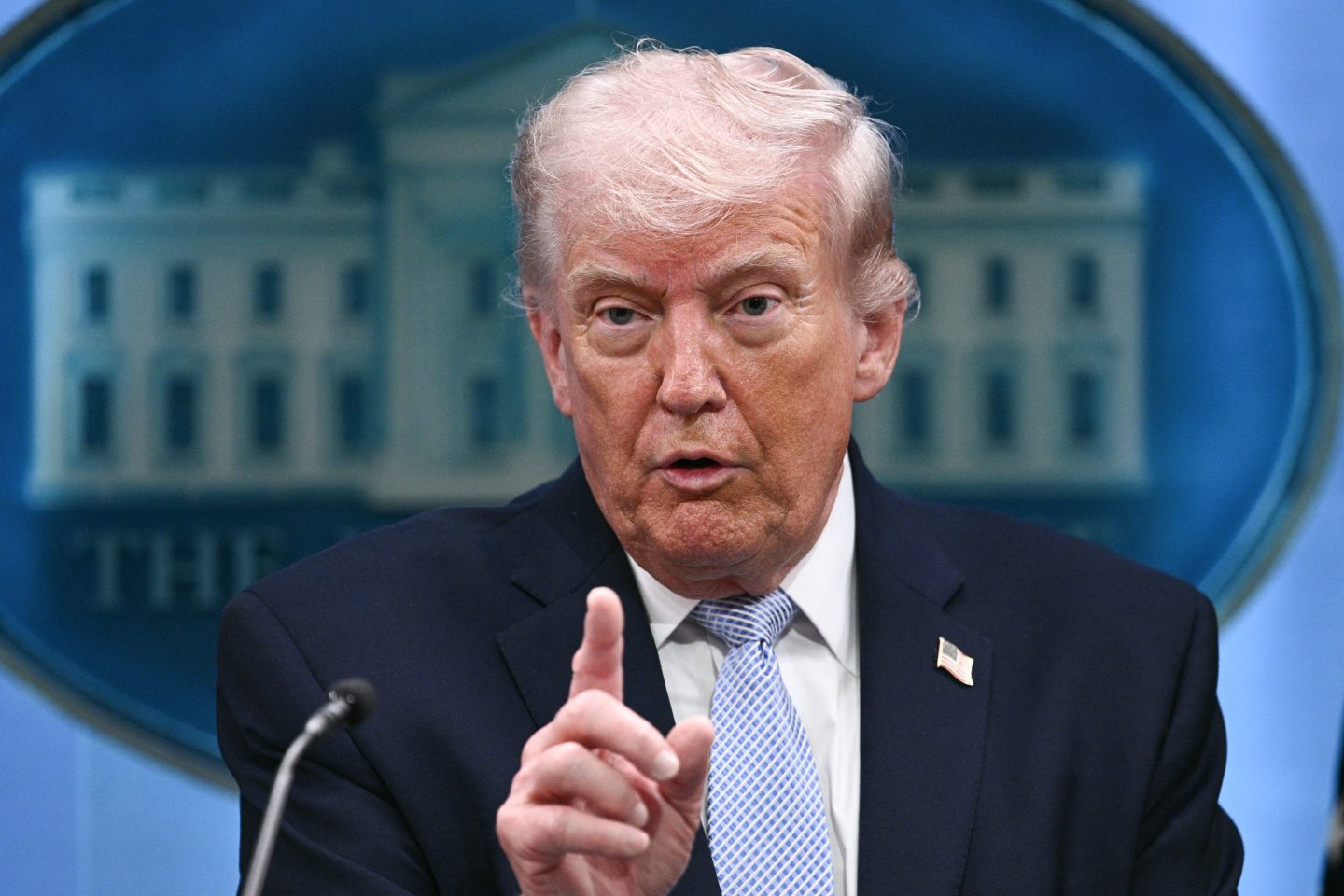
In addition, this is an election that Republican candidate Donald Trump has claimed is “rigged,” and where he has urged his followers to go to “certain sections” of states like Pennsylvania and monitor the polls to make sure the elections are not stolen from him. “You’ve got to get everybody to go out and watch,” he said at a rally in Akron, Ohio, in August, “and when [I] say ‘watch,’ you know what I’m talking about, right?” Democrats contend that he is calling upon his supporters to intimidate voters in districts with a high percentage of minority voters.
Here is an overview of the legal landscape for this singular election.
Will the Shelby County ruling make a difference this presidential election?
Yes. Some 14 states have enacted more restrictive voting laws than they had in the 2012 presidential election, according to the Brennan Center for Justice at New York University School of Law.
The number of such states would be even higher, according to the Constitutional Accountability Center, if not for important rulings by three federal appeals courts. These rulings struck down or pared back state actions in Texas, North Carolina, Kansas, Alabama, and Georgia, on the grounds that the voting constraints would have had a discriminatory impact on minority voters.
What sorts of voting restrictions do these new state laws have?
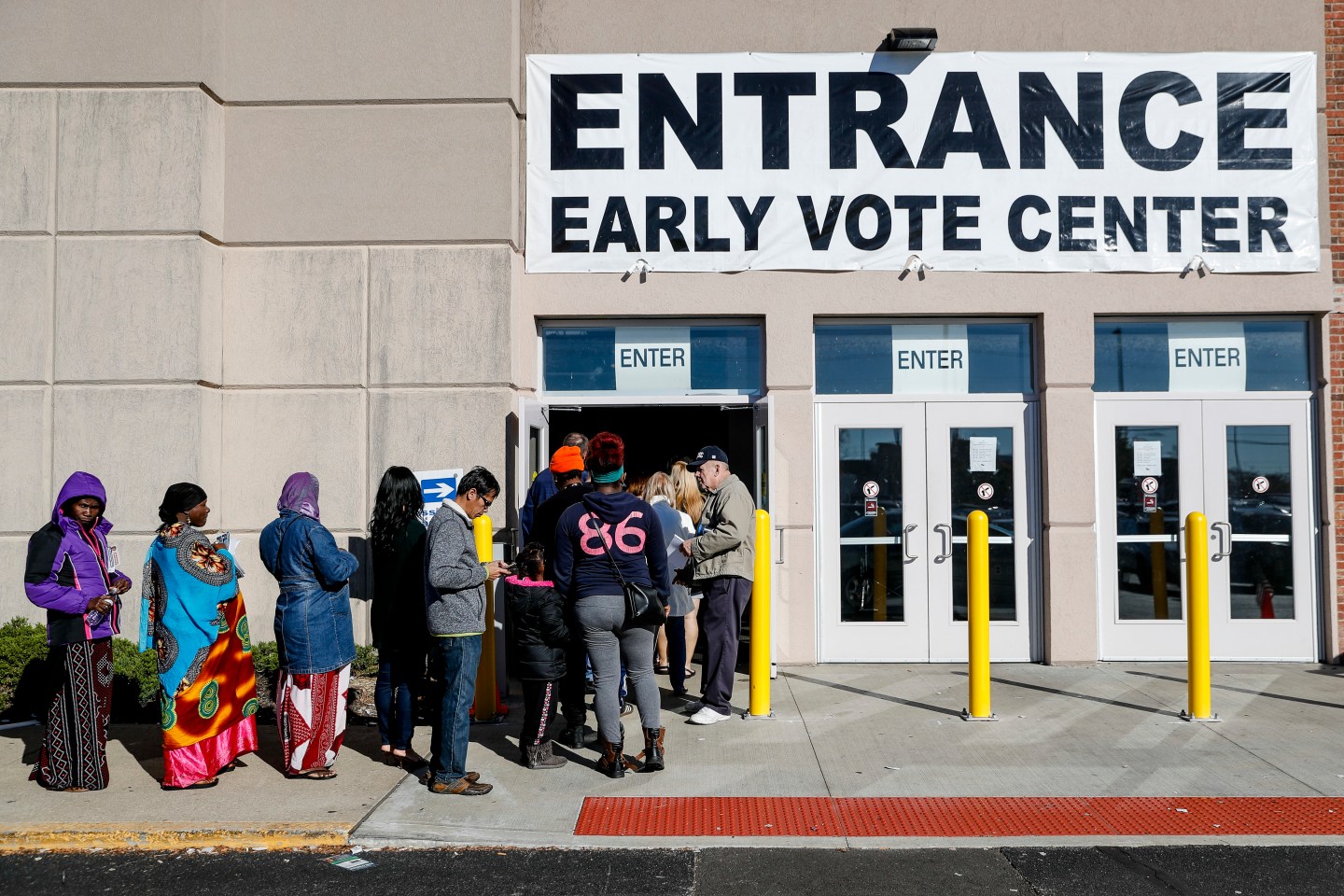
Controversial changes in voting laws include those that eliminate polling places, or move them to less accessible locations, or reduce the hours that polls are open; tighten voter ID requirements; reduce early voting and Sunday voting (popular among minority voters in certain regions); and so on.
Aren’t there legitimate grounds for doing all these things?
Yes. Budgetary constraints can certainly justify consolidating polling places. Tightening voter ID requirements are often said to be aimed at fighting in-person voter fraud. But numerous courts have found that in-person voter fraud is exceedingly rare and isolated, and that some such measures are more likely to disproportionately suppress legitimate minority turnout than to prevent voter fraud.
Could these laws have been enacted before the 2013 Supreme Court ruling?
In theory, yes, but in practice, fewer of them would have seen the light of day. Under Section 5 of the Voting Rights Act, about 800 counties with histories of racially-discriminatory voting laws—going back to poll taxes and literacy tests—had to get the Justice Department’s approval beforehand (a process called pre-clearance) before such laws could take effect.
In that process, the proponents of the laws would have had to prove that the laws would have no discriminatory impact before they could take effect. Now local legislatures can make such changes without explanation, and it’s up to voters to try to challenge them in lawsuits, and to do so often on an tight timetable, since courts won’t want to change voting rules close to an election.
In a sense, removing Section 5 reversed the burden of proof vis-a-vis whether voting enactments are discriminatory or not.
How many polling places have been closed since the 2012 presidential election?
A detailed study of 381 of the 800 counties covered by Section 5 found that there would be 868 fewer polling places in the surveyed venues this year—a reduction of 16%. About 43% of all the counties surveyed did reduce the number of polling stations, including every county polled in Arizona, which closed 212 polling stations.
There have been a recent flurry of last-minute elections lawsuits. What are they about?
There are a host of last-minute disputes, but the Democratic Party has filed at least seven federal lawsuits in an effort to stop so-called “ballot security” campaigns by either the Republican National Committee, local Republican parties, the Trump Campaign, or Stop the Steal. The latter is a web site which Democrats believe is run by unofficial Trump adviser Roger J. Stone, Jr. (Stone denies “running” the organization, but he has acknowledged “managing a project” for it, which he hasn’t identified.)
The Democrats fear that these “ballot security” efforts will descend into efforts to intimidate voters. Since October 26, Democrats have sued to prevent intimidation tactics in Arizona, Michigan, Nevada, North Carolina, Ohio, and Pennsylvania. In addition, they sought a nationwide injunction and contempt sanctions against the RNC under a consent decree that goes back to 1982. (Remarkably, the consent decree was put in place as a result of other events Roger Stone was involved in 35 years ago. In 1981, when he was acting as adviser to then New Jersey gubernatorial candidate (later Governor) Tom Kean, the RNC assembled a ballot security force consisting of off-duty law enforcement officers wearing armbands that read “National Ballot Security Task Force” that was alleged to have engaged in voter intimidation in minority neighborhoods of Newark, Camden, Paterson, and other cities.
Is it legal to send people to watch polls?
States permit poll watchers so long as they are registered, trained, and abide by state rules designed to make sure voters aren’t impeded or intimidated while getting to and from the polls. Often there are buffer zones—75 to 100 feet from the balloting areas, say—where unregistered observers cannot go. Unregistered poll watchers may violate the law if they break these rules.
In so-called open-carry states, like Virginia, unofficial poll watchers have reportedly worn guns.
How have the lawsuits fared?
As of the moment, injunctions have been denied in Arizona, Nevada, and also by the New Jersey court considering the national consent decree. A restraining order was granted in Ohio, but overturned by the federal appeals court. The Supreme Court let the appeals court ruling stand Monday afternoon.
So, by and large, the Democratic Party has lost these lawsuits?
Yes, with a caveat. Rick Hasen, a law professor at the University of California at Irvine and blogger, has argued in Slate that “the lawsuits have already borne fruit [for the Democratic Party] by getting the [Republican] campaign on the record with its plans and promises not to intimidate voters.” If the promises are not kept, the Democratic Party can return to court seeking sanctions at that point.
Hasen’s point appeared to be borne out Saturday when Stone submitted an affidavit to the Nevada court pledging to post a list of cautionary commands on the “Stop the Steal” web site in an effort to ensure that its volunteers do not break the law. The eight commands were posted on the site.